
Best Oven Grill Gloves: A Complete Buying Guide for Grilling
Disclosure: We may earn a commission when you buy through links on this page, at no extra cost to you. As an Amazon Associate I earn from qualifying purchases. Learn more

Grabbing a hot grill grate or a cast iron pan straight out of the oven with the wrong pair of gloves is how kitchens and backyards end up with burn scars. A thin cotton mitt that works fine for a casserole dish will fail almost instantly against an open flame or a smoker running for hours. Choosing the best oven grill gloves for your setup comes down to a handful of factors: what the glove is made of, how hot it can actually handle, how far up your arm it covers, and whether you can still hold a spatula while wearing it. This guide walks through each of those factors so you can match a glove to the way you actually cook, whether that is pulling trays from a home oven or flipping ribs over charcoal.
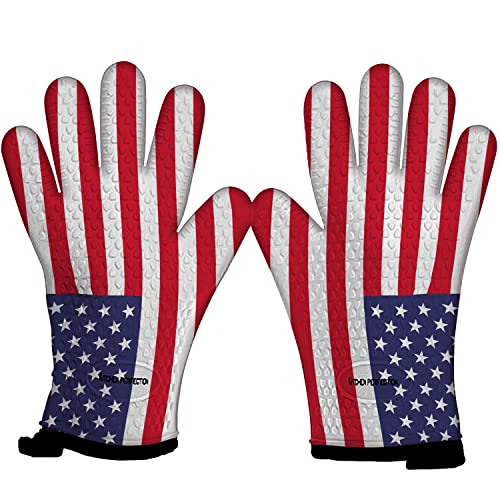
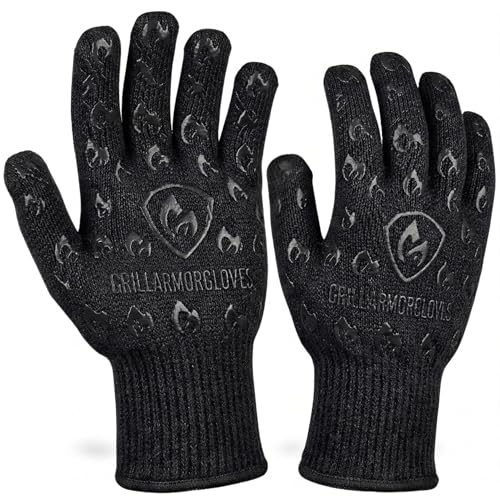
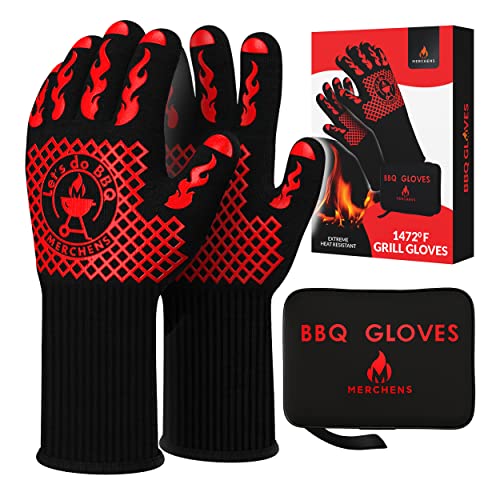
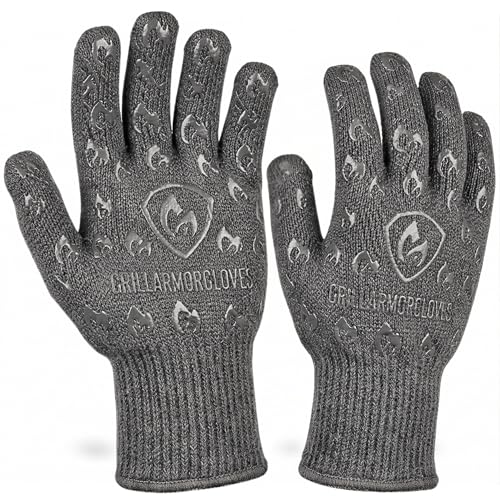


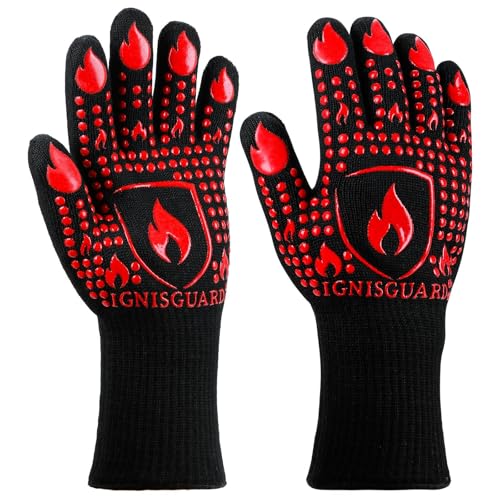
Material Types: Silicone, Aramid/Kevlar, and Leather
The material a glove is built from determines almost everything else about it, including its heat ceiling, its grip, and how it feels to wear for an hour at a time. Most oven grill gloves on the market fall into one of three categories.
Silicone
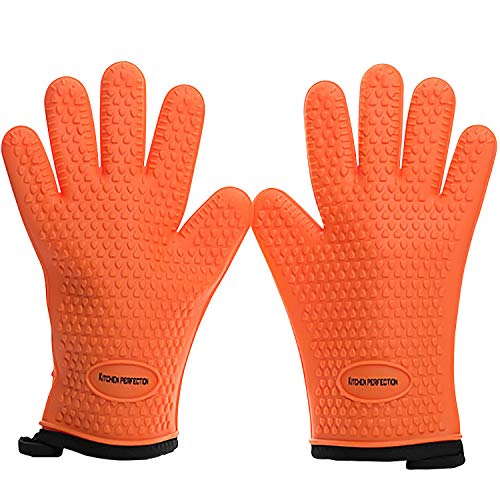
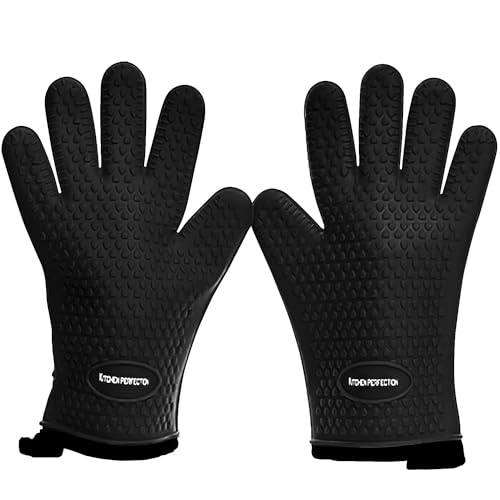
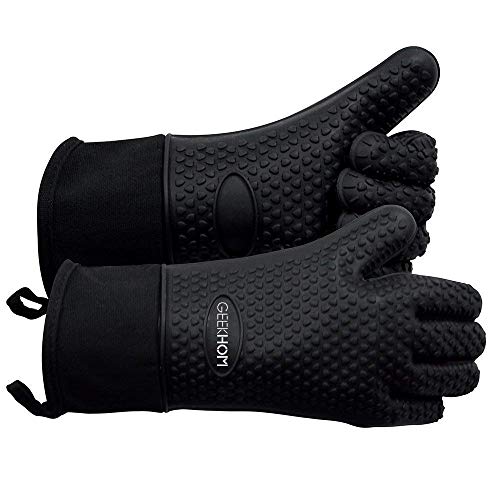
Silicone oven grill gloves are the most common option for home kitchens and backyard grills. They resist water, wipe clean easily, and usually have a textured or dotted surface that grips pans and grates well. The tradeoff is flexibility, thick silicone can feel stiff around the fingers, which makes fine tasks like adjusting foil or turning a small skewer a little clumsy.
Aramid and Kevlar Fiber Blends
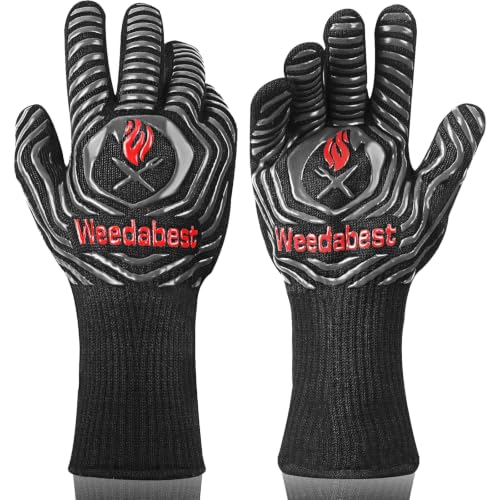
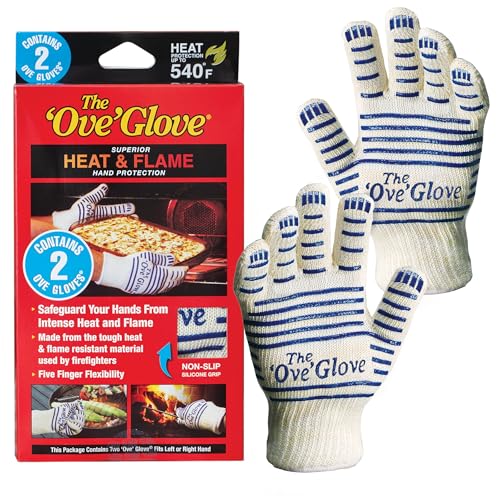
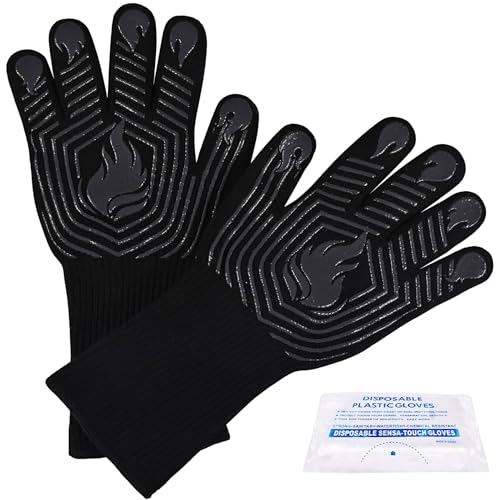
Fiber gloves woven from aramid materials, often blended with cotton or a silicone grip layer, tend to be thinner and more flexible than pure silicone. They breathe better over long cook sessions, which matters if you are tending a smoker for several hours, and many are rated for very high contact temperatures. They are usually less water resistant than silicone, so a wet marinade or basting brush can soak through faster.
Leather
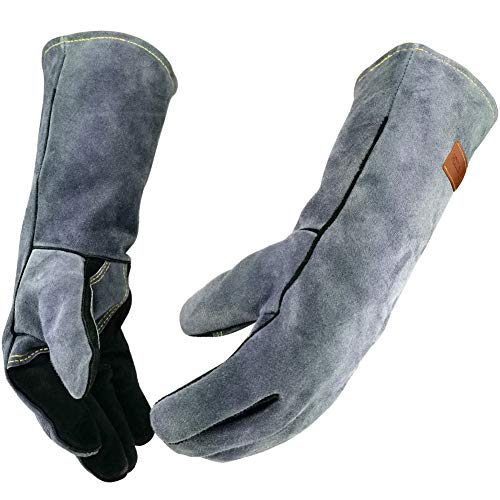
Leather gloves, often styled like a welding glove, are a favorite for people who cook directly over open flame or move logs and charcoal by hand. They hold up well to sparks and abrasion and tend to be the most durable option over years of use. They are usually bulkier than silicone or fiber gloves and are not machine washable, so they need to be wiped down rather than laundered.
Heat Resistance and Temperature Rating
Every pair of oven grill gloves lists a maximum temperature, and this number is the most important spec on the package, but it is also the most misunderstood.
What the Rating Number Actually Means
A rating like a few hundred degrees or well over a thousand degrees tells you the highest temperature the material can be exposed to without breaking down. It does not automatically mean you can hold that surface indefinitely. Gloves rated for very high heat are usually tested for a short window of direct contact, often just a few seconds, not for gripping a hot handle for a full minute while you move a tray.
Heat Resistant vs Heatproof
Heat resistant means the glove slows down heat transfer and protects your hand for a limited time. Heatproof implies no heat gets through at all, and almost nothing sold for home use is truly heatproof. Treat any glove as a buffer that buys you a few extra seconds, not a guarantee, and avoid lingering with a hot pan or grate longer than necessary even while wearing one.
This distinction matters more the closer you get to open flame. A standard kitchen oven mitt rated for a home oven is not enough protection for a charcoal chimney or the grates on a loaded gas grill, where surface temperatures run far higher than anything inside a conventional oven.
Length and Forearm Coverage
Where a pair of oven grill gloves ends matters almost as much as what it is made of. Standard oven mitts typically stop at the wrist, which is fine for reaching into an enclosed oven but leaves your forearm exposed the moment you lean over an open grill or a wood fired pizza oven, where heat radiates upward and flare-ups happen without warning.
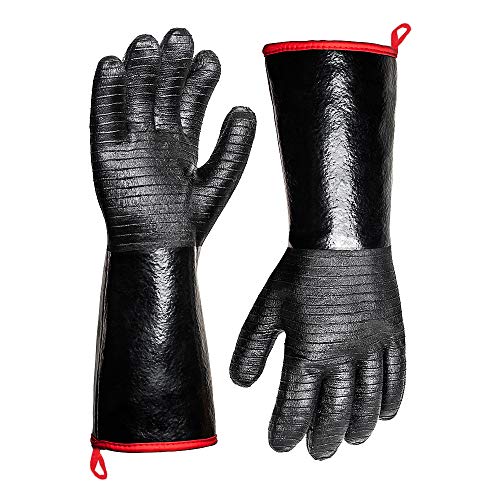
Longer cuffs, generally in the range of a foot or more, extend protection up the forearm and are worth the extra coverage for anyone working over direct flame, tending coals, or reaching deep into a smoker. A few specialty gloves extend closer to the elbow, which suits people who frequently reach into deep grills or large ovens. If most of your cooking happens indoors with a standard oven, wrist length coverage is usually enough. If you are regularly around an open flame, the extra length is not optional, it is the whole point of choosing a dedicated glove over a kitchen mitt.
Dexterity and Grip: Gloves vs Bulky Mitts
Not all oven grill gloves handle dexterity the same way. Traditional oven mitts are shaped like a mitten, with one compartment for the thumb and another for the rest of the hand. That shape adds bulk and insulation but makes it nearly impossible to pick up small items or operate tongs precisely. Five-finger grilling gloves solve this by giving each finger its own space, so you can still grip a fork, adjust a vent, or turn a small piece of food without pulling the glove off first.
The tradeoff runs the other way too. A bulkier mitt shape generally traps more insulating air and can feel more protective for a quick, simple task like pulling a sheet pan straight out. A five-finger glove trades a bit of that bulk for control, which pays off most when you are doing something more involved, like flipping food on a portable charcoal grill or repositioning coals mid-cook. Grip texture is worth checking either way, a smooth fabric palm can slip on a greasy handle, while a textured silicone palm holds on even when the glove gets a little wet.
The same logic applies indoors. Anyone cooking on a smokeless indoor grill still benefits from a flexible, grippy glove rather than a bulky mitt, since indoor grill plates and drip trays get hot enough to need real protection even a few feet from an open flame.
Getting the Right Fit for Your Hands
Most oven grill gloves are sold as one size fits all, and in practice that label is optimistic. A glove that is too tight around the wrist opening is uncomfortable to pull on quickly, while one that is too loose in the fingers reduces your grip and dexterity right when you need them most. Fit issues are one of the more common complaints among people who buy gloves without trying them on first.
If a retailer lists hand width sizing, measure across your palm at its widest point and compare it to the size chart rather than assuming a single size will work. Gloves built specifically in small, medium, and large sizes are worth seeking out if you have unusually narrow or wide hands, and a snug but not restrictive fit around the fingers is the best sign that a glove will actually stay useful once it heats up and your hands sweat a little.
Frequently Asked Questions
What temperature should grill gloves be rated for?
For general grilling, look for oven grill gloves rated at least a few hundred degrees above your grill's typical cooking temperature. If you work directly with coals, an open flame, or a smoker, gloves rated for very high heat give you a larger safety margin for brief contact with hot metal.
Are silicone or fabric oven gloves better?
Neither is universally better, they suit different tasks. Silicone handles moisture and mess well and grips confidently, while fabric or fiber blends breathe better and flex more easily for fine motor tasks over long cook sessions.
How long should grill gloves be for BBQ safety?
For open flame or smoker use, look for cuffs that extend well past the wrist toward the forearm. Anything that stops right at the wrist leaves your arm exposed to flare-ups and radiant heat from the grates.
Can you put oven mitts or grill gloves in the washing machine?
It depends on the material. Many fabric and fiber blend gloves are machine washable on a gentle cycle, while silicone gloves should generally be wiped down or hand washed and air dried rather than put in a dryer, since heat can affect the material over time.
Do grill gloves work for pizza ovens and smokers?
High heat rated grill gloves are generally suitable for pizza ovens and smokers, but check the temperature rating first since these appliances can run hotter than a standard gas grill. A glove built for light oven duty is not a safe substitute.
What is the difference between oven mitts and grill gloves?
Oven mitts are typically shorter, bulkier, and rated for moderate oven temperatures, while grill gloves are designed with individual fingers or longer cuffs and are usually rated for the higher, more direct heat of a grill, smoker, or open flame.
What size grill gloves should I buy?
Measure your hand width across the palm and compare it to the brand's size chart if one is available. If a product is only offered as one size, look at reviews mentioning fit before assuming it will work for smaller or larger hands.
Making Your Decision
The right pair of oven grill gloves comes down to matching material, heat rating, length, and fit to how you actually cook. Someone pulling trays from a home oven a few times a week has very different needs than someone tending a charcoal fire for hours. Once you know which of these factors matters most for your routine, narrowing down a specific pair becomes a much easier decision.