Best OLED TVs (2026 Buying Guide)
Disclosure: We may earn a commission when you buy through links on this page, at no extra cost to you. As an Amazon Associate I earn from qualifying purchases. Learn more

As televisions get bigger and better, the quality of OLED TVs continues to rise. With incredible picture quality and a wide range of features, OLED TVs remain some of the best displays on the market.
Whether you're looking for a top-of-the-line model or something a bit more affordable, there's an OLED TV suited to your needs. Entertainment is an indispensable part of modern life, and manufacturers keep improving and launching new TV products to meet that demand.
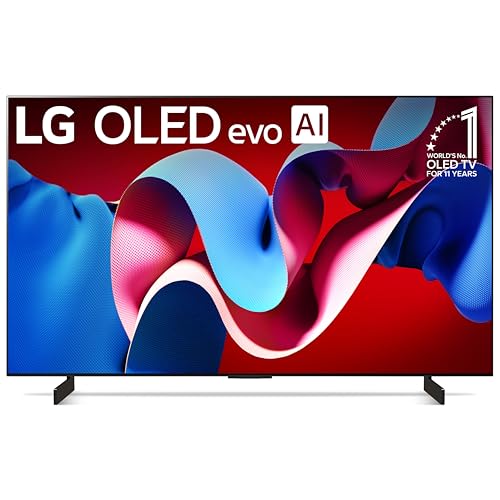
Currently, consumers are very fond of OLED TVs because of their picture quality. If you're wondering which OLED TV to buy, don't miss our picks and buying guide below.
Why Should You Buy an OLED TV?
For today's electronic devices, OLED technology has become very popular. OLED stands for Organic Light Emitting Diode.
OLED display technology gives each individual pixel its own light source, letting the panel control brightness pixel by pixel rather than relying on a shared backlight. That's the biggest advantage of this type of TV: true blacks, high contrast, and vivid images that satisfy even demanding viewers.
OLED panels also respond extremely fast, which makes them a great choice for gamers looking for a TV with minimal input lag and motion blur.
Related Post: Best 4k Smart OLED TV
Another advantage is energy efficiency. Because OLED pixels can turn off completely to produce true black, OLED TVs often use less power than traditional LED-LCD televisions showing the same content, so you don't need to worry about them increasing your electricity bill more than other TV types.
With so many OLED TVs on the market, it isn't always easy to find the one that fits your needs. Our picks and buying guide below can help.
Best OLED TVs
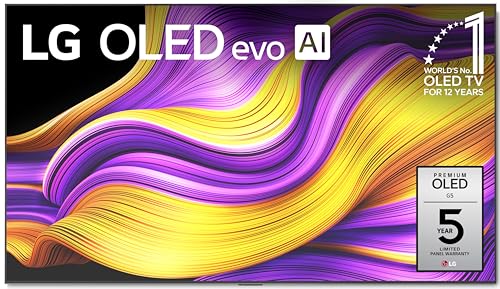
Top Pick: LG 77-Inch Class OLED evo AI C5 Series Smart TV

LG's C5 Series pairs a huge 77-inch OLED evo panel with an AI-enhanced processor, Dolby Atmos, and Dolby Vision support, making it a strong choice for a dedicated home theater setup. It's also one of the most reviewed OLED TVs on Amazon, which reflects how consistently it delivers on picture quality.
Key features:
- 77-inch OLED evo panel with AI-enhanced processing
- Dolby Atmos and Dolby Vision support
- webOS smart platform
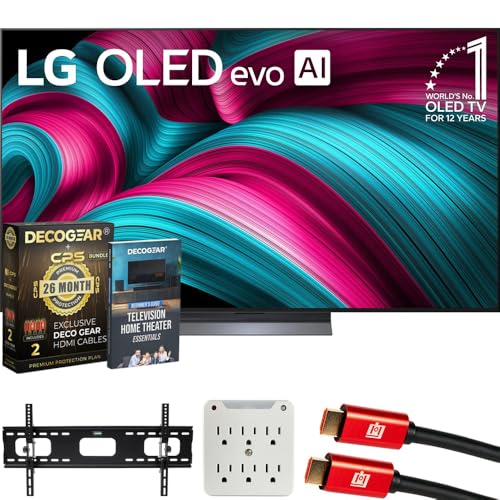
Best Mid-Size: LG 65-Inch Class OLED evo C5 Series Smart TV
The same C5 Series panel technology in a more common 65-inch size, which fits comfortably in most living rooms without needing to rearrange furniture. It carries the same AI processing, Dolby Atmos, and Dolby Vision support as its larger sibling.
Key features:
- 65-inch OLED evo panel, one of the most popular OLED sizes
- AI-enhanced 4K processing
- webOS smart platform with Dolby Atmos and Dolby Vision
Best Compact/Budget: LG 42-Inch Class OLED evo C4 Series Smart TV
At 42 inches, this LG C4 model is small enough for a bedroom, home office, or gaming desk while still delivering genuine OLED contrast and color. It's the most reviewed TV in this lineup, which speaks to how well it's held up with everyday buyers.
Key features:
- Compact 42-inch OLED panel, ideal for smaller rooms or desks
- 4K processor with flat-screen design
- Most budget-friendly OLED pick in this list
OLED TV Buying Guide
Size and Weight
The size and weight of the TV should match the size of the room and your intended use. The space you have available has a big influence on which size specifications make sense for you.
If you have a large room or want to enjoy movies to the fullest, a larger OLED TV will bring more satisfaction. If your room is smaller, a more compact model, like the 42-inch pick above, is often the more practical choice.
If you're placing the TV on a tabletop, cabinet, or other sturdy stand, a heavier unit is no problem. If you plan to wall-mount it, especially on a wall shelf without much bearing capacity, a thinner, lighter OLED TV is the safer option.
Related Post: The Best Small Smart TV With WiFi
Sound Processing Technology
Do you want your TV to deliver a satisfying experience in both picture and sound? If so, look for an OLED TV with built-in high-quality sound processing, or plan to pair it with a dedicated soundbar.
Manufacturers have found ways to integrate more of the TV's electronics into a slim soundbar-style base, which improves audio quality while keeping the overall footprint compact.
Related Post: Best 55 Inch TV Under $1000
HDMI Connection
If you're buying an OLED TV for gaming, an HDMI 2.1 connection is one of the most important things to check for. In addition, look for support for Variable Refresh Rate and 4K at 120Hz, both of which noticeably improve motion clarity and responsiveness during fast-paced games.
Operating System
Most LG OLED TVs run on the webOS platform, while other brands may use Google TV, Android TV, or their own smart TV operating system. A smart OS gives you access to the same streaming apps and voice assistant features you're used to on your phone, along with screen mirroring and casting support.
Related Post: Best 75-inch TV Under $1500
FAQs
How much do OLED TVs cost?
Pricing depends heavily on screen size, panel generation, and features. Smaller and older-generation OLED TVs can run under $1,000, while larger, newer flagship models with the latest AI processors and audio features can cost well over $2,000.
What is the lifespan of an OLED TV?
OLED TVs from reputable manufacturers, when used and maintained properly, can last roughly 100,000 hours, which is significantly longer than the 40,000 to 60,000 hours typical of traditional LED-LCD TVs. Given average daily viewing habits, that works out to around a decade of use.
What's the difference between OLED and QLED?
OLED stands for Organic Light Emitting Diode, and it allows each individual pixel to control its own brightness and color, which produces true blacks and very high contrast. QLED stands for Quantum Dot Light Emitting Diode, which uses a quantum dot film layered over an LED backlight to boost color and contrast rather than controlling each pixel individually. Both have their strengths, but OLED generally delivers the more immersive picture.
Related Post: The Best 65-inch TV Under $2000
Do OLED TVs have any "burn-in" issues?
It's possible. OLED burn-in occurs when a static, non-moving image stays on screen for a long time, leaving a faint ghost image behind. Manufacturers now include pixel-refresh and pixel-shifting features to help prevent this, and simply varying what you watch (rather than leaving a static image up for hours) further reduces the risk.
What should gamers look for when choosing an OLED TV?
Gamers should prioritize the connection ports they need (ideally HDMI 2.1), along with a high refresh rate and low input lag. OLED's near-instant pixel response time already gives it a natural advantage for fast-paced games over most LED-LCD panels.
Related Post: The Best 8K TVs
Conclusion
OLED TVs remain some of the best displays you can buy, combining true blacks, vivid color, and fast pixel response in a thin, modern design. Whichever size or budget you're working with, the picks and buying guide above should help you land on the right one for your home.
You may also like: