Best Mountain Bike Saddle: Everything to Know Before Your First Purchase in 2026
Disclosure: We may earn a commission when you buy through links on this page, at no extra cost to you. As an Amazon Associate I earn from qualifying purchases. Learn more

How to choose the best mountain bike saddle: sit bone width, padding, shape and rails explained, plus setup tips.
The saddle is one of three places your body touches a mountain bike, and it carries much of your weight on long climbs and rough descents. A saddle that is too wide, too narrow, too soft or the wrong shape can cause chafing, numbness and back pain, while the right one disappears beneath you. This guide to the best mountain bike saddle starts with the basics, explains each spec in plain English and walks you through setup so your first saddle upgrade is the right one.
We cover saddle basics, key specs, options by budget, rookie mistakes, setup and common questions. Persistent numbness, tingling or pain in the groin or sit bones is a sign that saddle fit or position needs attention; adjust your setup, wear padded shorts and see a doctor or professional bike fitter if symptoms continue. Always tighten seat post clamp bolts to the torque printed on the part, since a loose saddle can slip mid ride.



Mountain Bike Saddles 101: The Basics
A saddle has a shell, padding, a cover and two rails underneath that clamp to the seat post. Your weight should rest mainly on your sit bones, the two bony points at the base of your pelvis, rather than on soft tissue. Mountain bike saddles tend to be tougher than road saddles, with reinforced corners and covers that resist scuffs when you slide off the back on steep descents.
A few terms help. Width is measured across the widest point and should match your sit bone spacing. Profile describes whether the saddle is flat or curved from side to side and nose to tail. Cutout or relief channel is a groove or hole that reduces pressure on soft tissue. Rails are the metal or carbon bars that clamp to the post.
Most riders want a saddle that supports the sit bones on seated climbs and stays out of the way when standing.
Key Specs for the Best Mountain Bike Saddle, Explained in Plain English
For most riders, the right width and shape matter more than weight or price.
Width and Sit Bone Fit
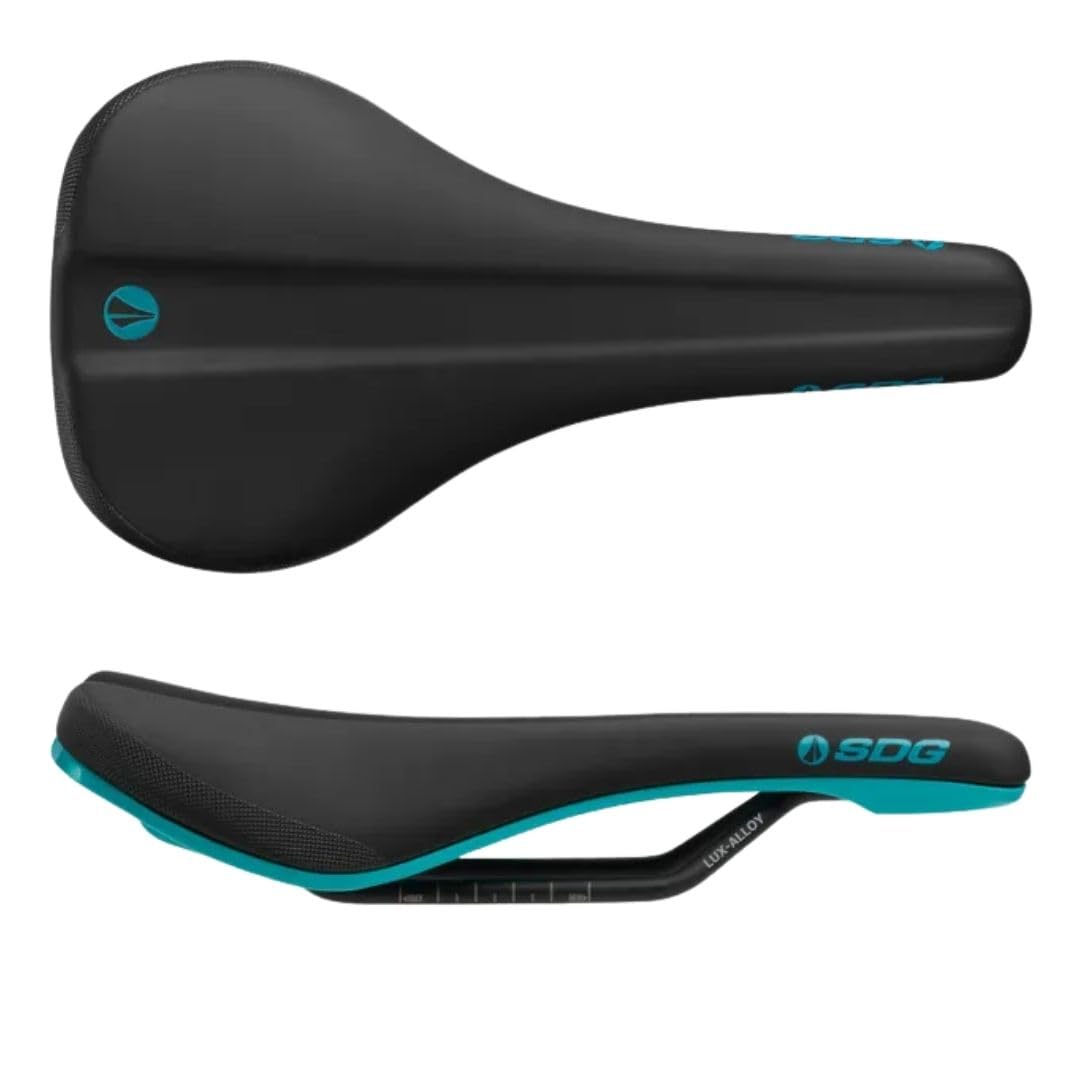
Width should match your sit bones plus a little extra. Many brands offer multiple widths: WTB's Volt comes in three sizes, Ergon's SMC Core lists S/M for 9 to 12 cm sit bone spacing and M/L for 12 to 16 cm and SDG's Bel-Air V3 measures 260 by 140 mm. Bike shops can measure sit bones with a simple pad, or you can sit on corrugated cardboard and measure the dents.
Padding and Comfort
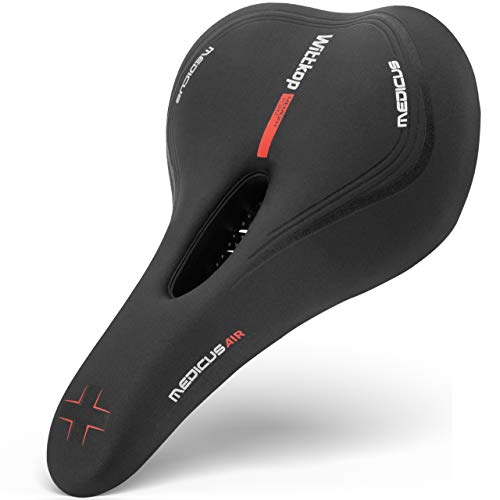
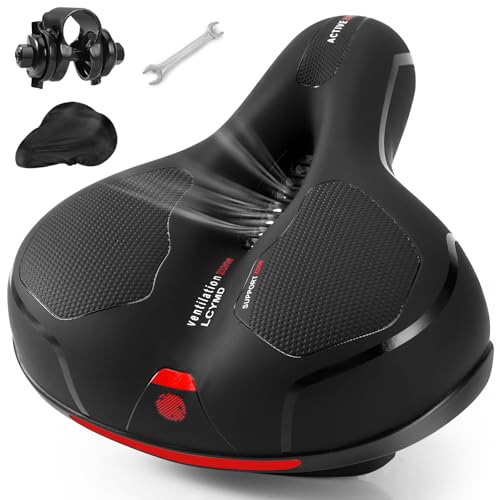
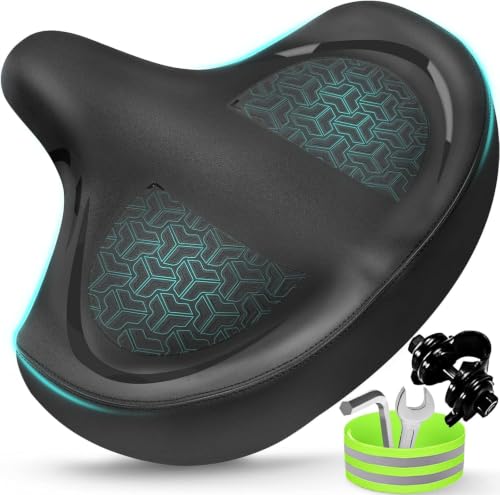
More padding is not always better. Medium padding, like WTB's Volt, supports the sit bones without squishing into soft tissue. Ergon's SMC Core adds a gel pad and microfiber cover. Wide comfort saddles, like Wittkop's waterproof saddle with a 5 zone concept and LCYMD's thick high density foam seat, suit casual riders on short rides but can chafe on long technical days.
Shape, Profile and Cutouts
Flat saddles let you shift position easily, while curved or wave shaped saddles hold you in one spot. Pressure relief channels, like those on Ergon's SMC and Selle Italia's Flite Boost Superflow, reduce soft tissue pressure. Women's specific saddles, like Ergon's E-Mountain Core Prime for women, use shapes designed around different anatomy.
Rails and Weight
Rails affect weight, flex and price. Steel rails, like WTB's Volt steel version, are tough and affordable. Titanium rails, like WTB's titanium Volt, save weight and add a little flex.
Alloy rails, like SDG's Lux-Alloy, balance both, and SDG lists 236 grams. Carbon rails are lightest but need compatible clamps. Most riders feel comfort differences far more than weight differences.
Compatibility and Mounting
Most mountain bike saddles use 7 mm round rails that fit standard seat post clamps. Carbon rails are often oval, about 7 by 9 mm, and need a compatible clamp. LCYMD includes a saddle adapter and wrench for most standard posts. Check rail length if you need to move the saddle far forward or back for fit.
Durability and Weather
Mountain saddles face mud, rain and crashes. Wittkop advertises a waterproof saddle, and tough synthetic or microfiber covers, like Ergon's, resist scuffs. Reinforced corners help when you drop a bike. Rider weight ratings matter for heavier riders; Ergon lists a 308 pound maximum on the SMC Core.
Length and Nose Shape
Saddle length affects how you move on steep terrain. Shorter saddles, like Fizik's short nose designs, let you rotate forward on steep climbs without the nose pressing into soft tissue. Longer saddles give more room to shift position on long seated climbs. A rounded, slightly dropped nose is less likely to snag your shorts when you move back over the rear wheel on descents.
Dropper Posts and Riding Position
Most modern mountain bikes use dropper posts that lower the saddle for descents. With the saddle dropped, the shape of the tail and sides matters, since your legs grip and move around it. Slim, smooth sides and a tail that does not hook your shorts make dropping in easier. Check that your saddle rails leave room for the dropper's clamp.
E-MTB Riding
Riders on electric mountain bikes often stay seated longer, even on steep climbs, because the motor helps. That shifts more weight onto the saddle for longer periods. E-MTB specific saddles, like Ergon's E-Mountain line, use shapes and tails designed to support the rider on steep seated climbs.
Choosing Mountain Bike Saddles for Your Situation
Trail and enduro riders usually do well with medium padded, flat to slightly curved saddles like WTB's Volt, SDG's Bel-Air V3 or Ergon's SM Pro. Cross country racers prefer lighter, firmer saddles. E-MTB riders who sit more on climbs may like Ergon's e-mountain shapes, and casual riders on short paths may prefer wider comfort seats.
Best Affordable Mountain Bike Saddles
The best affordable mountain bike saddles cost around $19 to $63. WTB's Volt with steel rails, around $63, is a proven trail saddle in three widths. Wittkop's waterproof comfort saddle costs around $48, Twomaples' wide comfort seat around $37 and LCYMD's padded replacement seat around $19 with a mounting adapter included.
Rookie Mistakes to Avoid
Buying the softest saddle. Thick padding compresses and pushes into soft tissue on long rides.
Ignoring width. A saddle too narrow puts weight on soft tissue; too wide causes thigh rub.
Setting the saddle too high or tilted. Poor position causes pain even on a good saddle.
Skipping padded shorts. Chamois shorts work with the saddle, not instead of it.
Giving up after one ride. New saddles take a few rides to judge, especially if you are new to riding.
Getting Started: Setup and First Use
Set saddle height. Your knee should have a slight bend at the bottom of the pedal stroke.
Level the saddle. Start level, then tilt the nose down slightly only if needed for comfort.
Center fore and aft. Start with the rails clamped in the middle of the marked range.
Torque the clamp correctly. Use a torque wrench and the value printed on the seat post.
Ride and adjust in small steps. Change one thing at a time by a few millimeters.
Check bolts after the first few rides. Clamps can settle.
Mountain Bike Saddles: Your Questions Answered
How often should I replace a mountain bike saddle?
Replace a saddle when the padding packs down, the shell cracks, rails bend or the cover tears. Many riders get several years from a quality saddle. Crashes that bend rails call for immediate replacement, since bent rails can fail.
How do I choose the right saddle width?
Measure your sit bone spacing at a bike shop or with corrugated cardboard, then add about 20 to 30 mm for mountain biking. Ergon lists saddle sizes by sit bone spacing, which makes matching easy. If you are between sizes, the wider option usually feels better on seated climbs.
Why does my saddle cause numbness?
Numbness usually comes from pressure on soft tissue due to the wrong width, shape, height or tilt. Try a saddle with a relief channel, check that your sit bones are supported and lower the saddle nose slightly. See a doctor if numbness persists after rides.
Do women need a women's specific saddle?
Not always, but many women find women's specific shapes more comfortable because they account for wider sit bones and different soft tissue pressure points. Ergon's E-Mountain Core Prime for women is one example. Fit matters more than the label.
Can I put a road saddle on a mountain bike?
Yes, the rails usually fit, but road saddles are often narrower, firmer and less durable. Mountain riders sit more upright on many bikes, which can call for slightly wider support, and they need tougher covers. A gravel or trail saddle like WTB's Volt or SDG's Bel-Air V3 is a safer bet.
Are wide comfort saddles good for mountain biking?
Wide, heavily padded comfort seats, like Wittkop's or Twomaples', suit casual riding and upright bikes. On technical trails, they can catch your shorts when you move behind the saddle and chafe on long climbs. Trail riders usually prefer narrower, medium padded saddles.
How long does it take to get used to a new saddle?
Expect a few rides, often two to four weeks of regular riding, to judge a new saddle fairly. Some soreness is normal when you start riding more often. Sharp pain, persistent numbness or chafing that does not improve suggests the width, shape or position is wrong.
Do padded seat covers help?
Gel seat covers can help on short rides with upright bikes, but on mountain bikes they tend to shift and bunch, which can cause chafing. Padded cycling shorts and a correctly sized saddle are a better long term solution.
The Bottom Line
The best mountain bike saddle supports your sit bones, matches your riding style and lets you move freely on the trail. Measure your sit bones, choose medium padding and adjust height and tilt carefully. WTB's Volt is a proven value pick, Ergon's SMC Core and SM Pro offer sit bone specific sizing and SDG's Bel-Air V3 balances weight and comfort for trail riders.
For more mountain bike gear, see the best grips for mountain bike, the best clip pedals for mountain bike, the best full face mountain bike helmets and the best beginner mountain bike. Then compare current prices in the product table above.