Best Moen Kitchen Faucet: The Complete Buying Guide
Disclosure: We may earn a commission when you buy through links on this page, at no extra cost to you. As an Amazon Associate we earn from qualifying purchases. Learn more
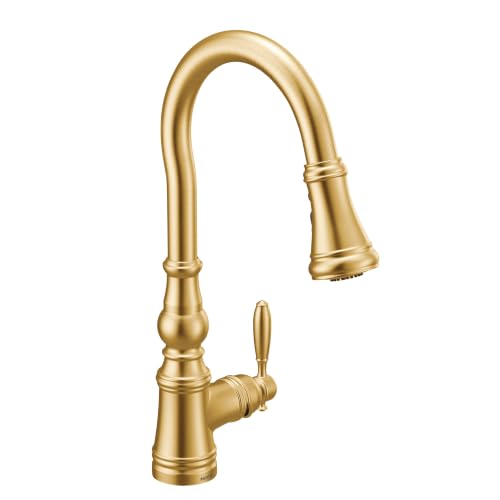
Your kitchen faucet works harder than almost anything else in the house, turning on and off dozens of times a day for washing produce, filling pots, and rinsing dishes. When the old one starts dripping, wobbling at the base, or just feels dated, replacing it is one of the more satisfying kitchen upgrades you can tackle in an afternoon. Moen has built its kitchen faucet lineup around a mix of spray technology, finish durability, and touchless convenience, which means picking the best Moen kitchen faucet for your space depends on more than just looks. This guide walks through how Moen's spray styles, motion sensors, and finish options differ, plus the practical details that determine whether a faucet fits your sink without a headache.


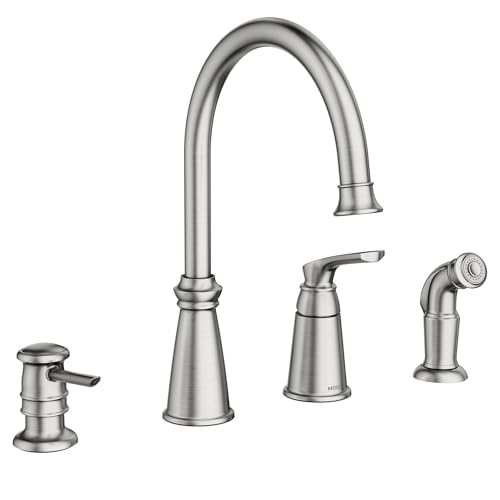
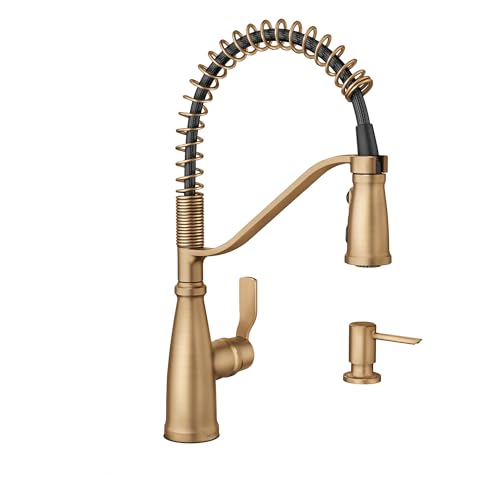
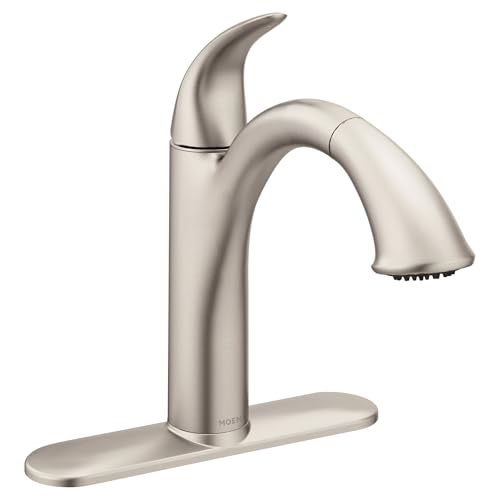
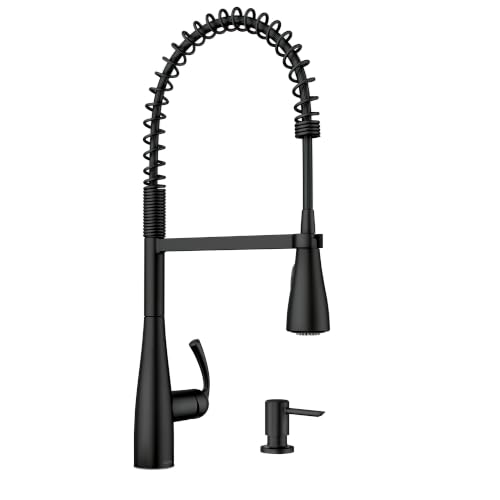
Matching Spray Style and Handle Design to Your Kitchen
Before comparing finishes or technology, narrow down the basic shape of the faucet. Spray head style and handle configuration affect how a faucet feels day to day more than almost any other spec, so it makes sense to settle these first.
Pull-Down vs Pull-Out Reach
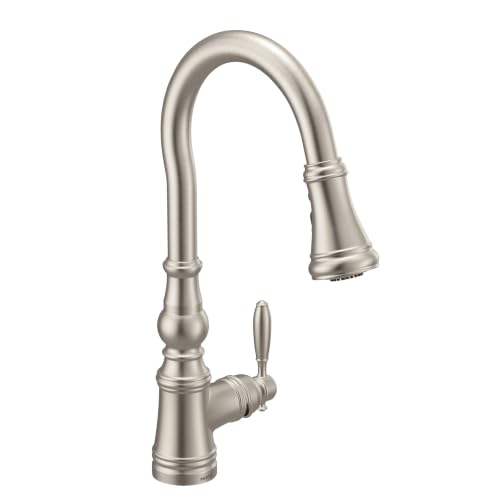
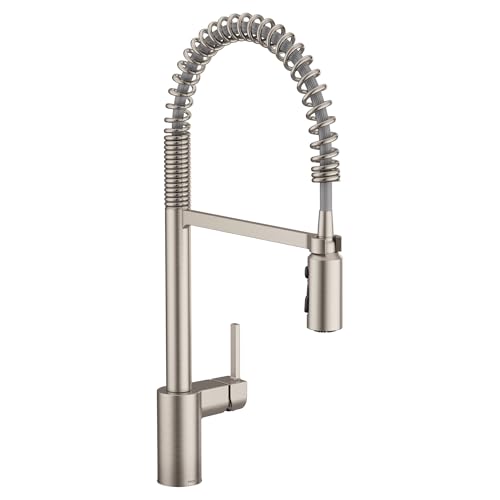
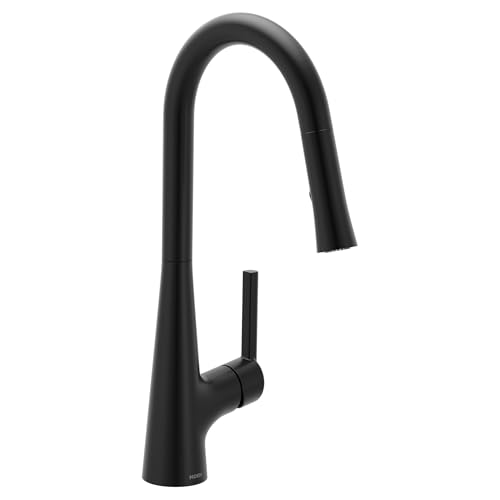
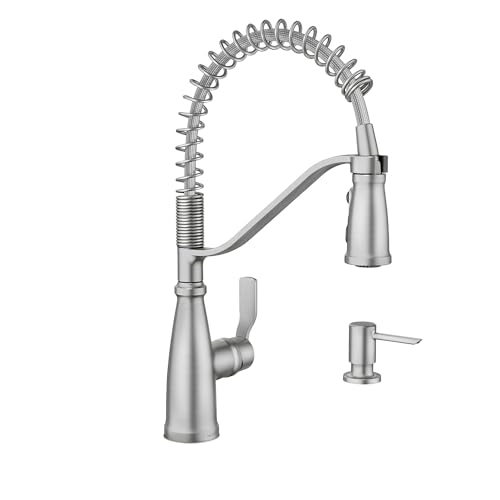
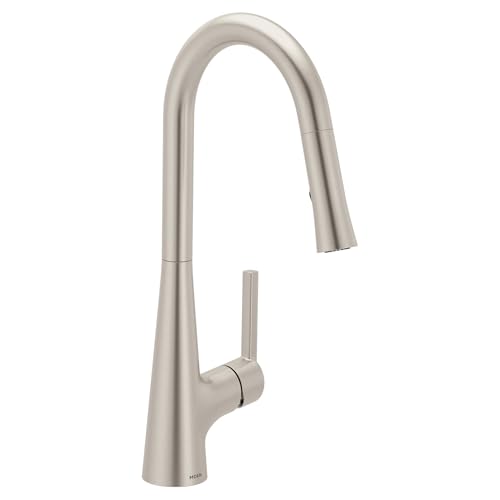
Pull-down faucets drop the spray head straight into the basin from a tall arc, giving clearance for filling stockpots and washing tall items without water sliding over the counter. Pull-out faucets sit lower and extend more horizontally, which suits a kitchen where a window sill or cabinet sits close above the sink. Stand at your sink and check the space above it before deciding, since the wrong arc height can mean the spray head bumps a window or shelf every time you reach for it. For a closer look at how this style performs, our pull-down kitchen faucet guide covers the mechanics in more detail.
Single-Handle vs Two-Handle Control
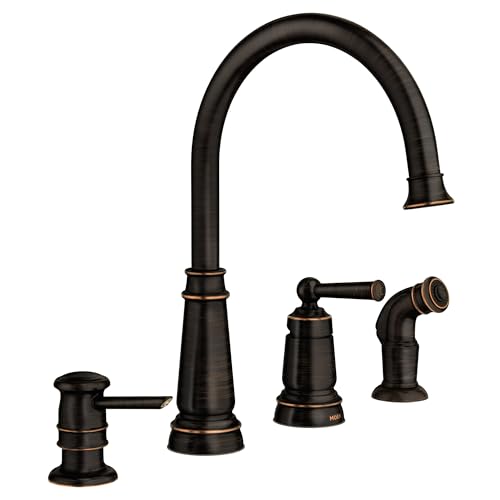
Single-handle faucets control temperature and flow with one lever, which is quicker to operate when your hands are full or messy from cooking. Two-handle designs separate hot and cold into their own controls, giving finer temperature adjustment but requiring both hands. Moen builds strong options in each category, so this choice usually comes down to your existing countertop holes and how you actually cook rather than one style outperforming the other.
Moen's Motion-Activated Touchless Technology
Moen's motion sensor technology, marketed under the MotionSense name, lets you start and stop water flow with a wave of your hand instead of touching the handle. It matters more than it sounds once you have tried it with raw chicken or bread dough on your fingers, and it is one of the clearest ways Moen's lineup differs from a standard manual faucet. If you want a wider view of how faucet technology varies across brands before narrowing down to Moen specifically, our kitchen faucets buying guide is a useful starting point.
How the Sensors Work
Touchless models use an infrared sensor built into the base of the spout, and some versions pair it with a second sensor lower on the body for more responsive detection at different heights. Wave your hand near the sensor and the valve opens; wave again and it shuts off, so you never have to touch a handle with messy hands. The handle still works normally for adjusting temperature, so touchless activation only replaces the on and off motion, not full manual control.
Living With a Touchless Faucet
Touchless faucets run on batteries housed in the cabinet below the sink, and some models pair that with an optional wired power adapter. Battery life typically lasts a year or more under normal household use, and most faucets give a low battery warning before shutting down. The sensor occasionally needs recalibrating if it starts triggering on its own or stops responding, a quick fix but worth knowing about before you commit to this style over a manual one.
Power Clean Spray Technology and the Reflex Docking System
Beyond basic spray and stream settings, two features show up across much of Moen's kitchen lineup and are worth understanding before you compare specific faucets: Power Clean spray technology and the Reflex retraction system.
Power Clean increases water pressure at the spray head without increasing overall water use, which noticeably speeds up rinsing stuck-on food from pots and baking sheets. It is a real upgrade over a standard single-pressure spray head if you regularly deal with cookware that needs more than a quick rinse.
The Reflex system controls how the spray head retracts back into its dock after use. Faucets built with Reflex pull the hose in smoothly and hold the spray head firmly in place instead of letting it sag or dangle over time, a common complaint with older or lower-quality pull-down faucets. If a model in Moen's lineup does not list Reflex, expect the retraction to feel noticeably looser after a year or two of regular use.
Finish Options and Everyday Durability
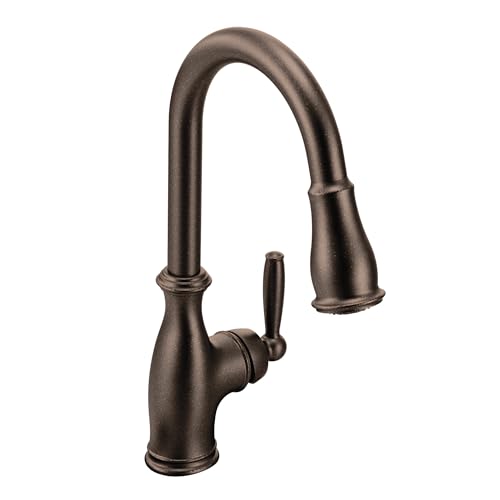
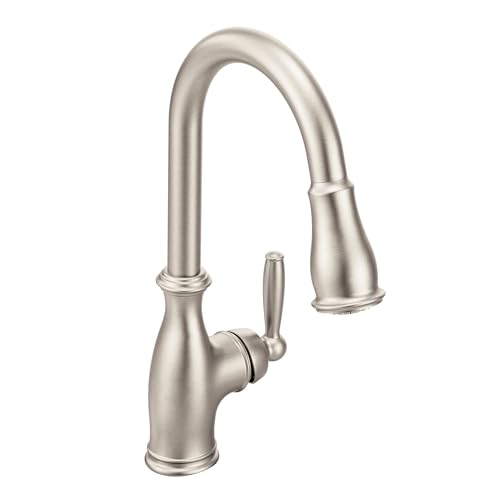
Moen sells its kitchen faucets in a range of finishes, from polished chrome and spot resist stainless to matte black, matte white, and warmer brushed gold and bronze tones. Spot resist finishes are treated specifically to hide fingerprints and water spots, which matters on a fixture you touch dozens of times a day.
Matte black and matte white finishes look sharp against most modern cabinetry, but they show hard water spots and fingerprints more readily than spot resist stainless, so plan on wiping them down more often if your water is hard. Brushed and warm-toned finishes tend to hide smudges better than polished ones while still adding more visual warmth than plain stainless. When you're weighing options for the best Moen kitchen faucet for your kitchen, finish durability ends up mattering as much as spray technology once the fixture has a few years of daily use on it. Finish and technology both add to the price, so if budget is your main filter before you settle on a specific look, a roundup like our kitchen faucets under $200 guide can help you see what's realistic first.
Mounting Holes and Installation Basics
Count the holes already drilled into your countertop or sink deck before you shop, since this narrows your options fast. Single-hole faucets give a clean, minimal look and are the simplest to install, while three-hole setups typically pair the faucet with a separate handle or soap dispenser filling the extra openings. Many single-hole Moen faucets ship with an escutcheon plate that lets them fit a three-hole sink as well, but confirm compatibility with your specific configuration before ordering.
Most Moen kitchen faucets are built for straightforward DIY installation with basic tools like an adjustable wrench and plumber's tape. If you're replacing an aging faucet, it is also a reasonable time to inspect what else sits under the sink, including a garbage disposal that has been running longer than it should.
Frequently Asked Questions
Is Moen a good brand for kitchen faucets?
Moen is generally well regarded for build quality, warranty coverage, and the range of technology across its lineup, from simple manual models to touchless options. Reliability varies somewhat by finish and feature set, but the brand's core cartridge and valve engineering has a solid reputation for holding up over years of daily use.
What is MotionSense on a Moen faucet?
MotionSense is Moen's motion sensor technology that turns water flow on and off when you wave your hand near the sensor, without needing to touch the handle. It is aimed at moments when your hands are full or covered in food, and the handle still functions normally for temperature control.
How long do Moen kitchen faucets last?
Most Moen kitchen faucets last well over a decade with normal use and occasional cleaning, especially models with ceramic disc cartridges that resist wear better than older rubber washer designs. Touchless components and batteries typically need attention sooner than the faucet body itself.
Do Moen touchless faucets need electricity?
They need power, but usually from batteries housed in the cabinet below the sink rather than a household electrical outlet. Some models offer an optional wired adapter, though battery operation is the standard setup for most touchless installations.
Is Power Clean worth it on a Moen faucet?
If you regularly deal with baked-on food, greasy pans, or produce that needs a strong rinse, Power Clean's added spray pressure makes a noticeable difference over a standard single-pressure spray head. If your sink mostly handles light rinsing, a standard spray setting will likely feel sufficient.
Can I install a Moen kitchen faucet myself?
Most manual models are straightforward for anyone comfortable with basic tools and a bit of patience under the sink. Touchless models add wiring for the sensor and battery pack, which is still manageable for most DIYers, though hiring a plumber is reasonable if your existing water lines look worn or corroded.
Making Your Decision
Picking the best Moen kitchen faucet for your kitchen comes down to matching spray style and handle design to how you actually use your sink, then layering in the technology and finish that fit your budget and maintenance habits. Prioritize touchless sensors and Power Clean spray if hands-free convenience and cleaning power matter most, or keep things simple with a manual single-handle model in a spot resist finish if low maintenance is the bigger priority. Either way, checking your mounting holes and sink clearance before you buy will save you a returned box and a second trip to the store.