Best Mechanical Pencil: What Actually Matters Before You Buy
Disclosure: We may earn a commission when you buy through links on this page, at no extra cost to you. As an Amazon Associate I earn from qualifying purchases. Learn more

The best mechanical pencil checklist: lead size, tip, grip, erasers and value, plus three picks for writers and students.
A good mechanical pencil never needs sharpening, keeps a consistent line and feels comfortable for hours of notes, sketches or math homework. A poor one breaks lead constantly, wobbles at the tip or has an eraser that smears more than it erases. With pencils ranging from about 30 cents each in bulk packs to around $30 for metal drafting tools, it helps to know what actually matters. This guide to the best mechanical pencil shares the checklist we use to judge them and three picks that pass it.
We cover our evaluation criteria, three picks, a quick buyer checklist, red flags, setup and care tips and answers to common questions. Every pencil in the table above is sold new on Amazon US.



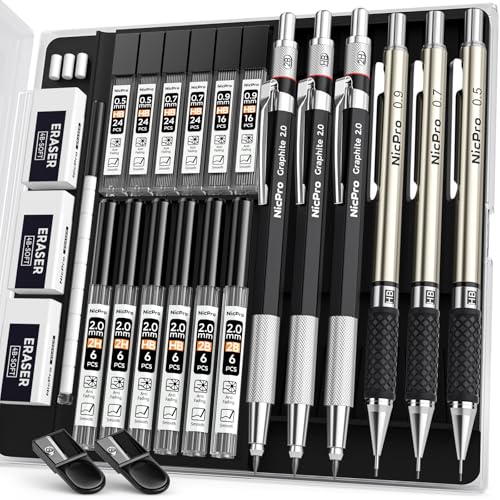


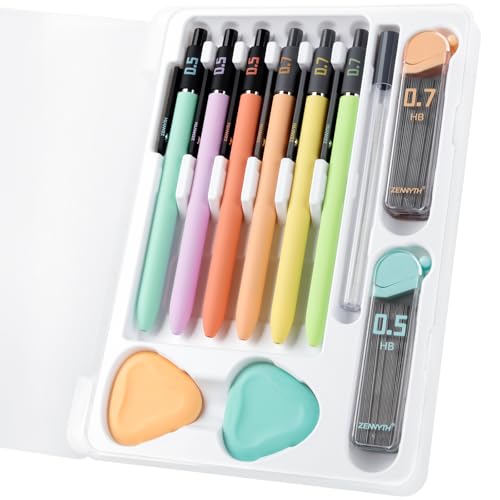
How We Evaluate Mechanical Pencils
We judge mechanical pencils on seven points: purpose, materials, durability, key features, price, size and ease of use. A pencil that writes cleanly, resists lead breakage and feels comfortable for its intended job passes; one that wobbles, jams or snaps lead fails regardless of price.
Finding the best mechanical pencil for you means balancing lead size, comfort and durability against price. The criteria below explain what good and poor look like for each point.
Purpose and Who It's For
Start with how the pencil will be used. Students taking notes and filling in answer sheets need dependable 0.7mm pencils in packs. Writers who want fine, crisp lines often prefer 0.5mm. Artists and drafters use 0.3mm for detail, 0.9mm and 2.0mm leads for shading and lead holders like the Koh-I-Noor 5.6mm for broad strokes.
Good: a lead size and design matched to the task. Poor: a fine 0.3mm lead for a heavy handed student, which snaps constantly.
Lead hardness also matters. HB is the everyday standard for writing. Softer grades like 2B and 4B produce darker lines for sketching, while harder grades like H and 2H make lighter, finer lines that suit technical drawing and smudge less.
A simple guide: 0.3mm for tiny handwriting and technical detail, 0.5mm for neat notes and fine lines, 0.7mm for everyday school and office use with fewer breaks, 0.9mm for bold writing and heavy hands, and 2.0mm or lead holders for sketching, shading and woodworking marks.
Materials and Build Quality
Plastic pencils are light and cheap, while metal bodies add weight, balance and durability. Metal grips can feel cold or slippery, so many pencils combine metal bodies with rubber or knurled grips. The tip sleeve, which guides the lead, should be firm and straight.
Good: a tip with no wobble and a clicker that advances lead consistently. Poor: loose tips, flimsy clips and clutches that slip.
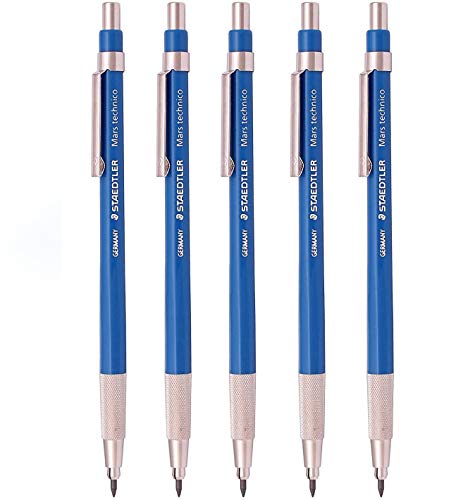
Drafting pencils, like the Pentel P200 series and Staedtler Mars Technico lead holder, use long, thin metal tips so you can see the edge of a ruler clearly. Everyday pencils use shorter tips that are less likely to bend in a pencil case.
Durability and Care
Durable pencils survive drops and backpacks. Retractable tips, like those on many BIC and Pentel pencils, protect the lead sleeve. Metal pencils last for years and are refillable indefinitely.
Good: refillable lead and erasers, with spare parts available. Poor: disposable designs that crack or jam after a few weeks.
Lead breakage is the most common frustration. Pencils with cushioned tips that retract slightly under pressure, or sleeves that slide back as the lead wears, reduce snapping for people who press hard. Choosing a slightly thicker lead, such as 0.7mm instead of 0.5mm, also helps.
Key Features That Matter
Features that make a real difference include lead rotation mechanisms, like Uni's Kuru Toga, which turn the lead slightly each time you lift the pencil so the point stays sharp and even. Cushioned or protective tips, like Pentel's, reduce breakage. Side lead advance, as on the Paper Mate Clearpoint, lets you feed lead without changing your grip.
Good: features that reduce breakage and keep lines consistent. Poor: gimmicks that add weight without helping.
Lead advance styles vary. Top clickers are the most common; side buttons let you advance without moving your hand; shake to advance mechanisms feed lead with a flick of the wrist. Choose the style that fits how you write and how often you pause to advance lead.
Price and Value
Bulk student pencils cost as little as around 30 cents each in a 40 pack, while premium pencils cost around $20 to $30. Value means cost per year, not sticker price; a $28 metal pencil used daily for years can cost less than repeatedly replacing broken cheap pencils.
Good: fair price for build and features. Poor: premium prices for plain plastic pencils.
Remember to budget for lead and eraser refills. A tube of quality lead costs a few dollars and lasts months, and better lead often reduces breakage more than switching pencils does.
Size and Design
Barrel thickness and weight affect comfort. Thin, light pencils suit quick notes, while thicker, heavier pencils reduce grip pressure during long sessions. Clips should hold securely without scratching pockets.
Good: balanced weight, a grip that fits your hand and a secure clip. Poor: top heavy designs that tire your hand.
Left handed writers often prefer smudge resistant leads and slimmer barrels that do not block the view of the line, while people with larger hands may find thicker grips like the Paper Mate Clearpoint more comfortable.
Ease of Use
Easy to use pencils have simple lead loading, reliable advance clicks and good erasers. Twist up erasers, like the Pentel Twist Erase and Paper Mate jumbo eraser, last longer than tiny cap erasers.
Good: lead loads in seconds and erasers lift graphite cleanly. Poor: fiddly refills and erasers that smudge.
For exams that use answer sheets, check the instructions; many still ask for a No. 2 or HB pencil, which most 0.7mm HB mechanical pencils satisfy.
3 Picks That Pass Our Checklist
Our picks are the Uni Kuru Toga Metal for most writers, the BIC Xtra Smooth 40 pack for value and the Paper Mate Clearpoint for students who erase often. Each writes cleanly and suits a clear group of users.
Best Overall: Uni Kuru Toga Metal
The Uni Kuru Toga Metal suits writers and students who want crisp, even lines every day, at around $28. It uses Uni's auto lead rotation system with a 0.5mm fine point, housed in an all metal body for weight and durability.
Two strengths stand out: lead rotation keeps the point evenly sharp, so lines stay consistent instead of turning wide and chiseled, and the metal body feels balanced and solid for long sessions. The limitation is price and weight, since it costs much more than plastic pencils and the metal body may feel heavy to some. Skip it if you lose pencils often or prefer a light plastic pencil.

Best Value: BIC Xtra Smooth Mechanical Pencil 40 Pack
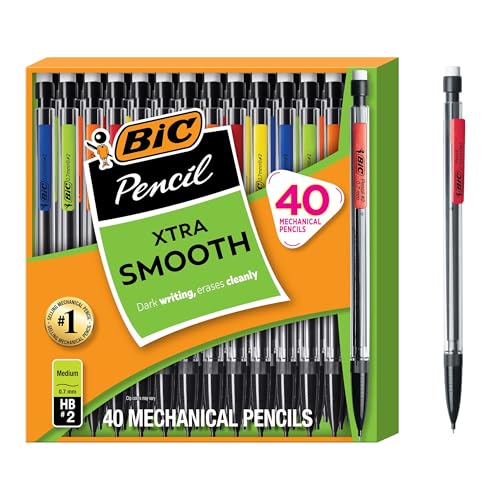
The BIC Xtra Smooth 40 pack is for families, classrooms and anyone who needs lots of dependable pencils, at around $13. Each pencil has a 0.7mm medium point, the standard for schoolwork and answer sheets, with smudge resistant lead that erases cleanly according to BIC.
Its strengths are price and practicality: 40 refillable, retractable pencils cover a whole school year, and the 0.7mm lead resists breakage better than finer leads. The trade off is build quality, since the plastic bodies and small erasers do not match premium pencils. Skip it if you want a pencil to keep for years.

Best for Students: Paper Mate Clearpoint
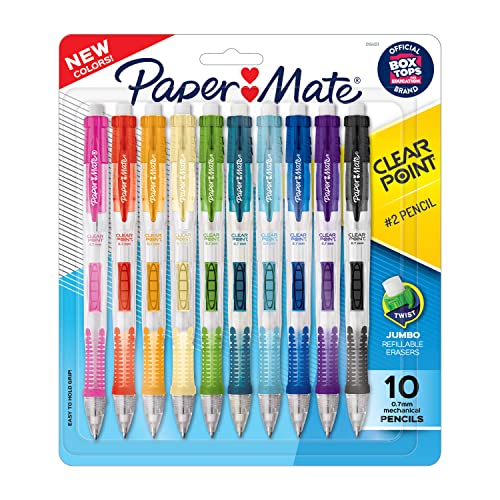
The Paper Mate Clearpoint suits students and note takers who erase a lot, at around $19 for a 10 count pack. It has a 0.7mm HB lead, side lead advance so you can feed lead without shifting your grip and a jumbo twist eraser for clean corrections.
The appeal is comfort and convenience: a soft grip provides control during long writing sessions, and the colorful barrels make pencils easy to identify. The limitation is size, since the thicker grip and side button design feel bulkier than slim drafting pencils. Skip it if you want a slim, minimalist pencil.

Quick Buyer Checklist
- Is the lead size right for your task (0.5mm fine, 0.7mm general, 0.9mm and up for shading)?
- Does the tip stay firm without wobbling?
- Is the grip comfortable for long sessions?
- Can you refill both lead and eraser?
- Does the tip retract or have protection for backpacks?
- Is the eraser large enough for your needs?
- Does the price match how long you plan to keep it?
If you can answer yes to most of these questions, the pencil is likely a good match. If not, adjust lead size or grip style before buying a pack.
Red Flags to Watch For
- Wobbly tips. Loose sleeves cause uneven lines and lead breakage.
- Unclear lead size. Listings that do not state lead diameter or hardness.
- Tiny, hard erasers. These smudge rather than erase and wear out quickly.
- Jamming clutches. Lead that slips or will not advance reliably.
- Very cheap metal look pencils. Painted plastic that chips and cracks.
Setup and Care Tips
Load only a few leads at a time to prevent jams, and use the lead size and hardness the pencil is designed for. HB is the standard; 2B is darker and softer, while H is harder and lighter. Retract the tip before storing the pencil in a bag. If lead jams, remove the eraser, push the jammed piece out with the cleaning pin many pencils include and reload.
Keep spare leads and erasers on hand, and store pencils away from heat, which can soften grips.
For artists, keep separate pencils loaded with different lead grades so you can switch between light sketching and dark shading without reloading. Label them with a small sticker or choose different barrel colors.
Mechanical Pencils: Your Questions Answered
What features matter most?
Lead size, tip stability, grip comfort and eraser quality matter most. A 0.5mm or 0.7mm lead suits most writing, a firm tip prevents wobble, a comfortable grip reduces fatigue and a good eraser keeps work neat. Lead rotation and breakage protection are worthwhile upgrades.
If you are unsure, start with a 0.7mm HB pencil with a comfortable grip and a large eraser, then try 0.5mm once you know you prefer finer lines.
How long does it last?
Quality mechanical pencils can last for years, since you refill lead and erasers instead of replacing the pencil. Metal pencils often last a decade or more with care. Inexpensive plastic pencils may last a school term or year before clips break or mechanisms wear.
Clips and erasers usually wear out first, and many brands sell replacement erasers that keep a favorite pencil going.
Is it a good gift?
Yes, a quality mechanical pencil makes a thoughtful, practical gift for students, artists, engineers and writers. Metal pencils like the Kuru Toga Metal or rOtring Rapid Pro feel premium. Pair a pencil with lead refills and erasers for a complete gift.
Is it worth paying more?
Paying more is worth it if you write or draw daily. Premium pencils offer better balance, steadier tips, lead rotation and metal bodies that last for years. If you lose pencils often or only need them occasionally, bulk packs like BIC offer better value.
A middle path is to buy one premium pencil for daily use and a bulk pack of inexpensive pencils for backups, exams and lending to classmates.
Wrapping Up
The best mechanical pencil matches your lead size, grip and how often you write. The Uni Kuru Toga Metal is our best overall pick for crisp, even lines, the BIC Xtra Smooth 40 pack offers unbeatable value and the Paper Mate Clearpoint suits students who erase often. Check tip stability, grip comfort and refillability before you buy.
For related guides, see the best tablets with pencil, the best laptops with pencil, the best sounding mechanical keyboards and the best mechanical watches. Then compare current prices in the product table above.