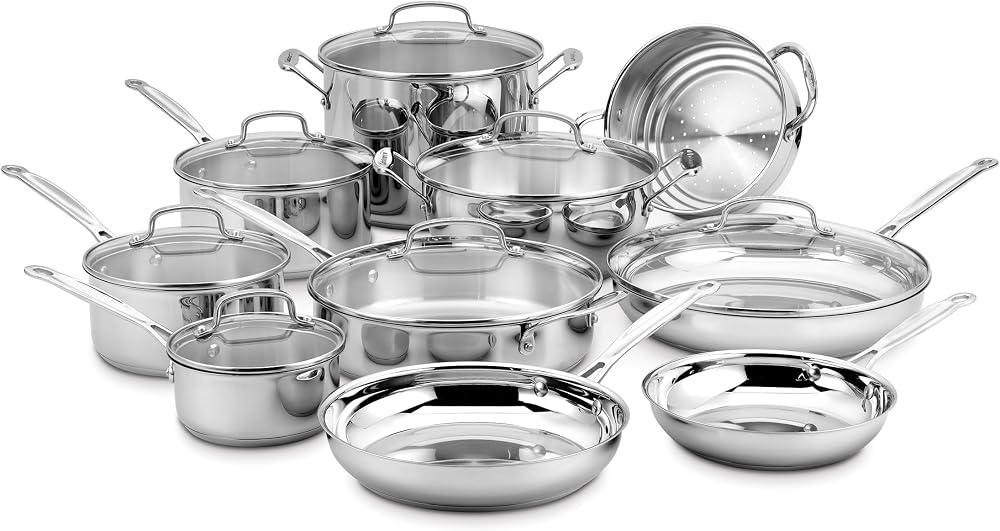
Best Material for Cookware Sets in 2026: Thermal Physics, Durability, and Buyer Guide
Disclosure: We may earn a commission when you buy through links on this page, at no extra cost to you. As an Amazon Associate I earn from qualifying purchases. Learn more

Not sure which is the best material for cookware sets? Compare stainless steel, nonstick, ceramic, cast iron, carbon steel and copper by heat, care and cost.
Every cookware material trades something for something else. Metals that conduct heat quickly, like copper and aluminum, react with acidic foods and scratch easily, while tough, nonreactive stainless steel conducts heat poorly on its own. Slick nonstick coatings release eggs effortlessly but wear out under high searing heat.
Choosing the best material for cookware sets means matching thermal conductivity, heat retention, and surface reactivity to the meals you cook most. Use the comparison table to see the picks across the major materials side by side.


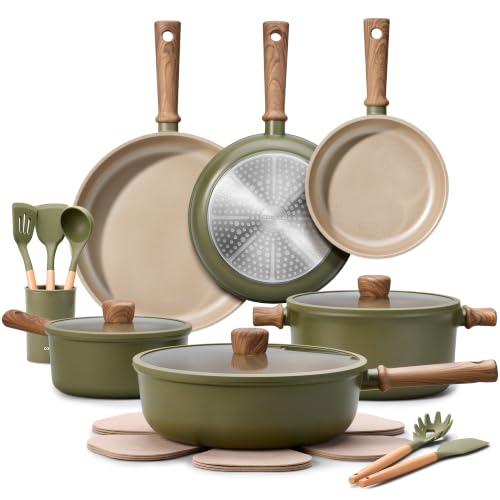


The 6 Core Cookware Materials Ranked by Culinary Role
No single material wins every category. Comparing thermal conductivity (measured in watts per meter Kelvin, W/mK), heat retention, maintenance, and lifespan shows why each material exists.
| Cookware Material | Heat Conduction | Searing & Oven Limit | Egg Release | Realistic Lifespan |
|---|---|---|---|---|
| Multi Ply Clad Stainless Steel | Fast & even (via Al/Cu core) | Excellent (500 to 600 F) | Needs preheat + oil | 25+ years |
| Hard Anodized PTFE Nonstick | Very fast across base | Low/Medium (400 to 500 F) | Effortless | 3 to 5 years |
| Sol Gel Ceramic Nonstick | Very fast (aluminum core) | Moderate (400 to 550 F) | Very good at first | 1.5 to 3 years |
| Enameled Cast Iron | Slow heat up; holds heat longest | Excellent (500 F) | Moderate (needs oil) | 20+ years |
| Seasoned Carbon Steel / Iron | Moderate; high retention | Extreme (600+ F) | Good once seasoned | Decades |
| Copper Core / Bimetal Copper | Instant (fastest metal) | Excellent (500 to 600 F) | Needs preheat + oil | 25+ years |
1. Multi Ply Clad Stainless Steel (Best All Around Foundation)
Clad stainless steel is the best all around choice for a full set because it is durable, nonreactive, and oven safe. Bare 18/10 (304) stainless resists acidic tomato sauces and wine and handles a hot broiler, but on its own it conducts heat poorly, at roughly 15 W/mK.
Makers solve this by bonding a central sheet of aluminum (about 237 W/mK) or copper (about 401 W/mK) between an 18/10 stainless interior and a magnetic 430 stainless exterior. That tri ply or five ply construction heats evenly up the sidewalls and leaves an uncoated cooking surface with no coating to peel.
2. Hard Anodized Aluminum PTFE Nonstick (Best for Effortless Release and Speed)
Hard anodized nonstick is the easiest material for eggs, pancakes, and delicate fish. Forged aluminum is treated in an electrolytic acid bath to grow a hardened oxide shell that is harder than standard aluminum, conducts heat quickly, and resists warping.
A multilayer PTFE interior then lets you cook with minimal oil and wipe the pan clean in seconds. The coating is a consumable surface, though, and typically wears out after three to five years.
3. Sol Gel Ceramic Coated Aluminum (Best PTFE Free Nonstick)
Ceramic coated aluminum suits cooks who want slide off convenience without PTFE. A silica derived mineral coating is applied to an aluminum base using a sol gel process, and most makers state their coatings are free of PFAS, PTFE, PFOA, lead, and cadmium, so look for that stated certification.
The trade-off is durability: the coating tends to lose its slickness sooner than PTFE, often within a few years. Our article on whether ceramic cookware is safe goes deeper on this.
4. Enameled and Bare Cast Iron (Best for Heat Retention and Slow Braising)
Cast iron is best when you want a steady, hot surface for searing and braising. It heats slowly and unevenly on a cold burner (about 55 W/mK), but its large thermal mass means a preheated skillet barely loses temperature when cold steaks go in, which builds a deep crust.
Enameled cast iron seals the iron beneath a nonreactive glass glaze, so you never season it and can simmer acidic tomato sauces for hours. Browse the best cast iron cookware brands if you want a full lineup.
5. Seasoned Carbon Steel (The Lighter Cast Iron Alternative)
Carbon steel behaves much like cast iron but is lighter and quicker to heat. It is stamped from a roughly 2.0 to 3.0mm sheet of iron with a small amount of carbon, builds the same polymerized oil seasoning, and tolerates 600+ degree heat. It often weighs a third or more less than cast iron, and its sloped walls suit stir fries, duck breasts, and crepes.
6. Copper and Copper Core (Best for Instant Temperature Control)
Copper gives the fastest response of any cookware metal. At about 401 W/mK, it heats almost instantly and cools soon after you lower the flame, which helps with delicate hollandaise, caramel, and custards.
Modern copper core sets wrap an inner copper sheet in stainless steel, so you get much of copper's speed with induction compatibility and no polishing of the exterior.
Who Should Choose Which Cookware Material?
Serious Home Cooks Who Sear, Deglaze, and Roast
Tri ply or five ply clad 18/10 stainless steel suits cooks who brown meat, build pan sauces, and move pans into a hot oven. Look for walls around 2.6 to 3.0mm thick. Coated nonstick pans prevent proper fond from forming and do not suit high heat deglazing or broiling. A dedicated stainless cookware set is the natural fit here.
Busy Families Cooking Quick Weeknight Breakfasts and Stir Fries
Hard anodized PTFE or ceramic nonstick suits households that value fast heat up, low oil cooking, and quick cleanup. Choose a set with a bonded stainless base plate if you have an induction stove. Treat coated pans as medium heat tools and wash them by hand to extend their life.
The Smartest Setup: The 80/20 Hybrid Kitchen
Many experienced cooks mix materials rather than relying on one. Buy an 8 to 10 piece tri ply stainless set as the permanent foundation (stockpot, saucepans, saute pan, and searing skillets). Then add one 10 or 12 inch nonstick skillet for eggs and one 5.5 quart enameled cast iron Dutch oven for weekend braises and bread.
Key Questions to Ask Before Picking Your Material
1. What Type of Stovetop Do You Have?
Your stovetop decides which materials will work at all. On an induction range, every piece needs a magnetic iron or 430 stainless base; pure aluminum, unlined copper, and glass will not heat. Our guide to induction cookware lists compatible options.
On a smooth glass top, avoid rough unmachined cast iron that can scratch when slid, and choose flat, thick bases around 3.0mm or more that resist warping. The best material for ceramic top ranges is covered in its own article.
2. Do You Cook Lots of Acidic Foods?
If you simmer tomatoes, wine, or lemon often, pick a nonreactive surface. Acidic ingredients can react with uncoated aluminum, unlined copper, and bare cast iron or carbon steel, stripping seasoning and adding a metallic taste. For marinara, chili, and wine reductions, use 18/10 stainless, enameled cast iron, or intact nonstick.
3. Do You Insist on Using the Dishwasher?
If you will not hand wash, clad stainless steel is the safest choice. Harsh dishwasher detergents can dull anodized aluminum, damage nonstick coatings, and rust bare iron. Choose stainless with rolled, sealed rims so the inner aluminum edge is not exposed to detergent.
Common Mistakes When Choosing Cookware Materials
- Spending heavily on a full coated nonstick set expecting 20 years: Nonstick is a consumable surface that wears out in a few years. Spend more on permanent uncoated materials like clad stainless, copper core, or enameled cast iron, and buy nonstick skillets open stock.
- Buying thin single ply stainless without an aluminum core: Unclad stainless conducts heat poorly and scorches soup at the base. Verify tri ply cladding or a thick impact bonded aluminum disc base.
- Using nonstick for high heat steak searing: Pushing a coated pan past about 500 degrees Fahrenheit damages the coating. Use stainless, cast iron, or carbon steel for hard searing.
- Buying heavy cast iron despite wrist pain: A full five quart cast iron Dutch oven can weigh close to twenty pounds when filled with stew. If weight is a concern, look at a lightweight cookware set in clad stainless or hard anodized aluminum.
- Assuming "granite" or "titanium" sets are solid stone or metal: These are usually mineral reinforced nonstick coatings over an aluminum body, so judge them as coated nonstick pans.
Material Care Cheat Sheet to Maximize Lifespan
- Clad Stainless Steel: Preheat dry over medium heat for about 2 minutes before adding oil, add salt after pasta water boils, and remove rainbow heat tint with an oxalic acid cleanser such as Bar Keepers Friend.
- PTFE and Ceramic Nonstick: Cook on low to medium heat with liquid oil or butter rather than aerosol spray, use silicone or wooden utensils, hand wash with a soft sponge once cool, and separate stacked pans with felt protectors.
- Enameled Cast Iron: Warm gradually on medium low before raising heat, avoid banging metal on the rim, and soak stuck food in warm water with baking soda instead of using steel wool.
- Bare Cast Iron and Carbon Steel: Hand wash with warm water and a brush or chainmail scrubber, dry immediately on a warm burner, and wipe a thin film of high smoke point oil inside before storing.
Frequently Asked Questions
What is the single best material for a complete cookware set?
Fully clad tri ply or five ply 18/10 stainless steel with an aluminum core is the best all around material for a full set. It heats evenly across the base and walls, works on every stovetop including induction, handles hot ovens and broilers, and does not react with acidic foods. With no coating to peel, it can last for decades.
Is hard anodized aluminum better than stainless steel?
Neither is strictly better, because they excel at different jobs. Hard anodized nonstick is better for low oil eggs, pancakes, and delicate fish, with easy hand washing at low to medium heat. Clad stainless is better for high heat searing, pan sauces, broiling, and long term durability.
What is the difference between tri ply and 5 ply stainless steel cookware?
Tri ply bonds one aluminum core between two stainless layers, while five ply alternates five layers of stainless and aluminum. Tri ply is lighter and heats quickly. Five ply is usually heavier and slower to heat, but it retains heat well and evens out hot spots on uneven burners.
Why do chefs use carbon steel pans instead of cast iron?
Chefs often prefer carbon steel because it is lighter and smoother than cast iron while still taking a nonstick seasoning. It is stamped from rolled sheet metal rather than sand cast, and its flared sidewalls make it easy to toss vegetables one handed. It still needs the same seasoning care as cast iron.
Are copper cookware sets worth the high price?
For most cooks, tri ply stainless with an aluminum core gives enough responsiveness at a much lower cost. Copper core or bimetal copper is mainly worth it for passionate sauce makers and pastry cooks who want instant temperature changes.
Final Thoughts
Choosing the best material for cookware sets comes down to matching heat behavior to how you cook and clean. If you want a long lasting set that sears, simmers, and roasts on any stove including induction, choose clad 18/10 stainless steel and add one inexpensive nonstick egg skillet.
If quick, low oil weeknight cooking and fast cleanup matter most, pick a hard anodized PTFE or ceramic nonstick set and accept that it will need replacing sooner. Compare the picks in the table to build the lineup that fits your kitchen.