Best Granite Cookware Sets for 2026: Die Cast Stone Coatings and Buyer Guide
Disclosure: We may earn a commission when you buy through links on this page, at no extra cost to you. As an Amazon Associate I earn from qualifying purchases. Learn more

Want a speckled, easy-release nonstick set that won't cost a fortune? Compare the best granite cookware sets by body metal, coating, induction base and handles.
Home cooks who want a speckled, easy-release nonstick set without a heavy price tag often end up shopping for "granite," "granitium," or "stone" cookware. Here is the key fact first: modern granite cookware is not carved from a block of quarry rock, which would be far too heavy and could crack on a burner. The best granite cookware sets bond a mineral-reinforced speckled nonstick coating over a die cast or forged aluminum core, or fuse speckled porcelain enamel over steel.
That construction gives you quick, even heating, a light pan and a textured surface that releases eggs, crepes and fish with little oil.


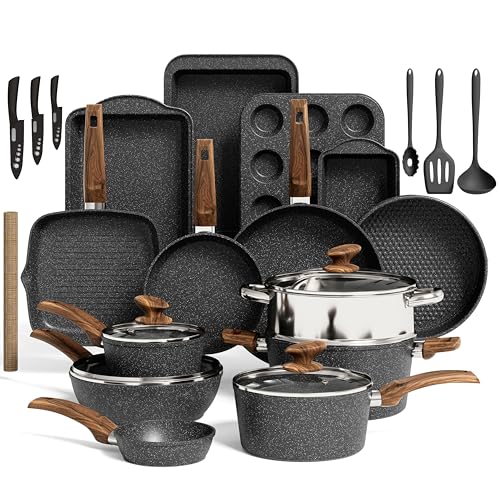
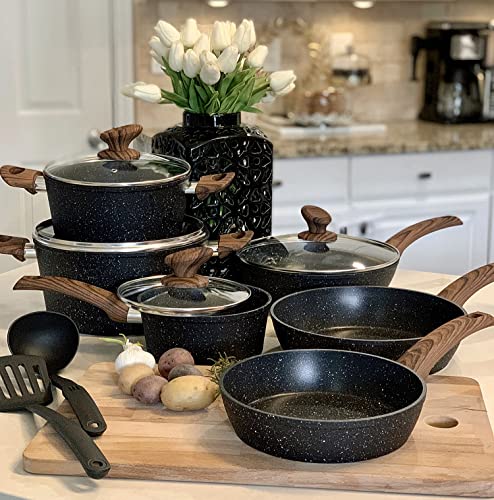
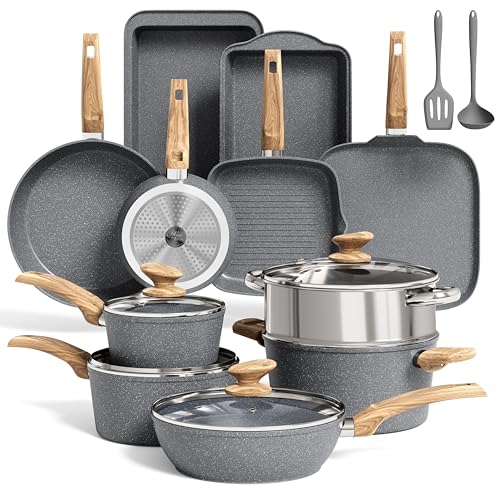
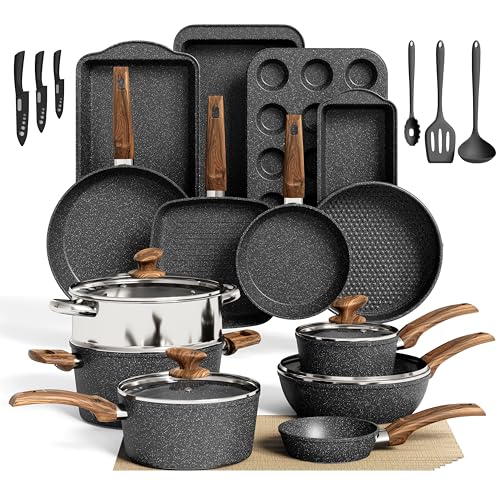


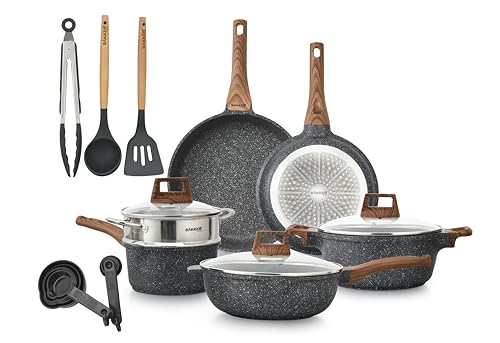


The Three Types of "Granite" Cookware Explained
"Granite" describes a speckled look and mineral reinforcement, not a single industry standard, so check which of three constructions a set really uses. The table summarizes them.
| Granite Construction Type | Core Body Metal | Interior Surface | Typical Oven Limit | Best Use |
|---|---|---|---|---|
| Mineral Reinforced PTFE (Granitium) | Forged or die cast aluminum | Multi layer PFOA free PTFE with stone particles | 350 to 500 degrees F | Long-lasting egg and low oil release |
| Speckled Sol Gel Ceramic Stone | Die cast aluminum, often with induction base | PTFE free silica mineral coating | 350 to 450 degrees F | Cooks who want no fluoropolymers |
| Classic Enamelware (Graniteware) | Stamped steel core | Kiln fused speckled porcelain glass | 500+ degrees F | Canning, stockpots, roasting, camping |
1. Mineral Reinforced PTFE Nonstick (Granitium / Stone PTFE)
This is a PTFE nonstick coating with mineral particles in the layers beneath the surface. A cold forged or die cast aluminum pan gets a hard primer containing microscopic mineral, quartz or titanium particles, followed by speckled PFOA free PTFE layers.
The particles create a micro textured surface that helps shield the slick layer from utensil friction. Makers claim it outlasts a flat single layer budget coating, though results still depend on heat and care.
2. Speckled Sol Gel Ceramic Nonstick (PTFE Free Granite)
This type uses a silica ceramic coating derived from sand instead of a fluoropolymer. Many white, cream and gray speckled sets use it, paired with die cast aluminum walls and wood-look Bakelite or removable handles. It cleans up easily over low to medium heat.
3. Traditional Porcelain Enameled Steel ("Graniteware")
Graniteware is porcelain glass fused onto a thin steel body in a very hot kiln. It is not slick enough for dry eggs, but it is a tough, high heat workhorse for turkey roasters, canning kettles, lobster pots and campfire stews. Chips in the enamel can expose bare steel, so retire a pot once the glaze flakes into food.
Who Should Buy Which Granite Cookware Set?
Everyday Families Wanting Easy Low Oil Cooking
A 10 to 12 piece die cast aluminum set suits weeknight eggs, pancakes, stir fries and pasta sauces. Look for a base around 4.0 to 4.5 millimeters thick, in either mineral reinforced PTFE or ceramic.
Die cast aluminum holds heat better than thin stamped sheets, so sauces are less likely to scorch in a ring over the burner. A set with a 1.5 quart saucepan, a 3 quart sauté pan, an 8 inch and 10 inch skillet and a stockpot covers most daily meals.
Induction Range and Glass Top Electric Owners
A granite set only works on induction if a magnetic stainless steel plate is bonded into the base, because aluminum is nonmagnetic. Choose a full width disc rather than a small center ring so even a small saucepan triggers the pan sensor. Our roundup of induction cookware sets lists other options built for these cooktops.
Small Apartments and Oven to Table Bakers
If you bake frittatas or finish steaks in the oven, avoid sets with permanently attached plastic-style handles. Choose riveted stainless handles (many rated around 450 to 500 degrees F) or detachable handles that unclip before the pan goes in. Detachable sets also nest into a single cabinet stack, which helps small kitchens.
First Kitchens and Dorm or Gift Buyers
A first-time buyer is usually best served by a compact 8 to 10 piece set with an 8 inch skillet, a 10 inch skillet, two saucepans with lids and a stockpot. That covers breakfast, pasta and soup without leaving half the pieces unused. Gift buyers should also check that the handles match the recipient's cooktop and oven habits, since a set that cannot go in the oven limits what a new cook can make.
Key Features to Compare Before Buying a Granite Set
Die Cast vs Cold Forged vs Thin Stamped Aluminum
Thickness is the first thing to check. Die cast aluminum is poured into a mold, giving a rigid pan with a base of roughly 4.0 to 5.0 mm and a sturdy rim that resists warping on a flat glass stove.
Cold forged aluminum is pressed under high tonnage, thickening the base while keeping walls lighter for tossing food. Avoid 2.0 mm stamped aluminum sets, which tend to bow in the middle after repeated hot cooks.
Handle Material: Wood Look Bakelite vs Riveted Metal vs Detachable
Bakelite (phenolic resin) handles feel soft and stay cool on the stovetop, but they generally should not go in an oven above about 300 to 350 degrees F. If you move skillets into the oven for cornbread or steaks, pick riveted stainless handles or detachable ones. Always confirm the maker's stated oven limit for the handle and the lid.
Screw Attached vs Rivetless Interior
Pans with exterior screw lug handles have a smooth interior with no rivet heads, so batter and cheese cannot collect around them. The tradeoff is that the screw can loosen, so check it with a Phillips screwdriver every few months.
Lid Design: Tempered Glass With Silicone Rims vs All Metal
Most granite sets include tempered glass lids with a stainless or silicone rim. A silicone rim cushions the lid against the coated pot edge and reduces scuffs, and a steam vent hole helps stop pasta water from boiling over.
Weight, Balance and Pan Sizes
Weight tells you a lot about construction. A 10 inch granite skillet usually weighs somewhere between two and three pounds, which is easy to flip but heavy enough to sit flat. If the handle feels like it tips an empty pan forward, the balance is poor and a full pan will be awkward to lift.
Also check the listed diameters, because manufacturers measure either the rim or the cooking floor. A skillet sold as 10 inches may offer only an 8 inch flat cooking surface, which matters when you are fitting two chicken thighs or a four-egg scramble.
What a 12 Piece Set Usually Includes
Piece counts often count lids as separate items, so a 12 piece set may hold only six or seven actual pans. A typical list is two skillets, two saucepans with lids, a stockpot with lid, a sauté pan with lid and a couple of utensils. Read the contents line by line so you are not paying for spatulas you will replace anyway.
Price Tiers: What Your Budget Gets You
Entry Level 8 to 10 Piece Speckled Sets (Under Around $90)
Under around $90, expect eight to ten pieces of forged or stamped aluminum with Bakelite handles and vented glass lids. They heat quickly, weigh little and wipe clean easily.
Midrange Die Cast Induction and Detachable Handle Sets (Around $90 to $190)
Spending around $90 to $190 typically brings thicker die cast bodies, full width induction bases, multi layer mineral coatings and 12 to 15 piece detachable handle sets that nest tightly.
European Forged Stone and Hybrid Collections (Around $190 to $350+)
Between around $190 and $350 or more, expect forged construction, riveted stay cool stainless handles with higher oven ratings, and heavier warp resistant bodies. At this level it is worth weighing a granite set against premium multi-ply or enameled cast iron lines, since a nonstick coating wears out however well the pan is built.
Common Mistakes That Ruin Granite Nonstick Pans
- Putting Bakelite handled pans into a hot oven: The handles can blister and crack above roughly 300 to 350 degrees F. Keep plastic handled pans on the stovetop, or buy riveted or detachable handles for baking.
- Preheating an empty skillet on high: Aluminum conducts heat quickly, so medium on the dial acts like high in a thin steel pan. Overheating an empty pan breaks down both PTFE and ceramic coatings.
- Using aerosol cooking sprays: Propellant sprays leave a sticky residue that builds on textured stone surfaces and dulls release. Use a half teaspoon of olive oil, avocado oil or butter instead.
- Running pans through the dishwasher: Strong detergent can darken exposed aluminum bottoms and dull soft touch handles. Hand wash with a soft sponge.
- Scraping with sharp metal tools: Mineral reinforced coatings tolerate a rounded spoon better than cheap nonstick, but silicone, wood or nylon utensils will extend the life of the surface.
- Cooking acidic sauces for hours: Long simmers of tomato or wine sauces can dull some ceramic coatings over time. Use a stainless or enameled pot for all-day sauces and keep the granite pans for quicker dishes.
Care and Cleaning Tips to Keep Stone Coatings Slick
Before the first meal, wash the pan in warm soapy water, dry it fully, and wipe a few drops of neutral oil over the interior with a paper towel. A short pass over low heat helps condition the surface.
After cooking, let the pan cool on the burner grate for about five minutes before rinsing, so cold water never shocks the aluminum base. If light interiors pick up brown marks from garlic or soy glazes, simmer a half inch of water with a tablespoon of baking soda for a couple of minutes, let it cool, and wipe gently with a soft cloth.
Store pans with a paper towel or felt protector between them if they stack, since rubbing coated surfaces together causes scratches. If a coating is deeply scratched or flaking, replace the pan rather than keep cooking in it.
Every few weeks, give the pans a closer look under good light. Check the cooking floor for dull patches where eggs have started to stick, and the rim for chips. A pan that needs more and more oil to release food is telling you the coating is near the end of its life.
Frequently Asked Questions
Is granite cookware safe and non toxic?
Granite cookware from reputable brands is generally sold as free of PFOA, lead and cadmium, but look for the maker's stated certification. If you also want to avoid PTFE, choose a ceramic granite set. If you prefer longer abrasion resistance, a PFOA free mineral reinforced PTFE set used at medium heat or below is the usual choice.
Is granite cookware made of real stone?
No, the body is die cast or forged aluminum (or steel for traditional enamelware), which is why a pan weighs only a few pounds. The "granite" layer is a speckled nonstick coating with mineral particles for added surface hardness.
Does granite cookware work on induction stoves?
Only if the set has a magnetic base. Many die cast sets bond a stainless steel disc to the bottom, making them usable on induction, gas, electric coil and glass top stoves. Check for "induction compatible" on the spec sheet and see whether a kitchen magnet sticks to the flat bottom.
How long does a granite nonstick cookware set last?
It depends on heat and care, but a mineral reinforced PTFE set often lasts a few years and ceramic granite sets commonly lose slickness sooner. Low to medium heat, liquid oil, wood or silicone utensils and hand washing all extend the life of either type.
Why did the bottom of my granite pan leave gray marks after the dishwasher?
Dishwasher detergent oxidizes bare aluminum, leaving a gray chalky film. Many granite pans have an exposed aluminum base for heat transfer. Washing by hand prevents the problem.
Final Thoughts
The best granite cookware sets have a thick 4.0 mm or more die cast or cold forged aluminum body, a full width magnetic base if you cook on induction, and handles that suit how you use the oven. A 10 to 12 piece set is a solid fit for weeknight eggs and sauces over low to medium heat. Compare the picks in the table above, check the stated oven limits and coating type, and plan to replace the pans once the surface wears out.