Best Kitchen Utensil Sets: A Complete Buying Guide
Disclosure: We may earn a commission when you buy through links on this page, at no extra cost to you. As an Amazon Associate I earn from qualifying purchases. Learn more
A drawer full of mismatched spoons and melted spatulas is usually the reason someone starts shopping for a matched set. The best kitchen utensil sets solve two problems at once: they cover the tools you reach for every single day, and they do it in materials that actually hold up to real cooking, not just years sitting on a shelf. Before you add one to your cart, it helps to understand what separates a set that lasts a decade from one that cracks, stains, or melts against a hot pan within months. This guide walks through material choices, piece counts, storage, cleaning habits, and the small details that make a set feel effortless instead of cluttered, so you can match your pick to how your kitchen actually works.




Choosing the Right Material for a Set That Lasts
Material is the single biggest factor in how a utensil set performs, and it comes down to three common options: silicone, wood, and nylon. Each behaves differently around heat, and each interacts differently with the coatings on your cookware.
Silicone
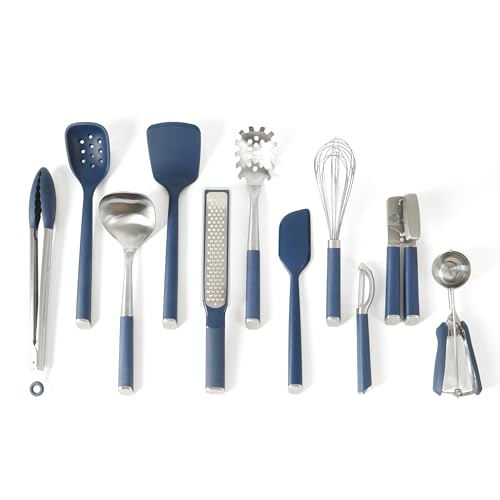
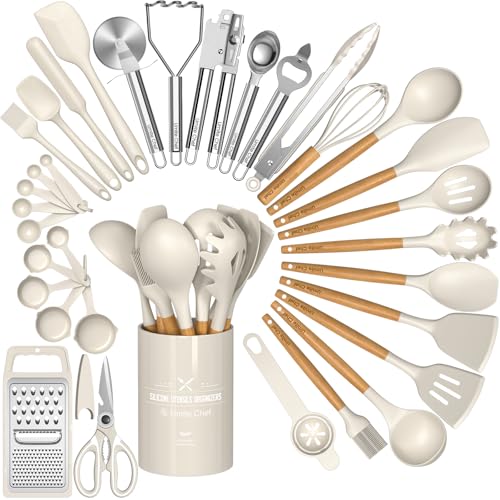
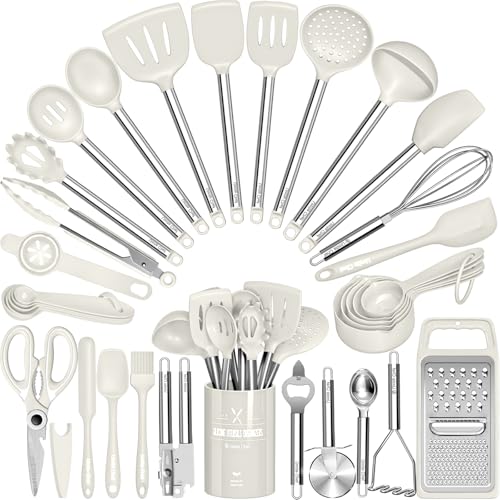
Food-grade silicone typically withstands heat in the 450 to 600 degree Fahrenheit range without melting, warping, or releasing an odor. It flexes slightly against a pan surface, which makes it one of the safer choices if you're pairing tools with a nonstick cookware set. Quality silicone tools can last five to ten years with normal use, and if you want to compare all-silicone lineups more closely, this rundown of silicone-only sets covers handle styles and color options in more depth.
Wood
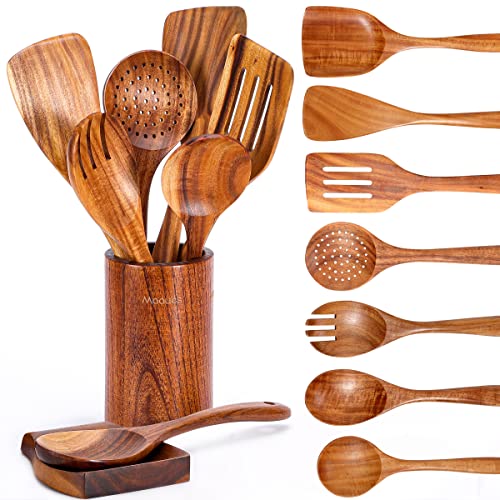
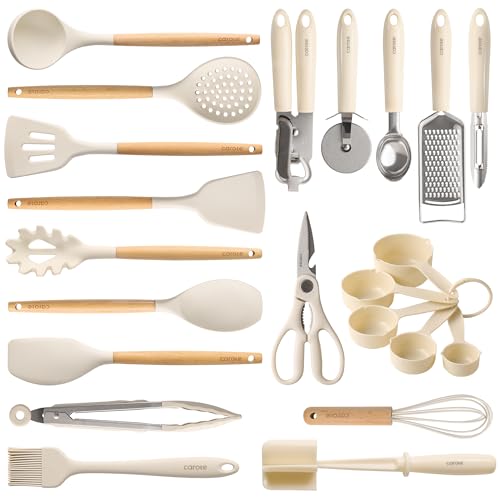
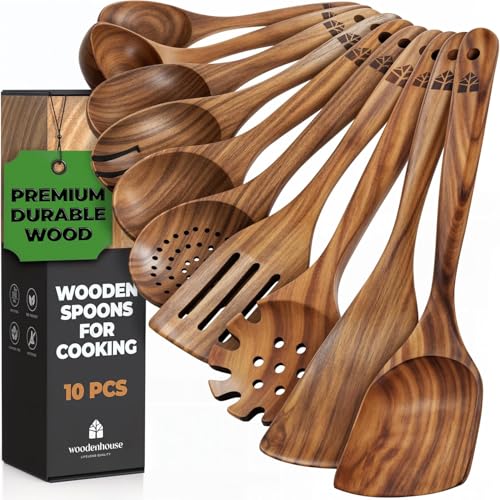
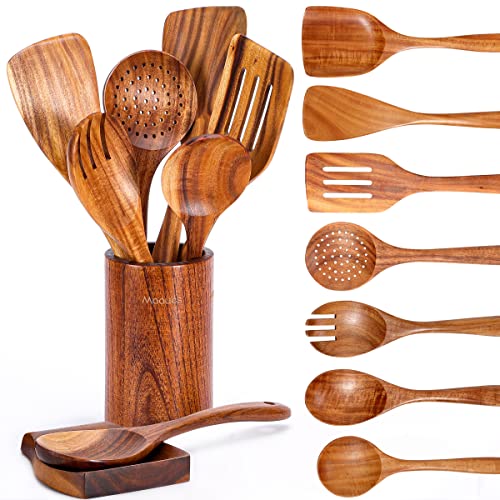
Wood, usually bamboo, olive wood, or beechwood, has been the go-to for stovetop cooking for generations because it simply cannot scratch a pan or pot, cast iron included. It handles high, direct heat better than most plastics. The tradeoff is that wood needs occasional oiling and should never sit in standing water.
Nylon
Nylon tools are lighter and usually the least expensive of the three, but their heat tolerance tops out closer to 400 degrees Fahrenheit. Set one down near a hot burner or rest it against a pan edge and it can soften or develop a permanent warp. Most nylon utensils are best replaced every year or two.
How Many Pieces You Actually Need
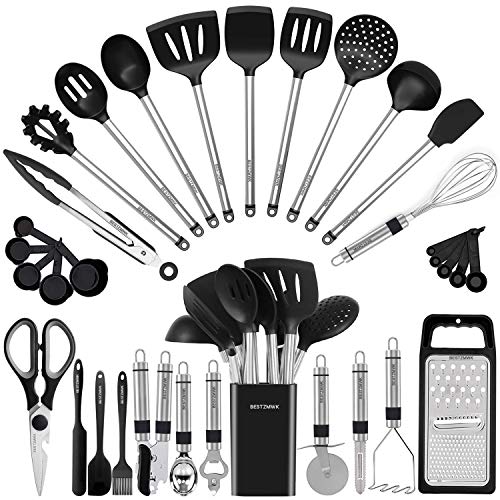
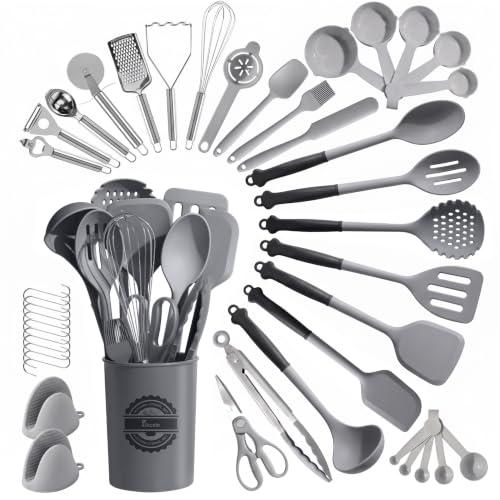
Sets range from compact five-piece bundles to sprawling collections with thirty or more gadgets, and bigger is not automatically better. A handful of tools cover most cooking: a solid turner or spatula, a slotted spoon, tongs, a ladle, and a spoon rest or holder to keep counters clean. Everything past that is convenience, not necessity.
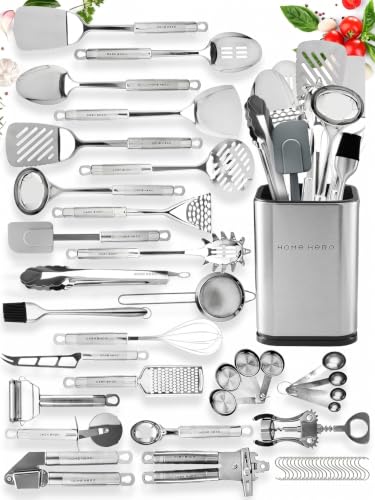
The best kitchen utensil sets keep the essentials tight rather than padding the box with rarely used gadgets. Specialty pieces like pasta servers, skimmers, and mini spatulas earn their place if you cook those dishes often. If not, they tend to sit unused and take up drawer space you could give to tools you reach for daily. Before buying a large set, think about the five tools already in your rotation and check whether the new set actually improves on them, rather than just duplicating what you own in a different color.
Keeping a Utensil Set Organized in a Small Kitchen
How you store a set affects how often you actually use it. A countertop crock or caddy keeps everything upright and within reach of the stove, which suits cooks who use the same handful of tools daily. It does take up counter space, so it works best near, rather than directly beside, the burners.
A wall-mounted rail with hooks frees up both counter and drawer space and looks tidy in a small kitchen, though it only works well for utensils with a hole or loop in the handle. A drawer organizer with individual slots is the quietest option and protects tool heads from getting scratched or tangled with other cooking gear.
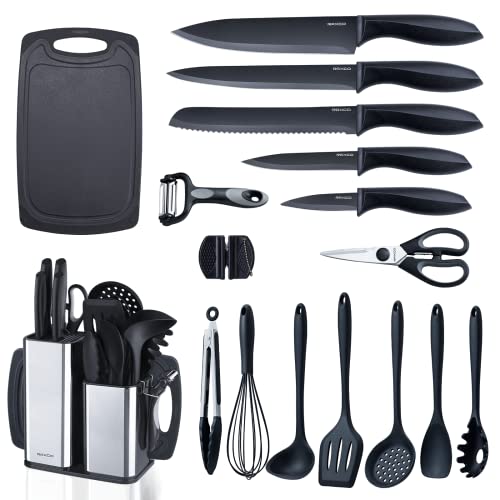
If you are furnishing a small kitchen, look for a set explicitly sold with a caddy or rack rather than buying storage separately. A holder built to fit the utensils properly saves you from a drawer that never quite closes.
Cleaning Habits and How Long a Set Holds Up
Dishwasher-safe silicone and nylon tools save time, but heat cycles in a dishwasher run hotter than most stovetop use, so lower-quality plastics can warp faster than the heat rating on the packaging suggests. Hand washing extends the life of almost any utensil, silicone included.
Wood is the one material that should never go in a dishwasher. Prolonged soaking and heat dry the wood out, which causes cracks where bacteria can hide. A quick hand wash and air dry, with an occasional wipe of food-safe mineral oil, keeps wooden tools smooth and crack-free for years.
Staining and odor retention vary by material too. Silicone can pick up a red or orange tint from tomato sauce and turmeric-heavy dishes, though it is usually cosmetic rather than a sign the tool is failing. Wood absorbs odors more readily than silicone or nylon, so keep one wooden spoon dedicated to strong-smelling dishes like garlic or curry if that bothers you.
Matching a Set to the Way You Actually Cook
An everyday cooking set and a baking-focused set overlap less than people expect. If most of your cooking happens on the stovetop, prioritize a sturdy turner, tongs, and a ladle over anything else. If you bake regularly, a silicone spatula built for scraping bowls clean and a set that includes a whisk will matter more than a slotted spoon you rarely touch.
For anyone shopping for a housewarming or wedding gift, a mid-sized set in a single color with a matching holder tends to read as more considered than an oversized bundle of mismatched extras. Recipients rarely mind fewer pieces if the ones included are well made and easy to store, which is worth remembering if you are choosing a set for someone else's kitchen rather than your own.
Frequently Asked Questions
What is the safest material for a kitchen utensil set?
Food-grade silicone, untreated wood, and stainless steel are generally considered the safest choices. All three hold up to heat without leaching odors or breaking down the way lower-quality nylon can over time and repeated dishwasher cycles.
How many utensils should I buy in a set?
Most home cooks do fine with five to twelve pieces covering a turner, spoon, slotted spoon, tongs, and ladle. Larger sets add convenience for specialty cooking but often include pieces that go unused.
Can I put my utensil set in the dishwasher?
Silicone and nylon tools are usually dishwasher safe, though repeated heat cycles can shorten their lifespan compared with hand washing. Wooden utensils should always be washed by hand and dried immediately.
Do silicone utensils scratch nonstick pans?
No. Silicone is soft enough to flex against a nonstick or ceramic surface without scratching it, which is why it is one of the most recommended materials for that type of cookware.
How often should I replace kitchen utensils?
Nylon tools typically need replacing every one to two years, while quality silicone and wood can last five to ten years or longer with proper care. Replace anything cracked, warped, or with a lingering odor.
Is wood or silicone better for cast iron cooking?
Wood is generally the better match for cast iron because it withstands high, direct heat and cannot scratch the seasoning. Silicone works well too, but check that it is rated for high-heat use first.
What size utensil set is right for a small kitchen?
A compact five to nine-piece set paired with a wall rack or drawer organizer usually works best in a small kitchen. It keeps counters clear while still covering the tools used most often.
Building a Utensil Drawer That Works for You
Whether you land on a five-piece silicone bundle or a mixed wood-and-steel collection, the best kitchen utensil sets are simply the ones matched to how you cook, not the ones with the most pieces in the box. Pay attention to material, heat tolerance, and how the pieces will actually fit into your storage before anything else. Get those details right and the rest of the decision becomes straightforward.