Best Kamado Grill (2026 Buying Guide)
Disclosure: We may earn a commission when you buy through links on this page, at no extra cost to you. As an Amazon Associate I earn from qualifying purchases. Learn more

A kamado grill earns its cult following by doing three things a standard kettle grill can't match at once: locking in moisture through thick ceramic walls, holding rock-steady low temperatures for hours-long smokes, and swinging up to searing-hot temperatures for a quick steak. That versatility is exactly why kamado owners often stop using their old grill entirely once they've cooked on one.
The tradeoff is cost and weight. Kamados run noticeably more expensive than a comparable kettle grill and weigh far more due to the ceramic construction. This guide covers what actually matters when picking one, plus a few standout picks worth a closer look.
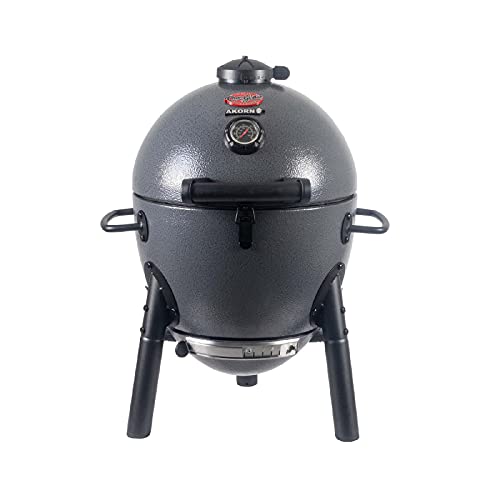
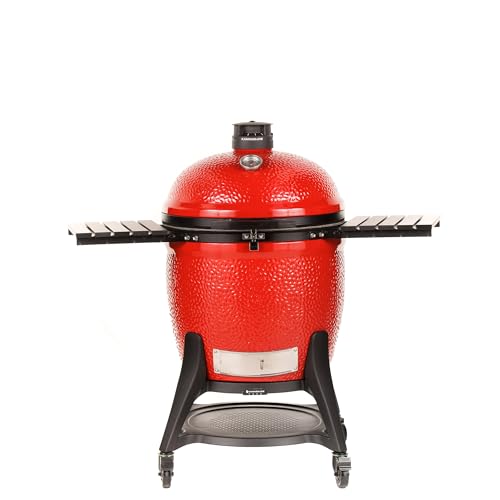
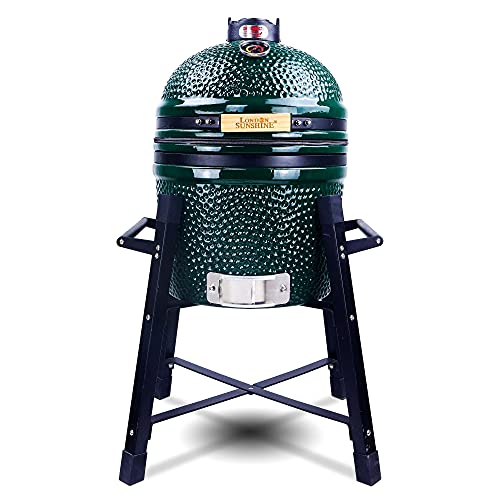
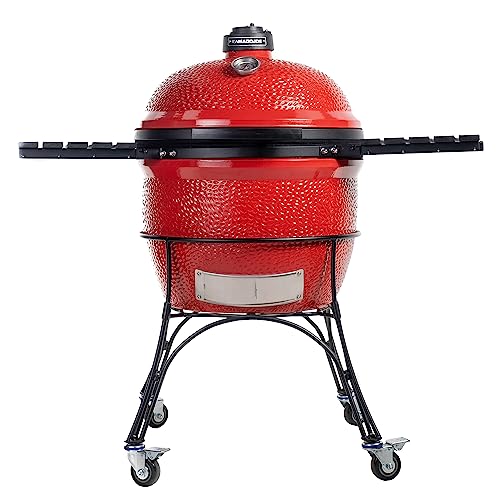
Ceramic vs. Steel Construction
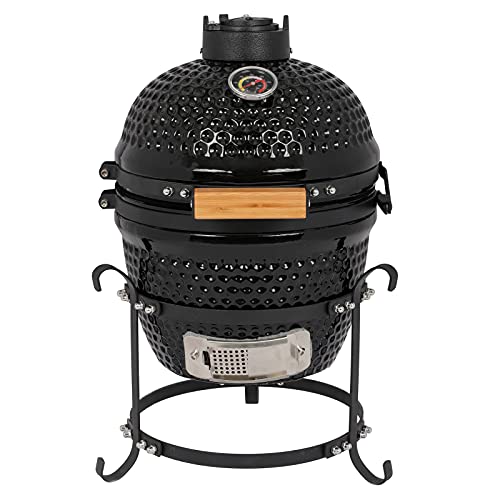
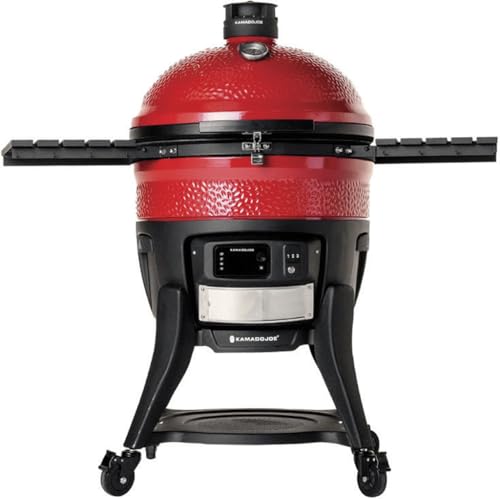
Traditional ceramic kamados offer the best heat retention and moisture control, the core reason people choose this style over a standard grill, but they're heavy, fragile if dropped, and expensive to manufacture. Steel kamado-style grills trade some heat retention for lower cost and better impact resistance, a reasonable middle ground if budget or portability matters more than matching ceramic's absolute best performance.

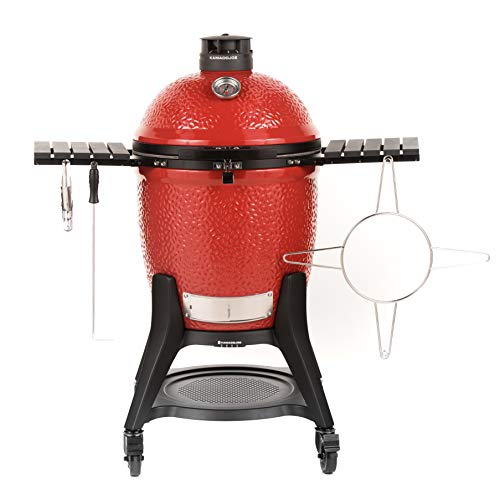
The Kamado Joe Classic I is one of the most established ceramic kamados on the market, and Kamado Joe has built a reputation specifically in this category rather than being a general grill brand that also happens to sell kamados. That focus tends to show up in more refined hardware details, like the gasket seal and hinge quality, than newer entrants to the category.
Size and Cooking Area
Kamados are commonly sold in three rough size tiers: compact/junior models around 13 inches for one to two people or portable use, standard 18-inch models that suit most households, and large 22-24 inch models for bigger gatherings or cooking multiple items at once. Bigger isn't automatically better since larger kamados take longer to heat and use more charcoal per cook; match size to how many people you actually cook for regularly.

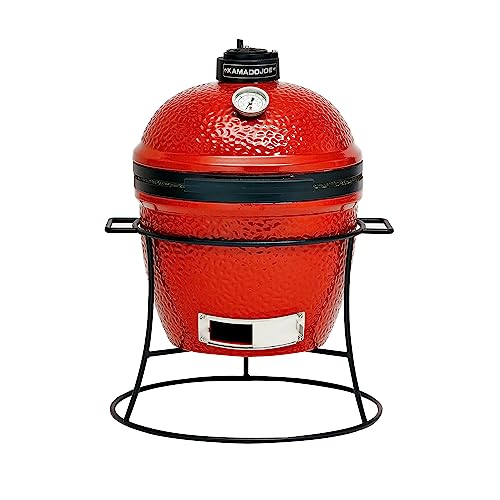
The Kamado Joe Jr is the portable end of the lineup at 13.5 inches, genuinely light enough to move for tailgating or a small patio without needing a permanent dedicated spot the way larger kamados typically do. It's a good entry point into the Kamado Joe ecosystem without committing to full-size cost and weight.
Airflow Control and Vent Design
Temperature control on a kamado comes almost entirely from adjusting top and bottom vents to regulate airflow to the charcoal, rather than an electric or mechanical thermostat. Quality vent hardware with fine, precise adjustment makes a real difference in how easily you can dial in and hold a specific temperature, especially for long low-and-slow smokes where small airflow changes compound over hours.
Heat-Deflector Plates for Indirect Cooking
A heat deflector (sometimes called a heat diffuser or plate setter) sits between the coals and the food, blocking direct heat to enable true low-and-slow indirect cooking rather than just grilling. Most quality kamados include one, but check specifically, since it's genuinely essential for smoking rather than an optional accessory, and buying one separately after the fact adds real cost.

The Weber Summit Kamado E6 brings Weber's established grill-building experience to the kamado category, with a dual-walled insulated design aimed at buyers who already trust Weber's build quality from their kettle and gas grill lines and want that same reliability in kamado form.
Charcoal Efficiency
Kamados are notably more charcoal-efficient than open kettle grills, since the sealed ceramic or steel body traps heat rather than losing it to open air. A single load of quality lump charcoal can sustain a smoke for many hours, which meaningfully reduces the ongoing cost of frequent use compared to a standard charcoal grill.
Digital and Smart Features
Newer kamado models increasingly add digital temperature controllers with app connectivity, automating airflow adjustment to hold a target temperature without constant manual vent tweaking. This genuinely simplifies long unattended smokes, though it adds meaningful cost over a purely manual kamado and introduces electronics that eventually need maintenance or replacement.
Accessories and Modularity
Many established kamado brands sell a wide ecosystem of add-on accessories: pizza stones, rotisserie kits, expander racks for multi-level cooking, and rolling carts. Buying into a brand with a broad accessory lineup gives more flexibility to expand your setup over time, versus a smaller brand where you're limited to whatever ships in the box.
Weight and Placement Considerations
Ceramic kamados commonly weigh 100-200+ lbs depending on size, meaning placement is essentially permanent once set up rather than something you'll move around a patio regularly. Confirm your deck or patio surface can support the weight, and plan the final location carefully before assembly, since relocating a full-size ceramic kamado afterward is a genuine hassle.
FAQs
How long does a quality kamado grill actually last?
A well-maintained ceramic kamado from an established brand commonly lasts many years to decades, since the ceramic body itself doesn't corrode the way steel grills eventually do. Gaskets and metal hardware (hinges, vents) wear faster and are typically replaceable separately from the ceramic body.
Can a kamado grill crack in cold weather?
Rapid temperature changes, rather than cold weather alone, are the main risk to ceramic kamados; avoid pouring cold water directly on a hot kamado body or exposing it to sudden extreme temperature swings. Normal seasonal cold doesn't damage a quality ceramic kamado on its own.
Is a kamado grill worth it over a standard charcoal grill?
If you value genuinely low-and-slow smoking capability alongside high-heat searing in one appliance, yes, since standard charcoal grills struggle to hold steady low temperatures for hours the way a sealed kamado does. If you mainly grill quickly over direct heat, a standard grill may serve you just as well for considerably less cost.
Do I need special charcoal for a kamado?
Lump charcoal is generally recommended over briquettes for kamados, since it burns cleaner and produces less ash that can clog airflow through the vents. Briquettes will work but tend to generate more ash buildup over long cooks.
Conclusion
For most households, an 18-inch ceramic kamado from an established brand covers everyday grilling and smoking well without the extra weight and cost of the largest models. Step up to a 22-24 inch size specifically if you regularly cook for larger groups, and consider a portable junior-size model if patio space or mobility matters more than maximum cooking area.