Best Drywall Anchors in 2026: Which Type Is Right for You?
Disclosure: We may earn a commission when you buy through links on this page, at no extra cost to you. As an Amazon Associate I earn from qualifying purchases. Learn more

The best drywall anchors by type: plastic, self drilling, toggle and snap toggle anchors compared with load safety tips.
Hanging a shelf, mirror or TV on drywall seems simple until a screw pulls right out of the wall. Drywall is soft gypsum, so screws need an anchor to grip, unless you can hit a wood stud. The right anchor holds your item securely for years, while the wrong one sags, spins or tears out. This guide to the best drywall anchors compares the main types side by side, so you can choose the right anchor for each job around the house.
You will find a comparison table, a look at plastic, self drilling, toggle and snap toggle anchors, a direct comparison of two common choices, how to choose and installation tips. Every product in the table above is sold new on Amazon US. For very heavy items, overhead fixtures and anything that could injure someone if it falls, mount into studs or ceiling joists whenever possible, and consult a professional if unsure.
Types of Drywall Anchors Compared
Plastic expansion anchors suit light items, self drilling threaded anchors suit light to medium items, toggle bolts suit heavier loads and snap toggles suit the heaviest drywall loads such as TV mounts and cabinets. Here is how they compare.
| Type | Best For | Pros | Cons | Typical Price |
|---|---|---|---|---|
| Plastic expansion | Pictures, light decor | Cheap, simple, many sizes | Low holding power, can spin | around $7 to $10 per kit |
| Self drilling threaded | Shelves, mirrors, towel bars | No pre drilling, easy install | Medium loads only | around $9 to $14 |
| Toggle bolts (wing) | Heavier shelves, ceiling hooks | Strong hold behind wall | Large hole, lost if removed | around $7 to $15 |
| Snap toggles (strap) | TV mounts, cabinets, heavy shelves | Highest drywall holding, reusable bolt | Higher cost per anchor | around $25 for 20 |
For most homes, an assortment kit with plastic and self drilling anchors plus a pack of toggles or snap toggles covers nearly every hanging job.
Plastic Expansion Anchors
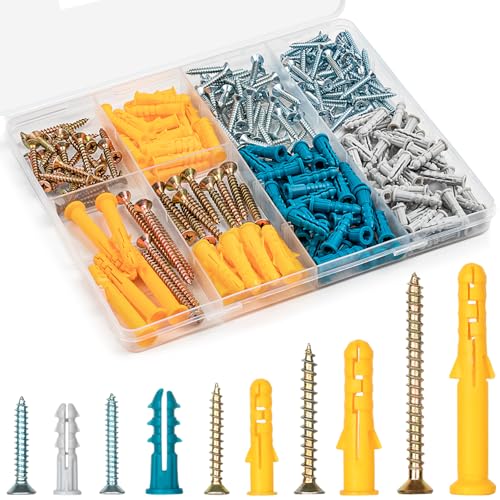
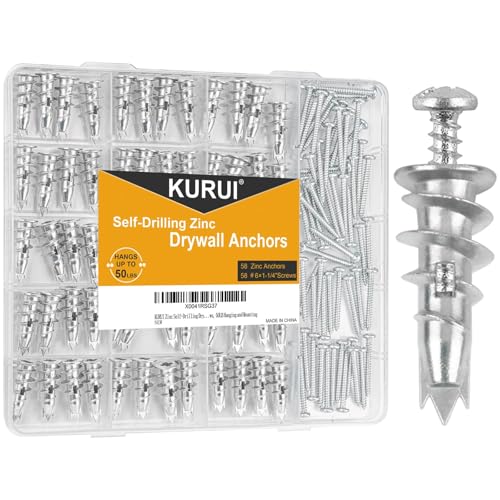
Plastic expansion anchors slip into a pre drilled hole and expand as you drive a screw in. Assortment kits, like the KURUI 270 piece and 160 piece drywall anchor kits, include several sizes and matching screws for light jobs around the house.
Their strengths are low cost and simplicity. The downside is holding power; they can loosen, spin in oversized holes or pull out under heavier loads. Choose them for picture frames, small decor and lightweight items.
Drill the hole to the exact size listed on the package, since a loose hole is the most common reason plastic anchors fail.
Ribbed plastic anchors resist spinning better than smooth ones, and anchors with fins grip better in drywall. When a plastic anchor spins, remove it and switch to a self drilling or toggle anchor rather than forcing the screw.
Self Drilling Threaded Anchors
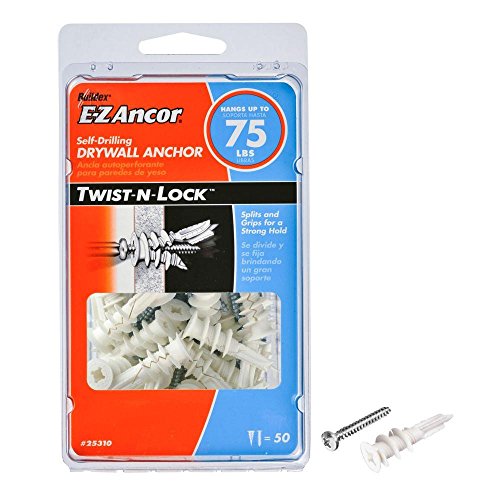
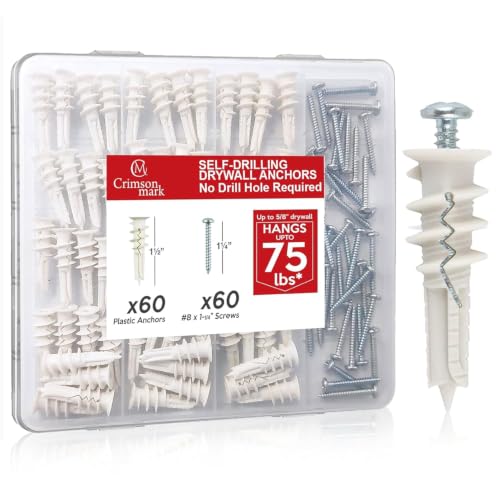
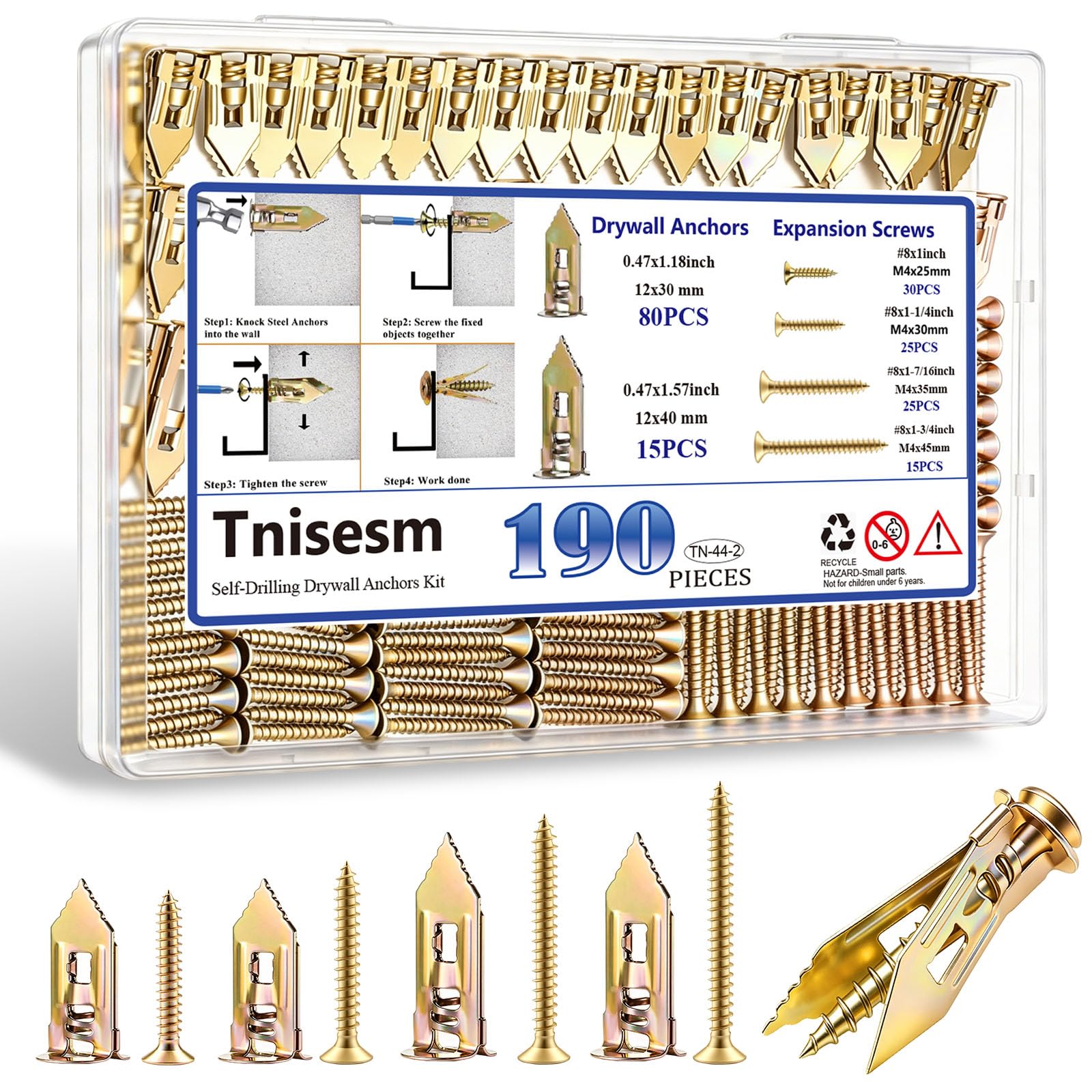
Self drilling anchors have coarse threads and a pointed tip, so you screw them directly into drywall without a pilot hole. The E-Z Ancor Twist-N-Lock is rated for 75 pounds, works in 1/2 or 5/8 inch drywall and gives an audible click when set, according to the maker. KURUI and CrimsonMark sell metal and nylon self drilling kits.
They install quickly and hold medium loads well. Metal versions resist stripping better than nylon. Choose them for shelves, mirrors, towel bars and curtain rods.
Drive self drilling anchors slowly with a screwdriver or a drill on a low clutch setting. High speed and too much force can strip the drywall, leaving the anchor loose.
Metal self drilling anchors, like the KURUI metal set, resist cracking better than nylon when driven into dense drywall.
Toggle Bolts (Wing Toggles)
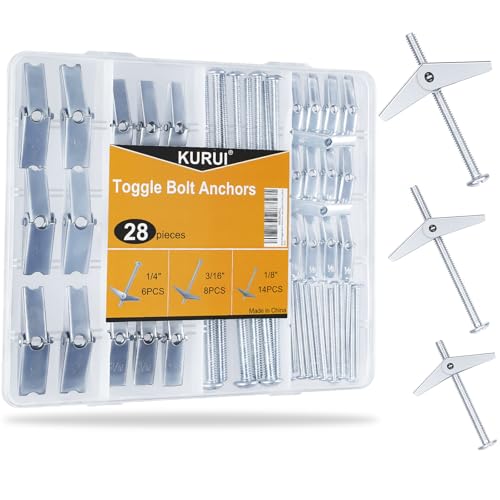
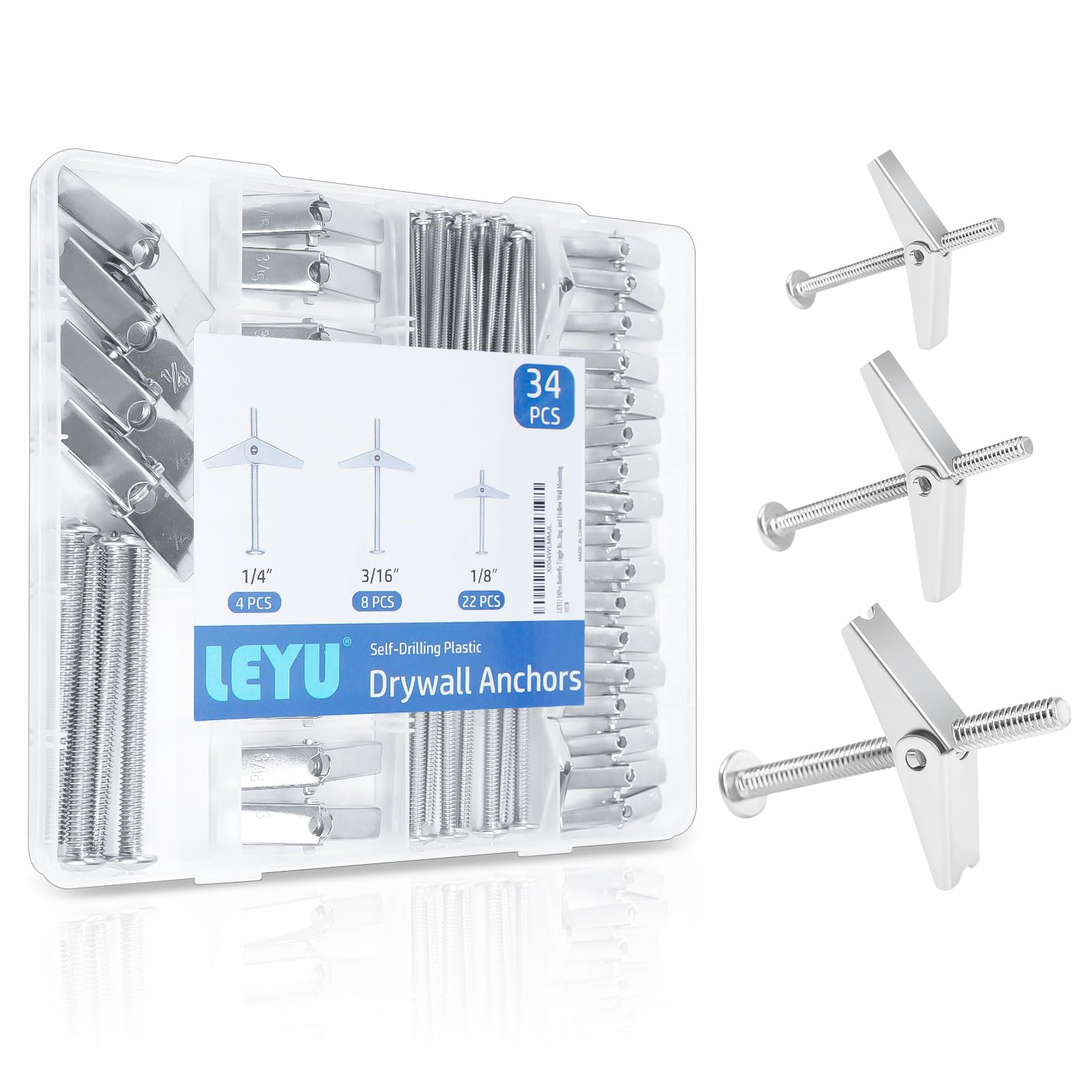
Toggle bolts use spring loaded wings that pass through a hole and open behind the drywall, spreading the load over a wider area. Kits like the KURUI heavy duty toggle bolt and wing nut kit and LEYU butterfly toggle kits include several sizes.
They hold heavier items and work in ceilings for light fixtures and hooks, within rated limits. The drawbacks are a larger hole and losing the wings inside the wall if you remove the bolt. Choose them for heavier shelves and wall cabinets when studs are not available.
Measure the bolt length so it is long enough to pass through your item and the drywall with room for the wings to open. Hold the item in place while tightening, since you cannot remove the bolt without losing the wings.
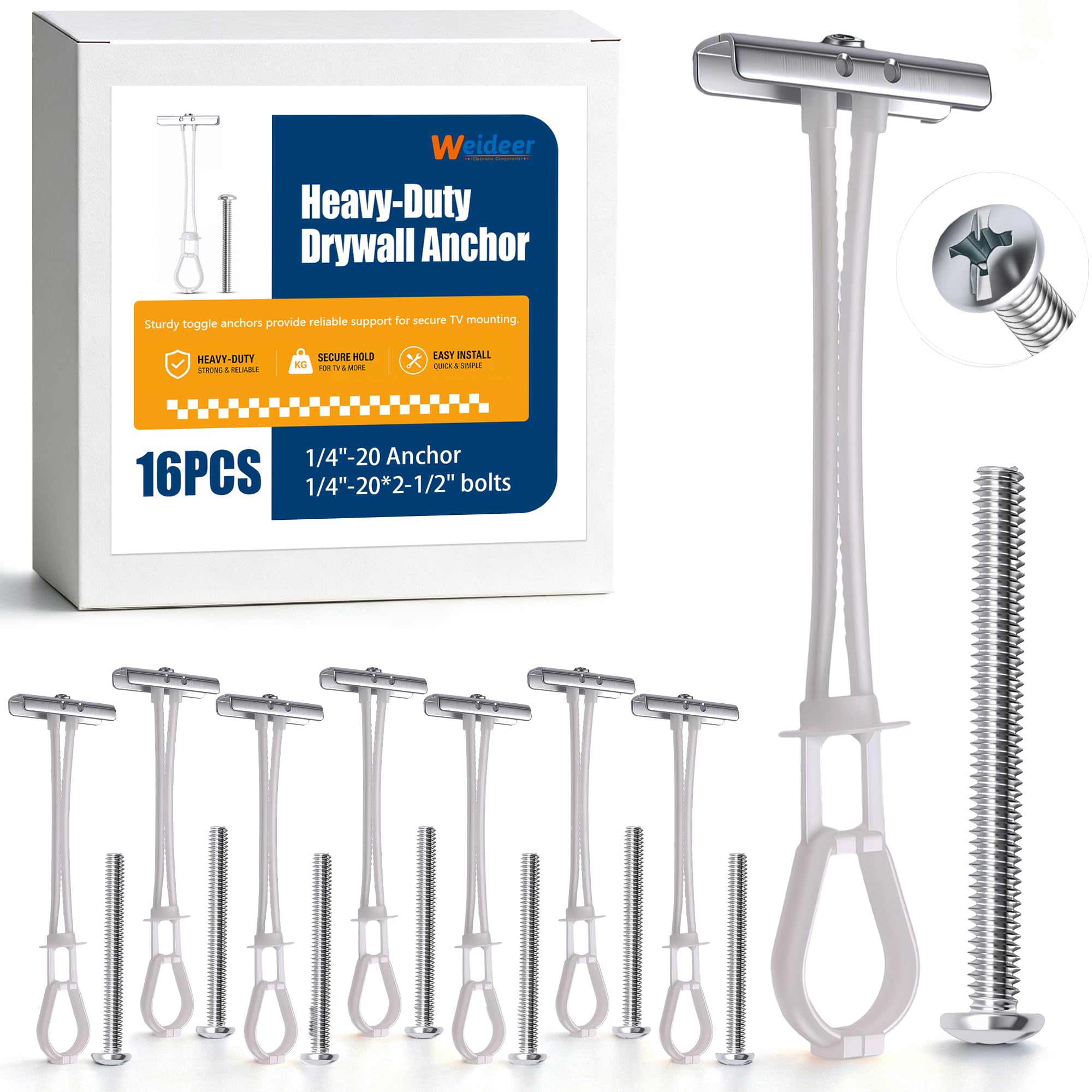
Heavy duty toggle anchors, like the weideer 1/4-20 sets, offer an alternative to wing toggles with a cleaner installation.
Snap Toggles (Strap Toggles)
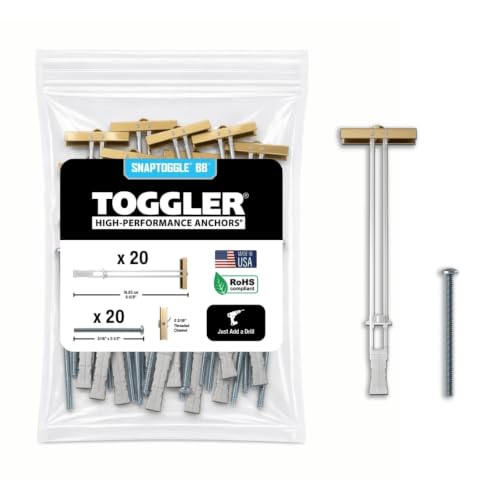
Snap toggles, like the TOGGLER SNAPTOGGLE, use a metal channel that sits flat behind the drywall with plastic straps that let you install the anchor before the bolt. TOGGLER lists an ultimate tensile strength of 265 pounds in 1/2 inch drywall with a 1/4-20 bolt and says the anchors fit walls from 3/8 to 3-5/8 inches thick.
They offer the highest holding power in drywall and allow one person installation and fixture changes. They cost more per anchor. Choose them for TV mounts, heavy shelves and cabinets when studs are not available.
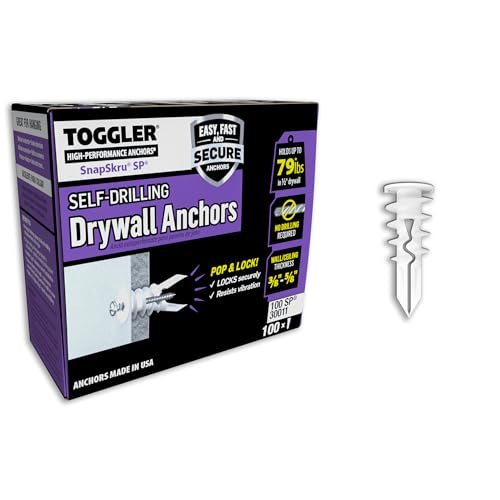
TOGGLER's SnapSkru anchors are a lighter duty option from the same brand that screw directly into drywall for medium loads, which suits curtain rods and small shelves.
Plastic Expansion vs Self Drilling Anchors: Which Should You Choose?
Choose plastic expansion anchors for light decor and self drilling anchors for medium items like shelves and mirrors. Here is how they compare.
- Holding power: Self drilling anchors generally hold more, with some rated up to 75 pounds.
- Installation: Self drilling anchors need no pilot hole; plastic anchors need an exact sized hole.
- Removal: Both can be unscrewed, but self drilling anchors leave a larger hole.
- Price: Both are inexpensive in assortment kits.
- Reliability: Plastic anchors spin more easily in oversized holes.
For anything heavier than a few pounds, self drilling or toggle anchors are the safer choice.
How to Choose the Best Drywall Anchors for Your Project
The best drywall anchors match the weight, wall thickness and type of item you hang. Use these factors to choose.
Weight Rating and Safety Margin
Anchor packages list load ratings, but understand the difference between ultimate strength, the load at which an anchor fails, and safe working load, which is much lower. Many professionals divide ultimate ratings by four as a safety margin. TOGGLER notes its 265 pound figure is ultimate tensile strength and advises following safe working load guidelines.
Use more than one anchor for shelves and spread the load, and remember dynamic loads, like a shelf that people lean on, need extra margin.
Consider the item's center of gravity too. Shelves and brackets that stick out from the wall create leverage that pulls the top anchors outward, so heavy shelving needs stronger anchors at the top or mounting into studs.
Weigh heavy items on a bathroom scale before mounting so you can choose anchors with confidence rather than guessing.
Spacing matters too: anchors placed too close together can crack the drywall between them, so follow the minimum spacing on the package.
Wall Type and Thickness
Standard drywall is 1/2 inch on walls and 5/8 inch on many ceilings. Check that your anchor suits your wall thickness. Plaster, paneling and concrete block need different anchors; TOGGLER snap toggles also work in hollow concrete block.
Use a stud finder before you start. Mounting directly into studs is stronger than any drywall anchor.
Older homes with plaster and lath walls behave differently from drywall; plaster is harder and can crack. Pre drill carefully and use anchors designed for plaster, or locate the wood lath and studs.
Moisture prone areas like bathrooms may have green or purple moisture resistant drywall, which is slightly denser; standard anchors work but drive more slowly.
Ease of Installation
Self drilling anchors install with a screwdriver or drill, plastic anchors need a pilot hole and toggles need a larger hole and careful alignment. Snap toggles allow installing the anchor before the bolt, which makes one person installation easier.
Use the correct drill bit size listed on the package for a snug fit.
A basic kit of a drill, bits, a level, a stud finder, a screwdriver and a pencil covers most anchor jobs. A small piece of painter's tape over the drill spot reduces crumbling around the hole.
Removability and Reuse
Plastic and self drilling anchors can be unscrewed and removed, leaving a hole to patch. Wing toggles drop inside the wall when the bolt is removed. Snap toggles stay in place, so you can remove and reinstall the bolt.
If you rearrange often, choose anchors that let you swap fixtures easily.
For renters, smaller anchors leave smaller holes that are easier to patch before moving out. Adhesive hooks and strips work for very light items without any holes.
Snap toggles are a good choice for TV walls you may reconfigure, since the bolt can be removed and reinstalled without losing the anchor behind the drywall.
Ceiling Use
Ceilings put anchors in tension, pulling straight down. Use toggles or snap toggles rated for ceilings, and never hang ceiling fans or heavy light fixtures from drywall anchors; these need an approved electrical box fastened to framing.
For plants and decor, choose ceiling rated anchors and stay well under rated loads.
For hanging plants, remember that watering adds weight, and swinging adds dynamic load, so choose anchors with plenty of margin.
Setup and Care Tips
Mark your holes with a level, check for wires and pipes with a stud finder or detector, drill the correct size hole and insert the anchor flush with the wall. Do not over tighten screws, which can strip plastic anchors or crush drywall. Check heavy items periodically for loosening, and patch old holes with spackle when you move things.
Keep a labeled assortment box so you can match anchors to jobs quickly, and note which anchor you used where, which helps if you need to remove or replace items later.
Frequently Asked Questions
What weight can drywall anchors hold?
It depends on the anchor type and wall. Plastic anchors hold light items, self drilling anchors often hold medium loads such as the E-Z Ancor Twist-N-Lock rated for 75 pounds and snap toggles hold the most, with TOGGLER listing 265 pounds ultimate in 1/2 inch drywall. Always use safe working loads, well below ultimate ratings.
The drywall itself is often the weak point; even a strong anchor can pull through damaged or wet drywall.
Can I hang a TV on drywall anchors?
Mounting a TV into wall studs is strongly preferred. If studs are not available, heavy duty snap toggles rated for the TV and mount weight can work, with several anchors and a generous safety margin. Follow the mount maker's instructions and consider professional installation for large TVs.
Articulating TV mounts create more leverage than flat mounts, so they need the strongest possible attachment, ideally into studs.
Do I need to pre drill?
Self drilling anchors do not need pre drilling. Plastic expansion anchors and toggle bolts need a pre drilled hole of the exact size listed. Using the wrong size hole is the most common cause of loose anchors.
Check the package for the recommended bit size, and drill straight rather than at an angle for a snug fit.
How do I remove a drywall anchor?
Unscrew plastic and self drilling anchors with a screwdriver, or pull them out with pliers. For wing toggles, remove the bolt and let the wings drop inside the wall. Patch the hole with spackle, sand and paint.
For small holes, a dab of spackle and light sanding make the patch invisible after paint.
Our Verdict
The best drywall anchors match the weight and wall you are working with. Plastic expansion kits like KURUI's suit light decor, self drilling anchors like the E-Z Ancor Twist-N-Lock suit shelves and mirrors, toggle bolts suit heavier loads and TOGGLER SNAPTOGGLE anchors suit TV mounts and cabinets. Use studs when you can, respect safe working loads and install carefully.
For related home guides, see the best home office chairs, the best clothes hangers, the best computer case and the best shower cleaner. Then compare current prices in the product table above.
When in doubt, choose the next stronger anchor type and use more anchors to share the load. A few extra minutes of planning prevents damaged walls and falling items.