Best Computer Desks For Small Spaces 2026 Buying Guide
Disclosure: We may earn a commission when you buy through links on this page, at no extra cost to you. As an Amazon Associate I earn from qualifying purchases. Learn more
How to choose best computer desks for small spaces: features, types, sizing, setup and care explained in plain language for a confident purchase.
In a small room, a desk has to earn every inch. The best computer desks for small spaces hold a monitor, a keyboard, and the things you reach for daily without blocking a door, a closet, or the path to your bed. A desk that fits the wall and still leaves room for your chair will feel larger than a roomier desk jammed into the wrong corner.
The comparison table below shows compact straight desks, corner desks, folding or wall mounted desks, and small standing desks. This guide explains how each one behaves in a tight room, so you can measure first and shop second.



Measure the Room Before the Desk
Start with the floor plan, not the product page. Measure the wall where the desk will sit, the width of the door that must open past it, and the distance from the desk to the nearest obstacle behind your chair. A chair needs about 30 inches of clear space to pull out and turn, and that space often decides the maximum desk depth in a small room.
Then measure what must sit on the desk: monitor width, laptop depth, and any speakers. A single monitor and a keyboard usually fit a 32 to 40 inch top, while a laptop with an external screen wants more width. Mark the footprint on the floor with painter's tape and walk around it for a day before you order.
Types of Compact Desks Compared
Compact Straight Desks
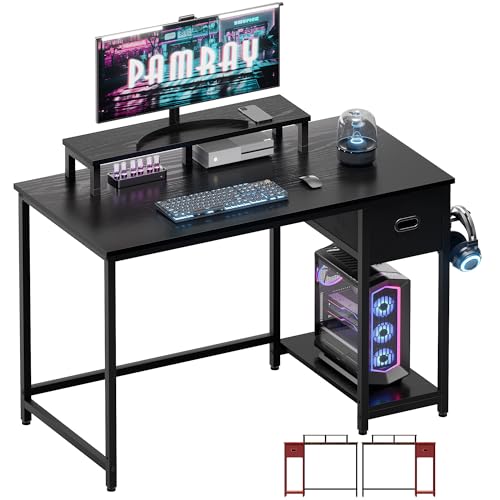
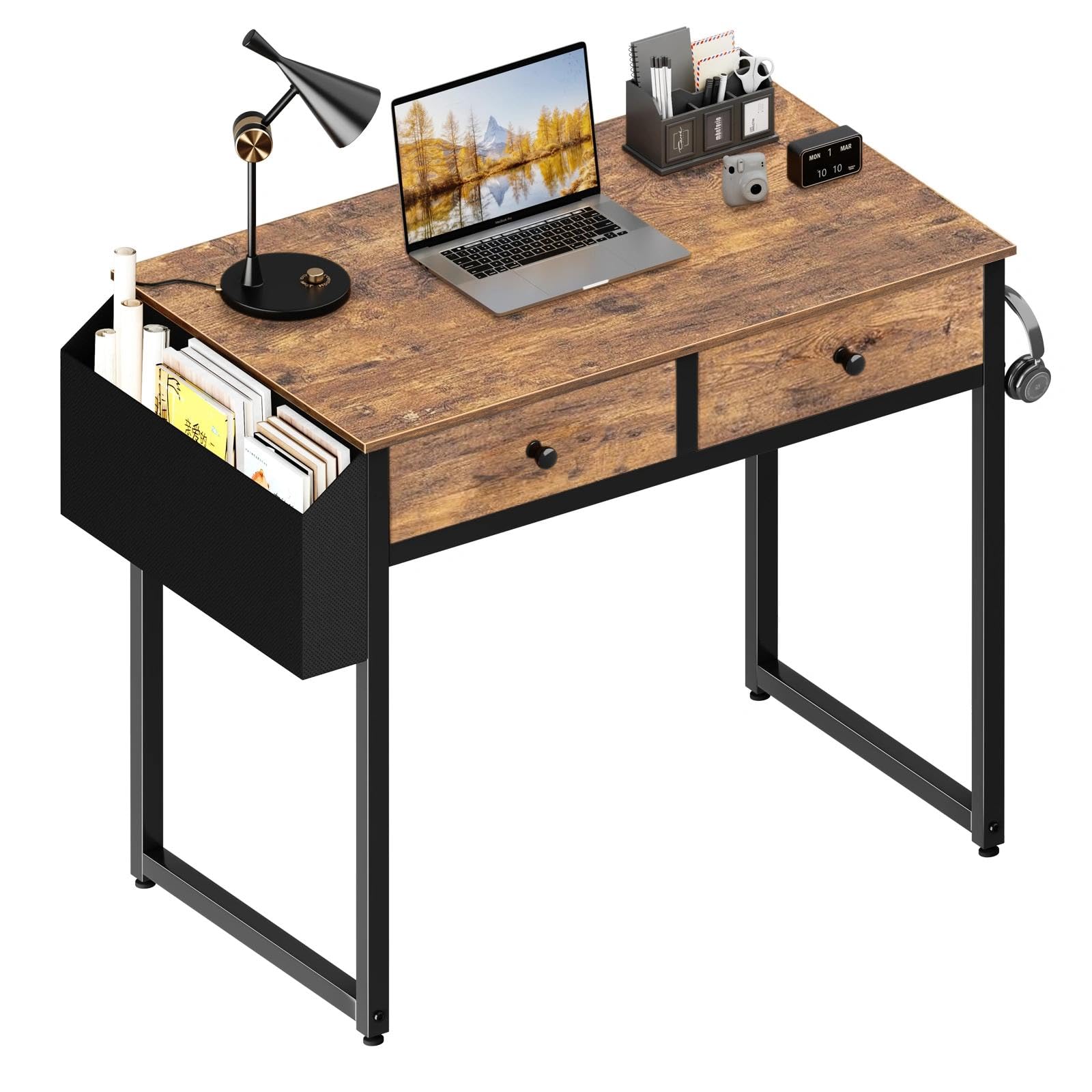
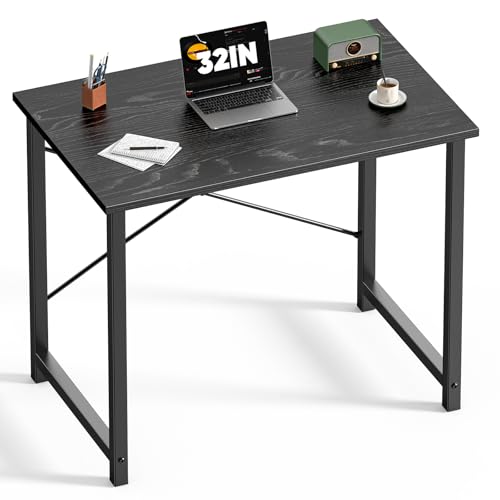
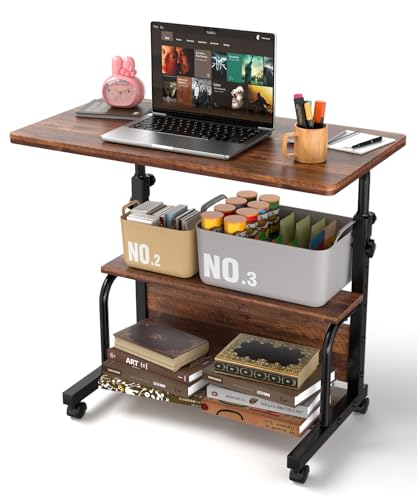
A small rectangular desk is the easiest to place and the cheapest to replace. Many include a drawer or a small shelf, and some offer a monitor riser built into the top. The tradeoff is surface area: a narrow top leaves little space for papers, so keep the stand or arm tidy and use wall shelves for the rest. These desks work well along a bedroom wall or in a hallway nook.
Corner Desks
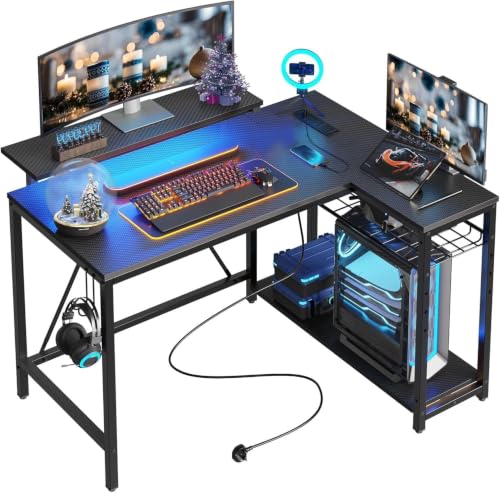
A corner desk turns dead space into a work area. The two wings give you separate zones, one for the screen and one for papers, without extending far into the room. The drawback is that the corner itself is often too deep to use well, and the desk is harder to move. If your room has a spare corner and you need more surface than a small straight desk offers, this is usually the best fit. Our guide to the best corner desks for small spaces goes deeper on layouts.
Wall Mounted and Folding Desks
Wall mounted desks fold flat when you are done, which gives the floor back. They suit studios, dorm rooms, and shared spaces where the desk must disappear after work. Check the rated load and the fixing method, and mount into studs or suitable anchors. Folding desks can feel less steady than fixed ones, so they fit laptop work better than a heavy monitor setup. See the best folding desks for small spaces for more on that style.
Small Standing Desks
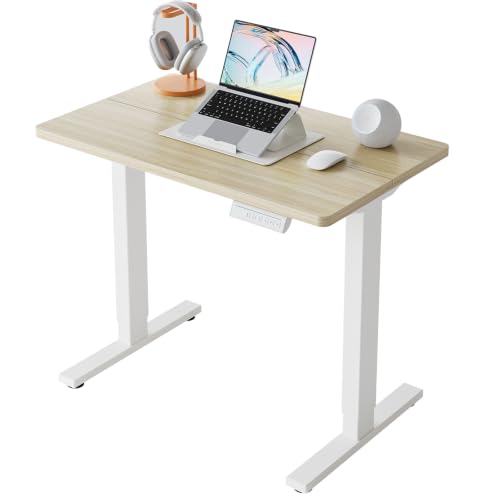
A compact electric standing desk lets you alternate sitting and standing without a larger footprint. Check the width, the lifting range for your height, and stability at the top of the range, since a small frame can sway when you type. Cable slack matters more here because cables travel with the desktop. This type suits people who sit for long hours and have a floor plan that allows a fixed spot.
Best Computer Desks for Small Spaces: Features That Matter
- Depth: at least 20 inches for a laptop, and about 24 inches or more for a monitor you can view comfortably.
- Stability: a crossbar or sturdy legs prevent wobble, which feels worse on a small, light desk.
- Storage: a shallow drawer, a shelf, or a monitor riser keeps small items off the work surface.
- Cable management: grommets, a tray, or clips keep cords from trailing across a tight floor.
- Leg room: avoid low crossbars or drawer units where your knees need to sit.
- Weight rating: check it against your monitor, laptop, and anything else you add.
Who Should Buy Which Type
Apartment dwellers with one multipurpose room do best with a folding or compact straight desk that clears away. Students in shared rooms usually want a small desk with a shelf or drawer and a shape that tucks beside a bed. Home workers with a spare corner can handle a corner desk or a compact standing desk, especially if they spend most of the day at the screen. Related options appear in our guides to the best small computer desks and the best office desks for small spaces.
Setup, Use, and Care
Build the desk in the room where it will live, and tighten all fittings again after the first week, since new joints settle. Keep liquids away from the edges and joints, and wipe the top with a damp cloth. If you use a wall mounted desk, recheck the fixings every few months and avoid loading it beyond its stated limit. Use a monitor arm or riser to reclaim surface space, and keep the power strip off the floor.
Common Mistakes to Avoid
- Buying a desk that fits the wall but blocks the chair, the door, or a drawer.
- Choosing a desk that is too shallow, which pushes the screen too close to your eyes.
- Ignoring the weight rating on a wall mounted or folding model.
- Forgetting the cable path, so cords end up across the floor.
- Skipping the return policy on a desk that arrives in a large flat box.
Frequently Asked Questions
How much floor space should I allow around a small desk?
Leave about 30 inches behind the desk for the chair, and make sure doors, closets, and drawers can still open. Measure the doorway too, since a flat packed desk must fit through it.
Is a wall mounted desk strong enough for daily use?
It can be, if you fix it into studs or suitable anchors and keep the load within the rating. Laptop work suits it better than a heavy monitor setup.
What depth works for a laptop and a monitor?
About 24 inches or more gives room for a keyboard and a screen at a comfortable distance. A laptop alone can work on a shallower top.
Can a small desk hold a second screen?
Yes, if the top is wide enough or you use a dual monitor arm that clamps to the rear edge. Check that the top is thick enough to take the clamp.
How do I keep cables tidy on a small desk?
Use a tray or clips under the top, route cords toward one corner, and keep the power strip off the floor with a short extension.
Final Thoughts
Take your measurements, shortlist two or three desks from the product table above, and compare them on depth, stability, and storage. When you choose the best computer desks for small spaces for your room, the one that leaves your chair, door, and walking path clear will serve you best.