
Best Commercial Waffle Makers for Home Kitchens: Buying Guide 2026
Disclosure: We may earn a commission when you buy through links on this page, at no extra cost to you. As an Amazon Associate I earn from qualifying purchases. Learn more

Feeding a crowd on weekends? Compare single grid, flip and double grid formats to find the best commercial waffle maker for your home.
Saturday morning at a busy house rarely looks like a calm cafe service, yet the pressure feels similar. One person wants a second waffle, someone else is waiting with fruit and coffee, and a slow iron turns breakfast into a queue. If you cook for a crowd often, a best commercial waffle maker search makes sense, because these machines are built for back to back batches instead of one leisurely round.
This guide helps you choose by the things that matter at home: counter space, the number of people you feed, and the budget you can justify. It also sets commercial models against a standard best waffle maker so you can judge the upgrade honestly. Start with the quick answer, then use the checklist to narrow your shortlist.




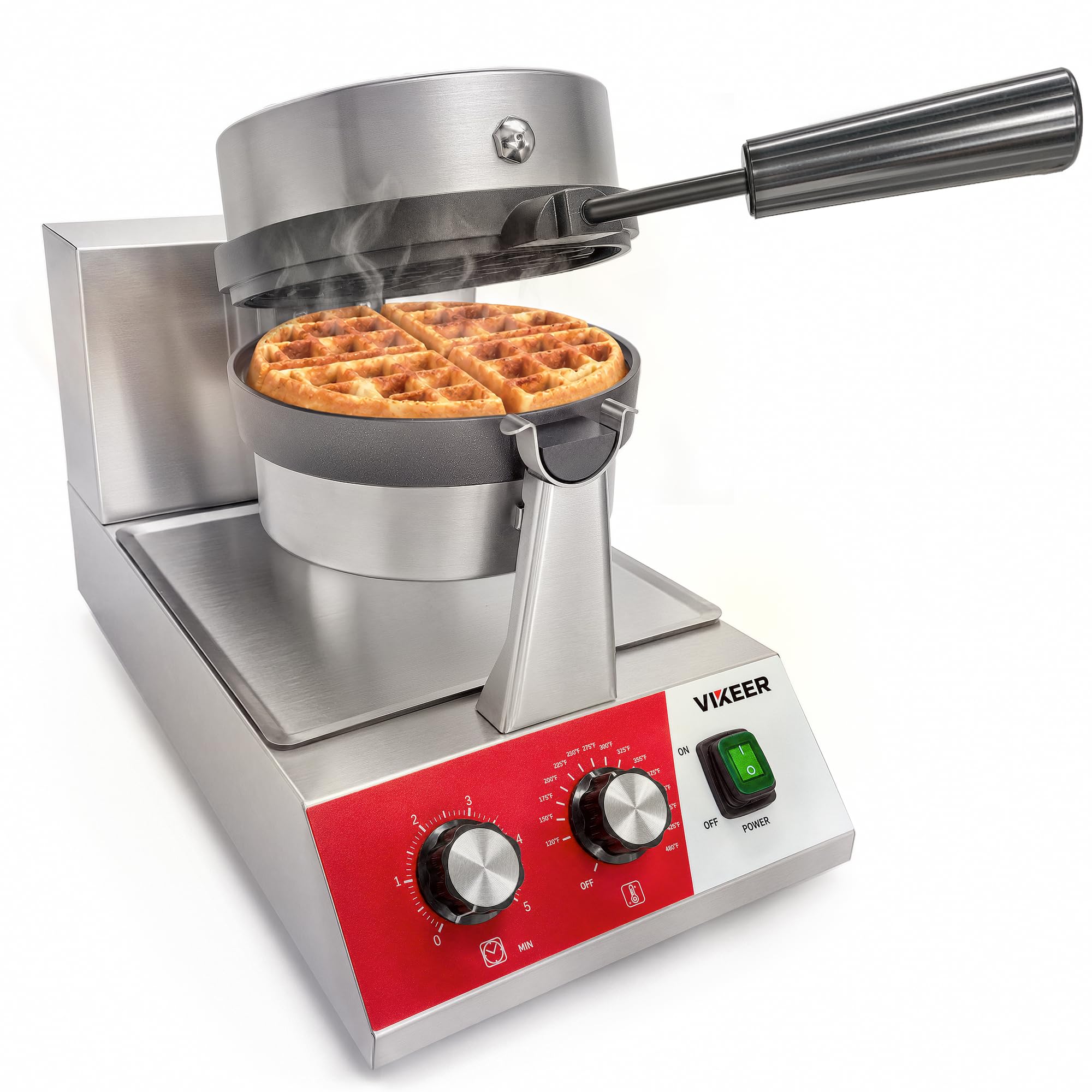

Quick Answer: The Short Version
Choose a commercial style iron if you regularly cook for four or more people, run a small rental or bed and breakfast kitchen, or host brunches where batches pile up. A single grid flip model suits most homes, while a double grid unit only earns its footprint when two waffles at once is a weekly need. If you cook waffles twice a month for two people, a good home iron will serve you just as well for less money.
Before You Buy: A Quick Checklist for Choosing a Waffle Maker
Which Type Fits Your Routine
Start with the waffle itself. Belgian grids are deep, so they hold thick batter and produce tall waffles with crisp edges, and our guide to the best belgian waffle maker explains that style in depth. Classic grids are shallower and give thinner, crisper results. Flip and rotating models spread batter across both plates for even browning, while fixed models are simpler and often cheaper. Match the grid to the recipes your household actually eats, not to the style you admire in photos.
Features Worth Paying For and Ones to Skip
Browning control is worth paying for, because batter with fruit, cheese, or extra sugar darkens faster than plain batter, and one fixed setting cannot suit all three. Thick plates that hold heat between batches matter more than a long list of presets. A ready light plus an audible signal helps when you are cooking eggs at the same time. If cleaning decides whether the machine gets used, look at the best waffle maker with removable plates before you commit. Skip novelty shapes and app controls, which add cost without adding capacity.
Wattage, Power and Energy Use
Commercial style irons draw serious power, often around 1000 to 1800 watts, because fast recovery between batches depends on strong heating elements. On a 120 volt, 15 amp kitchen circuit, an 1800 watt iron uses nearly the whole circuit, so running a toaster or kettle on the same circuit can trip the breaker. Check the rating plate before you buy, and plan on a dedicated outlet near the counter. Higher wattage shortens each batch, so total energy per waffle often stays similar to a slower home iron.
Safety Features and Certifications
Look for a UL or ETL listing mark on the label, which shows the appliance was certified to recognized safety standards for the United States market. True food service models may also carry an NSF mark, though that matters more for inspected commercial kitchens than for home use. Cool touch handles, a locking lid, and stable feet sound basic, yet they prevent the burns and slides that happen when a heavy iron is opened with one hand. A cord that is long enough to reach the outlet without stretching across the sink is another quiet safety win.
Counter Space and Dimensions
Measure before you fall for a big unit. A double grid commercial iron can take up as much counter room as a stand mixer and a toaster combined, and flip models need clear space above and beside them to rotate. Check the footprint with the lid open, the height under your upper cabinets, and whether the machine can stay out or must be stored. A model that lives in a deep cabinet and weighs as much as a small child tends to get skipped on busy mornings, whatever its cooking speed.
Realistic Budget Ranges
Set expectations by tier. Under about $100 you are mostly looking at home irons, whatever the listing language claims. Commercial style single grid models for home use generally run about $100 to $250, and heavier double grid units often cost about $250 to $500. The extra money should buy thicker plates, stronger hinges, and a warranty with real parts support. If a low priced unit promises commercial output, read the duty description closely, because heating elements and thermostats are where cheap models cut corners.
Commercial Types Compared
Rather than naming individual models, it helps to compare the three formats you will actually find, because format decides capacity, storage, and daily effort more than any single feature does.
Single Grid Fixed Models
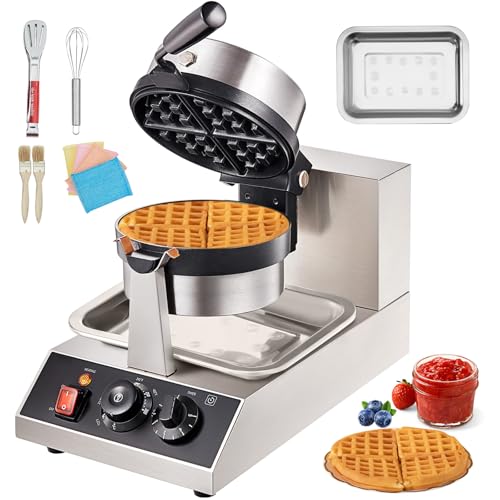
This is the simplest format: one grid, a hinged lid, and few moving parts to fail. It suits households that cook one waffle at a time but want faster reheating and sturdier construction than a basic home iron. Warm up is quick, storage is easy, and cleaning a fixed grid is manageable with a brush and a damp cloth. The limit is obvious at brunch, since every waffle still waits for the one before it.
Flip and Rotating Models
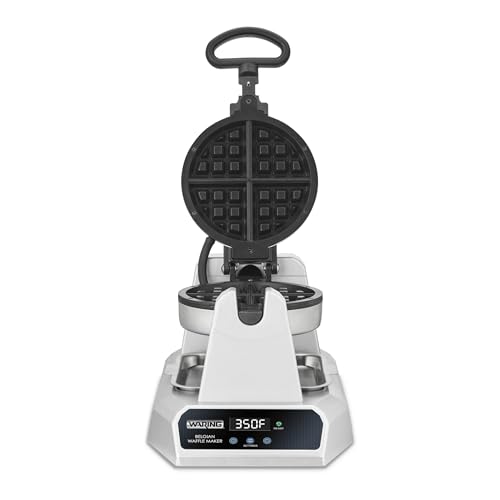
Flip models rotate the grid after you pour, so gravity helps batter coat both plates and fill the corners. The result is more even thickness and browning, which is why this format dominates diners and hotel breakfast bars. You do need clearance to rotate the handle, and the hinge mechanism adds weight. If you are new to this style, the technique in how to use a waffle maker will save you a few pale, lopsided first attempts.
Double Grid Models
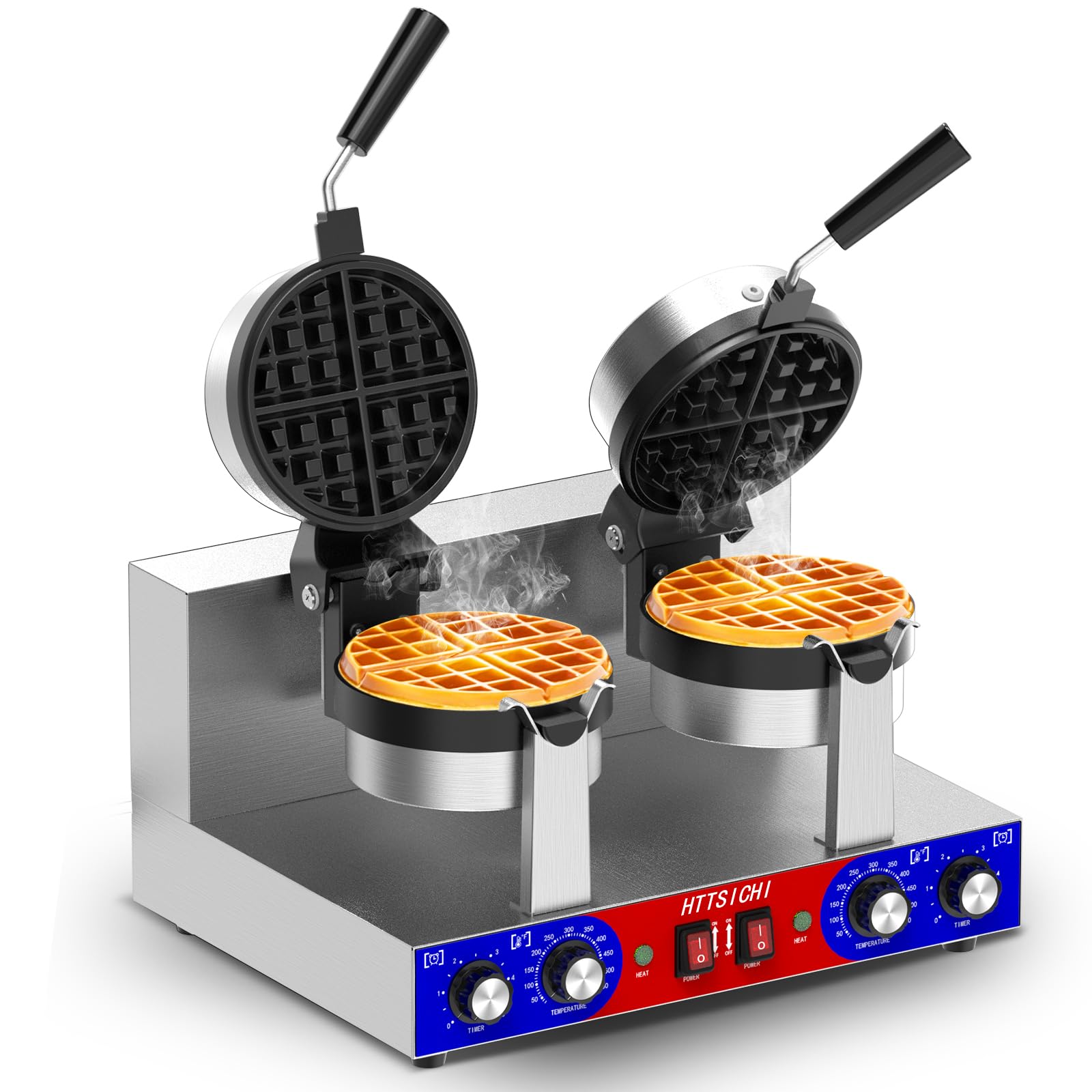
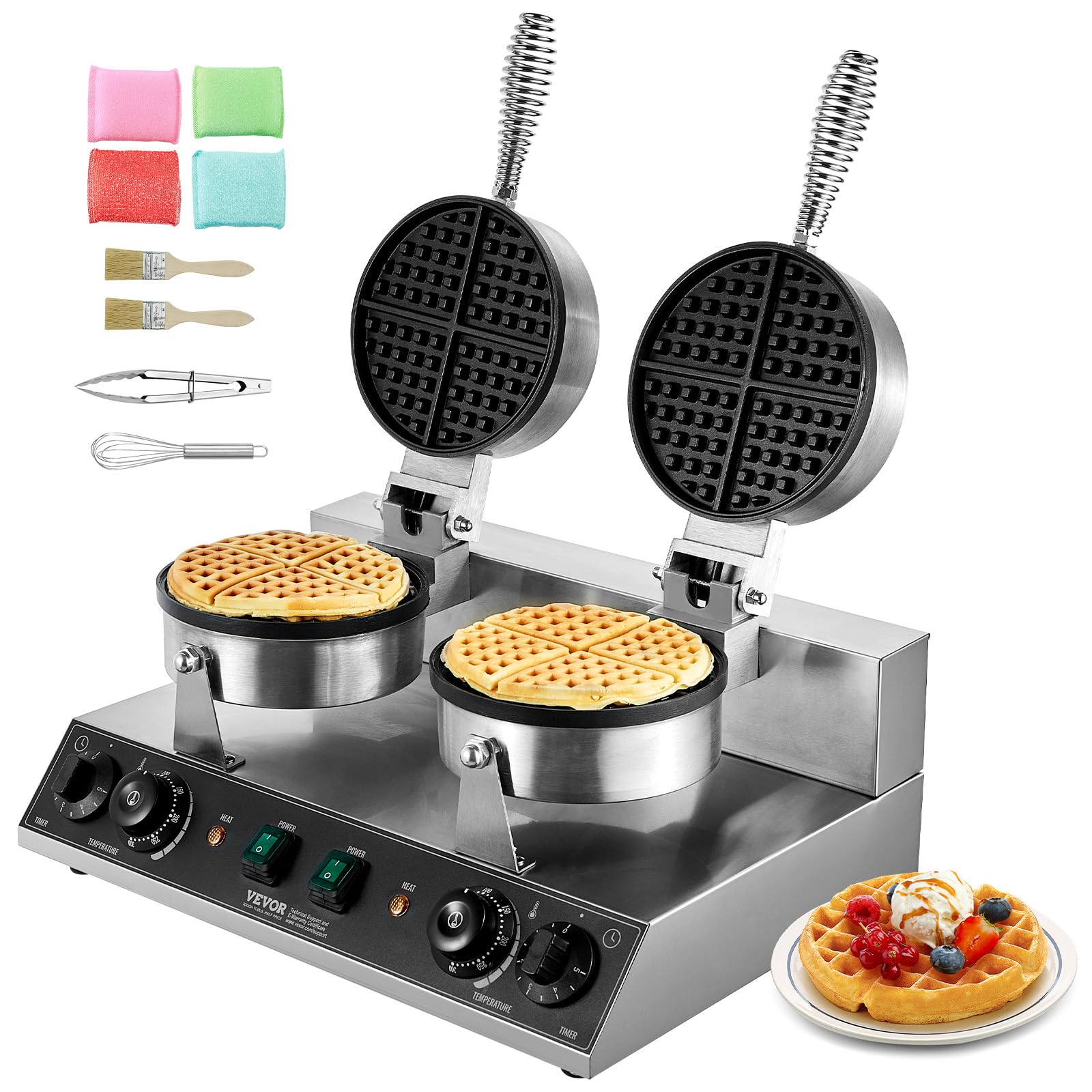
Double grid units cook two waffles at once, which cuts a six person breakfast from six rounds to three. That speed is the whole case for the format, and it is a strong case for large families, small cafes, and hosts who cook for guests every weekend. The trade offs are size, weight, and price, plus two grids to clean instead of one. Buy this format for a proven routine, not for a holiday crowd that appears twice a year.
How to Judge the Best Commercial Waffle Makers
Compare commercial waffle maker options on capacity, cooking performance, ease of use, cleaning effort, noise, safety listings, and warranty support. The evidence to look for is manufacturer specifications, stated dimensions and electrical ratings, and patterns across verified buyer reviews, such as repeated comments about hinge wear or uneven browning. Also weigh how a unit fits a real house: storage, household size, daily ease, and the cost of owning it over several years.
Strengths and Drawbacks of Commercial Models
The strengths are easy to feel in a busy kitchen. Plates recover heat quickly, so the fourth waffle browns like the first instead of coming out pale. Construction is usually heavier, with hinges and latches built for hundreds of cycles a month. Portions stay consistent, which helps when you cook for guests or for a small paying crowd.
The downsides are just as real. These machines are heavy, slow to put away, and louder in the sense that ready signals and sizzling plates demand attention. They cost more up front, spare parts cost more later, and a double grid unit can dominate a small counter. A commercial iron also cannot fix a thin batter or a rushed recipe, so it rewards cooks who already make waffles often.
Common Buying Mistakes to Avoid
- Buying a double grid unit for a two person household, so a large machine sits unused while a smaller iron would cook the same breakfast.
- Judging by wattage alone, because plate thickness and thermostat control shape browning as much as raw power does.
- Ignoring circuit limits, then tripping the breaker every time the iron shares an outlet run with a kettle or toaster.
- Skipping the storage measurement, so the new iron only fits in a cabinet after something else is moved out for good.
- Paying for features you will not touch, such as novelty plates, while passing over browning control that you would use weekly.
Cost of Ownership and Care
Running costs stay modest. Electricity for a breakfast of six waffles is a small part of the food bill, and batter, oil, and fruit cost the same whatever iron you own. The real ownership costs are replacement plates on models that offer them, a worn cord or hinge repair after years of service, and the counter space the machine claims every day. A longer warranty with available parts protects that investment better than a low purchase price does.
Care is simple but not optional. Let the plates cool until warm rather than hot, brush out crumbs, and wipe residue before it bakes on through another cycle. Never flood a fixed grid iron with water, and skip metal tools that scratch the nonstick surface. Our step by step guide on how to clean a waffle maker covers stubborn batter and grease in detail. Store the iron upright if the maker allows it, with the cord loose rather than wrapped tight against the hinge.
FAQ
Are commercial waffle makers worth it for a home kitchen?
They are worth it when waffles are a weekly routine for a crowd, because faster recovery and stronger hinges repay the price in time and consistency. For occasional use, the gains shrink fast. One middle path is a commercial style single grid model, which brings sturdier construction and quicker batches without the footprint or cost of a true double grid food service unit.
Does a commercial waffle maker need a special outlet?
Most home sized models plug into a standard kitchen outlet, so no special wiring is required. The catch is sharing: a high wattage iron on the same circuit as a kettle or microwave can trip the breaker mid batch. Plug the iron in on its own where you can, keep it off extension cords, and check the rating plate against your circuit before the first big breakfast.
Can a commercial waffle maker make chaffles and gluten free waffles?
Yes, and the strong, even heat actually helps both. Chaffles made from egg and cheese brown quickly, so use a lower browning setting and watch the first batch closely. Gluten free batters spread less and can stick more, so grease the grid lightly and give each waffle a little extra time before opening the lid. A removable grid, where offered, makes the sugary or cheesy residue from these recipes easier to wash away.
How long does a commercial waffle maker last?
A well kept commercial style iron often serves a home for many years, since home use is light compared with cafe duty. The usual end of life signs are uneven browning that no setting fixes, a thermostat that cycles off too early, or a hinge that lets the lid sit crooked. When plates lose their release and every batch sticks despite gentle cleaning, replacement is usually more sensible than repair for home sized models.
What size commercial waffle maker does a family of six need?
Think in rounds, not just grid size. One standard round or square waffle per round means six rounds, and at about three to four minutes each, breakfast stretches past twenty minutes of cooking. A flip model shortens each round slightly through even cooking, while a double grid cuts the rounds to three. If your six eat in shifts, a single grid is fine. If everyone sits down together, capacity matters more.
Final Thoughts
A commercial iron earns its place when your kitchen feeds a crowd on a schedule and a basic iron turns that job into a long queue. Match the format to your household size, check your counter and your circuit, and spend on plate quality and browning control before extras. Chosen that way, the best commercial waffle maker for your home is simply the one whose size, speed, and upkeep fit your routine. Use the product table above to compare the formats side by side before you order.


