
Best Commercial Immersion Blender for Home Kitchens (2026)
Disclosure: We may earn a commission when you buy through links on this page, at no extra cost to you. As an Amazon Associate I earn from qualifying purchases. Learn more

Compare compact, mid size and long shaft designs to pick the best commercial immersion blender for your pots, weekly cooking and storage space.
Your Sunday soup has outgrown your small stick blender. The pot holds enough for tonight, lunch tomorrow, and containers for the freezer, and the motor smells warm before the last carrots soften. That is when a best commercial immersion blender starts to make sense at home.
This guide helps you choose by kitchen space, household size, and budget, and you can compare the main types in the comparison table below. Commercial models are built for repeated batches, longer run times, and larger pots. That strength only helps if the shaft fits your cookware, the weight feels manageable, and storage works in your kitchen.


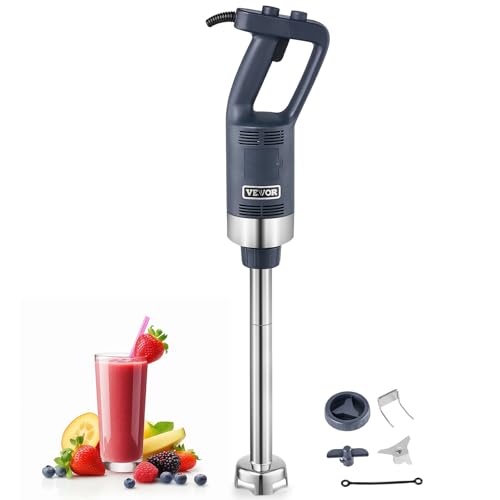

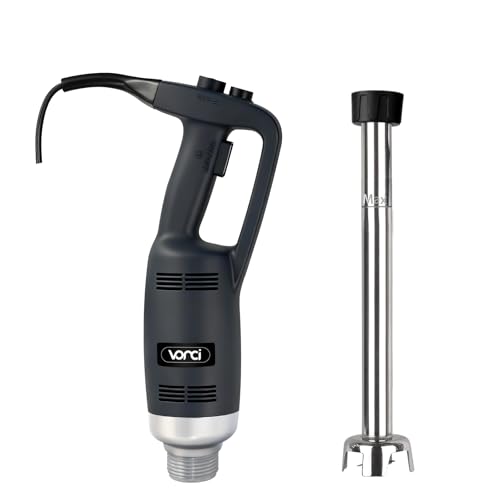

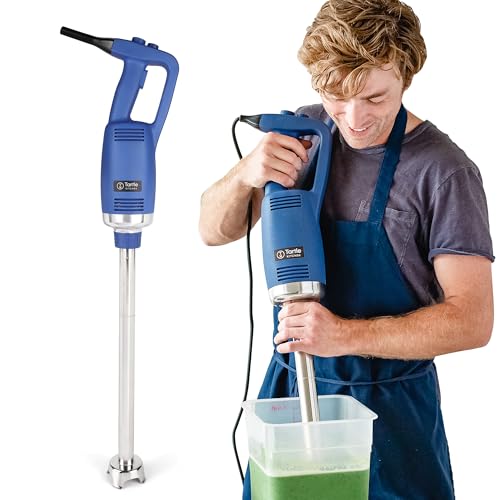


Quick Answer: Three Types of Commercial Immersion Blender That Fit Real Homes
Most home buyers fall into one of three groups. A compact commercial model with a shaft of about 10 to 12 inches suits daily soup and sauce in standard pots. A mid size model with a shaft of about 12 to 16 inches suits large family pots and meal prep for freezing. A long shaft heavy duty model suits very large stockpots and community meals.
Choose the smallest type that covers your largest normal pot. A longer shaft adds reach, but it also adds weight and storage length, and it can splash in shallow pans.
Before You Buy: A Quick Checklist for Choosing an Immersion Blender
For broader home options, see our guide to the best immersion blender. Commercial on the label describes build and duty, not a promise that every model suits a home kitchen. Work through the points below in order, starting with pot size and routine.
Which Type Fits Your Routine
Start with how often and how long you blend. Occasional soup once a month rarely justifies a heavy duty shaft that lives in a deep drawer. Frequent blending for a large household points to a corded model with a longer rated run time and a sturdy grip.
Cordless models feel lighter for quick tasks, and our guide to the best cordless immersion blender covers that route. A commercial hand blender and a commercial stick blender are the same tool, so judge by shaft and motor.
Features Worth Paying For and Ones to Skip
Variable speed control is worth paying for because thick soup, soft fruit, and whipped cream need very different speeds. A lock button that lets the motor run without constant finger pressure helps during long batches. A whisk attachment can earn its place if you often whip cream or egg whites.
A chopper bowl is harder to justify, since a food processor already does that job. Extra beakers mostly add washing up and clutter, so skip them unless you know the exact task they will handle.
Wattage, Power and Energy Use
Commercial models often list higher wattage than home models, but wattage alone does not tell you how smoothly a shaft pulls food toward the blade. Torque, blade shape, and the guard around the blade matter as much as the motor rating. What counts is whether it keeps moving through dense squash or bean soup without constant lifting and stirring. Energy use stays modest because blending runs in minutes, not hours.
Safety Features and Certifications
Look for a listing mark such as UL or ETL on the product page or rating label, since that shows the model was evaluated to a recognized safety standard. A blade guard that keeps the blade off the pot base protects both the blade and pot coatings. Overload protection that stops the motor when it strains is also valuable during thick batches. Treat any model with no clear certification and no guard description as a reason to keep shopping.
Counter Space and Dimensions
Measure before you order. A commercial shaft plus the motor body can reach about 20 to 30 inches in total length, and many home drawers cannot hold that in one piece. Check whether the shaft detaches, and measure the drawer you plan to use.
Weight matters too. A model that feels fine for thirty seconds can tire your wrist during a five minute batch.
Realistic Budget Ranges
Expect three broad tiers. Models under about $100 usually give you a shorter commercial style shaft and basic speed control for home scale batches. Models at about $100 to $250 tend to add longer shafts, stronger motors, and better grips for frequent use.
Models over about $250 move toward true restaurant duty, with longer warranties and replaceable parts. For most homes, the middle tier offers the best balance.
Types Compared: Shaft, Motor and Duty Cycle
Use the three groups below as your shortlist. Each group lists the pots it handles, the work it does best, and the compromise you accept.
Compact Commercial Models for Everyday Home Batches
Compact commercial models pair a shaft of about 10 to 12 inches with a motor built for repeated short batches. They suit soups for four to six people, pan sauces, and dressings made right in the pot. Storage is simpler and cleanup feels like a normal home blender.
The limit shows up in very deep pots, where the shaft may not reach the bottom. For smoothies in tall cups, compare the approach in our guide to the best immersion blender for smoothies.
Mid Size Models for Large Family Pots
Mid size models extend the shaft to about 12 to 16 inches and raise the rated run time, so you can work through a full stockpot without frequent pauses. They fit households that cook soup or chili for eight or more people, or that prep freezer meals in bulk each week. Grip design matters more here, because a long batch exposes awkward button placement. Expect more weight and a higher price, with reach and steadier power in return.
Long Shaft Heavy Duty Models for Very Large Batches
Long shaft models, often about 18 to 21 inches, serve stockpots that home burners barely hold. They make sense for community kitchens, large gatherings, and home based food work where batch size drives every choice. These tools are heavy, awkward in standard pots, and easy to splash with if the head is not fully covered by liquid.
They also cost the most and store the worst. Choose this group only when your pot depth requires it.
How We Chose These Types
The best commercial immersion blender for one kitchen is rarely the best for another, so we grouped models by the factors that change daily use at home: pot capacity, performance in thick food, ease of use, cleaning effort, noise, safety features, and warranty length. The groupings draw on manufacturer specifications for shaft length, motor rating, and duty guidance, plus patterns in verified buyer feedback about weight, grip comfort, and reliability. No brand paid for placement.
What We Like and What We Do Not Like About Commercial Models at Home
What we like starts with stamina. A commercial shaft can finish a double batch of soup without the pauses a light home model needs to cool down. Metal shafts and guards also tolerate hot liquids well, which suits soup made and blended in the same pot. If soup is your main job, our guide to the best immersion blender for soup goes deeper on pot shapes and textures.
What we do not like is just as clear. Commercial models weigh more, cost more, and often lack the small attachments home cooks enjoy. Noise can be higher, and replacement shafts and seals may cost more than you expect.
Some parts are sold only through restaurant suppliers. For a household that blends once a week for two people, a standard home model will usually feel easier to live with and easier to store.
Common Mistakes to Avoid
- Buying a shaft longer than your deepest pot, which leaves you with a heavy tool that splashes in everyday pans.
- Choosing by wattage alone, which can land you a loud motor that still struggles with thick food because the blade guard design is poor.
- Ignoring total length and weight, which turns a five minute blending job into wrist strain and a storage headache.
- Paying for restaurant duty run times you will never use, which raises the price and the part costs for no home benefit.
- Starting at the highest speed in a shallow pan, which throws hot liquid upward and can burn your hand or forearm.
- Skipping the certification check, which leaves you guessing about electrical safety on a tool you will use near water.
Cost of Ownership and Care
Rinse the head right after use so starch and sauce do not dry around the blade, then wash, dry fully, and store the shaft where the blade cannot knock against other tools. Our guide on how to clean an immersion blender covers safe washing in detail. Budget for a replacement shaft or seal kit over the life of the tool, and confirm that parts are sold to home buyers before you purchase. Good technique also protects the motor, and our guide on how to use an immersion blender explains angle and movement basics.
Electricity cost is minor, since even frequent blending adds only a small amount to a monthly bill. A detachable shaft that rinses clean in seconds saves more over a year than a small difference in wattage. Store the cord loosely coiled, since tight bending can damage it where it enters the housing.
FAQ
Are commercial immersion blenders worth it for home use?
Yes, if you regularly cook large pots, blend several times a week, or freeze meals in bulk. The longer run time and stronger shaft repay the higher price through fewer pauses and fewer replacements. For occasional small batches, the extra weight brings little benefit. If you often wished your current blender could keep going, the upgrade case is strong.
How long does a commercial immersion blender last with home use?
A commercial model used at home often lasts many years, since home volume is far below restaurant volume. The first parts to age are usually the shaft seal and the blade edge, not the motor. Rinsing promptly and avoiding dry running extend that life. If blending leaves stringy fibers uncut or the shaft vibrates more than before, inspect the blade and seal rather than forcing the motor harder.
What makes one commercial immersion blender type more reliable than another?
Reliability comes more from construction details than from a badge. A metal shaft housing, a sealed bearing area, and a maker that sells replacement shafts and seals all point to a longer service life. Models built as sealed throwaway units may work well at first but offer no repair path.
Ask whether the warranty covers the shaft as well as the motor. A warranty that excludes the working end tells you a lot about expected durability.
Can a commercial immersion blender work in a small pot or a cup?
It can, but only if the blade head stays fully covered by liquid and the container is deep enough to contain movement. In a shallow cup, a strong motor can throw food out before it blends it. Use a tall, narrow container, start on the lowest speed, and keep the head near the bottom until the mixture moves. For single serving drinks, a compact home model often gives you better control with less mess.
Do commercial immersion blenders handle hot liquids safely?
Most commercial shafts are built for hot liquids, since soup work is their main job. Safety still depends on technique. Keep the head submerged before you start the motor, and never lift a running shaft out of the pot.
Steam can build under a guard in very thick mixtures, so pulse the motor and let pressure release between pulses. That pulsing habit also gives you a smoother texture with fewer air pockets.
Final Thoughts
Start with your pot, your weekly routine, and your storage space, in that order. A compact type covers most homes, a mid size type suits large family cooking, and a long shaft type should stay a deliberate choice for very large batches. Look again at the product table above and match the shaft length to your deepest normal pot. Chosen that way, the best commercial immersion blender for your home is the one you can lift comfortably, store easily, and reach for without thinking twice.


