
Best Commercial Gas Powered Hedge Trimmers: Everything to Know Before Your First Purchase for 2026
Disclosure: We may earn a commission when you buy through links on this page, at no extra cost to you. As an Amazon Associate I earn from qualifying purchases. Learn more

A first time buyer guide to the best commercial gas powered hedge trimmers, covering blade length, engine size, cutting capacity, weight, and fuel care.
Buying your first commercial trimmer is different from buying a homeowner tool that comes out twice a month. You need power that holds up through long hedges, blades that stay sharp on thick growth, and parts you can replace instead of a tool you throw away. This guide explains best commercial gas powered hedge trimmers in plain language, from engine size to fuel care, so you can choose with confidence.
Start with the jobs in front of you, including hedge length, branch thickness, and how many days a week the tool will run. Then use the comparison table below to line up blade length, weight, and cutting capacity against those jobs.





Commercial Gas Powered Hedge Trimmers 101: The Basics
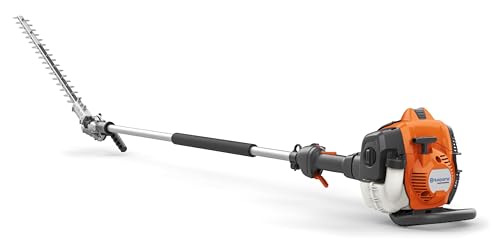
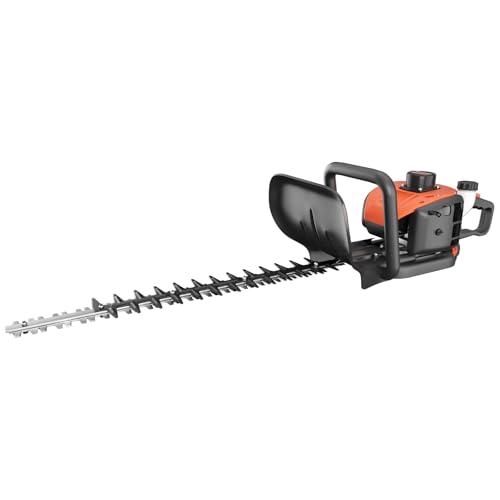
A commercial gas powered hedge trimmer is a standalone cutting tool built for daily work on large properties, estates, and client sites. A small gasoline engine drives two long steel blades that slide back and forth against each other thousands of times per minute. That sliding action shears leaves and stems cleanly instead of tearing them.
Commercial grade in this category means a stronger gearbox, a sturdier blade bar, and an engine and air filter designed for long hours and dusty conditions. It also means serviceable parts, including blades and filters that a dealer can replace. A homeowner model may cut the same hedge once, but it is built for far fewer hours per season and often cannot be rebuilt as easily.
If you are stepping up from a lighter homeowner tool, see our guide to the best gas powered hedge trimmers for the broader gas category before you narrow in on commercial duty.
Who Should Buy a Commercial Gas Hedge Trimmer?
Landscaping Crews Working Client Properties Daily
You run daily routes and cannot afford a breakdown that pushes a whole schedule back. Look for a midweight model with a 24 inch blade, strong vibration control, and a dealer nearby who stocks blades and filters. Crews that already cut lawns on the same visits often standardize their fuel and service routine, so see our guide to the best gas powered mowers if you are building one gas powered fleet for the whole property.
Estate and Grounds Staff Maintaining Long Formal Hedges
Long straight runs reward a longer blade and a rotating rear handle that keeps your wrists in a natural position on vertical faces. Choose a model with smooth starting and a large fuel tank so you can finish a full run without stopping to refill in the middle of a hedge.
Owners Clearing Thick, Overgrown, or Woody Hedges
If you regularly cut back neglected shrubs, privet, or laurel with stems thicker than a pencil, cutting capacity and engine torque matter more than blade length. A shorter blade on a stronger engine gives you control in dense growth and puts less strain on the gearbox.
Key Specs Explained in Plain English
The product table above gives you the headline numbers for each model. The sections below explain what those numbers mean in your hands, and which range to choose when you compare the best commercial gas powered hedge trimmers for a first commercial purchase.
Engine Size and Power
Engine size is listed in cubic centimeters, often written as cc, and most commercial hedge trimmers fall between about 21 and 26 cc. A larger engine holds blade speed better when you push into thick or wet growth, so the blades keep shearing instead of slowing and pinching stems. For routine shaping of maintained hedges, the lower end of that range is enough and keeps weight down. Choose the upper end if your work is mostly cutting back overgrowth or tackling coarse shrubs all day.
Blade Length and Blade Style
Blade length runs from about 20 to 30 inches on commercial models, and longer is not always better. A blade around 24 inches suits most first time commercial buyers because it covers long flat faces quickly while staying manageable on corners and ladders. Longer blades shine on tall, straight hedges but add weight and make tight work clumsy. Most commercial buyers want double sided blades, which cut on both the forward and back stroke and on either side of the hedge.
Cutting Capacity and Tooth Spacing
Cutting capacity tells you the thickest stem the trimmer can cut cleanly, and commercial models commonly handle branches around three quarters of an inch to one inch thick. Wider spacing between blade teeth lets thicker stems enter the blade, but it can leave a rougher finish on fine, soft growth. Match capacity to your thickest regular job, not to one extreme branch you could handle with loppers or a pruning saw instead. Forcing stems beyond rated capacity strains the gearbox, dulls teeth fast, and leaves torn cuts that invite disease.
Weight, Balance, and Vibration Control
Commercial gas models typically weigh about 10 to 14 pounds with fuel, and you will carry that weight at arm length for long stretches. A tool that feels balanced, with the engine weight sitting close to your body, tires your shoulders less than a lighter tool that pulls forward at the blade. Anti vibration mounts between the engine and the handles reduce the buzz that leaves hands tingling after a shift.
Fuel Tank, Starting, and Controls
Most commercial engines are two stroke designs that run on gasoline mixed with two stroke oil at the ratio in the manual, often 50 to 1. A larger tank means fewer stops, while a translucent tank lets you check the level at a glance. Look for a purge bulb, a choke that is easy to reach with gloves on, and a starter that engages smoothly, because a flooded engine on a client site wastes real time. Crews that standardize one fuel mix across tools save mistakes, so see our guide to the best gas powered grass trimmers if your hedge work and grass trimming share the same fuel cans.
Warranty and Service Network
Commercial warranties often run two years, with longer coverage on some parts, and the terms mean little if no one nearby can service the tool. Before buying, confirm that a local dealer stocks blades, air filters, spark plugs, and fuel lines for the brand you choose. A slightly plain model with strong local support will usually serve a first time buyer better than a feature rich model that needs shipping away for every repair.
Rookie Mistakes to Avoid
- Buying the longest blade available makes corners, ladders, and tight garden rooms slow and tiring, and the extra weight punishes your shoulders all day.
- Using straight gasoline without the required oil mix destroys a two stroke engine quickly, often within the first tank.
- Forcing the trimmer through branches beyond its rated cutting capacity chips blade teeth and strains the gearbox.
- Skipping eye and ear protection exposes you to flying debris and engine noise that can damage hearing over a single long shift.
- Storing the tool with old fuel left in the tank through winter leads to clogged fuel lines and hard starting in spring.
- Choosing a brand with no dealer nearby turns a simple blade or filter replacement into weeks of waiting.
Getting Started: Setup and First Use
Unbox the trimmer on a flat surface and read the manual fully before adding fuel, paying special attention to the fuel mix ratio, starting sequence, and blade guard removal. Check that the blade bolts are snug, the air filter is seated, and the throttle and stop switch move freely. Fill the tank outdoors with fresh mixed fuel, wipe any spills, and let the engine sit a minute before starting.
For your first cuts, choose a short, easy section of maintained hedge at ground level. Wear eye protection, ear protection, gloves, and long sleeves. Start the engine on flat ground with the blade pointing away from you, let it warm up briefly, and work with smooth sweeping motions, letting the blade speed do the cutting instead of pushing.
After each use, shut the engine off, let the blade stop fully, and clean sap and debris from the blades with a brush before the residue hardens. Check for stems wedged between teeth, because trapped material holds moisture against the steel. This short routine keeps the tool starting easily and cutting cleanly for seasons.
Care and Maintenance for Commercial Hedge Trimmers
Blade care matters most. Wipe blades clean after work, apply a light coat of blade oil or resin solvent as the manual directs, and sharpen teeth with a flat file when cuts start to tear rather than shear. Replace a blade that is bent or missing teeth, because a damaged blade vibrates, cuts poorly, and loads the gearbox. Keep the blade guard on during storage and transport to protect both the teeth and anyone reaching into the truck or shed.
Engine care is a short list done on schedule. Clean or replace the air filter often in dusty conditions, change the spark plug when starting gets hard, and inspect fuel lines each season for cracks. Use fresh fuel, and if the trimmer will sit for more than a month, follow the manual on draining the tank or using fuel stabilizer. Grease the gear case at the interval the manual states.
Commercial Gas Powered Hedge Trimmers: Your Questions Answered
What size blade should a first time buyer choose for a commercial gas powered hedge trimmer?
A blade around 24 inches is the safest first choice for most commercial gas powered hedge trimmer buyers. It covers long flat faces at a good pace, stays manageable on corners and steps, and keeps overall weight reasonable for full days. Go shorter, around 20 inches, if most of your work is dense shrubs in tight spaces. Go longer only when tall, straight hedges dominate your route.
What fuel mix does a commercial gas powered hedge trimmer need?
Most commercial gas powered hedge trimmer engines need gasoline premixed with two stroke oil, commonly at a 50 to 1 ratio, but you must follow the exact ratio in your manual. Mix fuel in a separate approved can, label it clearly with the ratio and date, and shake it before filling. One point many new owners miss is shelf life, since mixed fuel can go stale in about a month, so mix smaller batches more often rather than one large can for the season.
Are commercial gas powered hedge trimmers worth it for one large property?
Yes, a commercial gas powered hedge trimmer can be worth it for one large property if your hedges are long, thick, or cut many times a season. You gain longer runtime, stronger cutting capacity, and parts you can replace for years. Owners with only a few small ornamental shrubs will usually overspend, and those readers comparing lighter cordless tools for other yard jobs can see our guide to the best battery powered string trimmer to understand where battery power fits smaller tasks well.
How often should commercial gas powered hedge trimmer blades be sharpened?
Commercial gas powered hedge trimmer blades should be sharpened as soon as cuts look torn or the tool starts pulling stems instead of shearing them. On maintained hedges that may be after many hours of work, while cutting dirty or woody growth dulls teeth much faster. Learn to touch up teeth with a flat file at a consistent angle, and keep the file in the truck. A useful extra habit is rotating in a spare sharp blade during busy weeks so sharpening never delays a job.
Final Thoughts
For a first commercial purchase, keep your shortlist simple. Match cutting capacity to the thickest stems you cut every week, choose a blade length you can control for a full shift, and favor a brand with a dealer who stocks parts near you. Use the product table above to compare those three points side by side.
The right best commercial gas powered hedge trimmers choice is the one your crew can start easily, carry comfortably, and keep sharp with a simple routine. Buy for the hedges you actually maintain, care for the blades and fuel system from the first week, and the tool should earn its place on the truck for years.


