
Best Commercial Food Dehydrator for Home Kitchens (2026)
Disclosure: We may earn a commission when you buy through links on this page, at no extra cost to you. As an Amazon Associate I earn from qualifying purchases. Learn more

Compare shelf, stackable and cabinet layouts to find the best commercial food dehydrator for your kitchen, household size and harvest routine.
Harvest season can fill your kitchen counters in a single weekend, with garden tomatoes, orchard apples, and herbs all needing attention at once. A home sized unit often forces you into small rounds that stretch across days, while a best commercial food dehydrator gives you the tray space and steady airflow to finish a large batch in one run. This guide helps you choose by room in your home, household size, and budget, and the comparison table below sums up the main types.
You do not need a restaurant kitchen to use this class of machine well. You do need honest answers about storage, noise, and how often you will truly run it.

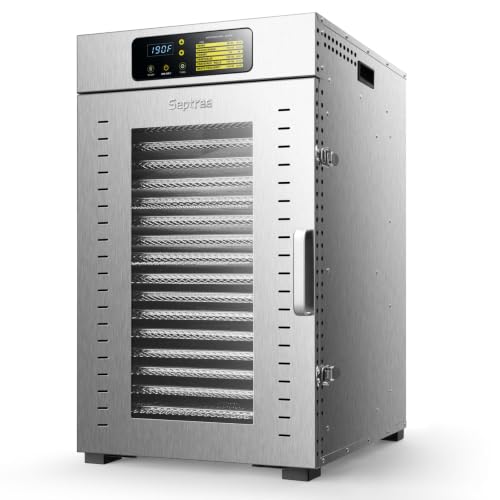
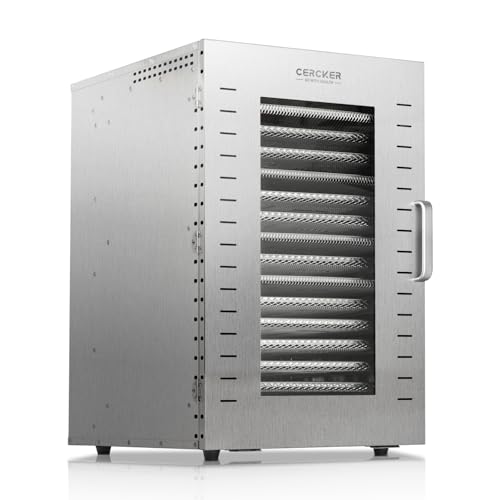
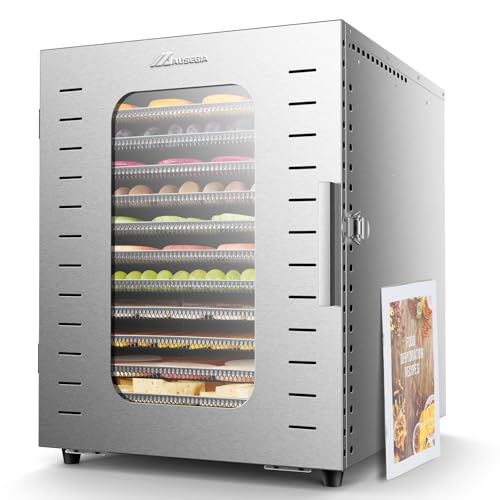


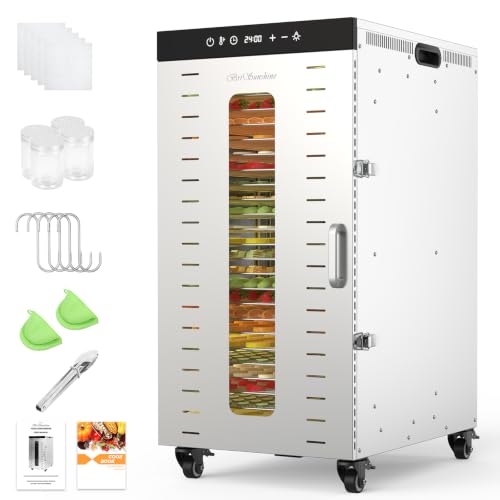


Quick Answer: The Main Types in 30 Seconds
Most buyers choose between three layouts. Shelf models use a rear fan and horizontal airflow, so foods dry evenly without tray rotation. Stackable models grow by adding trays and cost less at the start, but results can vary by level.
Large cabinets hold the most food, yet they need a dedicated spot and a strong circuit. Match the layout to your routine first, then compare controls and materials.
Before You Buy: A Quick Checklist for Choosing a Food Dehydrator
The right choice depends on how food moves through your home each week. A family that dries lunch snacks needs something different from a household that processes a whole deer or a fall apple crop. Work through each point below before you look at any single model. For smaller machines, see our guide to the best food dehydrator for everyday home use.
Which Type Fits Your Routine
Shelf models suit people who dry mixed loads, such as fruit on one tray and vegetables on another, because horizontal airflow treats each shelf much the same. Stackable models suit occasional users who start small and add trays during peak harvest weeks. Stainless steel cabinets suit frequent users who value durability and simple wiping after sticky loads.
Plastic cabinets weigh less and cost less, which matters if you carry the unit to the counter. Let your most common load, not your largest dream load, lead the choice.
Features Worth Paying For and Ones to Skip
A timer with automatic shutoff is worth paying for, because it lets a load finish overnight or while you are at work. A wide temperature range matters too, since herbs need gentle heat while meat needs higher settings. Stainless steel trays resist staining and handle scrubbing better than many plastic trays.
A glass door helps you check progress without opening the cabinet and losing warm air. Skip preset programs you will never use, extra fruit leather sheets beyond your habits, and decorative finishes that add cost without adding drying space.
Wattage, Power and Energy Use
Commercial units commonly draw about 600 to 1000 watts, because they heat a much larger cabinet and move more air. Higher wattage does not always mean better drying, since airflow design and insulation shape how evenly heat reaches each tray. Running costs add up across long sessions, so a well sealed door and an accurate thermostat can save more over a season than a small gap in purchase price. Check that your circuit can handle the unit alongside other appliances, and avoid sharing a circuit with a microwave or kettle.
Safety Features and Certifications
Look for a listing from UL or ETL, which shows the unit was evaluated against recognized electrical safety standards. Overheat protection that cuts power if the fan fails is worth confirming, especially for long unattended runs. For meat, follow current food safety guidance and heat jerky to safe temperatures as directed, because a dehydrator alone may not reach them on every setting. Keep the unit on a stable heat safe surface, leave clearance around vents, and stop using it if you notice scorch marks, a burning smell, or a cord that feels hot.
Counter Space and Dimensions
Measure the cabinet, the door swing, and the clearance the maker asks for around vents, not just the footprint on paper. A large unit can fit on a counter yet block upper cabinets when you open the door. Many households place a commercial model on a sturdy cart, a laundry room counter, or a garage bench near an outlet.
Confirm the surface can hold the loaded weight, since trays of wet fruit weigh far more than the empty cabinet suggests. Picture where the unit lives in winter too.
Realistic Budget Ranges
At under $100 you are mostly in compact home territory, with limited tray area for trial runs and small snack batches. Around $100 to $250 buys many midsize shelf models with digital controls and room for family harvests. About $250 to $400 is where larger cabinets, stronger fans, and longer warranties become common.
Spending over $400 makes sense mainly when you dry food most weeks or share the unit between households. Put part of the budget aside for extra trays, mesh sheets, and storage jars.
Types Compared: How to Choose a Commercial Model for Your Home
With the checklist in mind, compare the three layouts by the jobs they handle best and the differences that change your results at home.
Shelf Models for Mixed and Frequent Loads
Shelf models earn their place when you dry several foods at once and want even results without rotating trays. The rear fan pushes air across each shelf, so thin apple slices and thicker tomato halves finish closer together. They are the natural step up for jerky makers, and our guide to the best food dehydrator for jerky covers meat specific prep in more depth. The trade off is size, since the cabinet stores less neatly than a stackable tower.
Stackable Models for Flexible Small Starts
Stackable models let you run four trays for a weeknight snack batch or add trays when a neighbor shares a box of peaches. The base holds the heater and fan, so trays near the base often dry faster and benefit from rotation. They cost less and tuck into a closet between uses, which suits renters and smaller kitchens. The limits show up with strong smelling foods, because vertical airflow carries odors from tray to tray.
Large Cabinets for Harvest Scale Batches
Large cabinets with ten or more trays suit gardeners, orchard owners, and families who preserve food as a team sport. You can dry herbs on the top shelves while fruit leather sets below, a pairing that works when airflow stays even. For delicate loads, our guide to the best food dehydrator for herbs explains gentle temperatures and timing in detail.
The real costs are room, power draw, and cleaning time. Choose this layout only when your typical batch truly fills it.
Our Selection Process for the Best Commercial Food Dehydrators
We compare models on usable capacity, how evenly the maker says air moves across trays, ease of daily use, and how simple the trays and cabinet are to clean. We also weigh noise, safety listings, and warranty length, using maker spec sheets and verified buyer feedback.
What We Like and What We Do Not About Commercial Models
The clear gain is throughput, since one large run can replace three small ones and free your weekend. Even airflow in shelf designs also means fewer scorched edges and fewer trays that stay sticky in the middle. The downsides are real, starting with counter space and the hum of a larger fan running for eight hours or more.
Cleaning also takes longer, because sticky residue spreads across more trays. If you are weighing a different path, our comparison of freeze dryer vs dehydrator explains how texture, storage life, and cost differ.
Noise deserves an honest note for open plan homes. A commercial fan that sounds fine in a garage can feel intrusive beside a living area during an overnight run. Heat output matters too, since a big cabinet can warm a small kitchen in summer.
Common Buying Mistakes to Avoid
- Buying the largest cabinet for a once a year harvest, then losing storage space to it for the other eleven months.
- Ignoring circuit limits and tripping a breaker mid load, which leaves food sitting warm and damp.
- Paying for extra preset programs while skipping the timer and shutoff features you would use weekly.
- Forgetting the cost of extra mesh sheets, fruit leather trays, and airtight jars when setting the budget.
- Skipping the maker cleaning guidance, then fighting baked on residue that makes each later run harder.
Cost of Ownership and Care
Electricity is the main running cost, and long sessions at high settings add up across a busy preserving season. Extra trays and mesh sheets are the usual accessory costs, while door seals and fans are the parts most likely to need attention over years of use. Wipe the cabinet after sticky loads, wash trays in warm soapy water, and let every part dry fully before storage.
For loading and timing basics, see our guide on how to use a food dehydrator before your first large batch. Store the unit with the door slightly open, and check the cord before each season.
Your Questions, Answered
How do you clean a commercial food dehydrator after sticky fruit loads?
Start once the unit has cooled, then soak trays and mesh sheets in warm soapy water for about twenty minutes so dried sugars loosen. Wipe the cabinet interior with a damp cloth and mild detergent, keeping water away from the fan housing and vents. A soft brush clears residue from tray corners where fruit leather tends to stick. Dry every part fully before closing the door, because trapped moisture causes lingering odors between seasons.
Are commercial food dehydrators worth it for a family of four?
They are worth it when your family dries food at least twice a month or handles big seasonal harvests that overwhelm a small unit. The value shows up as fewer runs, less weekend time tied to tray rotation, and snacks that replace store bought ones. If you only dry a tray of apple slices now and then, the extra size and power draw buy you little. A simple trial helps, since a borrowed or rented weekend with a large batch tells you more than any spec sheet.
How long does a commercial food dehydrator usually last?
A well cared for unit often serves for many years, with fans and heating elements doing most of the work and trays lasting as long as you avoid harsh scouring. Lifespan drops when residue builds up around vents or the unit runs on an overloaded circuit that strains the motor. Keeping the intake area clear and storing the machine dry between seasons protects the parts that wear first. Warranty length is a useful signal here, because makers tend to back the models they expect to last.
Can a commercial food dehydrator run safely overnight?
Many owners run loads overnight, but safe practice means using a model with a timer and automatic shutoff, placing it on a stable surface with clear vents, and keeping it away from curtains and paper goods. Start overnight runs only after you have watched the same load type finish once during the day. Keep a working smoke alarm in the area. If your home wiring is older, have an electrician confirm the circuit can carry the load.
What temperature should you use for herbs in a commercial food dehydrator?
Herbs dry best at the gentle end of the range, around 95 to 115 degrees Fahrenheit, because higher heat fades color and drives off the aromatic oils you want to keep. Spread leaves in a single layer with space between them, since crowded trays trap moisture and extend the run. Small leaves can fall through wide tray gaps as they shrink, so a mesh sheet under them saves cleanup and lost harvest. Herbs are done when leaves crumble cleanly between your fingers without feeling cool or damp.
Final Thoughts
Start with your real routine, the space you can give up, and the circuit that will carry the load, then pick the smallest layout that handles your typical batch with room to spare. The product table above pulls those trade offs together so you can compare types side by side. Chosen well, the best commercial food dehydrator turns a crowded harvest weekend into one calm run and a shelf of snacks your household will actually eat.


