Best Commercial Coffee Maker for Home Kitchens (2026): Which Type Fits
Disclosure: We may earn a commission when you buy through links on this page, at no extra cost to you. As an Amazon Associate I earn from qualifying purchases. Learn more

Choose the best commercial coffee maker for a busy home by batch size, counter space and upkeep, from batch drip to plumbed brewers.
A busy home can empty a standard pot before everyone has had a first cup. Relatives visit, adults and teens all want refills, and a small brewer turns breakfast into a queue at the counter. Choosing the best commercial coffee maker for that kind of house means matching output, counter space, and daily upkeep to your real routine. The comparison table below sums up the main types so you can start with size and budget.
True commercial brewers are built for cafes, offices, and shared kitchens, with large batches and parts made to be serviced. Lighter commercial style models borrow the capacity and sturdy build but stay sized for a home counter. If your household drinks far less, our guide to the best coffee maker covers smaller options that cost less to buy and run.



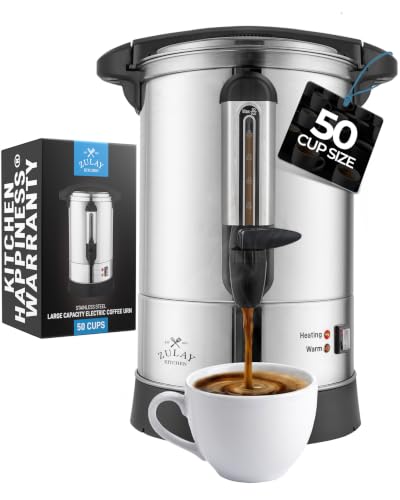
Quick Answer: Three Types Worth Considering
Start with how much coffee you serve in one busy hour, because that number sorts the field faster than any feature list. Most homes fall into one of the three groups below. Pick your group first, then use the checklist that follows.
- Batch drip brewers suit most homes, brewing one large pot at a time for families and guests.
- Compact manual fill brewers suit tight counters and lighter use, trading batch size for a smaller footprint.
- Plumbed high capacity brewers suit heavy daily use, drawing water from a line so nobody refills a tank.
Before You Buy: A Quick Checklist for Choosing a Coffee Maker
Work through these points in order. Size and type come first, because a brewer that fails either one will annoy you every single day, no matter how good its coffee tastes.
Size: Match It to Your Space
Manufacturers rate capacity in cups, but a cup on a box is often about 5 ounces, far less than a typical mug. Count your real servings on your busiest morning, including refills, then choose a brewer that covers that total in one or two batches. If you are really shopping for the best coffee maker for home use, a large standard model may already be enough.
Which Type Fits Your Routine
Most buyers land on batch drip, where water passes through a basket of grounds into a carafe or an insulated dispenser. It is the format behind the best drip coffee maker models homes already know, just scaled up for bigger batches and faster cycles. Manual fill versions need a tank topped up by hand, while plumbed versions connect to a water line.
Features Worth It (and Ones to Skip)
Worth paying for are a clear batch size control, a spray head that wets the grounds evenly, and a holding setup that suits how fast you drink a pot. A built in grinder sounds appealing, and our guide to the best coffee maker with grinder explains that trade off in detail. Milk frothers, pod adapters, and large color touchscreens add cost and cleaning without raising batch output, so most buyers can skip them.
Brew Temperature and SCA Certification
Good extraction needs water at about 195 to 205 degrees Fahrenheit as it meets the grounds, held steady across the whole batch rather than only at the start. Brewers that run cool tend to taste sour and thin, while unstable heat gives uneven results from pot to pot. Certification from the Specialty Coffee Association means a brewer met set targets for temperature, brew time, and uniformity under a published standard. It is a useful signal, though an uncertified brewer that holds temperature well can still serve a home nicely.
Water Reservoir, Filters and Descaling
A manual fill reservoir should hold at least one full batch so you are not topping up mid brew, and it should lift out or open wide for cleaning. Plumbed models skip the tank but need a simple inline filter to protect valves from scale and sediment. Paper filters cost a little per pot, while mesh baskets rinse clean but can let fine sediment through. Check how the maker guides descaling before you buy.
Counter Footprint
Measure width, depth, and height before you order, then add the clearance the machine needs in daily use. Lids and brew baskets open upward, so a brewer that fits under a cabinet on paper may not open once it sits there. Insulated dispensers add height under the brew head, and plumbed lines need a clear path to the water source. Leave a little room behind the unit for steam to escape.
Realistic Budget Ranges
Home scale commercial style brewers generally run about $100 to $250, covering solid batch drip models with glass or thermal carafes. Stepping up to about $250 to $600 buys larger batches, faster recovery between pots, and plumbed ready designs with sturdier parts. True commercial units above that range add serviceable components and duty ratings for all day use, but they can also need a dedicated circuit or a plumber.
Types Compared: Which Commercial Coffee Maker Suits Your Home?
With your checklist set, compare the three types below side by side. The best commercial coffee maker for a family kitchen is rarely the largest model in the catalog. It is the type whose batch size, water supply, and cleaning load fit the way your household already works.
Batch Drip Brewers for Most Homes
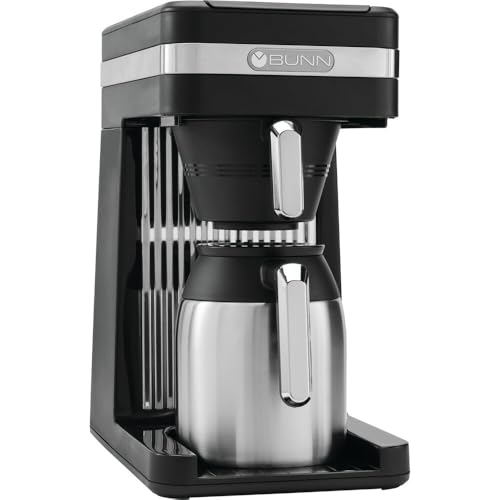
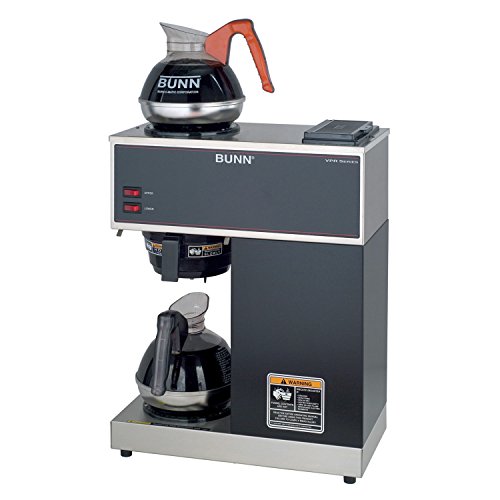
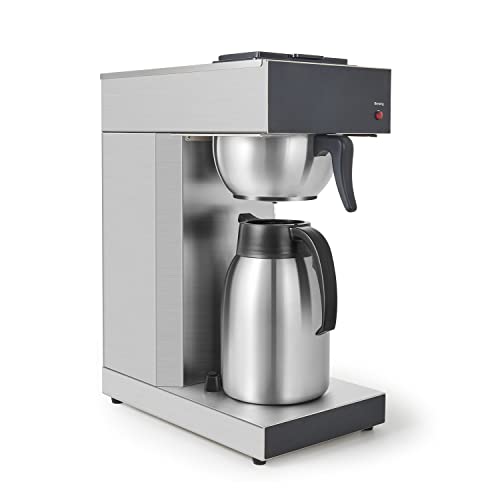
This is the default choice for families who host often and want a full pot ready at breakfast. A glass carafe on a warming plate suits coffee that gets poured within the hour, while a thermal carafe holds heat without a plate and travels to the table. Batches are big enough for guests, and controls stay simple. The main cost is counter space, since these are among the widest home machines.
Compact Manual Fill Brewers for Tight Counters
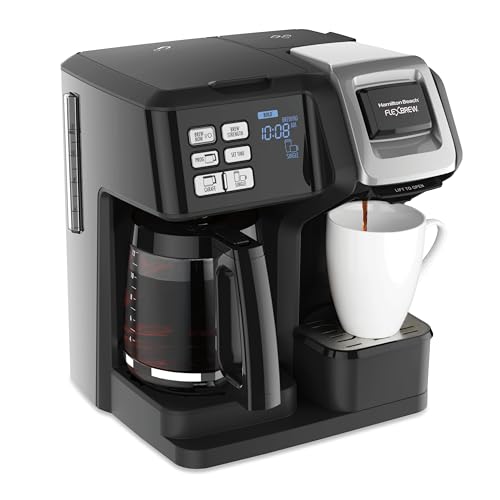
Smaller manual fill models bring commercial touches, like a sturdy basket and even water spread, to kitchens that cannot spare much room. They brew modest batches, so a crowd means cycling a second pot, but daily use for two to four drinkers feels quick and calm. Because you fill the tank by hand, there is no plumbing cost and you can move the machine freely. This is the value route for most small households.
Plumbed High Capacity Brewers as a Long Term Investment
Homes that brew pot after pot all day, or that share a kitchen with a home office or a rental unit, get the most from a plumbed machine. A direct water line removes refilling, and larger boilers recover fast between batches, so output stays steady during gatherings. Parts on this class of brewer are usually sold separately and replaced one at a time, which stretches the useful life of the whole unit. Installation cost is the hurdle, and the machine is hard to move later.
How to Evaluate Commercial Coffee Makers
Judge these machines on brew quality, temperature stability, ease of use, cleaning and descaling effort, and build quality. Those five points decide whether a brewer stays pleasant in year three, not just during its first week on the counter.
Look at manufacturer data, published standards and what long term buyers say about service parts and warranty support before you compare prices.
Strengths and Trade Offs of Commercial vs Other Coffee Makers
The strengths are speed and repeatability. A commercial style brewer makes a large batch in minutes and repeats that result pot after pot, which is exactly what a full house needs at breakfast. Parts like baskets, carafes, and spray heads tend to be sold as spares, so a worn piece does not end the life of the machine.
The trade offs are size, cost, and waste. These machines claim serious counter space and cost more up front than a basic home brewer. Brewing a full batch for two cups wastes coffee and energy, so small households lose the main benefit. If you also want milk based drinks, read our coffee maker vs espresso machine comparison before deciding, because a batch brewer cannot steam milk or pull espresso shots.
Common Buying Mistakes to Avoid
- Buying by cup count on the box, which uses small cups and leaves a house full of guests waiting on a second batch.
- Ignoring the height a lid or basket needs to open, so the brewer only works pulled to the edge of the counter.
- Choosing a plumbed model without pricing the water line work, which can add a plumber visit to the real cost.
- Paying for pods, frothers, and screens you will rarely use, while skipping the thermal carafe you need every day.
- Forgetting filter and descaler costs, so the cheapest machine to buy becomes the priciest one to feed each month.
Cost of Ownership and Care
Running costs stay modest but steady. Paper filters, descaler, and replacement water filter cartridges add up across a year of daily pots, and a spare carafe is worth pricing before you need one. Large boilers also draw more power during each brew than a small home machine.
For care, wash the carafe and brew basket daily, wipe the spray head weekly, and descale on the schedule your water hardness demands. Our step by step guide to how to clean a coffee maker walks through the full routine in order. Store a thermal carafe with its lid loose so trapped moisture does not leave stale odors.
Your Questions, Answered
What is the most reliable commercial coffee maker brand?
No single brand wins for every buyer, because reliability in this category depends heavily on local service. A brand with a nearby service network, spare parts in stock, and a warranty that covers commercial use will serve you better than a famous name you cannot get repaired. Ask sellers how long parts stay available for a model before you commit to it.
How do you clean a commercial coffee maker?
Start with the daily wash, since old coffee oils on the basket and carafe turn fresh batches bitter. Empty grounds after each brew, wash removable parts in warm soapy water, and rinse well. Descaling is a separate job done on a cycle with a descaling solution. A clear sign you waited too long is a brew cycle that runs noticeably slower than it used to.
Is a commercial coffee maker worth it for a home?
It is worth it when your home regularly serves four or more coffee drinkers, or hosts often enough that a standard pot runs dry. Compare the machine price with what your household spends on cafe coffee during gatherings across a year. If most mornings involve one quiet mug, the extra capacity sits unused and a smaller brewer is the smarter spend.
How long does a commercial coffee maker last?
Lifespan tracks batches per day more than birthdays. A machine rated for heavy daily duty can serve a home for many years, since home use is light by commercial standards. Wear items like carafe seals, valves, and warming plates fail first and are usually replaceable. Feeding the brewer filtered water slows scale, which is the most common cause of early failure.
What is the best commercial coffee maker?
The right answer depends on your peak hour, not your daily total. Count the most servings you need within one busy hour, since a brewer that keeps up at peak will cruise the rest of the day. Match that number to batch size and recovery speed, then check footprint and water supply. The model that fits those four facts is the right one for your home.
Final Thoughts
For most homes, a batch drip brewer with a thermal carafe covers family mornings and guests without plumbing work or cafe level cost. Tight counters point to a compact manual fill model, while nonstop daily brewing justifies a plumbed unit. Whichever type you choose, the best commercial coffee maker is the one sized to your busiest hour and simple enough to clean without a second thought. Look back at the product table above, confirm your measurements, and order with confidence.