Best Coffee Maker for Home: Household Guide 2026
Disclosure: We may earn a commission when you buy through links on this page, at no extra cost to you. As an Amazon Associate I earn from qualifying purchases. Learn more
Best coffee maker for home: matching capacity, carafe and features to your household.
Choosing the best coffee maker for home starts with your mornings, not with a feature list. Think about who pours the first cup, how many mugs get filled before work or school, and how much counter you can truly spare. A maker that suits a quiet two person kitchen can frustrate a busy family, and the reverse is also true.
This guide walks you through size, brew types, features, budgets, and daily care so you can match a machine to your household with confidence. Start with the comparison table below to see how the main types differ at a glance, then use the checklist that follows to narrow your choice step by step.




Quick Answer: Three Buying Profiles in Brief
Most home buyers fall into one of three groups, and naming your group early makes later decisions easier. Batch brewers serve households that fill several mugs at once. Single cup brewers suit solo drinkers and couples who hate waste. Flavor focused brewers suit readers who care most about steady brew temperature and a thermal carafe.
- Busy household profile: a programmable batch brewer in the 10 cup to 12 cup range, with a carafe that pours cleanly and a pause feature for an early first mug.
- Solo or couple profile: a compact brewer that makes one mug at a time or a small 4 cup to 5 cup batch, so coffee tastes fresh and cleanup stays quick.
- Flavor focused profile: a brewer with strong temperature control and a thermal carafe, sized to your daily volume rather than to your biggest guest day.
Before You Buy: A Quick Checklist for Choosing a Home Coffee Maker
Start with capacity and space, because a maker that does not fit your counter or your household will annoy you no matter how good the coffee tastes. Then look at brew type, features, temperature, water handling, and budget.
Size: Match Capacity to Your Household
Capacity labels can mislead you, because one coffee cup on most makers means about 5 ounces, not a full mug. A 12 cup carafe therefore holds about 60 ounces, which fills roughly five generous mugs. Count your real morning pours, add one cup for a guest, and choose the smallest size that covers that total. If most days mean a single mug, compare the sizes in our guide to the best single cup coffee maker so you brew only what you drink.
Which Type Fits Your Routine
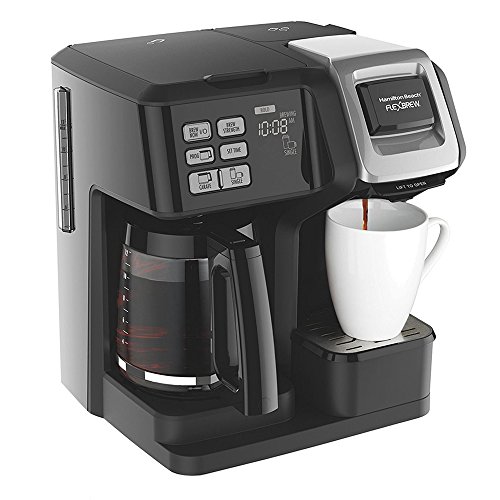
Drip brewing is the default for most homes because it makes a full pot with almost no attention, and our guide to the best drip coffee maker explains the format in more depth. A glass carafe on a warming plate costs less, while a thermal carafe keeps coffee hot for hours without cooking the flavor. Dual machines add a single cup side for pods or grounds, and iced settings brew a stronger small batch to pour over ice. Pick the type that matches your most common morning, not your rarest one.
Features Worth Paying For and Ones to Skip
A program timer earns its keep if you wake at the same time each day, and automatic shutoff adds peace of mind in a busy kitchen. A grinder built into the machine saves counter space and grinds right before brewing, and you can read more in our guide to the best coffee maker with grinder if that idea appeals to you. A milk frother helps only if you already make lattes daily. Skip extra drink menus and app controls if you will press the same single button every morning.
Brew Temperature and SCA Certification
Coffee extracts best in water between 195 and 205 degrees Fahrenheit, and makers that brew too cool often taste sour or thin. Certification from the Specialty Coffee Association signals that a brewer holds that range steadily across a full batch, which matters more as carafe size grows. You do not need certification for good coffee, but you should look for clear temperature information rather than vague claims about hot brewing. If your current cups taste flat despite fresh beans, temperature is a likely reason to upgrade.
Water Reservoir, Filters and Descaling
A removable reservoir is easier to fill and wash than a fixed tank. Paper filters cost little and give a clean cup with easy cleanup, while a reusable mesh filter saves money over time and lets more oils through for a heavier body. Hard water leaves scale inside any maker, so choose one with a clear descaling alert or a simple cleaning cycle you will actually run. In a hard water area, plan to descale about every one to three months.
Counter Footprint and Daily Access
Measure your counter depth and the clearance under your cabinets before you shop, because many makers need extra height with the lid open for filling. Check whether the carafe slides out without tilting under low cabinets. A compact footprint helps in small kitchens, but a slightly larger base can feel steadier when you pull the carafe out with one hand. Leave a little room around the machine, since steam escapes near the top during brewing.
Realistic Budget Ranges
Basic drip makers under $30 cover simple needs, usually with a glass carafe and few settings. Stepping up to under $50 often adds a program timer and better carafe pouring. Models under $100 commonly bring thermal carafes and bolder brew settings. Spending under $200 can buy steadier temperature control and sturdier parts for homes that brew several pots a day. Set your budget after you fix capacity and type, so money goes to traits you feel daily.
Three Buying Profiles and What to Prioritise
Instead of chasing a single winner, match your home to one of these profiles. Each profile lists the traits that deserve your money and the extras you can safely ignore.
Profile One: The Flexible Batch Brewer for Most Homes
This profile fits families and shared homes where two to five people drink coffee within the same morning window. Prioritise a 10 cup to 12 cup capacity, a reliable timer, and a carafe that pours without dripping. A thermal carafe helps if people pour across an hour or more, while a glass carafe suits homes where the pot empties fast. Skip pod attachments and frothers unless someone already uses them weekly.
Profile Two: The Small Footprint Brewer for Tight Budgets and Small Kitchens
This profile fits solo drinkers, couples, and small apartments where counter space is the scarcest resource. Prioritise a compact body, a simple layout, and a size in the single cup to 5 cup range that matches your real pours. Basic models in this group often cost under $50 and still brew a satisfying mug with fresh grounds. Skip large reservoirs and long feature lists, because both add size and cost without improving a small daily batch.
Profile Three: The Long Term Investment for Flavor Focused Homes
This profile fits readers who brew daily, notice flavor differences, and plan to keep one machine for many years. Prioritise steady temperature in the 195 to 205 degree range, a well sealed thermal carafe, and parts you can replace, such as the carafe and filter basket. A slightly higher price, often about $150 to $200, makes sense here because the machine works hard every day. Skip novelty drink programs and focus your budget on extraction quality and build.
How to Judge a Home Coffee Maker
Home coffee makers are judged here on brew quality, temperature stability, ease of use, cleaning effort, and build quality, using maker specifications and owner feedback about daily reliability. The guide leaves model names to the product table, which keeps the advice focused on traits you can verify on any product page before you order.
Living With It: What Really Matters Day to Day
Daily life reveals things a spec sheet hides, such as how loud a maker sounds in a quiet kitchen at dawn. A warming plate can keep coffee hot, but it slowly stews the flavor, so a pot that sits for two hours tastes better from a thermal carafe. Weekday mornings reward a timer and a carafe that pours fast, while weekends reward a bold setting for larger pots when guests visit. Think about who cleans the machine, because the person who brews most should find the reservoir easy to handle.
Some readers weigh a drip maker against an espresso machine for home use. Espresso gear gives you concentrated shots and milk drinks, but it asks for more money, more counter space, and more practice each morning. A drip maker wins on volume, simplicity, and cost per cup, which is why it stays the default in most kitchens.
Common Buying Mistakes to Avoid
- Buying a 14 cup maker for a two mug household, so every small batch tastes weak and leftover coffee goes down the drain.
- Skipping the cabinet clearance check, so the lid cannot open fully and filling the reservoir becomes a daily struggle.
- Paying for a frother, pods, and app controls you never use, while settling for weak temperature control that shapes every cup.
- Ignoring filter and descaling costs, so a cheap maker grows expensive and slow as scale builds up inside.
- Choosing a glass carafe when your household pours across several hours, so the last mug tastes stewed from the warming plate.
Cost of Ownership and Care
The purchase price is only part of what a home coffee maker costs you over its life. Paper filters, descaling solution, and a replacement carafe after a drop are the usual running costs, and electricity use stays modest for standard drip brewing. Rinse the carafe daily, wash removable parts weekly with warm soapy water, and descale on the schedule your water hardness demands. For a fuller routine, follow the steps in our guide on how to clean a coffee maker so flavor stays clean and brewing stays fast.
Store the maker with the lid open if you will not use it for a week or more, so the reservoir dries fully. Keep spare filters where you store your coffee, because running out tempts you to reuse an old filter and dull the cup. Note the date of your last descale on tape inside a cabinet door if your maker has no alert. Small habits like these protect flavor and the heating element over years of use.
Your Questions, Answered
What makes a coffee maker reliable for home use?
Reliability comes from simple parts, steady temperature, and a carafe and basket you can replace without replacing the whole machine. Look for a warranty of at least one year and clear descaling guidance in the manual. Owners report fewer problems when they descale on schedule, since scale strains the heating element.
How do you clean a coffee maker?
You clean a coffee maker by washing the carafe and removable parts, wiping the exterior, and running a descaling cycle with vinegar or a descaler. One detail many owners miss is the spray head above the basket, which collects oils and needs a wipe with a damp cloth. Rinse by brewing plain water once after descaling.
Is a coffee maker worth it for home use?
A coffee maker is worth it if you drink coffee most days, because the cost per home brewed cup is a small fraction of a cafe cup. Even a modest maker can pay for itself within a few months for a daily drinker who skips one cafe visit a week. It is less worth it if you drink coffee only rarely and prefer cafe visits as a treat.
How long does a coffee maker last?
Most home coffee makers last about five years, with simple drip models often running longer when you descale them on schedule. Heavy daily use and hard water shorten that span, while gentle use and soft water extend it. Signs that a maker nears the end include slow brewing, lukewarm coffee, and leaks around the base. Replacing a worn carafe or filter basket is normal upkeep and does not mean the machine itself has failed.
What should I look for in a coffee maker for home?
Look first at capacity that matches your daily pours, then at brew temperature, carafe type, footprint, and ease of cleaning. One check buyers skip is lifting the carafe when it is full, since a heavy carafe with an awkward handle annoys you every morning. Confirm the return terms before you order, so you can check the fit on your counter. A short list ranked by your routine beats a long list copied from ads.
What is the best coffee maker for home?
The right answer depends on your household, because the maker that suits a family of five will waste coffee and counter space in a solo kitchen. Start with your single top priority, whether that is capacity, timing, or flavor, and let it rule out most options quickly. Then compare the remaining types on carafe style and cleaning effort.
Final Thoughts
Look back at the product table above and match each type against your top profile, your counter measurements, and your budget range. The best coffee maker for home for you is the one whose size, carafe, and temperature control fit your routine so well that you stop thinking about the machine at all. Prices and availability can change, so check the product page before ordering.