Best Coffee Machines Pods: Pod Machine Guide 2026
Disclosure: We may earn a commission when you buy through links on this page, at no extra cost to you. As an Amazon Associate I earn from qualifying purchases. Learn more
Best coffee machines pods: three pod machine types, real cost per cup and refillable options explained.
Walk into any kitchen store and you will find a wall of machines that all promise the same thing: a hot cup of coffee at the press of a button. The confusion starts because those machines are not one product at all. Some brew a single cup from a sealed pod, some split their time between pods and a full carafe, and some push water through a pod at high pressure to imitate espresso. Choosing well begins with knowing which type fits your mornings, and that is why this guide to best coffee machines pods compares each type side by side instead of listing models.
The second thing most buyers miss is that the machine is the cheap part of the purchase. The pods you feed it every day are the real running cost, and each machine locks you into one pod ecosystem with its own range and its own prices. This guide covers the three main types, the honest cost per cup of each one, the features that actually change the coffee in your mug, and the refillable pod options that loosen the lock in. The comparison table below sums up the types before the detail that follows.


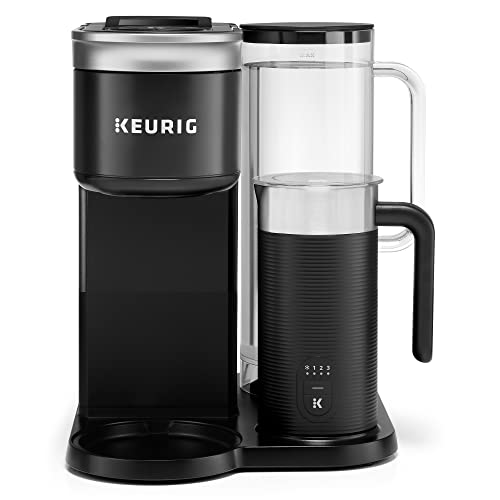

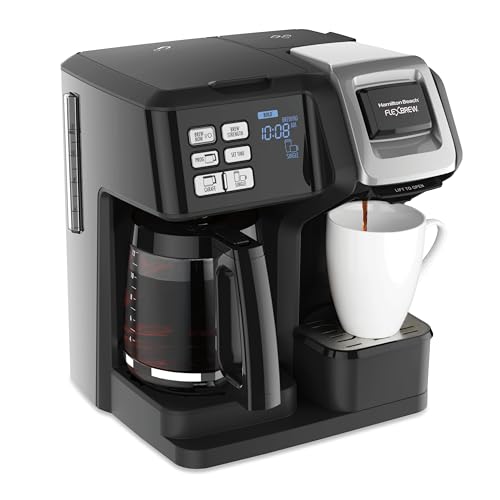
The Three Types of Pod Coffee Machines Compared
Every pod machine brews by forcing hot water through a sealed portion of ground coffee, but the format around that simple idea splits into three clear types. The table below gives the short version, and the sections after it explain how each type works, where it shines, and where it falls short.
| Type | Best For | Pros | Cons | Typical Price |
|---|---|---|---|---|
| Single serve pod machines | One or two cups a day | Fast, tidy, almost no cleanup | Highest cost per cup, one cup at a time | About $60 to $150 |
| Pod machines with a carafe side | Mixed households | Pods on weekdays, a full pot for guests | Larger footprint, two systems to clean | About $120 to $250 |
| Espresso leaning pod machines | Milk drinks and short strong coffee | Crema topped shots, compact bodies | Smaller drink range, pods cost more | About $100 to $300 |
Single Serve Pod Machines
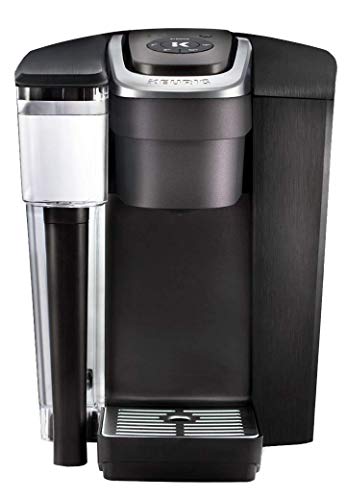
A single serve machine holds a water tank, heats a small amount of water on demand, and pushes it through one pod into one mug. From cold water to a finished cup takes about a minute, and the only cleanup is throwing the spent pod away. Cup size buttons let you pick a small, medium, or large pour, though the same pod stretched over more water simply brews a weaker cup.
This type suits solo drinkers, small offices, and anyone who values speed and a clear counter over everything else. Its weakness is arithmetic: one pod per cup means the cost per cup is the highest of the three types, and a household drinking four cups a day will feel that within a month. It also brews one cup at a time, so serving a table of guests turns into a queue.
Pod Machines With a Carafe Side
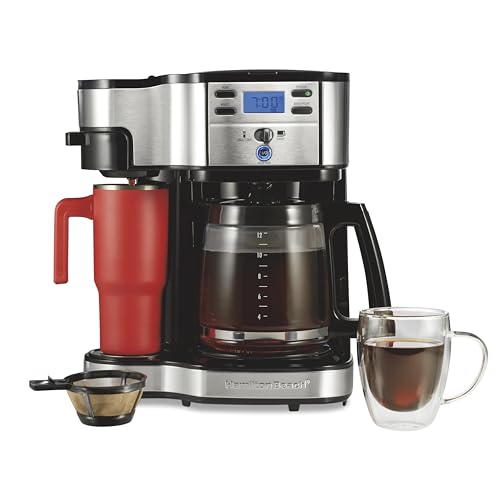
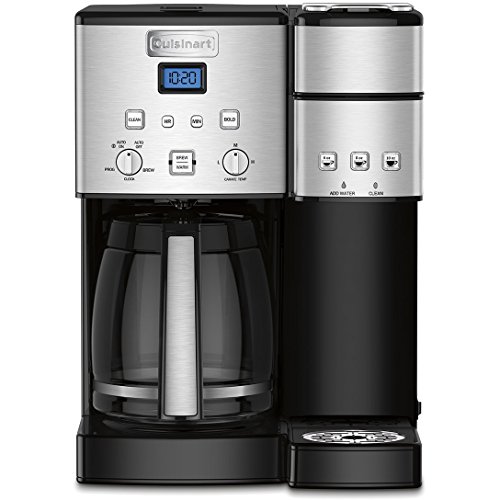
A carafe combination machine puts two brewers in one body. One side takes pods for single cups, and the other side is a drip brewer with a filter basket and a glass or thermal carafe that makes a full pot from loose grounds. You get pod speed on a rushed weekday and a shared pot on a slow weekend, without owning two machines.
The trade offs are size and upkeep. These machines are the widest of the three types and need counter depth as well as height clearance for the basket lid. You also maintain two brewing paths, so descaling and washing cover more parts. For a mixed household where one person drinks pods and another drinks pots, though, it is the only type that keeps both habits under one plug.
Espresso Leaning Pod Machines
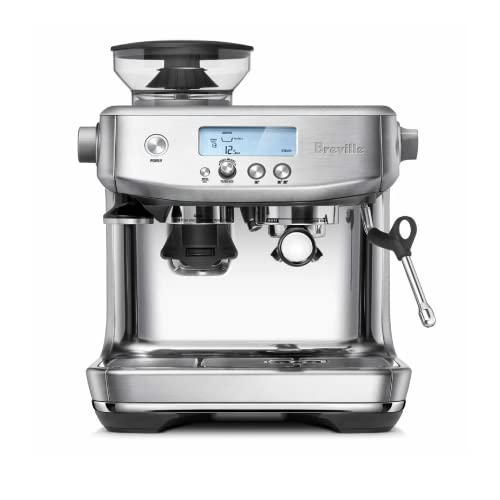
Espresso leaning machines use a pump to push water through a smaller, denser pod at much higher pressure, often around 19 bar. The result is a short, strong shot with a layer of crema on top, closer to cafe espresso than to filter coffee. Most add a milk frothing wand or a one touch milk container for lattes and cappuccinos.
Choose this type if your favorite drinks are short and milk based rather than long and black. The pods are usually the priciest of the three types and the drink sizes top out well below a large mug, so high volume mug drinkers will find it limiting. Readers comparing this class with pump machines that use loose grounds can see our guide to the best espresso coffee machines for the other side of that choice.
Pod Machines vs Ground Coffee Machines: Which Should You Choose?
The real fork in the road is not between the three types above but between pods and loose grounds. A pod machine wins on speed, consistency, and cleanup: every cup tastes the same, and there is no basket of wet grounds to empty. A ground coffee machine wins on price per cup, freedom of beans, and waste, because a bag of coffee costs a fraction of the same drinks in pod form and leaves compostable grounds instead of a pile of capsules.
Your daily count decides it for most people. At one cup a day, the pod premium is a small price for the convenience. At four or more cups a day, the yearly pod bill can pass the price of the machine itself, and a drip brewer or similar ground based option starts to look far smarter. Our guide to the best non pod coffee machines covers that side of the shelf if the running cost math pushes you away from pods.
How to Choose the Right Pod Coffee Machine
Once the type is settled, the differences that matter are the ones you will live with daily: what each cup costs, what the machine is made of, how it handles milk, and whether it fits your counter. Work through the factors below before you look at any single model.
Pod Cost Per Cup and the Ecosystem You Are Buying Into
A pod machine ties you to one pod ecosystem, and that tie matters more than the sticker price of the machine. Each system has its own capsule shape, its own coffee range, and its own price per pod, and pods from one system do not fit machines built for another. Before you buy the machine, price the drinks you actually like in that system and multiply by your daily count. That cost per cup figure is the honest comparison between machines, because a cheap machine drinking expensive pods loses to a pricier machine on a cheaper system within the first year for most households.
Two escape routes soften the lock in. Refillable pod classes exist for the most common systems: reusable capsules you fill with your own ground coffee, which cut the cost per cup sharply and remove most of the capsule waste. They add a minute of filling and rinsing to each cup, so they suit one or two daily drinkers better than a busy family line. The pod supply itself is also part of the purchase, and our guide to the best coffee pods walks through flavors, strengths, and value packs.
Build Materials: Plastic, Stainless Steel, and Glass
Most pod machines at the lower end are plastic bodied with a plastic water tank, which keeps them light and cheap but can pick up stale odors if the tank sits full for days. Stainless steel bodies and boilers resist odor, feel sturdier, and usually signal a machine built for a longer service life. Where glass appears, it is in the carafe on combination machines, and a thermal steel carafe holds heat without a hot plate cooking the coffee. Whatever the material, look for parts described as food safe and a water tank you can lift out and scrub, because a tank you cannot clean properly will taint every cup.
Milk Frothing Options
If your drinks are black, skip this factor entirely and spend the money on the brewer itself. If you drink lattes or cappuccinos, you have three routes. A manual steam wand gives the finest foam and the most control but takes practice and a wipe down after every use. An automatic frother draws milk from a jug or container, textures it, and pours with one button, at a higher price and with more parts to refrigerate and wash. The third route is a separate countertop frother, which keeps the machine simple and lets you replace the frother alone if it fails. The makers behind each system differ in how much of this they build in, and our overview of the best coffee machine makers explains how the main brands divide on features like these.
Footprint and Countertop Fit
Measure before you buy, because pod machines fail on fit more often than on flavor. Check the height with the pod lid or basket fully open, not the closed height printed in large type, since most counters sit under wall cabinets with limited clearance. Check the depth with the drip tray in place, and confirm the water tank either lifts straight up or pulls out from the front, because a rear tank on a machine pushed against a wall means dragging the whole unit forward for every refill.
Brew Strength and Drink Style
Pod machines offer less control than ground coffee brewing, but the control they do offer is worth comparing. A strength or bold setting slows the water flow or adds a pulse at the start, extracting more from the same pod. Cup size buttons change strength too, in the opposite way most people expect: the smallest size gives the strongest cup. Some espresso leaning models add a programmable timer and shot memory, which suits drinkers who repeat one exact drink. Match the control set to your habit rather than paying for settings you will set once and forget.
Tips to Get the Most From Your Pod Machine
Three habits protect both flavor and machine life. First, use filtered water if your tap water is hard or heavily chlorinated, because minerals build up inside the boiler and chlorine flattens the taste of a short ingredient list like a pod. Second, descale on a schedule of every one to three months depending on your water hardness, or whenever the machine asks, since scale slows heating and weakens extraction long before it causes a breakdown. Third, empty the used pod bin daily and rinse the drip tray, because spent pods left warm and wet grow mold quickly. Wipe any steam wand the moment you finish frothing, as baked on milk is far harder to remove later. Follow them with whichever of the best coffee machines pods you choose.
Frequently Asked Questions
Can I use regular ground coffee in a pod coffee machine?
Yes, with a refillable pod made for your machine system. These reusable capsules have a fine mesh or a small paper filter, and you fill them with finely ground coffee, tamp lightly, and brew as normal. The result costs far less per cup and produces almost no capsule waste. The trade offs are a minute of filling and rinsing per cup and a slightly less consistent brew than a sealed pod, since your fill and tamp vary each time. Match the refillable pod to your exact system, because capsule shapes are not shared between systems.
Is a more expensive pod coffee machine really worth it?
Only if the upgrade buys something you will use daily. Higher prices mainly add a milk frothing system, a larger metal body, a thermal carafe on combination models, and quieter pumps. The brew from a basic model using the same pod is very close in the cup, because the pod itself fixes the coffee, the dose, and the grind. A point many buyers miss is that a mid priced machine on a cheaper pod system often costs less over two years than a bargain machine locked into pricey pods, so compare the full running cost, not the shelf price alone.
How often should I descale a pod coffee machine?
Every one to three months for most homes, sooner if your water is hard. Many machines track cups or time and light a descale warning, and you should treat that warning as due rather than optional. One detail the manuals understate: descale before the flow slows noticeably, because heavy scale insulates the heating element and makes every later descale less effective. With filtered low mineral water you can stretch toward the longer end of the range, but still run a full tank of plain water through after descaling before the next real cup.
How long does a pod coffee machine usually last?
Around five years of daily use is a fair expectation for a mid range machine, with budget models often giving up sooner. The parts that end a machine life are usually the pump, the water tank seals, and the piercing needles that open each pod. You can extend the life by descaling on schedule and keeping the needles clear of coffee residue. A useful buying check is whether the maker sells replacement tanks, drip trays, and seals for the model line, because a machine with available spares can outlast one that treats every small failure as a full replacement.
What grind size works best in a refillable pod?
A fine grind, close to espresso fine but slightly coarser, works best in most refillable pods. Water passes through a refillable pod quickly, and a fine grind slows it enough to extract properly. Too fine, and the machine strains, drips slowly, or leaks around the seal. Too coarse, and the cup tastes thin and sour. One practical trick is to change only the fill amount first, since a level fill often fixes a weak cup on its own. Rinse the pod while it is still warm, because dried grounds stick hard in the mesh.
Wrapping Up
The choice comes down to three questions. How many cups a day do you drink, because that sets the running cost of the pod ecosystem you are buying into. Which drinks do you actually make, because that decides between a plain single serve machine, a carafe combination, and an espresso leaning model with milk frothing. And does the machine fit your counter with its lid open and its tank reachable, because a machine that fights your kitchen will annoy you daily. Weigh those three against the product table above, pick the type that matches your routine, and best coffee machines pods shopping becomes a short, confident decision.