
Best Cob LED Strip Lights in 2026: Buying Guide
Disclosure: We may earn a commission when you buy through links on this page, at no extra cost to you. As an Amazon Associate I earn from qualifying purchases. Learn more

Smooth, dot free COB strips compared by lumens per foot, color temperature, voltage and mounting for cabinets, shelves and coves.
Regular strip lights often show a row of bright spots on a wall or under a cabinet, and that dotted look can ruin an otherwise clean installation. COB strips solve that problem by packing many tiny chips close together on one board, so the light reads as one smooth line. When you shop for the best cob led strip lights for your space, brightness, color quality, voltage, and mounting all matter more than the reel length printed in large type. The product table below lets you compare strips side by side.


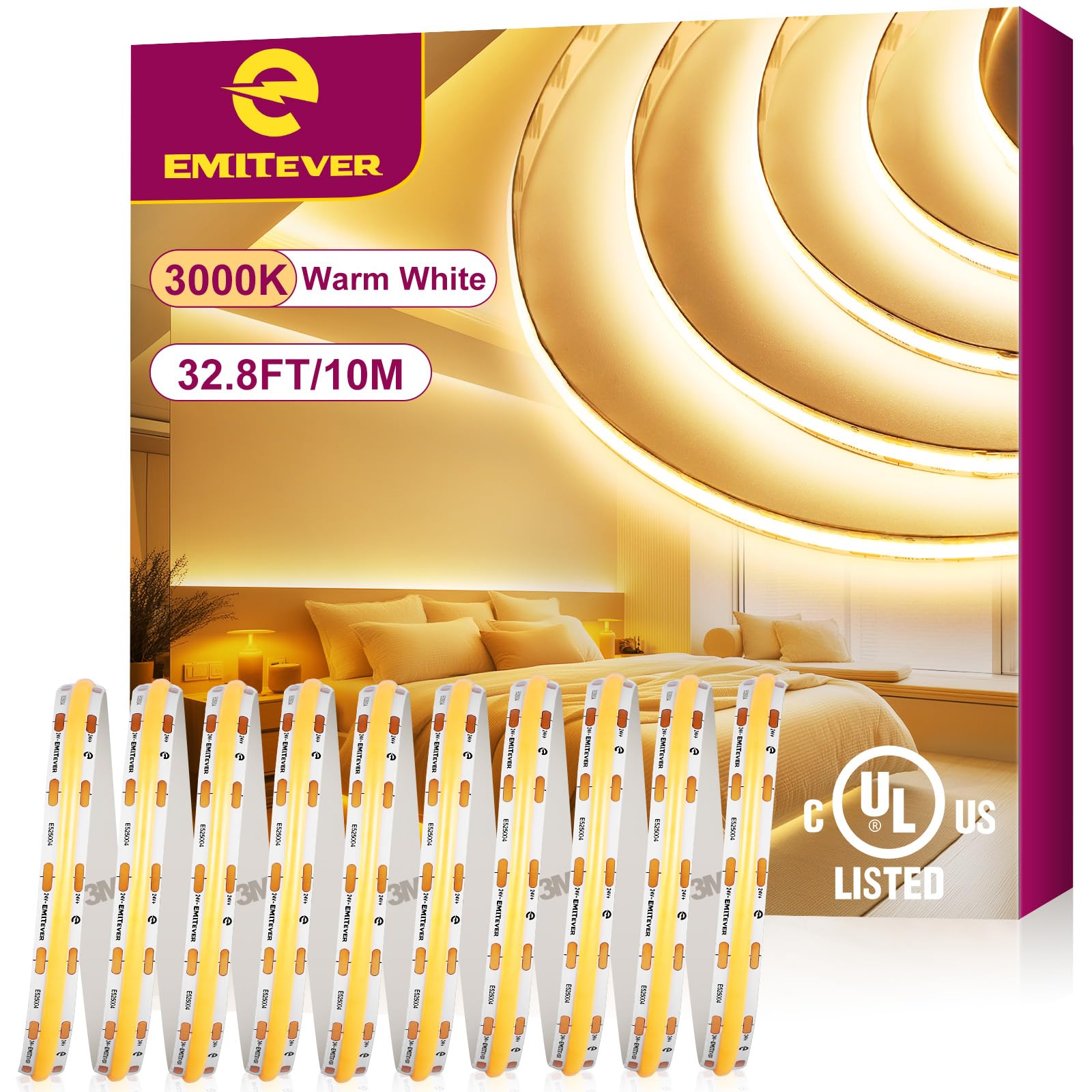


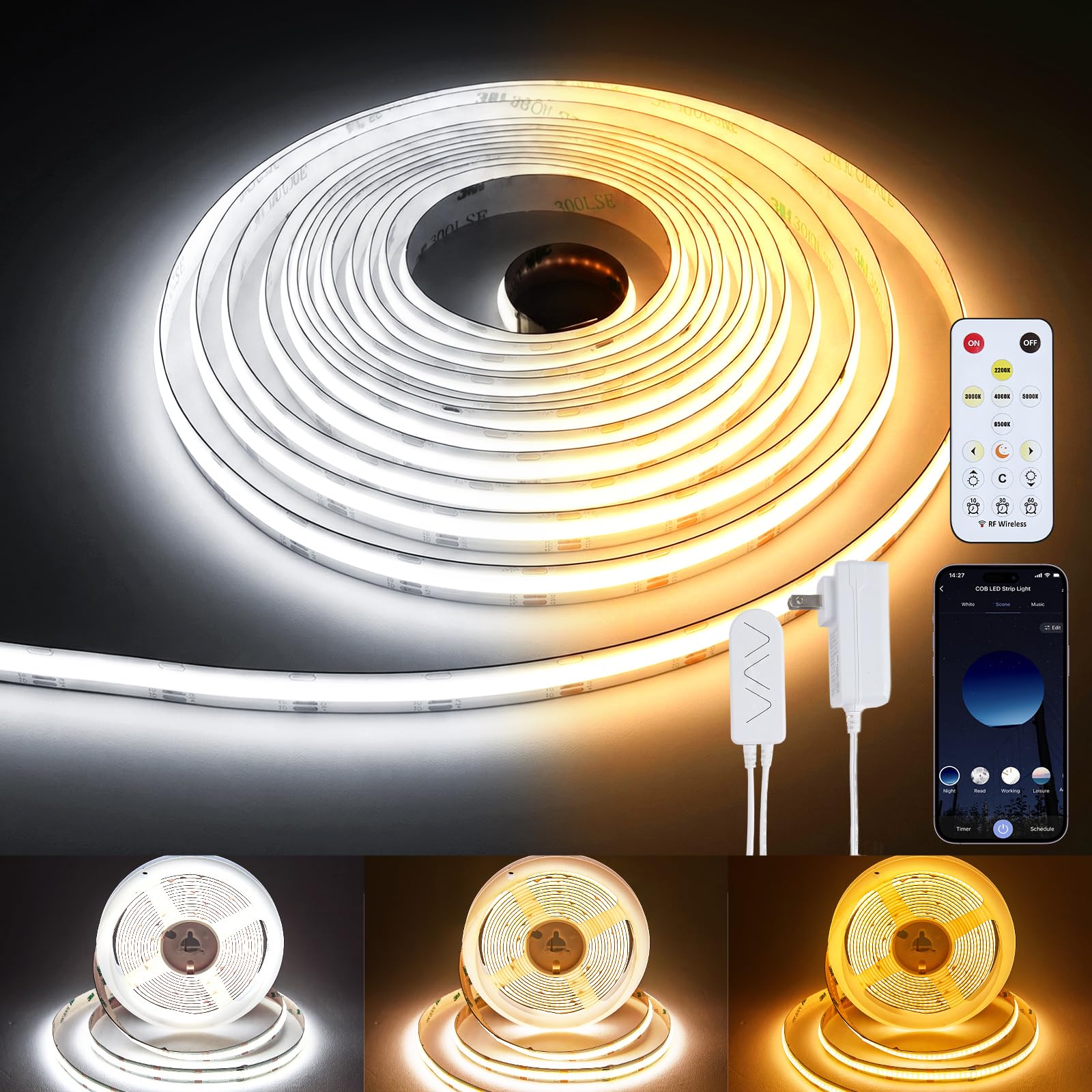
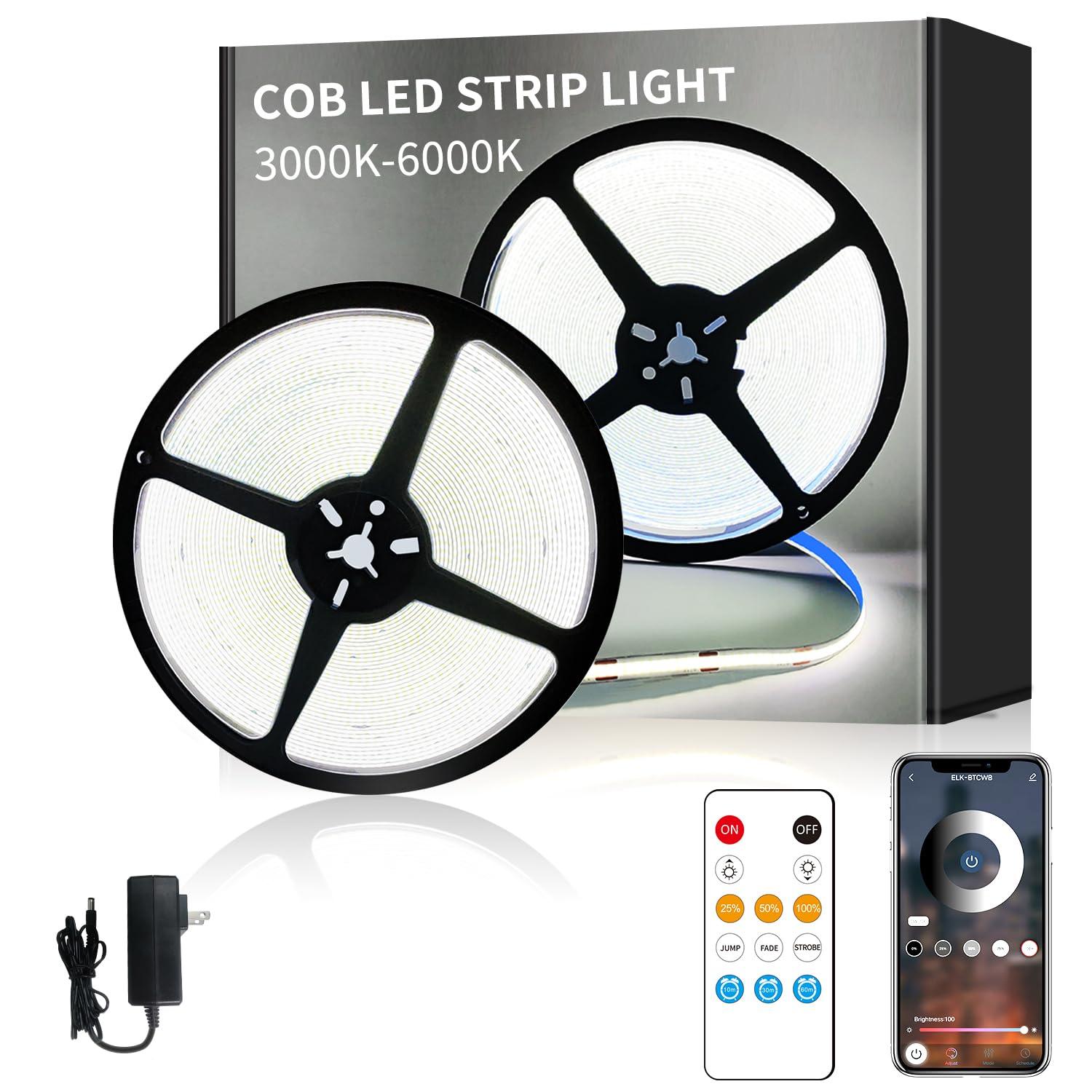
COB Strip Types at a Glance
COB stands for chip on board, and it describes how the diodes sit on the strip rather than a style of light. Instead of separate diodes spaced along a tape, a COB strip carries hundreds of small chips per meter under one phosphor coating. That density is why the glow looks even in reflections and in photos.
Three COB Strip Types Compared
Single Color COB Strips for Cabinets and Task Areas
A single color strip gives you one fixed shade of white, chosen at the time you order. This type suits kitchen counters, workshop benches, closet shelves, and stair treads, where steady and even light matters more than effects. Because there is no color mixing to manage, controls stay simple, often just a dimmer between the supply and the strip. If your goal is clean working light with no visible dots on a glossy counter, start with this type.
Tunable White COB Strips for Living Spaces
Tunable white strips carry both warm and cool chips, and a controller blends them so you can shift the shade through the day. Bright cool light helps a home office feel alert in the morning, while a soft warm setting suits reading and films in the evening. This type works well in living rooms, hallways, and open plan kitchens where one strip serves several moods. Choose this type if you often wish one room could feel both crisp and calm.
Color Changing COB Strips for Media and Gaming Rooms
Color changing COB strips blend red, green, and blue chips to produce colored light for shelves, TV walls, and gaming desks. The dense chip layout keeps color blends smooth, so a purple or teal wash looks even instead of patchy. If you are weighing simple color mixing against strips that can show several colors at once along one run, our explainer on rgb vs rgbic breaks down the difference in plain terms.
How to Judge COB Strip Lights
To find the best cob led strip lights, this guide weighs five things you can check on any listing before you buy. Brightness in lumens and color temperature decide how the light looks. Chip density and finish decide how smooth it appears. Installation details, such as voltage, cut points, and connectors, decide whether it fits your space. Energy use and total project cost decide whether it makes sense once the power supply, controller, and channel are counted.
How to Choose the Right LED Strip Lights
Work through the factors in this order and you will rule out most wrong options quickly. If you want a broader checklist before you narrow down, see our guide on what to look for when buying led strip lights and then return here for the COB specific details.
Size and Form Factor
Start by measuring the full run, including corners and the route back to the outlet, and then pick a reel length that covers it with a little spare. Common reels run about 16 feet or about 32 feet, and longer projects usually join two reels at a corner rather than forcing one strip around tight bends. Width matters too, since narrow strips fit inside slim channels and under thin cabinet lips, while wider strips often carry more chips and spread heat better.
Type and Color Options
Your color choice should follow the job the light does each day. Fixed white strips are the calm option for counters and shelves, tunable white adds shade control for rooms that change use, and color changing strips trade some white purity for effects. Check how a color strip makes white, since mixing red, green, and blue gives a tinted white that can look slightly blue or pink on walls. Match the type to the main job, not to the rare party scene.
Features Worth Paying For
A remote or an app earns its cost when the strip sits out of reach, such as along a ceiling cove or above tall cabinets. Look for a dimmer that holds your last brightness setting after a power cut, since strips that restart at full brightness can glare at night. A power supply with output headroom is worth paying for, because a supply running near its limit runs hot and may buzz.
Lumens and Color Temperature
Brightness for strips is best judged in lumens per foot, because total lumens rise with reel length and can mislead you. Accent lighting can look good at about 100 to 200 lumens per foot, while counter tasks often need about 300 to 500 lumens per foot. Color temperature, stated in kelvin, runs from warm light at about 2700K to crisp daylight at about 5000K to 6500K. Color rendering index, or CRI, tells you how faithfully colors appear, and a rating of 90 or higher helps wood, fabric, and food look natural.
Fixture Size and Placement
Placement decides whether the smooth COB glow reaches your eyes directly or washes a surface first. Mount the strip so you see the lit surface, not the strip itself, by tucking it behind a cabinet lip, inside a channel with a frosted cover, or along the back edge of a shelf. For ideas on runs that circle a room, see our guide to the best led strip lights for ceiling and note how coves hide the source.
Dimmable and Smart Options
Dimming method affects how a COB strip behaves at low levels. A good dimmer fades smoothly to a faint glow, while a poor match flickers, hums, or drops out in steps near the bottom of the range. If you plan voice control or schedules, choose a controller that works with your existing smart home setup and confirm whether it needs a hub or connects over WiFi. For a sleeping space, our guide to the best led strip lights for bedroom covers gentle night settings in more depth.
Installation, Plug In or Hardwired
Most home COB strips run on low voltage direct current, so a power supply sits between the wall outlet and the strip. Plug in supplies suit renters and simple runs, since you can unplug everything before you work on it. Hardwired supplies suit permanent work, and that wiring belongs to a licensed electrician. Plan for voltage drop on long runs, where the far end glows dimmer than the start, and feed power from both ends or split the run at the supply. Respect the marked cut points, use connectors rated for COB width, and never power a strip while it is still coiled on the reel.
How Much Should You Spend?
Budget in tiers for the whole project, not just the reel. At about $20 to $50 you can cover a short single color run with a basic supply and remote for a shelf or a desk. At about $50 to $100 you can expect higher chip density, better CRI, a stronger supply, and often enough channel for one room feature. Above about $100 the gains shift toward tunable or color control, longer runs, and sturdier parts rather than raw brightness.
COB vs Other LED Strip Lights, Pros and Cons
The clear gain with COB is the smooth line of light, which looks better on glossy counters, in mirrors, and on camera. The trade off is heat and flexibility, since dense chips on one board produce more heat in a small area, so a channel helps long runs stay bright over time. Standard strips with spaced diodes cost less and bend more easily around sharp corners, and our overview of the best led strip lights covers those designs if your project has many tight turns. For most shelves, counters, and coves where the strip reflects in nearby surfaces, COB is the neater choice.
FAQ
Are COB LED strip lights worth it?
Yes, if the strip will reflect in counters, mirrors, or screens, or if it sits close to where you stand. The smooth output removes the dotted pattern that makes standard strips look unfinished in those spots. If the strip hides deep inside a cove and only its wash of light shows, a standard strip can give a similar result for less money, so spend the difference on a better dimmer.
How long do COB LED strip lights last?
Many COB strips carry a rated life of tens of thousands of hours, but real life depends on heat and power quality. A strip run at full brightness inside a closed, unventilated space ages faster than one mounted in an aluminum channel with air around it. Running the strip below full brightness for daily use is an easy habit that reduces heat stress and still looks bright in most rooms.
Are expensive COB LED strip lights worth the extra cost?
They can be, when the higher price buys higher CRI, denser chips, and a power supply with real headroom. Those gains show up as truer color and steadier dimming. Compare lumens per foot and CRI line by line before you pay for features you may use once.
How do you clean COB LED strip lights?
Switch the power off, let the strip cool, and wipe it with a dry or slightly damp soft cloth, working along the run rather than across it. Avoid soaking the strip and keep water away from cut ends and connectors, since moisture there can corrode contacts. Our step by step guide on how to clean led strip lights adds advice for sticky kitchen residue and for strips mounted inside channels with covers.
What makes a COB LED strip light reliable?
Reliability comes from steady power, modest heat, and sound connections more than from any single feature on the box. Look for clear maker specifications, safety certification marks from a recognized testing lab, and a supply rated above the strip draw. Press connectors fully home and support the strip so its weight never hangs from a joint.
Do COB LED strip lights need an aluminum channel?
Not always, but a channel helps in three common cases. It sinks heat on bright or long runs, it holds the strip straight on uneven surfaces where the adhesive alone would sag, and its frosted cover softens the last trace of glare. Short accent runs at modest brightness can mount directly with the backing adhesive on a clean, smooth surface. If the strip faces downward above a counter, choose the channel, because gravity and kitchen heat weaken adhesive over time.
Final Thoughts
Start with the job in front of you, then match type, brightness, and voltage to that job instead of buying the longest reel on offer. Single color strips handle most counters and shelves, tunable white suits rooms that change mood, and color strips earn their place around screens and desks. Check the product table above once more, measure your run, and order the supply and connectors in the same basket. Chosen that way, the best cob led strip lights for your home are simply the ones whose light you stop noticing, because the room itself looks right.


