Best Closet Shelf Dividers of 2026: Complete Buying Guide
Disclosure: We may earn a commission when you buy through links on this page, at no extra cost to you. As an Amazon Associate I earn from qualifying purchases. Learn more

Compare closet shelf dividers by fit, material, and load so your shelves stay tidy. This guide covers types, sizing, setup, and care in plain terms.
Best closet shelf dividers turn a wide, open shelf into tidy sections that keep stacks of clothes, linens, and bags from toppling into each other. They slide onto a shelf or stand upright between items, so you can pull one stack out without disturbing the rest. The comparison table below can help you compare divider styles and shelf fits side by side.
The best divider for you depends on your shelf depth, the weight of what you store, and how often you rearrange. A tall divider suits folded sweaters, while a short, sturdy one may be better for bags and boxes. This guide explains the main types, the measurements that matter, and the care habits that keep dividers working well over time.



Who Should Buy Which Divider?
Different closets need different dividers, so start with what you actually store.
People With Tall Stacks of Folded Clothes
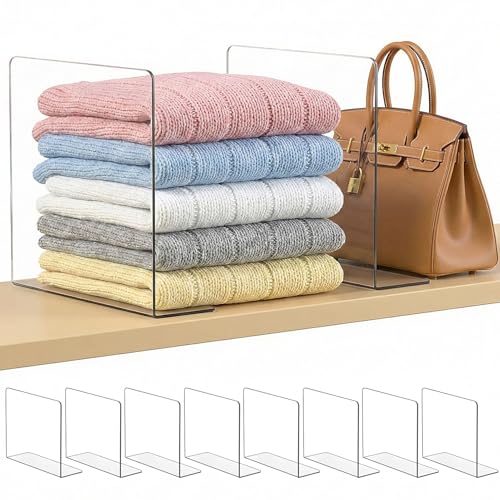
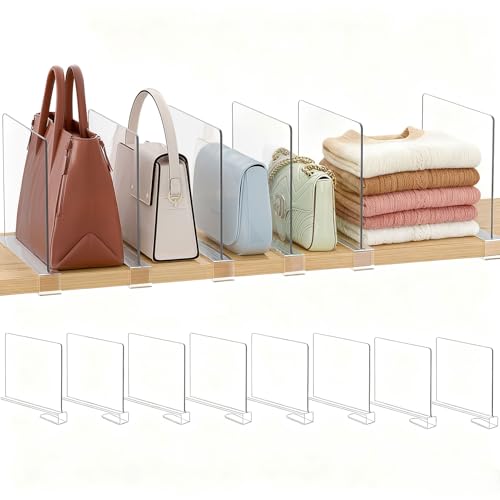
If your shelves hold tall stacks of sweaters, jeans, or towels, choose tall dividers that reach near the shelf above. Height is what stops a stack from leaning, so a short divider will not help much here. Measure the clear height between shelves before buying, and leave a little room to lift items out easily.
People Organizing Bags, Boxes, and Accessories
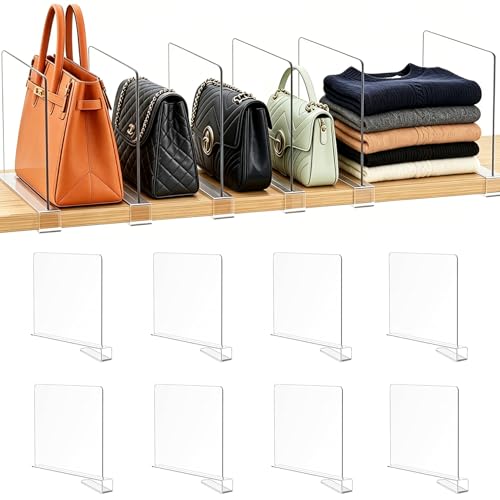
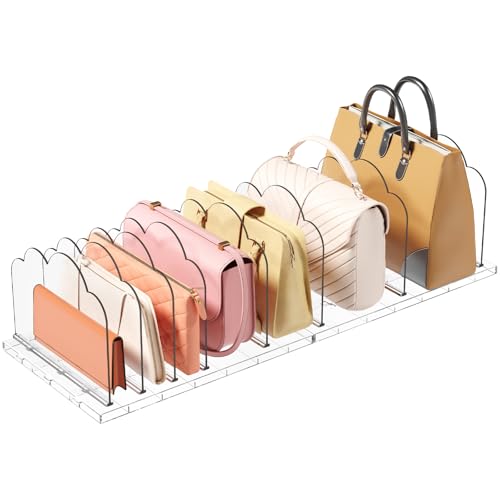
If you store handbags, storage boxes, or accessories, a shorter, sturdier divider often works better. These items are heavier and wider than folded clothes, so the divider must resist being pushed sideways when you pull a bag out. Look for a wide base or a firm grip on the shelf, rather than height alone.
Renters and Frequent Rearrangers
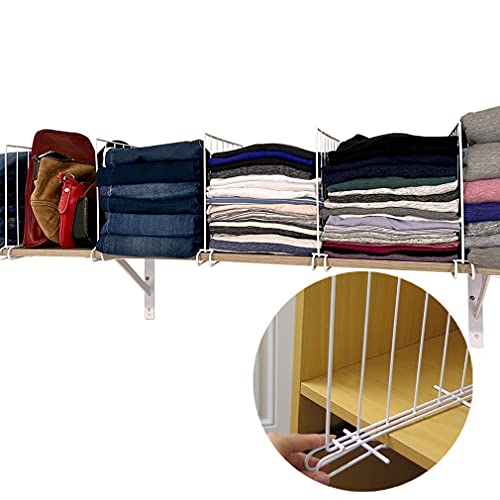
If you rent or change your closet layout often, choose dividers that need no tools and leave no marks. Clip on or freestanding styles let you move sections in minutes, which is useful when seasons change. Keep small parts away from children during setup, and store spare dividers flat so they do not bend.
How to Choose the Best Closet Shelf Dividers: Buying Guide
Intended Use and Who It Is For
Begin by listing what each shelf will hold, since one divider style rarely suits a whole closet. Heavy denim needs a stronger divider than light t shirts, and tall stacks need more height than shallow rows of accessories. If a shelf holds mixed items, place the heaviest items closest to the divider base, where support is strongest. This simple step prevents most leaning stacks.
Ease of Use and Setup
Most dividers install in seconds, but the details matter. A clip style must match your shelf thickness, while a freestanding style needs a flat shelf surface to stay upright. Check the fit by sliding the divider into place and giving it a gentle push, since a divider that moves easily will not hold a stack. If setup needs tools, follow the maker guidance and keep small parts away from children.
Build Quality and Materials
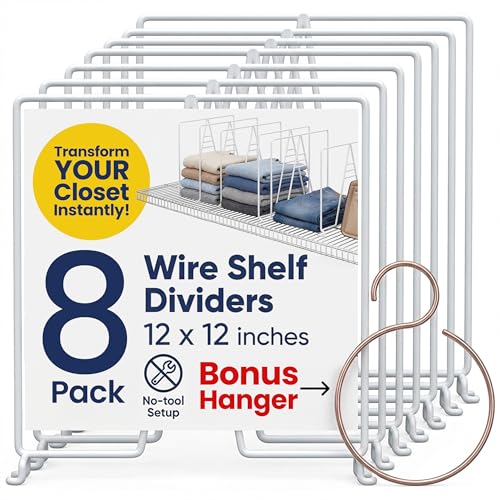
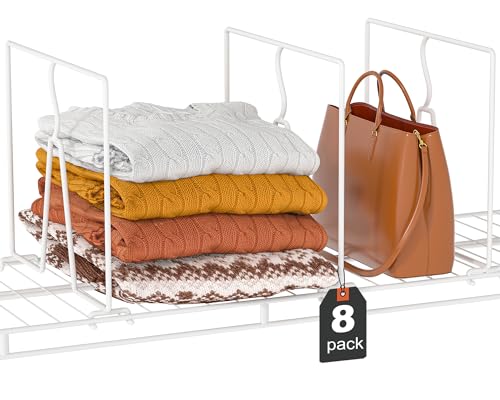
Dividers come in metal wire, solid metal, plastic, bamboo, and fabric covered board, and each has trade offs. Metal wire is light and ventilated but can bend under heavy stacks, while solid metal holds more weight and resists bending. Plastic is light and easy to clean, though thin plastic may flex, and bamboo looks warm but needs dry storage to avoid warping. Choose the material that matches the weight you plan to store, not just the look you prefer.
Maintenance and Long Term Costs
Dividers have few running costs, but durability still matters. Metal dividers may need a wipe to remove dust, plastic can be washed with mild soap, and bamboo should be kept dry. Check joints and clips once or twice a year, since a loose clip can let a stack lean without warning. Replacing one worn divider is cheaper than restacking a whole shelf repeatedly.
Price vs Value
Lower priced dividers, at about $10 to $20 for a set, suit light clothes and simple closets. Mid priced sets, at about $20 to $40, usually offer stronger materials and better clips, which pay off for daily use. Higher priced sets, at about $40 to $70, often add taller panels, sturdier bases, or finishes that match a built in closet. Spend more when stacks are heavy or tall, and save when the load is light.
Warranty and Customer Support
Maker coverage for dividers is usually short, so read what it actually covers before buying. A warranty that covers bent frames or broken clips is more useful than one that covers only manufacturing defects in vague terms. Keep your order details, since a broken clip is the most common reason to contact support. If coverage is unclear, the lower price of a simple set may be the safer choice.
Types of Closet Shelf Dividers
Budget Options
Budget dividers are usually simple wire or thin plastic panels that clip or stand on a shelf. They work well for light clothes and short stacks, and they are easy to move when you rearrange. Their limits show up under heavy loads, where they may bend or slide, so keep stacks modest with this type.
Compact Options
Compact dividers are shorter and narrower, made for shallow shelves or small sections. They suit accessories, small bags, and children's clothes, where a tall panel would waste space. Their small footprint also helps on crowded shelves, though they will not hold a tall stack upright on their own.
Mid Range Options
Mid range dividers balance height, strength, and price, with sturdier materials and firmer clips than budget types. They suit most family closets, where shelves hold a mix of clothes, linens, and bags. If you want one type for a whole closet, this range is usually the most versatile choice.
Setup and Care Tips
- Read the maker guidance before first use, so you know the shelf thickness and weight limits.
- Measure shelf depth and clear height, and place dividers where stacks will not overhang the shelf edge.
- Clean and inspect dividers regularly, wiping dust and checking clips for cracks or looseness.
- Store spare dividers in a dry place, flat or upright, so panels do not bend.
- Register the product for warranty if the maker offers it, and keep the order details handy.
- Move dividers slowly when rearranging, since dragging a loaded divider can scratch the shelf.
Closet Shelf Dividers: Your Questions Answered
Are expensive closet shelf dividers worth it?
Expensive dividers are worth it when they solve a real problem, such as holding tall, heavy stacks that cheaper panels let lean. For light clothes on shallow shelves, a simple set usually does the job just as well. The difference shows up in clip strength and panel rigidity, not in appearance alone. If your stacks keep toppling, spending more on sturdier dividers saves time and frustration.
How long does a closet shelf divider last?
A well made divider should last many years in a dry closet with normal use, since it faces little wear beyond stacking and dust. Clips and joints wear first, especially if dividers are moved often or forced onto shelves that are too thick. Keeping loads within the maker guidance and storing spares flat extends life. Replace a divider when its clip no longer grips or its panel bends, since a weak divider can let a whole stack fall.
What features matter most when buying closet shelf dividers?
Fit matters most, so shelf thickness, shelf depth, and clear height should be measured before anything else. Next comes strength for the weight you store, since a divider that bends under denim is useless no matter how neat it looks. Ease of moving the divider also matters if you rearrange seasonally. Finally, consider cleaning, since dust collects on closet shelves and a wipe clean surface stays presentable longer.
How do I maintain a closet shelf divider?
Maintenance is simple: dust panels during regular closet cleaning, wipe metal or plastic with a damp cloth, and keep bamboo dry. Inspect clips and joints a few times a year, and tighten or replace any loose part before it fails. Avoid overloading a section, since constant pressure bends panels over time.
If a divider is part of a larger best closet system, check that system guidance too, since built in shelves may have their own limits. For shoe storage nearby, see our guide to the best shoes closet.
How much should I spend on a closet shelf divider?
Most buyers spend about $10 to $40 for a set, depending on material and height, and that range covers most closets well. Light, occasional use suits the lower end, while daily use with heavy stacks justifies the middle of the range. Higher priced sets make sense for tall panels or a matched finish across a built in closet. Start with one shelf, check the fit and strength, and then buy more of the same type if it works.
Final Thoughts
Measure your shelves, match the divider to the weight you store, and choose a style you can move easily, and your closet will stay tidy with little effort. Height matters for tall stacks, strength matters for heavy items, and a firm fit matters for everything. Check the product table above against your measurements before ordering, and start with the shelf that frustrates you most. The right best closet shelf dividers will make everyday routines calmer, one neat stack at a time.