Best Clip Mountain Bike Shoes: What Actually Matters Before You Buy for 2026
Disclosure: We may earn a commission when you buy through links on this page, at no extra cost to you. As an Amazon Associate I earn from qualifying purchases. Learn more

Trail riders get a clear checklist for the best clip mountain bike shoes, covering cleat fit, sole stiffness, closure, sizing, and durability.
Clip shoes change how a mountain bike feels. Your foot stays planted on rough descents, your pedal stroke feels smoother on climbs, and you stop wasting energy on a foot that keeps sliding out of place. The catch is that specs on a product page rarely tell you whether a shoe will suit your pedals, your trails, or your feet.
This guide scores the best clip mountain bike shoes against a plain checklist instead of chasing marketing claims. You will learn which thresholds separate a good shoe from a poor one, what each price tier usually delivers, and which warning signs should send you back to the comparison table below.




How to Evaluate Clip Mountain Bike Shoes
Think of the criteria below as a scoring card. A shoe does not need to win every category, but it should never fail the first one, because a shoe that cannot work with your pedals is useless no matter how stiff or light it feels.
Compatibility With Your Pedals and Cleats
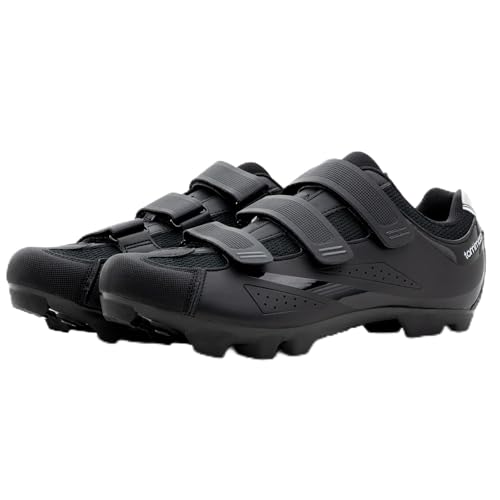
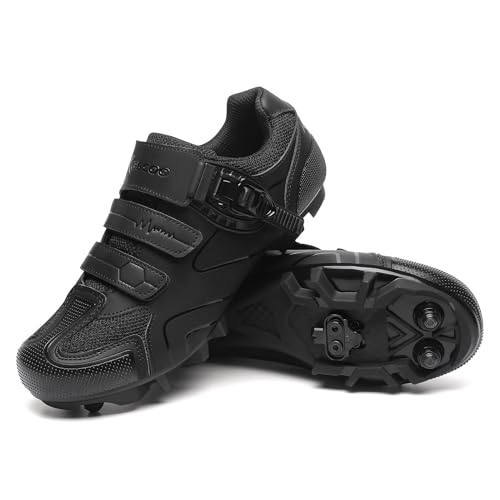
Compatibility comes first. Almost every clip mountain bike shoe uses a two bolt cleat pattern on the sole, and that pattern must match the cleats your pedals use. The most common system is SPD, and our guide to the best mountain bike clips explains how the cleat styles differ. Check that the cleat channel is recessed enough for walking, that the sole has room to move the cleat forward or back by several millimeters, and that the included hardware matches your cleat bolts. A shoe with a narrow, shallow channel can make clipping in feel vague even when the pedal itself is excellent.
Value and Warranty
Value is not the lowest price. It is how much riding you get before the shoe needs work. Look for replaceable parts such as straps, buckles, and cleat mounting plates, because a shoe you can repair outlasts one you must replace. A warranty of at least one year against defects is a fair baseline, and two years is better. Read what the warranty actually covers. Stitching failures and sole separation are common claims, while worn tread is normal wear that no brand covers. A slightly pricier shoe with spare parts available often costs less per season than a bargain shoe that fails by midsummer.
Weather Resistance and Durability
Trail shoes live in mud, creek crossings, and gritty dust, so the upper matters as much as the sole. Synthetic leather and tightly woven mesh shrug off water and dry faster than soft fabric uppers. Sealed seams around the toe box help in wet climates, while generous mesh panels suit hot, dry riding. Check the toe and heel for rubber armor, because rock strikes and hike a bike sections chew through unprotected material. Stitching should be even with no loose threads, and the sole bond should show no gaps. A shoe that feels flimsy in your hands rarely survives a full season of wet rides.
Safety and Secure Retention
Shoes carry no helmet style safety certification, so judge safety by retention and protection instead. The closure system must hold your heel firmly without pressure points, because a foot that lifts inside the shoe can release from the pedal at the worst moment. A stiff toe box and padded ankle collar protect against rock strikes and crank arm knocks. Reflective details on the heel add a small but real benefit if your trail rides start or end on roads at dusk. If a shoe lets your heel slip when you walk up a steep slope, it will slip under hard pedaling too, so treat that as a fail.
Materials and Weight
Sole material sets the character of the shoe. Nylon composite soles balance stiffness, weight, and price, and they walk better than very stiff options because they flex a little at the toe. Carbon soles transfer power with almost no flex and weigh less, but they cost more and can feel harsh on long hike a bike pushes. Expect a trail shoe to weigh roughly 350 to 450 grams per shoe in a mid size. Much heavier than that and your feet notice on long climbs. Much lighter usually means a race focused upper with less armor, which is fine for smooth courses and less fine for rocky ones.
Cleat Setup and Ease of Adjustment
Good shoes make setup simple. The cleat channel should have clear scale marks so you can match both feet and repeat a position after replacing cleats. Bolts should be reachable with a standard hex key, and the mounting plate should not spin freely inside the sole. Plan your first setup carefully: start with the cleat centered under the ball of your foot, ride a short loop, then move it a few millimeters at a time. Riders pairing new shoes with new pedals can save guesswork by reading our guide to the best clip pedals for mountain bike before choosing a cleat position.
Ventilation and Long Ride Comfort
What matters on a three hour ride is airflow and moisture control. Mesh panels over the toes and sides vent heat on climbs, while a padded tongue stops lace or strap pressure from building into hot spots. Moisture wicking liners pull sweat away and reduce odor over a season. If you ride in cold rain more than heat, trade some mesh for a more closed upper and wear waterproof socks. Comfort you barely notice at minute ten is what decides how your feet feel at hour three.
What a Strong Shoe Looks Like at Each Price Tier
Instead of naming specific models, use these tier profiles to judge whatever appears in the product table above. They describe what your money normally buys and what it does not.
The Balanced Overall Profile
The best all around shoe usually sits in the middle of the price range, around $120 to $200. Expect a nylon composite sole with a stiffness that climbs well yet still walks without a clumsy shuffle. A mix of hook and loop straps plus a ratchet or dial closure gives secure retention you can adjust on the move. Rubber armor guards the toe, the tread grips wet roots and loose dirt, and the fit suits average width feet without squeezing. This profile suits riders who race occasionally, ride trails weekly, and want one shoe for everything. Its main limit is weight, since it carries more protection than a pure race shoe.
The Value Profile
A value focused shoe, often around $70 to $120, spends money on the sole and closure and saves on extras. You typically get a fiberglass reinforced nylon sole, two or three straps, and a simpler mesh upper with less armor. Power transfer feels close to pricier shoes on smooth climbs, and most beginners cannot feel the small stiffness gap. The trade offs show up in durability and fine fit adjustment rather than in basic function. For a first clip shoe, or a spare pair for muddy days, this tier makes strong sense. Spend the savings on good cleats and socks, which affect comfort more than a fancier upper would.
The Premium Profile
Premium shoes, often around $200 to $350, buy you a carbon sole, a precise dial closure system, and a lighter, more sculpted upper. The gains are real but narrow: slightly better power transfer, easier micro adjustment while riding, and less fatigue on very long days. Fit also becomes more specific at this tier, with some models running narrow for a locked in race feel. That precision helps aggressive riders and frustrates anyone with wide feet. Buy premium when your current shoe already fits well and you know exactly which small upgrade you want, not as a first step into clip pedals.
Quick Buyer Checklist
Run through these questions before you order. Every yes means the shoe is closer to right for you.
- Does the sole use the two bolt cleat pattern your pedals need?
- Can the cleat slide forward and back enough to sit under the ball of your foot?
- Does your heel stay planted when you walk and pull up on the shoe?
- Is there about a thumb width of space in front of your longest toe?
- Does the closure adjust in small steps rather than only tight or loose?
- Does the tread look deep enough for the muddy or loose sections you ride?
- Are spare straps, buckles, or mounting plates available for this model?
- Does the warranty cover defects for at least one year?
Red Flags to Watch For
Some warning signs are easy to spot once you know them. Vague stiffness claims with no sole material named usually mean a soft, cheap sole. A cleat channel with no adjustment range locks you into one position whether it suits your knees or not. Reviews that repeat the same phrases or praise a shoe for uses it is not built for suggest padded listings rather than honest feedback. A warranty measured in months, or none mentioned at all, signals low confidence from the maker. Finally, be wary of sizing charts that skip half sizes and width options entirely, because clip shoes fit closer than trail runners and a poor size range makes a good fit unlikely.
Care and Maintenance Tips
Loosen straps and remove insoles after wet rides so the shoes dry fully before the next outing. Stuff them loosely with newspaper to draw out moisture, and keep them away from direct heat, which cracks synthetic uppers and weakens sole glue. Brush dried mud off the cleat channel and check cleat bolts every few rides, since a loose cleat can twist and release unexpectedly. Check fit and tightness of the closure before each ride, treat worn tread as a replacement warning, and retire a shoe whose sole has separated or whose upper can no longer hold your heel securely.
FAQs
How do I choose the right size in clip mountain bike shoes?
Start with your usual cycling shoe size, then check length with your heel against a wall and your weight on the foot. You want roughly a thumb width beyond your longest toe because feet swell on long, hot rides. Try shoes on late in the day when feet are largest, wearing the socks you ride in. Sizes vary more between brands than within them, so trust the centimeter measurement on the size chart over the number printed beside it.
Are clip shoes or flat pedal shoes better for beginners?
Neither is automatically better, and the honest answer depends on your trails and confidence. Clip shoes reward smooth pedaling and keep feet planted on rough ground, but they demand practice releasing in a hurry. Many riders start on flats, and our guide to the best non clip mountain bike shoes covers that route. If you do start clipped in, practice unclipping on grass, set release tension low, and give yourself a few easy rides before tackling technical climbs.
How often should I replace cleats and shoes?
Replace cleats when engagement feels sloppy or release becomes unpredictable, which for regular riders is often every one to two seasons. Brass cleats wear faster than steel ones but release more smoothly as they wear. The shoes themselves last longer, typically several seasons, until the sole separates, the tread wears smooth, or the closure stops holding tension. A shoe that rocks side to side on the pedal because the sole has worn around the cleat is telling you its structure is done.
What cleat position works best for trail riding?
A slightly rearward cleat position suits most trail riders. Placing the cleat just behind the ball of the foot reduces calf fatigue, improves control on descents, and lowers strain on the Achilles tendon during long climbs. Racers chasing maximum sprint power sometimes move cleats forward, but that position tires the calves faster. Move in small steps of two or three millimeters, ride the same loop after each change, and note knee comfort as carefully as power, because knee pain is the clearest sign a position is wrong.
Can I walk normally in clip mountain bike shoes?
Yes, within limits, and that is the main reason mountain bike shoes recess the cleat into the tread. Short walks on dirt, rock, and cafe floors feel close to normal, though the stiff sole still limits how much the shoe bends. Long hikes are a different story, since the cleat area can grind on rock and the stiffness tires your feet. For rides with long hike a bike sections, choose a shoe with deeper tread and a slight flex at the toe, and expect a slower, flatter footed walking style.
The Bottom Line
Judge every candidate against the same short list: cleat compatibility first, then fit and heel hold, then sole stiffness matched to your riding. Price tiers mostly buy lighter materials and finer adjustment, not a different category of performance. When you compare options in the product table above with that checklist in hand, the best clip mountain bike shoes for your trails become easy to spot, and you can order with confidence instead of hope.