
Best Clay Chimineas: Buying Guide for 2026
Disclosure: We may earn a commission when you buy through links on this page, at no extra cost to you. As an Amazon Associate I earn from qualifying purchases. Learn more

Compare the best clay chimineas by size, wall thickness, stand, and price, and learn how to choose a safe outdoor fire feature for your patio or yard.
A clay chiminea can add warmth and a focal point to a patio, but size, shape, and clay quality change how it performs. The best clay chimineas are not simply the largest or the most decorative, they are the ones that fit your space, your fuel, and your safety routine. This guide explains what to compare before you buy, so you can choose with confidence. Use the comparison table below to narrow your options, then read the buying guide for the details.
Think first about where the chiminea will sit, how often you will use it, and who will be nearby. A small patio needs a compact shape and a stable base, while a large yard can suit a taller design. Safety matters from the start, since clay can crack if it heats too fast or gets wet. A careful choice protects both your investment and your outdoor space.



What Makes a Clay Chiminea Different
A clay chiminea is a kiln fired terracotta vessel with a wide belly, a narrow chimney, and a front mouth for loading wood. The clay soaks up heat and radiates it gently for an hour after the flames die down, which is why a small clay unit warms a seating circle better than a steel fire bowl of the same size. The chimney pulls smoke up and away from faces, and the enclosed belly keeps sparks contained far better than an open pit.
The same clay that gives the warmth is also the weak point. Terracotta is porous, so it absorbs rain and then cracks when a fire boils that trapped water, and a cold chiminea lit with a roaring fire can split from thermal shock. Every buying decision below, from wall thickness to the rain lid, comes back to protecting that clay.
How to Choose the Best Clay Chimineas: Buying Guide
Intended Use and Who It Is For
Decide whether you want gentle warmth for quiet evenings, a gathering point for guests, or occasional cooking over a small fire. A chiminea for a couple on a small patio needs a different size from one for a large family yard. Consider how often you will light it, how long each fire lasts, and whether children or pets use the same space. Your main use should drive size, shape, and placement.
Maintenance and Long Term Costs
Clay needs steady care to last, including protection from rain, frost, and sudden temperature changes. Budget for a cover, a stand, and replacement parts such as a grate or rain cap if the maker offers them. Clean ash after the chiminea cools, and check for cracks before each season. A design that is easy to clean and cover will cost less over time than one that needs frequent repair.
Warranty and Customer Support
Check what the warranty covers, how long it lasts, and what it excludes, since clay damage from misuse or weather is often limited. Look for clear maker guidance on curing, first fires, and storage, and check whether support answers questions about cracks or parts. A strong warranty helps, but it does not replace careful use. Keep your receipt and the maker instructions in a safe place.
Ease of Use and Setup
Look at weight, assembly, and how the chiminea sits on its stand, since a stable base is essential for safety. Check whether the fire bowl is easy to load, whether ash can be removed without tipping the unit, and whether the chimney draws well. A simple setup with clear instructions is safer than a complex design with loose parts. Place the chiminea on a level, heat resistant surface before you light the first fire.
Price vs Value
Budget designs at about $50 to $120 suit light, occasional use and small spaces. Mid range designs at about $120 to $250 suit regular use, with thicker clay and steadier bases. Premium designs at about $250 to $500 suit frequent use and larger yards, with larger bowls and more detailed finishes. Value comes from a size and build that match your use, not from the highest price alone.
Safety and Certifications
Use a clay chiminea outdoors only, on a level surface away from roofs, trees, fences, and dry plants. Follow the maker guidance for curing, small first fires, and fuel type, and never leave a fire unattended. Keep children and pets away from the hot surface, and keep a safe distance from seating and walkways. Check local rules for outdoor fires, since some areas limit burning during dry or windy conditions.
Build Quality and Materials
Look for even wall thickness, a smooth finish, and a sturdy stand that holds the chiminea level. Thick, well fired clay resists heat better than thin, uneven clay, and a wide base helps prevent tipping. Check the chimney opening, the mouth size, and the fit of any lid or rain cap. A well made design should feel solid, sit level, and show no large cracks or weak spots before first use.
Types of Clay Chimineas
Traditional Terracotta Chimineas
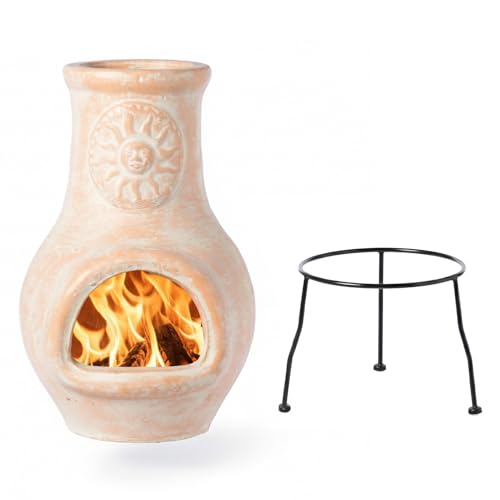
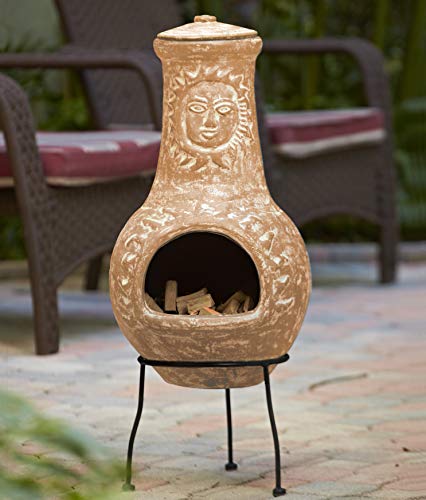
The classic Mexican style unit is unglazed terracotta in a natural orange or sand color, usually about 27 to 36 inches tall on its stand, with a plain belly or a simple pressed sun or leaf design. It gives the most authentic look and the most even radiant heat, and the unfinished clay is easy to seal yourself with a clay sealer each spring. Expect the surface to darken around the mouth with use, which most owners consider part of the charm.
Painted and Glazed Clay Chimineas
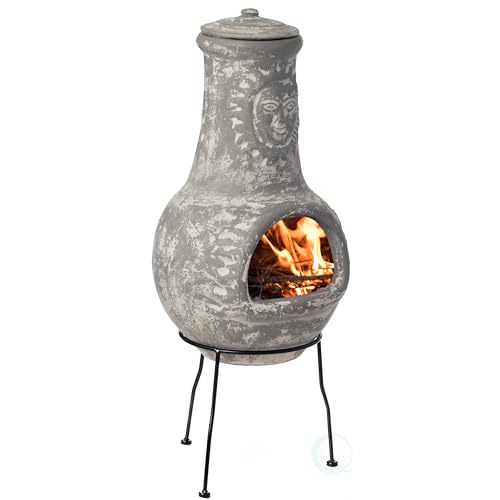
Painted or glazed clay units add a colored finish in gray, beige, blue, or a two tone pattern, and the sealed surface sheds rain better than raw terracotta. The finish can chip if the unit is knocked or overheated, and a glazed surface needs gentler cleaning than plain clay. Choose this type when the chiminea has to match painted patio furniture or a modern garden rather than a rustic one.
Small and Tabletop Clay Chimineas
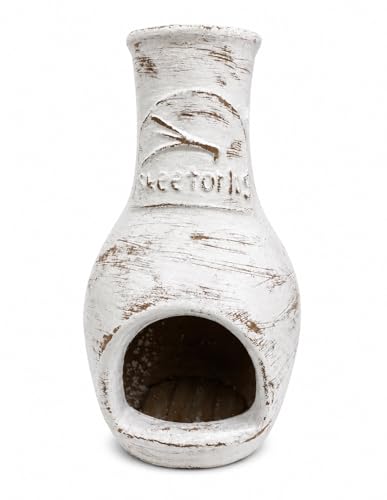
Small units of about 12 to 20 inches, often sold as kits with a few logs or fire sticks, sit on a table or a low stand and warm two or three people on a balcony or a small deck. They burn small sticks, kiln dried mini logs, or fire logs rather than full firewood, so they suit short evening fires and mood lighting more than a cold night outdoors. They also store indoors easily, which solves the weather problem for apartment dwellers.
Chiminea Kits With Stand and Rain Lid
Most medium chimineas ship as a set with a steel stand and a rain lid or chimney cap, and that set is worth favoring over a bare pot. The stand lifts the hot base off decking, and the lid keeps rain out of the chimney between fires, which is the single biggest factor in how many seasons the clay survives. Check that the stand is welded steel rather than thin wire, and that the lid fits snugly enough to stay on in wind.
Tips to Get the Most From Your Clay Chiminea
- Read the manual before first use, and follow the maker steps for curing with small fires.
- Clean and inspect regularly, removing cool ash and checking for cracks before each season.
- Store in a dry place or use a cover, since rain and frost can damage clay over time.
- Register the product for warranty if the maker offers it, and keep your receipt.
- Start with small fires and dry fuel, and let the chiminea cool fully before you move or cover it.
- Keep the area clear of dry leaves and furniture, and never leave a fire unattended.
Frequently Asked Questions
How long does a clay chiminea last?
A clay chiminea can last several seasons when it is cured correctly, protected from rain and frost, and used with dry fuel. Life depends on wall thickness, weather, and how often it is fired, with harsh winters shortening life if the unit stays exposed. Cover it when not in use, and bring it under shelter in freezing weather if the maker advises it. Check for cracks each season, since small cracks can grow if the chiminea is fired again without care.
What features matter most when buying clay chimineas?
Size, wall thickness, base stability, and chimney draw matter most, because they shape heat, safety, and durability. Check the fire bowl size against your seating area, and make sure the stand holds the unit level on your surface. Look for even clay, a good rain cap, and clear maker guidance on curing and fuel. A design that fits your space and is easy to protect will serve you better than a larger, less stable one.
Are expensive clay chimineas worth it?
Higher priced designs are worth it when you use a chiminea often, need a larger fire bowl, or want thicker clay and a sturdier stand. They tend to handle regular heat better and may include better finishes and covers. For occasional use on a small patio, a budget design can be enough if you store and cover it well. Match the price level to your use and your climate, not to size alone.
How do I maintain a clay chiminea?
Remove cool ash after each use, and inspect the bowl, chimney, and stand for cracks or loose parts. Clean the outside with a dry cloth, and avoid soaking the clay, since trapped water can crack it when heated. Cover the chiminea when not in use, and store it in a dry place during long wet or freezing periods. Follow the maker guidance for repairs, and do not fire a unit with a large crack until you have checked it.
How much should I spend on a clay chiminea?
Spend based on use, space, and climate rather than on the largest design you can find. Occasional use on a small patio may suit about $50 to $120, while regular use in a medium yard often calls for about $120 to $250. Frequent use or a large seating area may need about $250 to $500. Add the cost of a stand, cover, and fuel to your budget before you decide.
Wrapping Up
Size, wall thickness, and base stability are the most important choices, followed by weather protection and safe placement. Choose a design that fits your seating area, suits how often you will use it, and can be covered and stored with care. The best clay chimineas are the ones that stay safe, last through seasons, and fit your outdoor routine. Review the product table above once more, then pick the size and spending level that match your space.


