
Best Clamps for Radiator Hoses: How to Choose for 2026
Disclosure: We may earn a commission when you buy through links on this page, at no extra cost to you. As an Amazon Associate I earn from qualifying purchases. Learn more

Pick the best clamps for radiator hoses by size range, band width and stainless build, with worm gear, constant tension and T bolt styles compared.
The upper and lower radiator hoses carry the hottest, highest volume coolant flow in the engine bay, and the two clamps on each hose are all that stand between a dry joint and a puddle under the car. Choosing the best clamps for radiator hoses comes down to three things: a size range that fits the hose on its fitting, a band that grips evenly without cutting the rubber, and a material that will not rust solid before the next hose change.
Radiator hoses are large, usually around an inch and a quarter to two inches in outside diameter, which rules out the small spring clips used on heater lines and puts worm gear, constant tension band, and T bolt clamps in play. This guide explains those three styles, how to size them, how tight is tight enough, and what to inspect each season. The comparison table below lets you scan sizes and pack counts quickly.
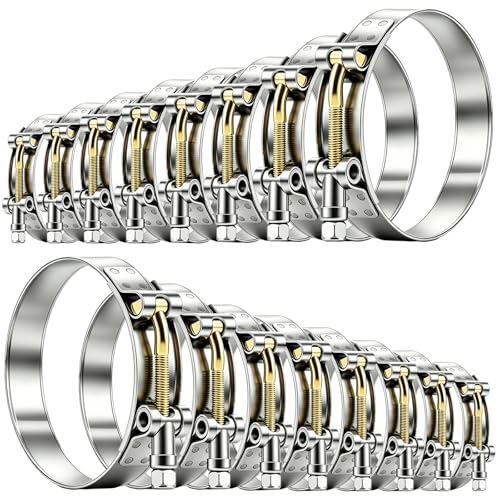


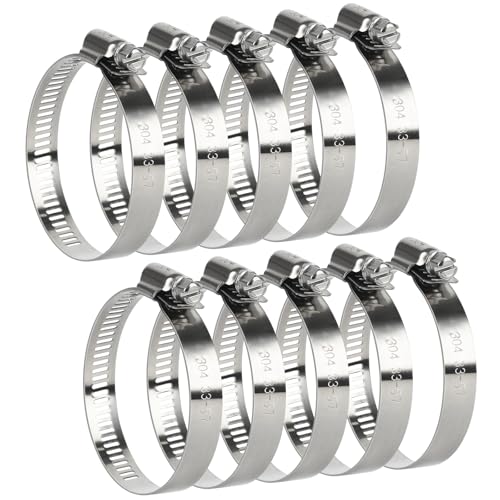
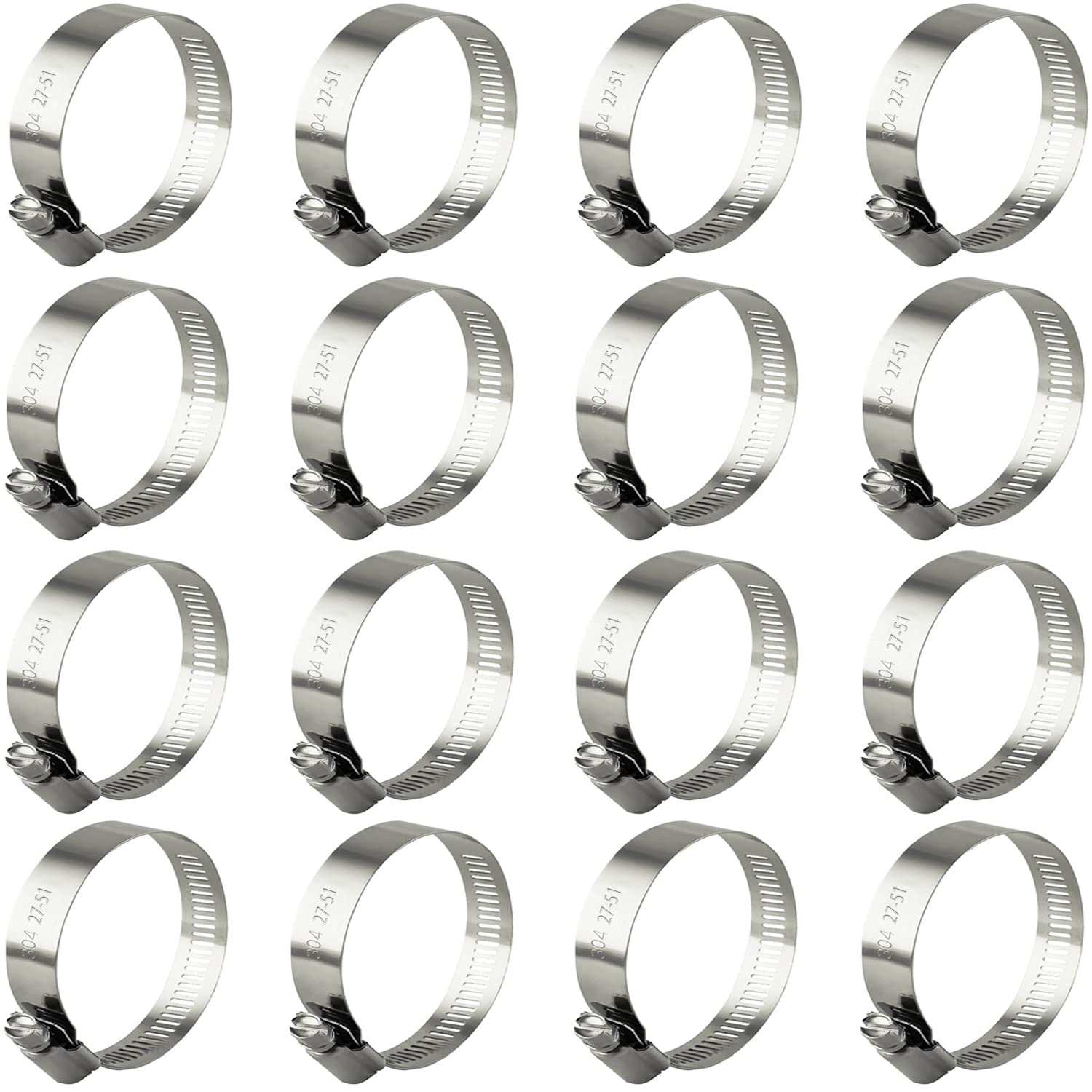


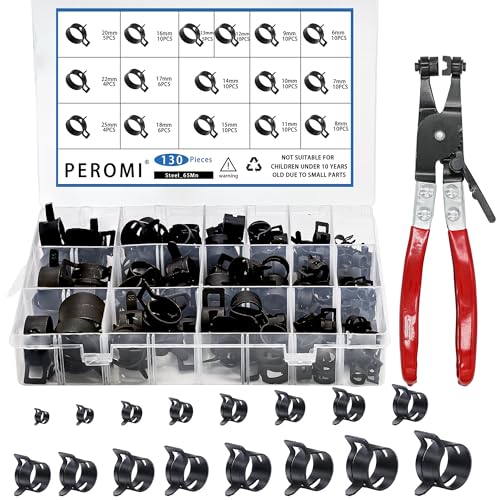


Who Should Buy Which Radiator Hose Clamp
DIY Owners Replacing a Hose
If you are swapping a radiator hose on a daily driver with a nut driver and a drain pan, a stainless worm gear clamp with a smooth or lined band is the simplest reliable choice. It fits a wide size range, tightens with common tools, and can be loosened later for service. Buy a small assortment that covers both hose ends, since the upper and lower hoses are often different diameters.
Owners of Older or Classic Cars
Older hoses, and reproduction hoses for classic cars, are often softer and less forgiving of sharp band edges. A constant tension band clamp or a lined worm gear clamp spreads pressure and keeps sealing force as the hose shrinks on a cold morning, which is when many old car leaks appear. Avoid cheap perforated bands that bite into the rubber.
Performance and Heavy Duty Cooling
Trucks that tow, modified engines, and silicone hose upgrades put more pressure and more vibration on the joint. T bolt clamps give even force around the full circle and resist loosening, which is why they are standard on intercooler and large silicone radiator hoses. They cost more and need a socket and some torque sense, so reserve them for joints that justify the effort.
The Three Clamp Styles for Radiator Hoses
Worm Gear Clamps
A screw turns against slots in a stainless band, pulling the band tighter around the hose. Worm gear clamps cover the widest range of sizes and are the easiest to adjust, which makes them the default for most radiator work. Their weakness is uneven pressure: the band is tightest under the screw housing and the slots can emboss soft rubber if overtightened. A lined or solid band version removes most of that risk and is worth the small extra cost on a radiator hose.
Constant Tension Band Clamps
These look like a worm gear clamp with a spring section built into the band. As the hose and fitting expand when hot and shrink when cold, the spring keeps clamping force steady instead of letting the joint loosen. Many manufacturers fit them at the factory for exactly that reason. They cost more per clamp and come in narrower size ranges, so measure carefully.
T Bolt Clamps
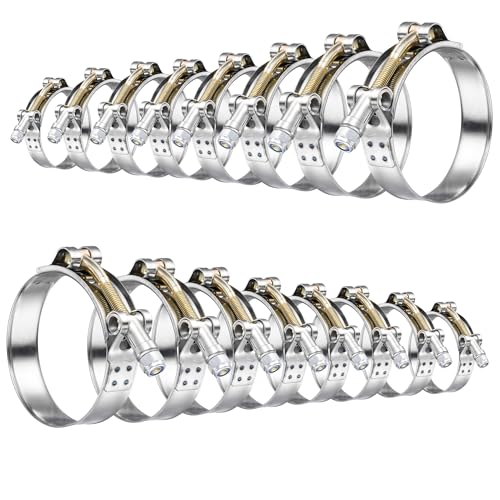
A T bolt clamp uses a wide stainless band closed by a bolt and nut through a cast or stamped bridge. The band has no slots, so pressure is even around the hose and nothing cuts into the surface. They suit large diameter hoses, silicone hoses, and high pressure or high vibration systems. The drawbacks are bulk, a narrower working range per clamp, and the need to reach the bolt with a socket. Our guide to the best clamps for silicone hoses covers T bolt sizing in more depth.
How to Size a Radiator Hose Clamp
Slide the hose fully onto its fitting first, then measure the outside diameter of the hose over the fitting, because that is the circle the clamp must close around. A tape or a strip of paper wrapped around the hose gives you the circumference; divide by about 3.14 for the diameter. Pick a clamp whose range places that number near the middle. A clamp at the very end of its range either barely closes or runs out of thread before it seals.
Band width matters on radiator hoses. A band around half an inch wide spreads force well on these large hoses, while the narrow bands sold for small heater lines concentrate pressure and can cut the cover. If you are replacing the hoses as well, our guide to the best radiator hoses explains how hose construction changes the installed diameter you will measure.
Material and Build Quality
Choose stainless steel for the band and the screw or bolt. The radiator sits at the front of the car where road salt and spray hit first, and a plated steel screw can rust solid in a couple of winters, which turns a five minute hose change into a cutting job. Check that the screw housing is rigid and does not flex as you tighten, that the band edges are rolled or at least smooth, and that threads turn cleanly. Mixed metal clamps with a stainless band and a plated screw are a false economy in snow country.
Fitting and How Tight Is Tight Enough
Position the clamp just behind the raised bead on the fitting, not on top of it and not at the very end of the hose. Tighten gradually until the hose is held firmly and will not rotate by hand, then stop. A hose that bulges on either side of the band is overtightened, and a slot pattern pressed into the rubber means the clamp is cutting in. Bring the engine to full temperature, look for weeping at both joints, and recheck snugness after the first full heat cycle and again after a week of driving.
If a joint still leaks with a correctly sized, properly tightened clamp, the problem is elsewhere: a corroded or scored fitting, a hose cut unevenly, a hose with the wrong inner diameter, or a cracked radiator neck. Tightening further will not cure those and may split the hose.
Common Mistakes to Avoid
- Choosing a clamp at the extreme end of its size range, so it never fully seals or runs out of thread.
- Overtightening until the hose bulges or the band cuts into the rubber.
- Reusing a rusted, bent, or stripped clamp on a new hose.
- Fitting a clamp on top of the fitting bead instead of behind it.
- Ignoring a soft, swollen, or cracked hose and blaming the clamp for the leak.
Inspection and Long Term Care
Look at both radiator hose clamps at every oil change. Rust at the screw, a white or colored crust at the joint, or a hose that feels soft near the fitting all call for attention before a road trip. Replace the clamps whenever you replace a hose, since an old band rarely grips a new hose evenly, and keep a spare pair in your sizes in the glovebox or tool bag.
Never open a cooling system while the engine is hot, because pressurized coolant can cause serious burns. Let the engine cool fully, wear eye protection, catch old coolant in a pan, and keep it away from pets, since it is toxic. If the engine overheats or coolant leaks heavily, stop safely, let the system cool, and have a professional check it rather than forcing a roadside repair.
Related Guides
For the other coolant joints in the bay, our guide to the best clamps for coolant hoses covers heater hose and small spring clamp choices. Owners upgrading to silicone can plan hose and clamp sizes together with our guide to the best silicone radiator hoses.
Frequently Asked Questions
What size clamp do I need for a radiator hose?
Measure the outside diameter of the hose while it is pushed fully onto its fitting and choose a clamp whose range puts that measurement near the middle. Most radiator hoses fall between about an inch and a quarter and two inches, but check yours rather than guessing, and remember the upper and lower hoses often differ.
Are worm gear clamps good for radiator hoses?
Yes, a stainless worm gear clamp with a smooth or lined band suits most radiator hoses and is the easiest style to fit and service. For silicone hoses, large diameters, or systems that have slipped a clamp before, a T bolt clamp holds more evenly.
How tight should a radiator hose clamp be?
Tight enough that the hose cannot be twisted by hand on the fitting, and no tighter. Bulging rubber on either side of the band or slot marks pressed into the hose mean you have gone too far. Recheck after the first heat cycle, since new hoses settle slightly.
Should I use spring clamps or worm gear clamps?
Factory style spring and constant tension clamps keep force steady through temperature swings and resist cold leaks, which makes them a good match for soft rubber hoses. Worm gear clamps are easier to fit with common tools and cover more sizes. On a large radiator hose, a constant tension band clamp or a lined worm gear clamp is the practical middle ground.
Can I drive with a small coolant leak at the radiator hose?
A small weep can become a burst hose quickly once the system is hot and pressurized, so top up carefully, watch the temperature gauge, and fix the joint promptly. Do not open the cap while the engine is hot. If the gauge climbs or steam appears, stop and let everything cool before doing anything else.
Final Thoughts
Size the clamp from the hose on its fitting, choose stainless steel, pick the style that matches the hose material and the pressure it sees, and tighten until snug rather than until it stops turning. Compare the best clamps for radiator hoses in the product table above by size range, band width, and pack count, order a spare pair, and recheck both joints after the first full heat cycle.

