
Best Chrome Kitchen Faucet (2026): Types, Fit and Budget for Real Homes
Disclosure: We may earn a commission when you buy through links on this page, at no extra cost to you. As an Amazon Associate I earn from qualifying purchases. Learn more

Pick the best chrome kitchen faucet for your sink by comparing pull down, sensor and bridge types, hole count, height and budget.
Picture a weeknight sink full of pasta pots, lunch boxes, and a cutting board that still needs rinsing. The faucet you reach for dozens of times a day should clear tall cookware, rinse the whole basin, and wipe clean without a fuss. Finding the best chrome kitchen faucet for your home comes down to how your household cooks, how many people share the sink, and what your counter already has drilled into it.
This guide walks you through types, measurements, and budgets so you can match a faucet to your space. Use the comparison table below to line up the main styles, then read on for the details that decide daily comfort.
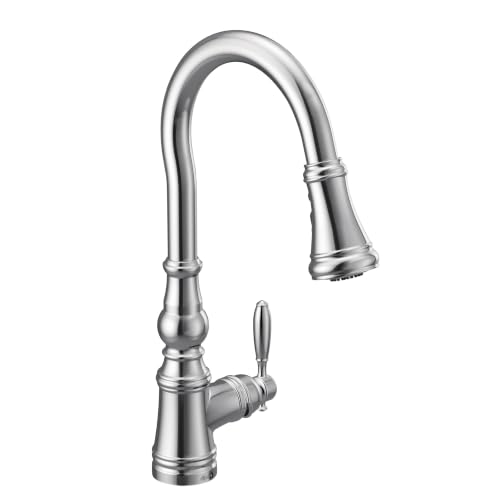


Quick Answer: The Main Types in Brief
Most homes land on one of three routes. A pull down model suits busy family kitchens because the spray head reaches every corner of the sink and handles bulky pans. A sensor model suits cooks with messy hands who want water without gripping a handle. A classic two handle or bridge style suits traditional kitchens where looks matter most.
Chrome itself is the easy part. It costs less than most specialty finishes, matches stainless appliances well, and reflects light in small kitchens. Your real work is choosing the type, height, and hole layout that fit your sink.
Before You Buy: A Quick Checklist for Choosing a Kitchen Faucet
Which Type Fits Your Routine
Start with how you use the sink. If you fill stockpots and wash sheet pans, a pull down sprayer with a tall arc gives you room to work and a hose that travels across the basin. Our guide to the best pull down kitchen faucet covers that style in depth. If you mostly rinse produce and wash hands, a single handle model with a fixed spout may be all you need.
Households with young kids or keen bakers often prefer hands free control, since floury hands stay off the handle. Compare that route in our guide to the best touchless kitchen faucet. Two handle models suit period style kitchens but take more counter space. Pull out models, with a lower profile, can suit shallow sinks where a window ledge limits spout height.
Features Worth Paying For and Ones to Skip
A sprayer is the feature most buyers use daily, so look for a spray head that switches easily between a steady stream and a wide spray and that docks firmly when you let go. Magnetic docking and a weighted hose both help the head seat itself instead of dangling. If rinsing coverage is your top concern, see our guide to the best kitchen faucet with sprayer for how spray patterns differ. A pause button on the head is handy when you move a pot from sink to stove.
Some extras earn their cost only in the right home. A soap dispenser clears a bottle from the counter but adds a refill chore under the sink. A built in filter makes sense only if you will replace the cartridges on schedule. Side sprayers add another hose that can leak. Skip extras that add parts without daily help, and put the money toward a solid valve instead.
Measurements and Compatibility With Your Setup
Count the holes in your sink or counter before you shop, since that single fact rules out whole groups of models. Many faucets include a deck plate that covers extra holes, so a single hole model can often sit on a three hole sink, but the plate must be long enough to cover the outer holes. Measure the distance from the faucet center to the backsplash as well, because lever handles need room to swing back without hitting the wall.
Check height and reach next. Measure from the counter to any cabinet above the sink so a tall arc will fit, and note the spout reach so water lands near the center of your basin. For a farmhouse or undermount sink, confirm the faucet mounts on the counter behind the basin and still reaches over it. Also check under the sink for a disposal or filter unit crowding the space where the sprayer hose needs to move.
Certifications and Build Quality
Look for faucets that meet NSF and ANSI standards for drinking water contact and are certified as lead free. A WaterSense label signals a model that uses less water while still rinsing well. Inside the body, a ceramic disc cartridge controls flow and stops drips, and it tends to outlast older compression designs that rely on rubber washers.
Body material matters more than surface shine. A brass or stainless steel body resists corrosion better than a plastic shell with a chrome look coating, which can chip at the edges. Weight is a rough showroom clue, since solid metal bodies feel noticeably heavier. Check that the listing states the flow rate and valve type plainly, because vague listings often hide weaker parts.
Installation Costs and Realistic Budget Ranges
Swapping a faucet for one with the same hole layout is a common do it yourself job with basic tools, and our step by step guide on how to install a kitchen faucet walks through the process. Budget for a pro when valves are corroded or holes need drilling in stone. Professional installation often costs about $150 to $350 depending on your area and the plumbing below.
For the faucet itself, models under $100 cover basic single handle designs with simpler cartridges and lighter bodies. Spending about $100 to $250 usually buys a solid metal body, a smooth ceramic cartridge, and a pull down sprayer that docks well. Models at about $250 to $500 add sensor control, heavier construction, and longer warranties. Paying beyond that mostly buys designer styling. For a broader view across finishes and styles, see our overview of the best kitchen faucet options for American homes.
Types Compared: Three Routes for Real Homes
Pull Down Models for Busy Family Kitchens
Pull down faucets pair a tall spout with a spray head that pulls toward you, making them the most versatile choice for households that cook often. You can aim the spray at a stuck pan, fill a pot on the counter beside the sink, and rinse produce without splashing. The trade off is the hose and weight inside the cabinet, which need clear space to move. In homes where several people share cooking duties, this type usually draws the fewest complaints.
Sensor and Touch Activated Models for Messy Hands
Sensor models turn water on with a wave near the spout, while touch activated models respond to a tap on the body. Both keep raw chicken juices and dough off the handle. They need batteries or an outlet under the sink, and the electronics add a part basic models lack. For households that bake or handle a lot of raw meat, the cleaner handle can justify the higher price.
Bridge and Two Handle Models for Traditional Kitchens
Bridge faucets mount the spout and two handles on a shared bar above the counter, giving a classic look that suits farmhouse and older homes. Separate handles make fine temperature adjustments easy, and the exposed design wipes down quickly. The limits are reach and rinsing power, since many bridge models lack a spray head. Choose this route when room style leads the decision and your sink work is mostly filling and washing at the spout.
What We Like and What We Do Not About Chrome
Chrome has stayed popular for simple reasons. It is usually the lowest priced finish in any faucet line, it pairs with almost any appliance color, and its bright surface makes a small kitchen feel lighter. Matching accessories and replacement parts stay easy to find in chrome years later, which keeps a small repair from becoming a full fixture change.
The honest downside is upkeep. Chrome shows water spots and fingerprints more clearly than brushed finishes, so it needs a quick wipe after heavy use. In homes with hard water, mineral marks stand out sooner on the mirror like surface. Chrome can also feel stark in a kitchen built around warm wood and stone. A brushed finish hides marks better, but you will likely pay more and gain nothing in function.
Common Buying Mistakes to Avoid
- Buying a tall faucet without measuring the cabinet or shelf above the sink, so the spout will not fit once installed.
- Ignoring the hole count in the sink, then finding the deck plate is too short to cover the outer holes.
- Choosing by finish alone and skipping the cartridge and body material, which decide how long the faucet stays drip free.
- Forgetting the space under the sink, so the sprayer hose catches on the disposal or stored bottles and stops retracting smoothly.
- Paying for sensor controls and filter add ons you will not maintain, while underfunding the valve and finish quality you use daily.
Cost of Ownership and Care
Day to day care for chrome is simple. Wipe the body with a soft damp cloth and dry it to limit water spots, and avoid scouring pads that can scratch the finish. A mild solution of vinegar and water helps lift mineral marks around the base. Cleaning little and often prevents the buildup that makes chrome look dull.
Ownership costs stay low when you plan for small parts. Aerators, seals, and cartridges are inexpensive and widely stocked, and fixing a drip early protects the cabinet floor. If a drip starts, our guide on how to fix a leaking kitchen faucet explains the common causes. Check connections under the sink twice a year for dampness, and keep the warranty, since many makers cover the cartridge for the original owner. Call a plumber if you find swollen cabinet wood, mold, or a valve that will not shut off.
Your Questions, Answered
How do you clean a kitchen faucet aerator?
Unscrew the small round screen at the tip of the spout by hand, noting the order of the mesh parts. Soak the pieces in plain vinegar for a few hours to loosen mineral grit, rinse them, and brush away debris with an old toothbrush. Reassemble in the same order and run the water briefly. A clogged aerator is a common cause of weak or uneven flow, so try this before assuming the faucet itself is failing.
Can you replace a chrome kitchen faucet without replacing the sink?
Yes, in most cases, as long as the new faucet matches the hole pattern of the sink or covers it with a deck plate. The sink only limits mounting when its holes are damaged or spaced unusually wide. Take a photo of the sink top and the plumbing below before you shop, since those two views answer most fit questions in a product listing.
Are chrome kitchen faucets worth it compared with brushed finishes?
For most budgets, yes, because chrome delivers the same valve, cartridge, and spray functions for less money than brushed versions of similar quality. What you give up is camouflage, since brushed surfaces hide spots between cleanings. If your household wipes the faucet during normal cleanup anyway, the savings are real and performance is identical. Households that rarely wipe fixtures may prefer paying more for a finish that hides marks.
How long should a chrome kitchen faucet last?
A well made model with a metal body and ceramic cartridge commonly serves a household for many years, and the cartridge is the part most likely to need attention first. Lifespan drops when the finish is a thin coating over plastic or when hard water deposits are left to build up. Solid construction and wiping the finish dry are the two habits that stretch service life most.
Will a chrome faucet match stainless steel appliances?
Usually yes, though the two surfaces differ up close. Chrome is brighter and more reflective, while stainless appliances have a softer brushed grain, so the faucet will look shinier than the fridge. In a typical kitchen the faucet sits apart from the appliances, and both read as silver toned metal that belongs together. If exact matching matters, view a hardware sample in your own lighting before ordering.
Final Thoughts
The right choice is the faucet whose type, height, and hole layout fit your sink and whose controls suit the hands that use it every day. Compare the product table above, weigh chrome for its low price, and choose solid parts over gadgets. Picked that way, the best chrome kitchen faucet will feel obvious each time you turn it on.


