Best Cheese Board Sets: What Each Price Tier Delivers in 2026
Disclosure: We may earn a commission when you buy through links on this page, at no extra cost to you. As an Amazon Associate I earn from qualifying purchases. Learn more
Choose the best cheese board sets for your budget with a guide to what each price tier delivers and which features are worth paying for at home.
Cheese board sets range from under $20 to well past $150, and the price gap can feel impossible to judge from photos alone. Knowing where the money actually goes is the fastest way to find the best cheese board sets for your budget without paying for decoration dressed up as quality.
This guide breaks the market into three tiers, explains what each tier typically includes and what it leaves out, and flags the features worth paying for. Start with the comparison table below, then use the tier sections to set your spending line.




What a Smart Buy Looks Like at Each Budget
Budget Tier: The Sensible Starter Profile
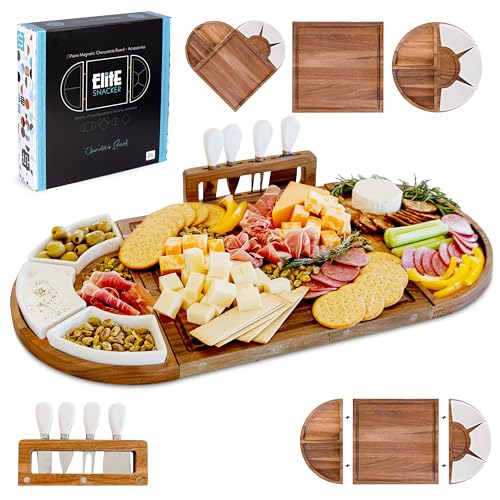
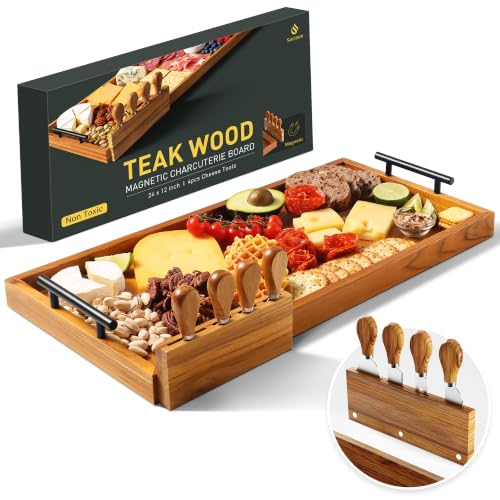
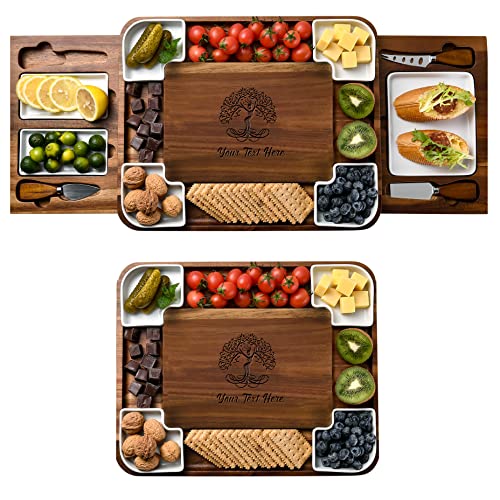
A smart budget buy is a bamboo or basic acacia board around 13 to 15 inches with two to four stainless steel knives and a smooth, even finish. Judge candidates in the product table above against that profile: no cracks, no rough splintery edges, and a flat base that does not rock on the counter. Expect to give up drawer storage, extra bowls, and thick board depth at this level, and expect the board to show knife marks sooner than denser woods.
Midrange Tier: The Full Kit Profile
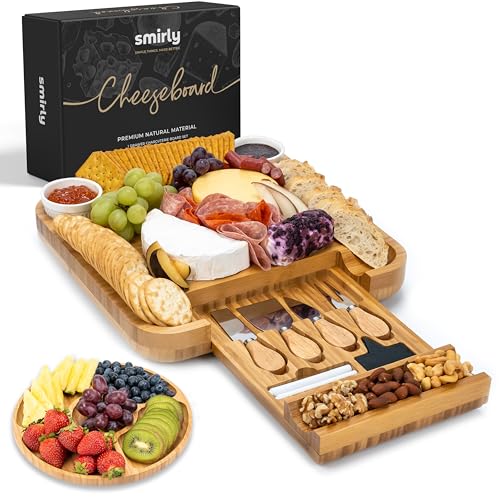
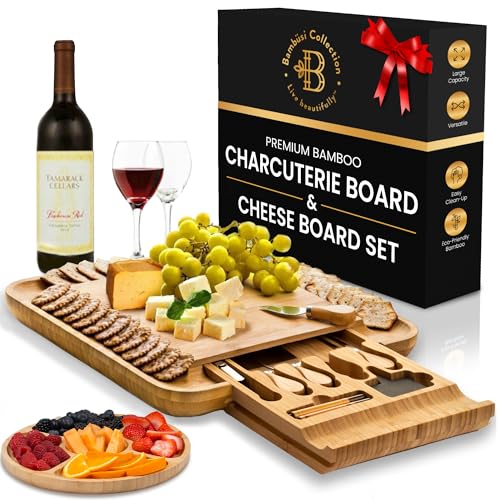
In the midrange, a smart buy adds real utility: a larger board, often 16 to 17 inches, a knife drawer or magnetic storage, a groove for crumbs and juices, and small bowls or ramekins for olives, nuts, and spreads. The wood is usually thicker and heavier, and the knives feel balanced rather than stamped and flimsy. This profile suits hosts who serve six to ten guests and want one purchase to cover the whole ritual from slicing to serving.
Premium Tier: The Statement Piece Profile
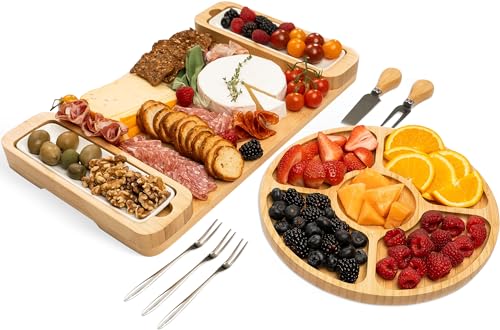
A premium buy is about scale, material, and finish: large hardwood or marble surfaces, dense boards over an inch thick, well fitted drawers, and sometimes a slide out or folding second tier for extra room. The board doubles as a table centerpiece, and the joinery and sanding are visibly finer. You give up nothing functional at this level, but you do pay for presence and longevity, so it makes sense mainly for frequent hosts and gift buyers with a generous budget.
What Your Money Gets You at Each Price Tier
Budget Tier: What to Expect
Sets under about $30 focus on the essentials: one board, a few knives, and simple packaging. Bamboo dominates because it is light, renewable, and inexpensive, and thinner boards around half an inch thick keep costs down. These sets serve two to four people happily and are ideal for trying out cheese nights before committing. The trade offs are durability and size, so check the serving area carefully and plan to replace or upgrade if hosting becomes a habit.
Midrange Tier: The Sweet Spot for Most Buyers
Between about $30 and $70, nearly every weakness of the budget tier gets fixed. Boards grow thicker and larger, acacia and other hardwoods replace basic bamboo, and storage drawers, bowls, and slate or ceramic inserts appear. For most households this is the tier where a set stops feeling like a compromise and starts feeling like the permanent answer. If your budget can stretch to one tier only, this is the one to stretch into.
Premium Tier: When Spending More Pays Off
Above about $70, spending buys craftsmanship and capacity rather than new functions. Expect boards around 18 inches or more, premium materials such as end grain hardwood or marble, heavier and better finished knives, and design details like hidden drawers and soft close slides. These sets justify themselves when you host large groups often, want a board that anchors a table, or are buying a wedding or housewarming gift meant to be kept for decades.
Features Worth Paying For (and Ones to Skip)
Build Quality and Materials
Worth paying for. Denser hardwoods resist knife scoring and warping, and a well sanded, oiled finish keeps the board looking good after years of washing. Bamboo is the budget friendly exception that still performs well. If you also prep on wood daily, compare materials with our guide to the best cutting board sets, since the same grain and hardness logic applies.
Intended Use and Who It Is For
Worth thinking about, not paying extra for. A set marketed for large parties simply needs the surface to match, so measure instead of trusting labels. Couples and small families can skip oversized boards entirely and save the money, while frequent hosts should treat surface area as the one feature that cannot be added later. Match the tier to your real guest count, not your biggest imaginable holiday.
Size, Weight, and Fit for Your Space
Worth paying for in the form of thoughtful design. Handles, lighter bamboo in big sizes, and boards that store in a standard cupboard all prevent the classic problem of a lovely board with no home. Very heavy marble and thick hardwood boards look superb but punish anyone who carries them loaded across a room. If prep and serving share one cramped kitchen, our guide to the best chopping board sets helps you size the work boards that sit beside it.
Ease of Use and Setup
Mostly free. Wide openings, knives that store inside the board, and bowls that nest are design choices, not premium luxuries, and many midrange sets include them. Pay a little extra for a set whose storage keeps every piece together, because a knife lost in a drawer is a knife you will not use. Skip elaborate multi level display stands unless you truly serve buffet style, since they complicate both setup and washing.
Maintenance and Long Term Costs
Worth respecting rather than paying for. Every wooden set needs hand washing and occasional oiling with food grade mineral oil, which costs only a few dollars a year. The real long term cost is replacement: a thin budget board that splits in two years is more expensive over a decade than one midrange board. Factor in a small bottle of board oil with any purchase, and keep a dedicated knife set in mind too, since our guide to the best cheese knife sets shows how a proper forked knife and spreader upgrade any tier.
Long Term Costs to Factor In
The best cheese board sets also carry small ongoing costs. Beyond the sticker price, budget for board oil, replacement knives if the bundled set disappoints, and possibly a second smaller board for intimate evenings when the big one feels excessive. None of these costs is large: oil is a few dollars a year, and a decent supplementary knife set sits around $15 to $25. Warranty coverage quietly matters here too, because a maker who replaces a split board in year one turns a midrange purchase into a genuinely long term one. Total cost of ownership over five years usually favors the midrange tier by a clear margin.
FAQs
How much should I spend on a cheese board set?
Most households should spend about $30 to $70, the range where board size, wood quality, and included tools all reach a satisfying level. Spend less if you serve two to four people occasionally, and more only if you host big groups or want a centerpiece quality gift. Money beyond that range buys appearance and heft rather than better cheese nights, so set your tier by guest count first.
What features matter most when buying cheese board sets?
Usable surface area, wood density, and a complete knife set matter most. Measure the flat serving space instead of the outer edge, pick a material you are willing to hand wash and oil, and confirm the knives cover hard, soft, and spreadable cheeses. A crumb groove and tidy knife storage are the two extras that hosts consistently appreciate after the first few uses.
Are expensive cheese board sets worth it?
They are worth it for frequent hosts who use the extra size and finer materials every month, and for gifts meant to last decades. They are poor value for occasional use, because a midrange set serves cheese just as well at a small gathering. The honest test is frequency: if the board comes out most weekends, premium quality pays you back in durability and pleasure; if it comes out twice a year, it does not.
How do I maintain a cheese board set?
Hand wash in warm water, dry it right away, and never soak the board or put it in a dishwasher. Rub in food grade mineral oil whenever the surface looks pale or feels dry, usually every month or two with regular use. Store the board dry and flat or on edge, keep knives dry in their slots, and light stains can be lifted with a lemon half and coarse salt before rinsing.
How long does a cheese board set last?
A midrange or premium hardwood set, washed by hand and oiled occasionally, commonly lasts ten years or more of regular serving. Budget bamboo boards usually give three to five good years before knife scars and thinning finish show their age. In every tier the knives and any small ceramic bowls tend to need attention or replacement first, while the board itself carries on.
Our Verdict
Set your tier by guest count, then spend inside that tier on wood quality and surface area rather than novelty extras. For most readers that means the midrange, with budget sets as honest starters and premium sets as deliberate upgrades. Compare the finalists in the product table above, and you will own the best cheese board sets your budget can sensibly buy.