
Best Chairs for Nursing Mothers of 2026: Complete Buying Guide
Disclosure: We may earn a commission when you buy through links on this page, at no extra cost to you. As an Amazon Associate I earn from qualifying purchases. Learn more

A complete guide to the best chairs for nursing mothers: measure the room first, compare glider, rocker and recliner classes, and check safety before you buy.
Buying a feeding chair goes wrong most often before the chair is even chosen, when the room, the doorway and the budget are guessed instead of measured. The best chairs for nursing mothers are the ones that fit the space, fit the parent, and hold up to several feeds a day for a year or more. This guide follows the order that prevents regrets: measure first, pick the class second, then match the budget band to the features that actually change daily use.
A nursing chair is furniture, chosen for fit, comfort and build. It supports your arms and back while you feed, and that is the full extent of what it can do. Questions about latch, pain or supply belong to a pediatrician or an IBCLC lactation consultant, not to a furniture listing. The comparison table below summarizes the three main classes before the sections that follow go through each step in full.




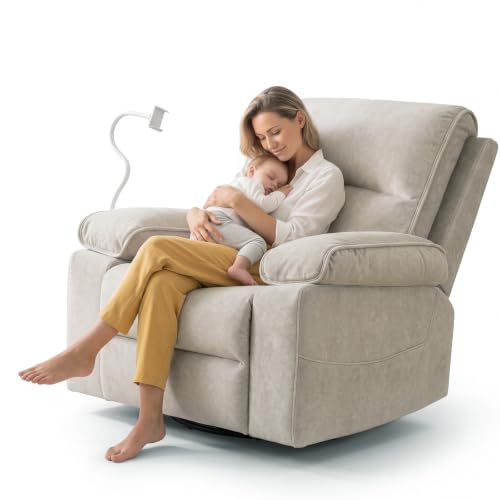
Step One: Measure the Room and the Route In
Start with the corner where the chair will live. Mark the footprint with tape on the floor, then add working room: a glider needs a few inches of clearance behind it, a rocker needs space at both ends of its arc, and a recliner needs the most room of all once the back drops and the footrest rises. Check the swing of the nursery door and leave a path you can walk at night without thinking. Parents planning a compact setup will find footprint first thinking in our guide to best nursing chairs for nursery as well.
Then measure the route the chair travels to get there. Note the width of every doorway, hallway turn and stair landing between the front door and the nursery, and compare those numbers with the assembled size in the listing, not the box size. Many feeding chairs arrive partly assembled with the back separate, which helps, but a wide glider base still defeats a narrow hall. Ten minutes with a tape measure now is cheaper than a return pickup later.
While the tape is out, measure yourselves as well. Seat height decides whether your feet rest flat or dangle, and shorter and taller parents often need different chairs from the same class. Note the height of the chair arms against your seated elbow, because arms that sit too high shrug your shoulders up during every feed. Listings give seat height and arm height in their dimensions, and comparing those two numbers with your own measurements predicts comfort better than any photograph.
Step Two: Choose the Class That Fits Your Feeding Style
| Class | Motion | Space needed | Typical band | Suits |
| Glider | Short, flat glide on a fixed base | Small; a few inches behind | About $250 to $700 | Small nurseries, night feeds, motion in a tight footprint |
| Rocker | Rolling arc on curved rails | Medium; clearance at both ends | About $150 to $450 | Simple build, bigger soothing arc, lower budgets |
| Recliner | Recline with leg support, some swivel | Large; room to extend fully | About $450 to $1,100 | Long contact sessions while awake, living room placement |
Gliders: Controlled Motion in a Fixed Footprint
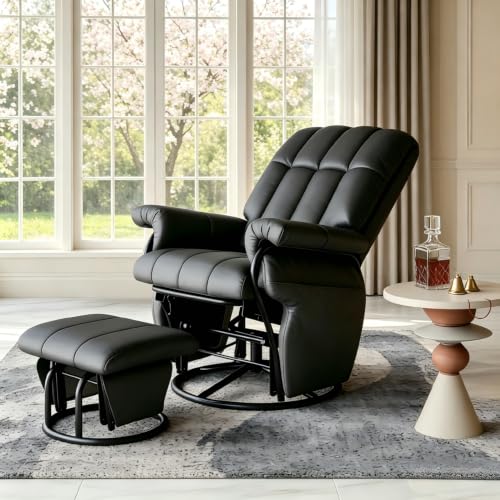
A glider slides back and forth on bearings inside a stationary base, so the chair stays in one spot while it moves. That makes gliders the easiest class to place in a small nursery and the easiest to get out of while holding a sleeping baby. Look for a locking position, smooth travel with no grinding, and cushions thick enough that the frame does not press through by the second month. Our dedicated guide to best rocking chairs for nursing mothers covers the curved rail side of this family in more depth if you lean that way instead.
Rockers: The Simple, Lower Cost Route
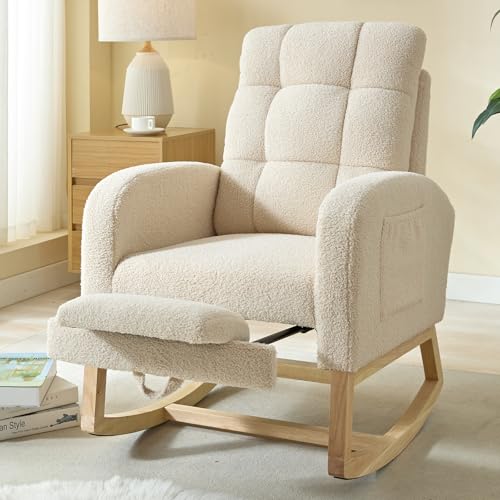
Rockers have no bearings or linkage to maintain, which keeps prices down and makes the chair easy to move between rooms. The trade offs are floor clearance, a tendency to wander on smooth floors, and rails that can catch toes or trap small fingers once a baby starts crawling nearby. A rug under the chair steadies the motion and protects the floor. If a deep, rhythmic arc settles your baby better than a short glide, this class earns its place despite the extra space it asks for.
Recliners: Leg Support and Living Room Looks
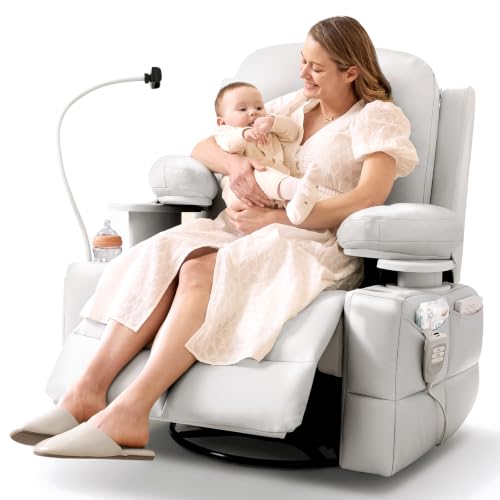
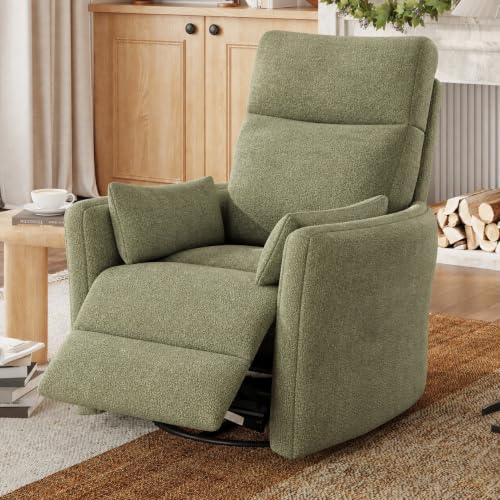
Recliners suit parents who feed in a living room and want the chair to stay useful afterward as ordinary seating. The raised leg support takes strain off your lower back during long awake sessions, and taller backs fit taller parents better than most nursery chairs. The costs are weight, width and price, plus a mechanism that needs the full extension space measured in step one. A swivel base helps you turn toward a side table without standing, which matters more at night than it sounds.
Step Three: Match the Budget Band to Daily Use
The Getting Started Band: Around $200 to $350
At this level you are buying simple rockers and compact armchairs with basic padding and fixed covers. The chair will do the job if the fit is right, but expect thinner foam and fabrics that need a washable throw over them from day one. Spend your attention on stability and arm height rather than color choice, and keep the receipt, because fit problems show up in the first week.
The Everyday Band: About $350 to $700
This is where gliders with decent bearings, removable washable covers and included ottomans cluster, and for a chair used six or more times a day it is the band that makes sense for most families. Foam density improves, mechanisms run quieter, and makers tend to stand behind the product with clearer warranties. If your budget stretches to one band only, stretch to this one rather than splitting the difference on a chair plus separate extras.
The Keeping It for Years Band: About $700 to $1,400
Above the everyday band, money buys build weight, recline and swivel hardware, premium fabrics and styling that reads as living room furniture. Nothing here improves feeding itself; the value is a chair that still looks and feels good as a reading chair years later. Buy into this band for the second life and the comfort of long sessions, not because a higher price promises a better feeding outcome. It does not.
Whichever band you land in, leave room in the same budget for the small pieces that complete the setup. A footrest or ottoman, a narrow side table for water and a phone, and a spare washable cover together cost less than the jump between bands, and they shape daily comfort as much as the chair class does. Buying them with the chair also means colors and heights match without a second round of measuring.
Safety, Stated in Full
The most important safety fact about a feeding chair is simple: it is a seat for an awake adult holding a baby, and never a sleep surface for the baby. If tiredness wins during a feed, put the baby down in a crib or bassinet on a firm, flat mattress with nothing soft around them, or feed in a setup you prepared ahead for drowsy moments. Dozing in a reclined chair with a baby on your chest is a recognized risk, and planning around it is part of setting up the nursery.
For the chair itself, test stability by sitting and standing while holding weight in your arms; the base should not lift, shift or creak alarmingly. Run a hand around glider linkages and rocker rails to find pinch points and sharp edges, and repeat that check as your baby becomes mobile. Prefer makers that reference recognized consumer safety standards; JPMA certification programs cover many juvenile products, and the CPSC publishes the recall database to search by maker and product type before you buy. Register the chair after purchase so recall notices come to you directly.
Buying Secondhand Without Buying Trouble
Used feeding chairs are common and can be a sensible saving, because many are used hard for a year and then outgrown. Check the mechanism first: glide or rock through the full travel and listen for grinding, and sit with weight to feel for play in the linkage. Search the exact maker and product type in the CPSC recall database before money changes hands, since a recalled chair should not be resold at all. Ask whether covers come off for a full wash, and budget for new cushion inserts if the seat feels bottomed out; worn foam is the usual reason a used chair disappoints.
Delivery and Assembly: The Bulky Reality
Feeding chairs are furniture, with furniture sized boxes and weights. Confirm whether delivery ends at the curb or the door, and plan a second person for carrying, because a glider base is awkward rather than merely heavy. Assembly is usually limited to attaching the back and base, but do it in the room where the chair will live if your hallway turns are tight. Keep the packaging until you have sat in the chair for a few real feeds; return windows and restocking terms for bulky items vary, and the box is your insurance if the fit is wrong.
Frequently Asked Questions
How much space does a nursing glider actually need?
Most gliders need their listed footprint plus a few inches behind for travel and enough front room to stand up while holding a baby. Rockers need more, roughly the length of their arc at both ends. Measure your taped outline against the listing dimensions rather than trusting room photographs, which are staged to make chairs look smaller than they are.
Can a recliner work for night feeds?
Yes, a recliner can work well for night feeds while you are awake, because the leg support and tall back suit long sessions. The cautions are space, since it needs room to extend fully, and discipline about drowsiness, since its comfort invites dozing with the baby on your chest. If you know you drift off easily at night, a simpler upright glider is the safer setting.
How do I check a used nursing chair for recalls?
Find the maker and product name on the chair's label, then search that pairing in the CPSC recall database online before you buy. Also check that the mechanism moves smoothly, that no hardware is missing, and that covers can be removed and washed fully. If the seller cannot identify the maker or the label is gone, walk away; untraceable chairs cannot be checked.
How early should a nursing chair arrive before the due date?
Having the chair delivered and assembled two to four weeks before the due date is a comfortable target. That buffer absorbs slow shipping, lets you return a poor fit, and gives you time to set up the feeding corner with a side table and light. It also means one less piece of furniture being built during the first week home, which is worth more than any single feature.
Which fabric holds up best to daily use and washing?
Tightly woven synthetic fabrics with removable, machine washable covers hold up best to the daily reality of milk and spit up. They dry fast, resist staining, and the cover can be swapped while one is in the wash if you buy a spare. Delicate natural weaves and fixed upholstery look softer in photographs but demand spot cleaning that rarely removes milk odor fully.
Final Thoughts
The reliable order is measure, choose the class, then spend according to how many hours a day the chair will work. The best chairs for nursing mothers for your home are the ones that pass the room measurements, support your feeding posture, and stay safe and cleanable through the first year. Work through the product table above with your tape measurements beside you, and let fit, not photographs, make the final call. Shoppers who see the shorter term used for the same chairs can cross check our guide to best chairs for nursing moms, which approaches the same classes from the features side.


