
Best Chairs for a Round Dining Table in 2026: Every Type Explained Side by Side
Disclosure: We may earn a commission when you buy through links on this page, at no extra cost to you. As an Amazon Associate I earn from qualifying purchases. Learn more

Armless, low arm, upholstered and wood types compared for the best chairs for a round dining table, with seat height, arm clearance and sizing steps.
A round table has no corners and no head seat, so every chair shares the curve equally and has to earn its place along the rim. The best chairs for a round dining table match that curve in width, height and profile, so guests sit close without crowding elbows. Use the comparison table below to line up the main types before you measure.
The confusion usually comes from choice, not quality. Armless chairs, low arm chairs, upholstered chairs and classic wood chairs can all work at the same table, yet each one changes how many seats fit, how easily chairs push in, and how long people linger after a meal.
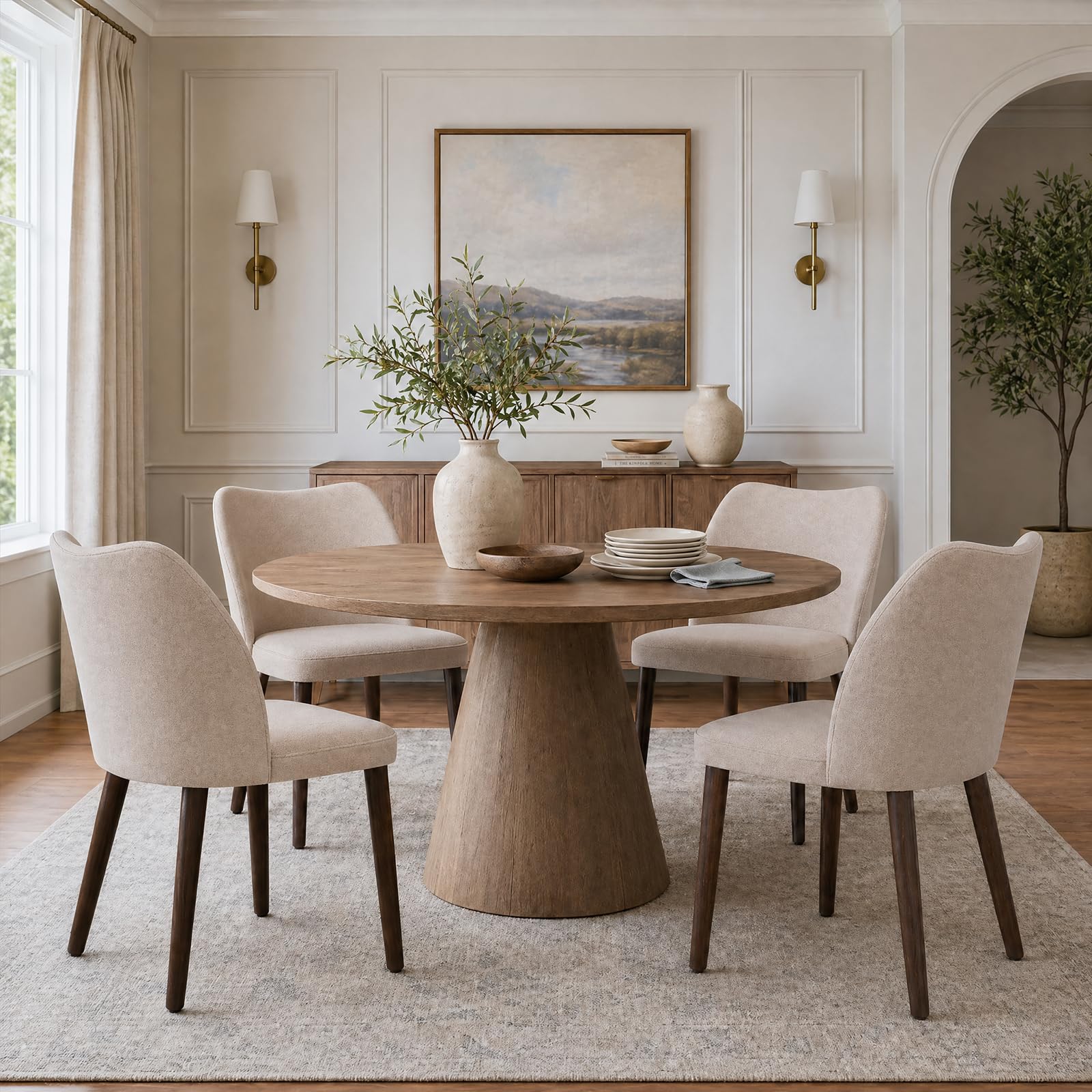
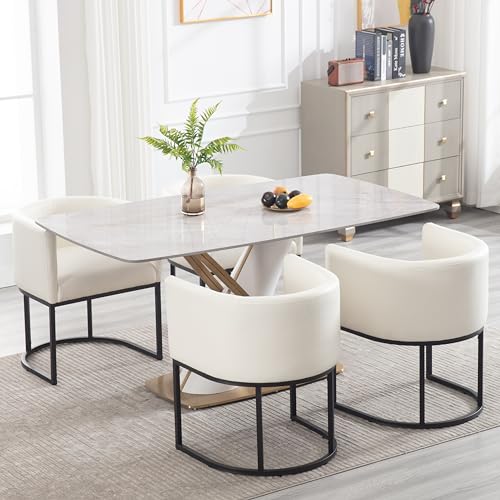

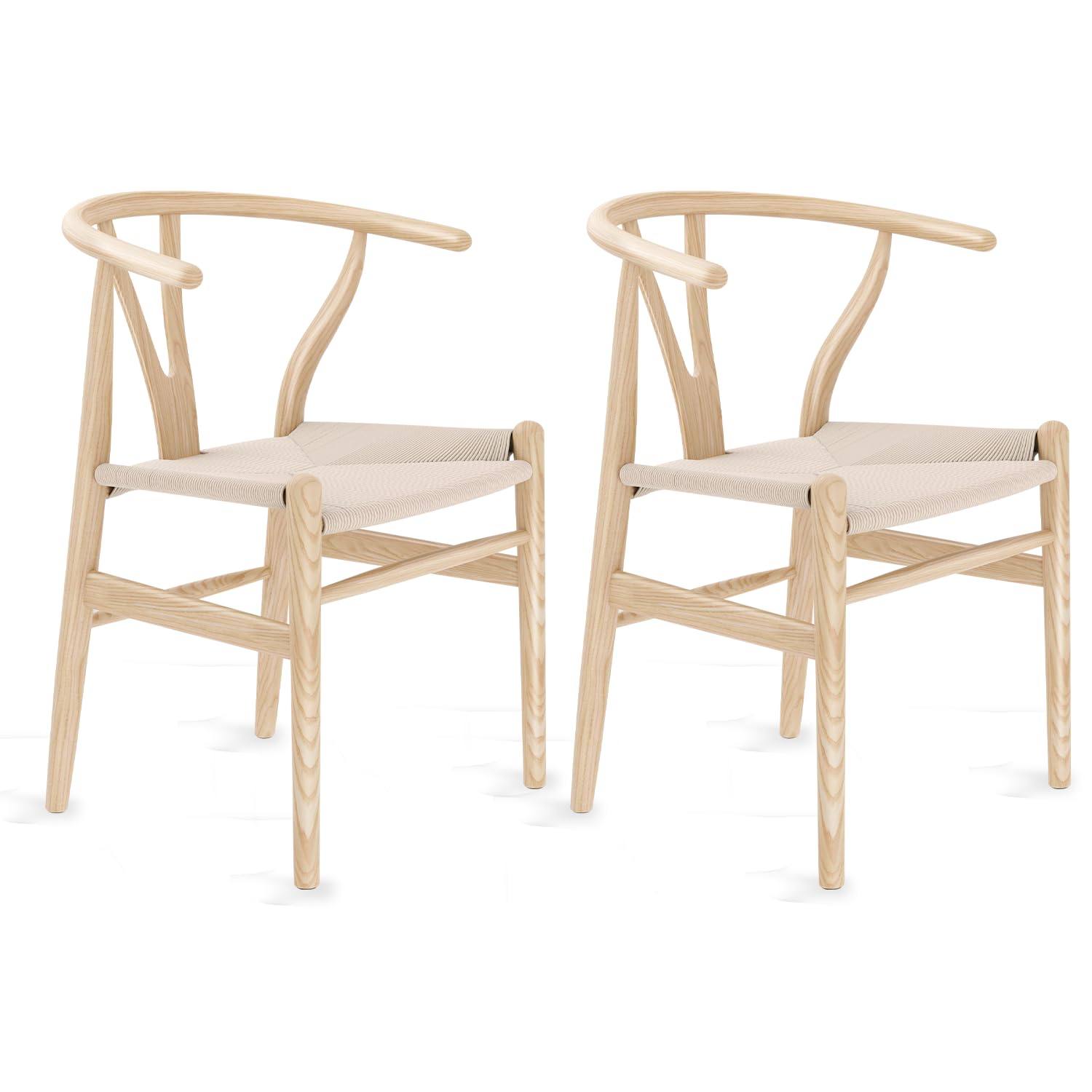


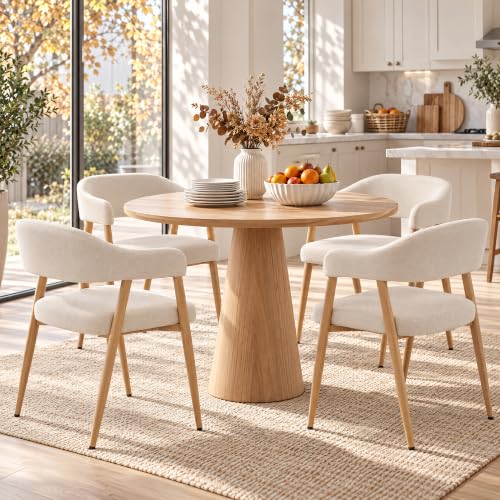
Types of Chairs Compared for a Round Dining Table
Start with the type, because type sets the footprint. A slim type lets you add a seat at a small table, while a wider type trades that extra seat for comfort at long meals.
Armless Side Chairs That Follow the Curve
Armless side chairs are the easiest fit because nothing sticks out at the sides, so chairs can angle slightly as the rim curves away. Most are about 17 to 20 inches wide, which helps when you want four chairs at a 48 inch table. They push fully under the top and usually cost about $80 to $200 each. The trade off is support, so they suit everyday meals better than three hour dinners.
Low Arm Chairs for Longer, Slower Meals
Low arm chairs give guests a place to rest their forearms between courses, and they make a round table feel settled and generous. They work best at tables of 54 inches or wider, where the rim offers more room per seat. Expect widths of about 21 to 24 inches and prices of about $150 to $350 each. The catch is clearance, because the arms must clear the apron, so this type rewards careful measuring.
Upholstered Chairs With a Curved or Padded Back
Upholstered chairs add a soft seat and a back that often curves gently, echoing the shape of the table itself. That padding suits households that eat, talk and work at the same table, and fabric or faux leather brings warmth that bare wood does not. Prices often run about $180 to $400 each. The costs are bulk and upkeep, since padded chairs push in less neatly.
Classic Wood Side Chairs for Everyday Durability
Solid wood side chairs, including wishbone and ladder back styles, bring a firm seat and legs that show cleanly under the table. They wipe clean in seconds, and a well joined frame can serve for years at about $120 to $300 per chair. Comfort is the limit, because a flat wood seat can feel hard during long meals, so many owners add a thin seat pad.
Key Features to Compare
Once the type is set, compare these factors in order. They decide the daily fit far more than color or decoration.
Chair Width and Spacing Around the Rim
Width decides how many chairs your table can honestly hold. Allow about 24 inches of rim for each diner as a starting point, then check the real width of the chair, because wide backs and arms take more than the seat measurement suggests. Leave a few inches between neighboring chairs so guests can sit down without turning sideways. If your count only works with chairs touching, drop one seat.
Seat Height Against Table Height
Most dining tables stand about 29 to 30 inches high, and most dining chair seats sit about 18 to 19 inches from the floor. That pairing leaves roughly 10 to 12 inches between the seat and the top, which gives thighs room and keeps elbows at a natural height for eating. A seat pad adds height, so measure to the underside of the top as well.
Arm Height and the Table Apron
Many round tables hide an apron, the wooden band under the top that supports it, and that band is what chair arms usually hit. Measure from the floor to the underside of the apron, then compare it with the arm height in the listing, often about 24 to 26 inches. The arm should pass under the apron with about an inch to spare, so the chair can push in fully and stay off the walkway.
Back Shape and Comfort for Lingering
The back shapes how long a guest stays comfortable after the plates are cleared. A back that curves slightly inward supports the spine at meal posture, while a tall straight back can press on the shoulder blades. Open backs, such as slatted or wishbone styles, look light around a round top, while solid and padded backs feel warmer and quieter.
Frame, Materials and Weight Capacity
A dining chair frame takes load every time someone leans back or scoots forward, so joinery matters as much as looks. Solid wood frames feel firm and can often be tightened or repaired, while engineered wood and veneer cost less but dislike repeated stress at the joints. Most dining chairs are rated for about 250 to 300 pounds. For broader style comparisons, see our guide to the best dining table chairs.
Upholstery and How It Handles Spills
Seat fabric meets food and drink daily, so treat cleanability as a core feature. Smooth faux leather and tightly woven fabrics wipe clean with a damp cloth, which suits children and frequent guests. Loose weave linen and pale boucle hold crumbs and show marks sooner. Removable covers are easiest of all, since you can wash the cover instead of scrubbing the chair.
How to Measure Your Round Table Before You Order Chairs
Measuring takes ten minutes and prevents the most common returns. You need the table diameter, the height to the underside of the apron, and an honest seat count for a normal night, not a holiday.
- Measure the diameter across the center of the top, then set your seat count using the rim spacing above.
- Measure from the floor to the underside of the apron, and note the height of the top itself.
- Mark your seat count on the floor with tape at the width of the chairs you like, and test the elbow room.
- Check that each chair can push in close to the table edge, so your walkway stays clear.
A glass top shows every leg through the surface, so leg finish carries more visual weight, and our guide to the best chairs for round glass dining table covers that pairing. If you are buying table and seats together, see our guide to the best dining room tables and chairs. If you are still weighing the best chairs for a round dining table against nearby shapes, our guide to the best chairs for round table helps sort the overlap.
Common Mistakes to Avoid
- Counting seats by hope instead of rim space leaves guests pressed elbow to elbow all meal long.
- Skipping the apron measurement leaves arm chairs stuck out from the table and blocking the walkway.
- Choosing chairs that are too wide for the diameter makes the set look crowded even when nobody is seated.
- Forgetting the seat pad height leaves too little room between the seat and the table top.
- Mixing chair styles with clashing leg shapes makes a round table look unsettled from every angle.
- Buying pale, delicate fabric for a daily family table leads to stains that cleaning cannot fully remove.
Care and Maintenance for Dining Chairs at a Round Table
Wipe wood frames and legs with a soft, slightly damp cloth, then dry them so moisture does not sit in the joints. Vacuum upholstered seats weekly, and blot spills at once rather than rubbing, which pushes liquid deeper into the weave. Tighten leg and seat bolts every few months, because chairs that scoot around a curve work their fasteners loose.
Felt pads under each foot protect the floor and quiet the scrape when chairs move, so replace pads once they flatten. Keep upholstered chairs out of long hours of direct sun to slow fading, and rotate chairs around the table monthly so wear spreads evenly.
FAQ
How many chairs fit at a 48 inch round dining table?
Four chairs fit comfortably at a 48 inch round dining table. Slim armless chairs can sometimes allow a fifth seat for a short gathering, but comfort drops quickly once rim space falls below about 24 inches per person. If your household often hosts five, a 54 to 60 inch table serves everyone better.
Can arm chairs work at a round dining table?
Yes, arm chairs can work at a round dining table when the arms clear the apron and the table is wide enough. Many households use arm chairs at just two positions and armless chairs between them, which keeps the supported seats while saving rim space. Test the layout with tape on the floor first.
What chair style suits a small round dining table in a tight room?
Armless chairs with an open or slatted back suit a small round table best, since they push fully in and let light pass through the set. A lighter leg finish also helps the group read as one calm shape. Avoid tall solid backs in a tight room, because they ring the table like a wall.
How long should dining chairs for a round table last?
Dining chairs for a round table should last about seven to ten years of daily use when the frame is sound. The first signs of age are usually a wobble at one leg joint and worn fabric at the front edge of the seat. Retightening joints early and replacing worn seat pads can add years to a set.
Is it worth paying more for chairs for a round dining table?
Paying more is worth it when the extra money buys a stronger frame, better joinery and a cover you can clean or replace. Those gains show up daily at a table used for most meals. Higher prices that only buy a trend driven shape, with the same light frame underneath, add little, so compare construction before looks.
Our Verdict
For most homes, the decision comes down to three numbers: chair width along the rim, seat height against your table, and arm height against the apron. Choose armless chairs for small tables, low arm or upholstered chairs for long meals at wider tables, and wood chairs when easy cleaning leads.
When you compare the best chairs for a round dining table with those checks in hand, the right set usually stands out quickly. Recheck your measurements once, then use the product table above to confirm width, height and price before you order.


