Best Ceramic Slow Cookers (2026): Buying Guide
Disclosure: We may earn a commission when you buy through links on this page, at no extra cost to you. As an Amazon Associate I earn from qualifying purchases. Learn more

Choose the best ceramic slow cooker for your household: compare midsize, compact and large oval types by capacity, controls, safety, care and budget.
Picture a Sunday where dinner cooks itself while you handle laundry and errands. That is the appeal of finding the best ceramic slow cooker for your home. The right one fits your counter, feeds your household without waste, and turns simple ingredients into a meal ready when you are.
This guide focuses on fit rather than fancy extras. You will match capacity to your family size, weigh ceramic against other materials, and set a sensible budget. Use the product table to compare current options, then use the checklist to narrow your choice. If you are open to other materials, see our guide to the best slow cooker for the wider picture.




Quick Answer: What to Choose in 30 Seconds
Most households do well with a midsize ceramic model holding about 5 to 6 quarts, with a timer and an automatic warm setting. Smaller homes save money and counter room with a compact manual model. Larger families and batch cooks should size up and pay more for sturdier construction and a longer warranty.
- Most homes: a midsize programmable model with a timer and warm setting.
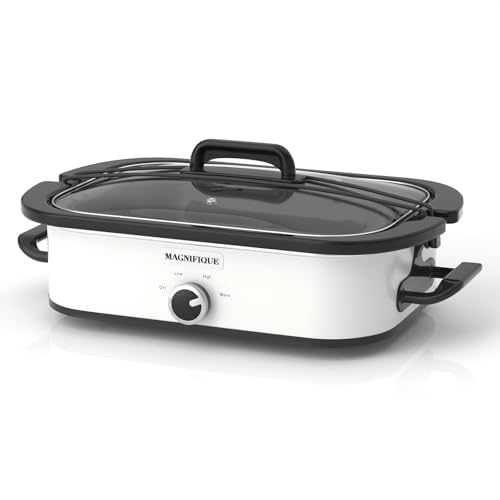
- Small kitchens: a compact manual model with simple low, high, and warm dials.
- Big batches: a large oval model with room for a whole chicken.
Before You Buy: A Quick Checklist for Choosing a Slow Cooker
Work through these seven points before you look at any single model.
Size: Match It to Your Space
Capacity should follow the number of mouths you feed most weeks. About 2 quarts suits one or two people cooking small soups or oatmeal. Around 4 quarts covers three or four people and most stews. About 6 quarts feeds five or six people with leftovers. Models of 7 to 8 quarts suit large families and batch cooking, while a 10 quart cooker only makes sense for crowds.
Which Type Fits Your Routine
Manual cookers use a simple dial and cost less, but you must be home to switch them off or down to warm. Programmable and digital models set a cooking time, then shift to warm on their own, which suits long workdays away. Shape matters too. Oval inserts fit a whole chicken more easily than round ones, while flat casserole shapes suit gratins and baked pasta. Portable models add a locking lid for trips to family dinners.
Features Worth It (and Ones to Skip)
A timer with an automatic warm setting is the feature most people use weekly, since it protects dinner when your day runs late. A locking lid earns its cost if you carry food to other homes. A temperature probe helps with large roasts, switching the cooker to warm once the meat reaches your chosen temperature. Skip preset menus named for single dishes, since low and high cover nearly everything, and skip a sear function, because most ceramic crocks cannot go on a stovetop burner.
Wattage, Power and Energy Use
Slow cookers are gentle on electricity use compared with heating a full oven for hours. Many home models draw roughly 75 to 300 watts depending on size and setting, with larger cookers and the high setting at the upper end. The low setting draws less per hour but runs longer, so total use for a recipe ends up broadly similar either way. If energy cost matters, choose the smallest size that fits your meals.
Safety Features and Certifications
Look for a listing mark such as UL or ETL on the base, which shows the appliance was certified by an independent safety organization. Check that the cord is intact, the base sits flat, and the lid fits snugly. If the glaze concerns you, choose a model whose maker states the crock is made without added lead. Readers who want to dig deeper into materials can see our guide to the best non toxic slow cooker.
Counter Space and Dimensions
Capacity tells you what fits inside, but the outer footprint tells you whether the cooker fits your kitchen. Measure the width and depth of your spot, adding room behind it for the cord and steam. Check the height with the lid on, and the height of your storage shelf, since a tall oval cooker may not fit a low cupboard. Handles add width on both sides, so include them rather than measuring the body alone.
Realistic Budget Ranges
Prices fall into three broad bands, each buying a different level of convenience.
- Budget band, under $30: small manual models with a dial and little more. Fine for singles and occasional use.
- Main band, about $30 to $100: midsize and large capacities, programmable timers, warm settings, and better lids.
- Premium band, over $100: larger oval crocks, probes, stronger handles, and longer warranties rather than different cooking results.
Ceramic Slow Cooker Types Compared for Different Homes
Match the type of cooker to the way your household actually eats. These three types cover nearly every home.
The Flexible Midsize Programmable Type for Most Homes
A midsize programmable ceramic cooker of about 5 to 6 quarts is the easiest type to live with. It handles a weeknight stew, a batch of chili for guests, and a pot roast without feeling oversized on the counter. The timer and warm setting suit households where dinner time shifts daily. If your signature dish is a Sunday roast, our guide to the best slow cooker for pot roast covers the cuts and liquid amounts that suit this size best.
The Compact Manual Type for Small Kitchens
A compact manual ceramic cooker of about 2 to 4 quarts is the value pick for one or two people, small kitchens, and anyone who cooks at home rather than leaving meals unattended. You give up the timer, so plan to be nearby when cooking ends. In return you get the lowest price, the smallest footprint, and the fewest parts to wash. This type also works well as a second cooker for holiday side dishes.
The Large Oval Type for Big Batches
A large oval ceramic cooker of about 7 to 8 quarts suits big families and batch cooks who fill the freezer with ready meals. The oval shape takes a whole chicken, a large pork shoulder, or a generous batch of soup. Paying more at this size should buy thicker ceramic, sturdier handles for lifting a full crock, and a longer warranty. Soup lovers cooking at this scale can compare shapes in our guide to the best slow cooker for soup.
How to Judge a Ceramic Slow Cooker
Judge capacity accuracy first, since a crock should hold close to its stated volume below the rim. Next comes cooking performance, meaning even gentle heat without hot spots that scorch sauces. Ease of use, cleaning, weight, and lid fit follow, then safety listings and warranty length. These judgments draw on maker specifications and patterns in verified buyer feedback about cracking and control failures.
Strengths and Limits of Ceramic Compared With Other Slow Cookers
Ceramic crocks heat gently and hold heat well, which suits long braises and keeps food warm at the table after you unplug the base. The crock doubles as a serving dish, so a stew goes from counter to table in the same vessel, and the glazed surface resists staining and lingering odors better than many bare metal inserts.
The trade offs are weight and fragility. A full ceramic crock is heavy to lift and wash, and it can chip or crack if dropped or knocked against a faucet. Most ceramic inserts cannot be used on a stovetop or under a broiler, so you cannot brown meat in the same vessel the way some metal inserts allow. Ceramic also changes temperature slowly, which suits steady cooking but will not rescue a late start the way a pressure cooker can.
Common Buying Mistakes to Avoid
- Buying by guest capacity instead of weekly meals: an oversized crock cooks small portions poorly and eats storage space all year.
- Ignoring replacement cost: a cracked crock can cost a large share of the whole cooker price, so confirm a replacement is sold first.
- Paying for presets you will never open: extra dish programs add cost without changing how low and high heat cook food.
- Forgetting where the cooker will live: a model dragged from a high shelf each week soon stops being used.
- Choosing a locking lid for home only use: the latches add washing work if you never carry food anywhere.
Cost of Ownership and Care
Running costs stay low, since the cooker itself is the main expense. The real ownership costs are replacement crocks and lids, plus small extras such as liners if you use them for sticky recipes. Budget minded owners can skip liners and soak the crock instead. For day to day care, soaking, and stain removal, follow our guide on how to clean a slow cooker rather than scrubbing the glaze with abrasive pads.
Store the crock with a soft cloth between it and the lid, so the rim does not chip in the cupboard. Never stack heavy pans inside the crock, since the weight can start a hairline crack that only shows during cooking. Keep the cord loosely coiled beside the base, and wipe the heating base with a damp cloth only, never under running water.
Your Questions, Answered
What is the most reliable slow cooker brand?
Reliability depends more on the specific model than on the name on the front. Look for a warranty of at least one year, replacement crocks that are easy to order, and few recurring complaints about the same failure, such as controls dying early. A maker that sells spare lids and crocks for older models expects its cookers to stay in service, which is a stronger sign than any award badge.
How do you clean a slow cooker?
Let the crock cool fully before washing, since moving hot ceramic into cool water can stress the glaze. Wash it in warm soapy water, or in a dishwasher if the maker allows it. For a white mineral film left by hard water, soak the crock with water and a splash of vinegar for an hour, then rinse. That soak also clears lingering odors from strong spices better than soap alone.
Is a slow cooker worth it?
For households that enjoy soups, stews, and braised meats, yes, mainly because it turns cheap tough cuts tender with minutes of morning prep. It also frees the oven during holidays and keeps a dish warm for family members eating at different times. If you will use it twice a month or more, the cost per meal drops fast. If your cooking leans toward crisp and quick dishes, it will gather dust.
How long does a slow cooker last?
A ceramic slow cooker often serves for many years, and the signs of ending matter more than any fixed lifespan. Retire it if the cord frays, the base heats unevenly so one side scorches while the other stays lukewarm, or the controls cut out mid cook. A crock with a crack you can feel with a fingernail should also be replaced, since liquid can seep into the ceramic and weaken it with heat.
Are ceramic slow cookers worth it?
They are worth it if you value gentle even heat and a crock that looks good enough to serve from at the table. Ceramic holds warmth well, so mashed potatoes or gravy stay at serving temperature during a long meal without the base plugged in. The cost is weight and care, since you must lift it with two hands and store it where it will not be knocked.
What is the best ceramic slow cooker?
The best ceramic slow cooker for you is the one whose capacity matches your usual recipe volume. Check that by filling your largest pot with the amount of soup you normally make and noting the level. Then confirm the footprint fits your counter and shelf, and choose programmable controls if you cook while away, manual if you cook at home. That order prevents the common regret of loving the features and hating the size.
Final Thoughts
Choose capacity first, controls second, and extras last, and the product table above will point you to the right type. Midsize programmable models fit most families, compact manual models serve small homes on a budget, and large oval models reward batch cooks. Whichever best ceramic slow cooker you settle on, measure your shelf and check that replacement crocks are sold, and it should earn its counter place for years.