
Best Ceramic Muffin Pans (2026): Buying Guide
Disclosure: We may earn a commission when you buy through links on this page, at no extra cost to you. As an Amazon Associate I earn from qualifying purchases. Learn more

Pick the best ceramic muffin pan for your oven and routine: compare solid ceramic and coated pans by cup count, browning, oven limits, care and budget.
Morning muffins are cooling on the counter, lunch box egg cups are planned for tomorrow, and your old pan already takes up half of a small cabinet. Choosing the best ceramic muffin pan for a real home is less about collecting bakeware and more about matching cup count, storage space, and daily cleanup to the way your household actually bakes. This guide walks through sizes, materials, and upkeep so you can pick one pan that earns its place. Use the product table to compare current options, then work through the checklist that follows.
Ceramic appeals to many home bakers because it heats gently, releases food well when the surface is intact, and looks pleasant enough to carry from oven to table. Those benefits only hold if the pan fits your oven, your recipes, and your sink.
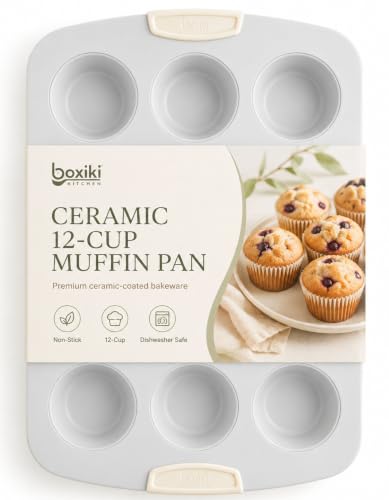


Quick Answer: What to Look For in 30 Seconds
For most households, a standard 12 cup ceramic pan in a medium tone is the practical starting point. It covers a full batch of muffins or cupcakes and fits a typical home oven. Choose solid ceramic if you value gentle, even heat and table presentation. Choose a ceramic coated metal pan if you want lighter weight and faster cooling. Go smaller, with 6 cups, if you bake half batches often.
If you are still deciding between pan styles, our guide to the best muffin pan compares the wider field, while this article stays focused on ceramic in home kitchens.
Before You Buy: A Quick Checklist for Choosing a Muffin Pan
Size: Match It to Your Space
A 12 cup pan is the size most recipes assume, and it suits families who bake a full dozen at once. A 6 cup pan suits couples and small households and leaves room beside a second dish. Mini pans make bite size snacks for parties, and jumbo pans hold bakery style muffins or individual frittatas, but each jumbo cup needs more batter and a longer bake. Measure your oven rack and cabinet depth before ordering, and leave about an inch around the pan so hot air can move. If mini portions are your main goal, see the best mini muffin pan guide for sizing details.
Which Type Fits Your Routine
Solid ceramic, often sold as stoneware, is heavy, holds heat after leaving the oven, and gives muffins a tender crumb with gentle browning. Ceramic coated aluminum is much lighter, heats quickly, and cools fast enough to wash soon after baking. Ceramic coated steel sits between the two, with a firm frame and moderate weight. Silicone is flexible and stores in a drawer, but it can feel wobbly when full, a point covered in our look at the best silicone muffin pan.
Features Worth It (and Ones to Skip)
Wide handles or a generous rim are worth paying for, because a full ceramic pan is awkward to lift with thick oven mitts. A lid is useful only if you regularly carry muffins to school events or store a batch in the pan itself. Skip lids that double as baking sheets if you have no room to store them, and skip extra mini pans bundled into a set if you rarely bake bite size food. Rolled edges on coated metal pans add strength, while thin rims can bend over time.
Light vs Dark Finish and Browning
Glaze color changes how your muffins brown. Light and cream glazes reflect more heat, so bottoms stay paler, which suits vanilla cupcakes and egg cups. Dark glazes absorb more heat and give edges a deeper color and a firmer crust, which many bakers like for corn muffins. If you own one pan only, a medium tone is the safest middle ground, and you can adjust rack position rather than buying a second pan for a single recipe.
Oven Safe Temperature and Coating Choices
Check the stated oven limit before your first bake, and keep a margin between that limit and your usual recipe temperature. Sudden temperature change can crack solid ceramic, so let a cold pan warm up on the counter before it meets a hot oven. Coated pans rely on a thin ceramic layer over metal, and that layer is the part that wears. If avoiding common coating chemicals matters to you, compare options in the best non toxic muffin pan guide and read the maker description of what the coating contains.
Realistic Budget Ranges
Expect to pay under $15 for a basic coated pan with a thin frame, about $15 to $25 for a sturdier coated pan or a small solid ceramic pan, and about $25 to $40 for a large solid ceramic pan with wide handles. Paying more should buy thickness and a clearer warranty, not bundled extras you will store and forget.
Ceramic Pan Types Compared
Since ceramic can mean two very different builds, compare the type, not just the color or cup count. The three types below each suit a different routine.
Solid Ceramic for Slow, Even Baking
Solid ceramic pans heat at a steady pace and keep muffins warm at the table, which makes them a good fit for weekend baking and brunch serving. The trade off is weight and fragility. A full solid pan needs two hands, a flat trivet, and storage where other pans will not slide into it. Choose this type if you bake muffins, popovers, and baked egg cups most often, and if you are comfortable washing a heavier pan by hand.
Ceramic Coated Aluminum for Light Everyday Use
A ceramic coating over aluminum gives you easy food release with far less weight, so weekday batches feel simpler to lift, wash, and put away. The metal core heats and cools quickly, which helps when you bake two batches in a row. The coating, though, is a surface with a lifespan. It can stain, scratch, and lose release over time, especially with metal tools. Choose this type if easy cleanup matters most and you accept that a coated pan is a replaceable item.
Ceramic Coated Steel for a Firmer Frame
Coated steel pans feel rigid in the hand and resist the twisting that thin aluminum can develop when you lift a full pan from one corner. That firm feel helps in busy family kitchens where pans get loaded and stacked often. Browning tends to be a touch deeper than on aluminum because the frame holds heat at the edges. Release depends on the surface staying smooth, so wooden or silicone tools are the safer match. Choose this type if you want coated convenience with a sturdier base.
How to Judge Ceramic Muffin Pans
Judge ceramic muffin pans on five points: how evenly heat spreads across the cups, how cleanly food releases without heavy greasing, how well the pan resists warping or cracking, what the material and coating are made of, and how much effort cleaning takes. Maker specifications and patterns in verified buyer feedback are the best evidence for each point.
Strengths and Limits of Ceramic vs Other Muffin Pans
What stands out first is the eating experience. Ceramic tends to bake a softer crumb with less risk of scorched bottoms, and the pan itself can go to the table, which saves a serving dish on busy mornings. Release is also strong while the glaze or coating is new, so muffins often need only a light coat of oil.
The limits are just as real. Solid ceramic can chip if it knocks against a stone counter, and it should not move straight from fridge to hot oven. Coated ceramic loses its slick feel with age, and once release fades, no amount of soaking restores it. For release basics before your first batch, our notes on how to grease a muffin pan explain when a thin coat is enough and when liners help more.
Common Buying Mistakes to Avoid
- Buying a 24 cup pan for a small oven, which leaves no room for air to circulate and can leave center cups pale.
- Choosing solid ceramic for a household that stacks pans in a deep drawer, where chipping is likely within months.
- Paying for a lid, carry case, and extra mini pan that add storage bulk but solve no problem you actually have.
- Ignoring the stated oven limit, then using the pan under a broiler or on a stovetop burner it was never built for.
- Judging price alone and skipping the replacement cost of a thin coated pan that may need replacing far sooner than a solid one.
Cost of Ownership and Care
Ongoing cost is mostly liners, oil spray, and eventual replacement. Solid ceramic has no coating to wear out, so its cost over time is low if it never chips or cracks. Coated pans may need replacing once release fades, which makes a cheap coated pan less cheap across several years. Store solid pans with a cloth layer between stacked items, and avoid aerosol sprays that leave a sticky film on coated surfaces.
Wash ceramic pans in warm soapy water once they have cooled, and dry them before storing so moisture does not sit in unglazed spots on the base. For stubborn baked on batter, a soak softens most residue without hard scrubbing. Methods for older stains are covered in how to clean a muffin pan.
Your Questions, Answered
What is the most reliable muffin pan brand?
Reliability varies more by build than by name. A thick solid ceramic pan from any established maker tends to outlast a thin coated pan, because there is no surface layer to wear away. Before buying, check that the stated oven limit, cup size, and dimensions match across the maker site and the store listing. A clear warranty is also a better sign than a long list of bonus items in the box.
How do you clean a ceramic muffin pan?
Soak the cooled pan in warm water for about 20 minutes, which loosens caramelized fruit sugars that plain rinsing leaves behind. Lift residue with a soft sponge, and for a stained cup, use a paste of baking soda and water and let it sit for 15 minutes before wiping. Avoid soaking a solid ceramic pan overnight, since its unglazed base can absorb water and then steam in a hot oven.
Is a muffin pan worth it?
Yes, if you bake portions at least a few times a month. A dedicated pan gives even portions for school lunches and freezer breakfasts, and it works for far more than muffins, including mini meatloaves, baked oatmeal cups, and individual frittatas. If you bake only once or twice a year, a small 6 cup pan is the smarter spend, because a large pan will mostly occupy cabinet space.
How long does a ceramic muffin pan last?
A solid ceramic pan can serve for many years if it avoids drops and sudden temperature swings. A coated pan has a shorter working life, and the honest signal is behavior, not age: muffins that once released cleanly start sticking in the center cups first. Fine surface lines on solid ceramic are usually cosmetic, but a crack you can feel with a fingernail means the pan should be retired.
Are ceramic muffin pans worth it?
They are worth it when gentle heat and easy serving matter to you, and when your storage can protect a heavier pan. Bakers who bake large batches back to back may prefer metal, since it cools faster between batches and tolerates temperature change better. For a single pan household that bakes weekly and serves at the table, ceramic usually earns its extra care.
What is the best ceramic muffin pan for a toaster oven?
Look for a 6 cup pan and measure the toaster oven interior, including the door curve, before you buy. Many toaster ovens fit a 6 cup pan only without its handles, so a compact rim matters more than wide grips here. Keep the pan at least an inch from the heating elements on every side.
Final Thoughts
The right ceramic pan fits your oven, your batch size, and your tolerance for careful storage. Solid ceramic suits relaxed weekend baking, coated aluminum suits light daily use, and coated steel adds frame strength for busy kitchens. Whichever type you choose, the best ceramic muffin pan for your home is the one you will reach for weekly. Use the product table above to compare cup counts, materials, and oven limits before you order.


