
Best Ceramic Mixing Bowls (2026): Buying Guide
Disclosure: We may earn a commission when you buy through links on this page, at no extra cost to you. As an Amazon Associate I earn from qualifying purchases. Learn more

Choose the best ceramic mixing bowls for your kitchen: compare nesting sets and single bowls by size, stoneware or porcelain, glaze safety and budget.
Picture a small kitchen on a Sunday morning. Pancake batter is on the counter, the cabinet above holds exactly one shelf of bowls, and the bowl you grab has to mix, serve, and go back into that same tight space. That is the real measure for the best ceramic mixing bowls. They need to suit your cabinet, your household size, and the way you cook each week.
This guide helps you choose by space, by the number of people you feed, and by budget. A quick table below sums up the main bowl setups, and the product table lists current options. If you are still weighing ceramic against other materials entirely, our guide to the best mixing bowls covers the full field before you narrow down.


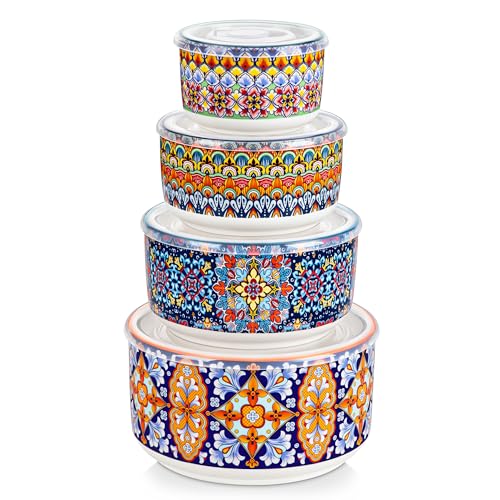
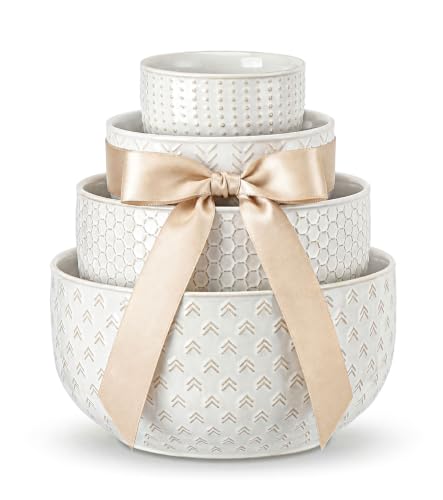


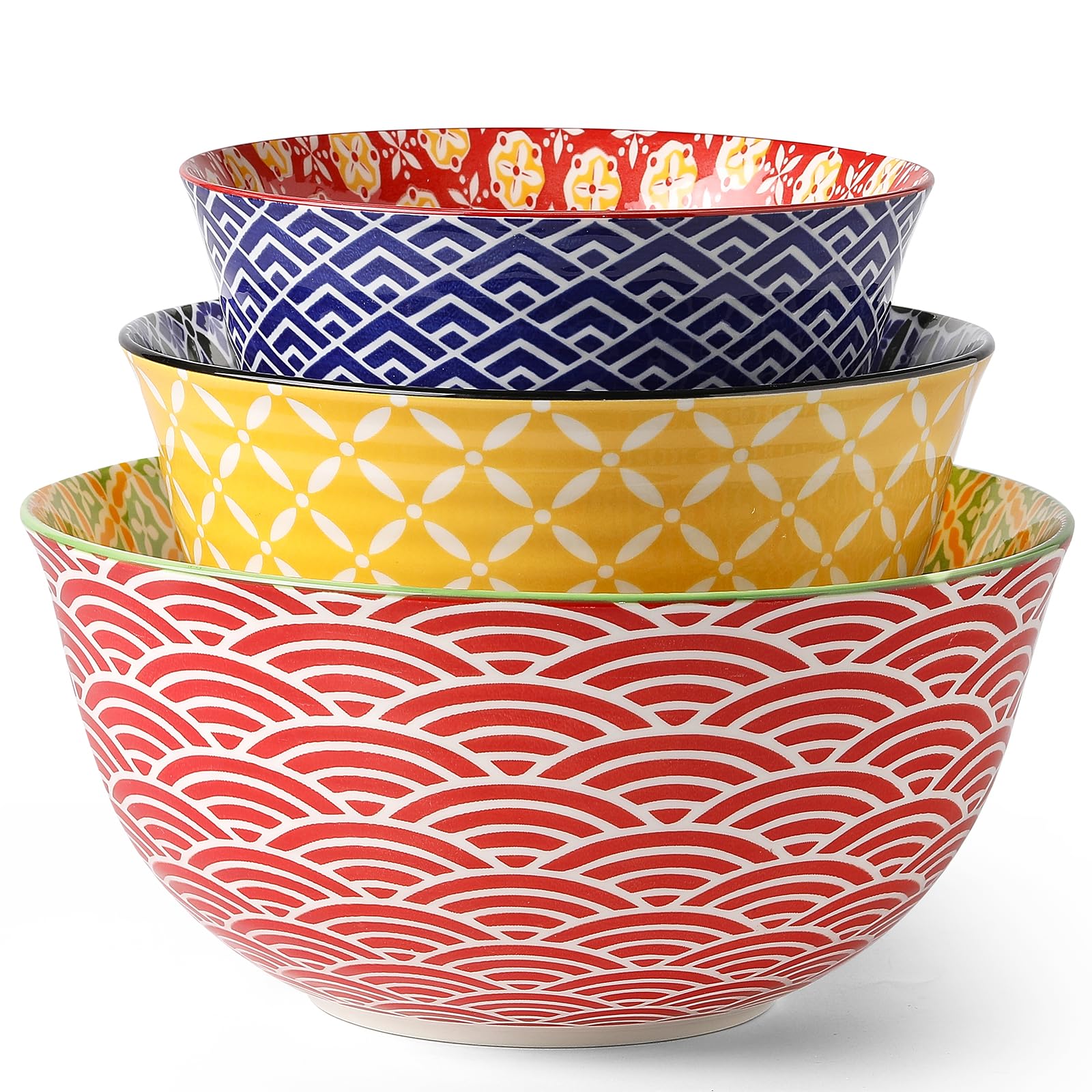
Quick Answer: Which Ceramic Bowl Setup Fits Your Home
Ceramic bowls come in three setups that cover almost every home. A single large bowl suits a small household that bakes in big batches. A nesting set of three covers daily cooking for most families. A nesting set of five adds tiny prep bowls for cooks who measure out spices and sauces before they start. The table below matches each setup to the home it serves best.
| Setup | Typical sizes | Best for |
| Single large bowl | About 5 to 7 quarts | Bread dough, big salads, small kitchens with one good shelf |
| Nesting set of three | About 1, 2.5, and 4.5 quarts | Everyday cooking for two to four people |
| Nesting set of five | About 0.5 to 5 quarts | Meal prep, baking with measured ingredients, larger families |
Weight is the one trait all three share. Ceramic has real heft, and that heft keeps a bowl planted on the counter while you whisk or fold. If anyone in your home has weak wrists or grip trouble, check the weight before you commit, because a large ceramic bowl full of dough feels surprisingly heavy.
Before You Buy: A Quick Checklist for Choosing Ceramic Mixing Bowls
Size: Match It to Your Space
Start with the cabinet, not the recipe. Measure the shelf height where the bowls will live, then check the stacked height of any nesting set against that number, because a set that nests beautifully still fails if the stack is too tall for your shelf. For capacity, a bowl of about 1 quart handles eggs and dressings, 2 to 3 quarts covers most batter and salad work for two people, and 4 to 5 quarts gives dough and family size salads proper room. Buy the largest size you will use weekly, and let smaller bowls earn their place only if you prep ingredients often.
Which Type Fits Your Routine
Stoneware is the workhorse type, dense and sturdy enough for daily mixing, and it holds heat well when you proof dough in a warm spot. Porcelain is thinner and lighter, with a finer finish that moves gracefully from counter to table, but it asks for gentler handling. Earthenware is the most rustic and often the most decorative, yet its body is usually more porous and less suited to heavy daily use. Match the type to your routine. A home that bakes twice a week needs stoneware toughness, while a home that mostly serves salads at the table may prefer the lighter feel of porcelain.
Features Worth Paying For, and Ones to Skip
A wide, stable base is worth paying for, since it stops the bowl tipping while you stir with one hand and pour with the other. Rolled rims give your fingers a secure hold when you lift a full bowl, and a pour spout helps with batter if you bake pancakes often. Snug lids turn a mixing bowl into fridge storage, and our guide to the best mixing bowls with lids explains what to check in a seal. Skip printed measurement markings inside ceramic bowls, because they fade with washing and a measuring jug does the job better. Decorative unglazed bands look lovely but trap grease, so treat them as a serving only extra.
Materials and Food Safety
A sound ceramic bowl is fully glazed inside, with a smooth surface that resists stains and does not hold odors from garlic or curry. Check the product listing for a clear statement that the bowl is food safe and made for contact with food, and be cautious with unlabeled decorative imports that never state their intended use. Avoid bowls with cracks in the glaze, since those fine lines can harbor moisture and bacteria and they signal that the surface is breaking down. If a listing is vague about the glaze, choose a maker that states its materials plainly.
Dishwasher Safe or Hand Wash
Many stoneware and porcelain bowls are labeled dishwasher safe, and for busy households that label matters more than almost any design detail. Hand washing only sets often carry painted or metallic decoration that a dishwasher would strip, so read the care line before you buy, not after the first wash. Even with a dishwasher safe bowl, hand washing the largest piece saves rack space and lowers the chance of rim chips from contact with heavy pans. Let bowls dry fully before nesting them, because trapped moisture between stacked bowls can leave a musty smell.
Realistic Budget Ranges
Under about $20 usually buys one medium bowl or a small starter set with thin walls, fine for a first apartment. About $20 to $50 is the practical middle, where sturdy stoneware sets of three with even glazing are common. About $50 to $100 brings thicker walls, larger capacities, and finishes that double as serveware for guests. Above that, you are mostly paying for handcrafted work and design rather than better mixing. For most homes, the middle range delivers the best balance of durability and price, and it leaves room in the budget to replace a single bowl if one ever breaks.
Ceramic Compared With Other Bowl Materials
Ceramic wins on stability and presentation. Its weight keeps it still during vigorous whisking, it does not react with acidic foods like tomato or lemon, and it looks at home on the table, so one bowl can mix and serve. It also holds warmth, which helps dough rise steadily in a cool kitchen.
The trade offs are weight and fragility. Ceramic chips when it knocks against a stone sink, and it can crack if it moves straight from a cold fridge to a hot oven. If you want feather light bowls you can toss in a bag for picnics, our guide to the best stainless steel mixing bowls covers the durable metal option. If you want to watch ingredients fold together through the wall of the bowl, see our guide to the best glass mixing bowls instead. Ceramic suits cooks who work at one counter and value a bowl that stays put and serves beautifully.
How to Compare Ceramic Mixing Bowls Before You Order
When two sets look alike in photos, compare them on five points. Ease of use means rim shape, base stability, and a weight you can lift when the bowl is full. Durability shows in wall thickness and an even glaze with no thin spots at the rim. Cleaning depends on a fully glazed interior and a care label that matches your habits. Design should fit your storage and your table, not just the product photo. Value is the cost spread across the bowls you will actually use each week, so a set of three you reach for daily beats a set of five with two bowls that never leave the cabinet. Read buyer reviews for repeated mentions of chipping or glaze flaws, since patterns reveal more than any single rating.
Common Mistakes to Avoid
- Buying by looks alone: a beautiful bowl with a narrow base will skate across the counter the first time you whisk eggs.
- Ignoring stacked height: a nesting set that stands too tall for your shelf ends up stored on the counter, eating the space you meant to save.
- Choosing a set with near duplicate sizes: bowls only half a quart apart do the same jobs, so you pay for storage instead of usefulness.
- Skipping the care label: a hand wash only set in a dishwasher household gets damaged slowly, one faded wash at a time.
- Filling to the rim: batter needs headroom to fold without spilling, so a bowl that looks big enough on paper may still be too small in use.
Cost of Ownership and Care
Ceramic bowls have almost no running cost, but how you treat them decides whether they last two years or twenty. Wash with a soft sponge rather than a scouring pad, because harsh abrasives dull the glaze over time and dull glaze stains faster. Store nested bowls with a cloth or paper towel between them to stop rim chips, since most damage happens in the cabinet, not at the counter. Keep bowls away from sudden temperature swings, and never set a cold bowl on a hot stovetop. If one bowl in a set breaks, many makers sell open stock replacements, so check that before you rebuy a whole set. A chipped rim is more than cosmetic, because the exposed body absorbs water, so retire a badly chipped bowl to dry storage duty like holding fruit or utensils.
FAQ
Are ceramic mixing bowls worth it?
Yes, if you mix at one main counter and like serving in the same bowl you cooked in. The weight that makes ceramic awkward to carry is exactly what keeps it steady during whisking and kneading. Ceramic also avoids the metallic taste some people notice with acidic foods in metal bowls. It is less worth it if you need bowls for travel, camping, or handing to small children, since one drop on a hard floor can end a bowl for good.
How do you clean ceramic mixing bowls without dulling the glaze?
Soak stuck batter in warm water for ten minutes instead of scraping, and most residue lifts away with a soft sponge. For tea or turmeric stains, a paste of baking soda and water rubbed gently with a cloth usually clears the marks without scratching. Avoid steel wool and powdered scouring cleansers, which wear the glaze down wash after wash. Dry bowls fully before stacking them, and store a cloth between nested pieces to protect the finish you just preserved.
How long do ceramic mixing bowls last?
A well made stoneware bowl can serve for decades, because the material itself does not wear out with normal mixing and washing. In practice, bowls leave service through accidents, such as a chip from a faucet knock or a crack from a drop, rather than through age. Fine cracks in the glaze, called crazing, can appear after years of temperature swings and mean the bowl should move to dry goods only. Lifespan therefore depends far more on handling and storage than on the price you paid.
Are expensive ceramic mixing bowls worth the extra cost?
Sometimes, but not for mixing performance. Higher prices usually buy thicker and more even walls, handcrafted shapes, and glazes with real depth of color. Those traits matter if the bowl doubles as your main serving piece for guests. For daily batter and salads, a mid priced stoneware set performs the same work. Spend more only when you can name the trait you are paying for, such as a larger capacity or a finish that matches your tableware, rather than paying for a brand name alone.
Can ceramic mixing bowls go in the oven?
Some can, but only when the maker rates the bowl for oven use, so check the base stamp or listing before you try it. Even oven rated ceramic dislikes sudden change, so let a cold bowl warm up at room temperature and place it in a preheated oven rather than under a broiler. Never move a bowl straight from the oven to a cold wet surface, because that shock is the classic cause of a clean crack across the base. When in doubt, transfer the food to a baking dish you trust.
Final Thoughts: Best Ceramic Mixing Bowls
For most homes, a nesting stoneware set of three in the middle price range is the sweet spot, giving you daily capacity, a stable base, and bowls that can go straight to the table. Check the product table above against your shelf height and household size before you order. Choose the best ceramic mixing bowls for the kitchen you actually have, and they will earn their shelf space every single week.


