Best Ceramic Grills (2026): Complete Buying Guide
Disclosure: We may earn a commission when you buy through links on this page, at no extra cost to you. As an Amazon Associate I earn from qualifying purchases. Learn more

Learn how to choose the best ceramic grills by size, vents, stand and warranty, with spending levels, care tips and common mistakes.
If you want a cooker that holds heat for hours and still sears well, best ceramic grills deserve a close look. The thick ceramic wall stores heat, smooths out temperature swings, and lets you grill, roast, smoke, and bake with one cooker. The product table shows current models before you compare specs in detail.
The tradeoff is weight, price, and care. A ceramic cooker is heavy to move, needs a firm and level spot, and needs protection from knocks and freezing water. Use this guide to match size, fuel, temperature control, and cleanup to how you actually cook, rather than to a feature list alone.




Spending Levels Without the Guesswork
At a lower spend, expect a smaller cooking area, simpler vents, and a basic stand, which can still cook well for two to four people. Focus on a solid gasket seal, smooth vent movement, and a stand that feels stable when you open a hot lid. You may give up a second grate, a fan controller, or a premium cart, but those extras matter less than steady heat and safe handling.
At a middle spend, you usually gain more cooking area, better hinges and bands, and a sturdier cart or table. This level suits families and hosts who cook often and want room for a roast plus side dishes. Check whether the extra size still fits your patio, and whether the warranty covers the ceramic body for a longer period than the smaller parts.
At a higher spend, expect a larger cooker, a well built cart, and extras such as a fan controller, a meat probe, or a wider range of add on cooking surfaces. Pay for those extras only if you will use them often, such as weekly low and slow cooks or frequent large gatherings. A higher price does not automatically mean better flavor, since vent skill, fuel quality, and cook technique still shape the result.
How to Choose the Best Ceramic Grills: Buying Guide
Fuel and Fire Starting
Ceramic grills burn lump charcoal or briquettes, and that is a big part of their appeal. Lump charcoal lights quickly, burns hot and leaves little ash, while briquettes burn longer and more evenly for slow cooks. Use natural fire starters or an electric starter instead of lighter fluid, since fluid can leave a taste in the ceramic and the food. A few wood chunks added to the coals give smoke flavor. Because the thick wall holds heat so well, a modest load of fuel can run for many hours, and closing the vents puts the fire out and saves the rest for next time.
Portability and Footprint
Portability matters more than many buyers expect, because a ceramic cooker can weigh well over 100 pounds once assembled. Wheels help on a flat patio, but they do not make a heavy cooker easy to lift over steps or soft ground. Measure the full footprint with the lid open, the side tables extended, and space for safe clearance around the cooker. If you need to move it for storage, check whether it breaks down safely into a base and a lid, and whether the maker guidance allows that kind of move.
Cooking Area and Capacity
Cooking area is measured in square inches, and it tells you how much food fits in one layer without crowding. A size near 200 to 300 square inches suits small households, while 400 square inches or more suits larger groups and whole roasts. A warming rack or a second grate adds space, but it also changes airflow and distance from the heat, so it works best for foods that need gentler heat. Count burgers, chicken pieces, or ribs for your usual meal, then choose a size with a little room to spare.
Temperature Control and Smart Features
Good temperature control starts with vents that move smoothly and hold their setting, plus a gasket that seals well when the lid closes. A fan controller can hold a low temperature for hours by adjusting airflow, and a meat probe can warn you when food reaches a target temperature. WiFi alerts add convenience, but they also add cost and a device to charge or connect. For most buyers, strong manual vent control matters first, and smart features are a useful second layer rather than a replacement for it.
Assembly and Warranty
Assembly for a ceramic cooker often takes two people, because the lid is heavy and the bands and hinge must align correctly for a good seal. Check the stated assembly time, the tools included, and whether a cart or a table comes in the box or costs extra. Warranty coverage may differ for the ceramic body, metal parts, gaskets, and grates, so read the terms for heat damage, cracks, and outdoor use. Keep the purchase record and the warranty terms together, and follow the maker guidance for first use and curing.
Ash, Grease Management, and Cleanup
Cleanup shapes daily ownership, so look for an ash removal path that does not require lifting hot parts or spilling ash across a patio. A grease tray or a drip pan should sit where you can reach it easily and clean it after fatty cooks. Cast iron grates give strong sear marks and hold heat well, but they need drying and light oiling to resist rust. Stainless grates clean more easily and still sear well when fully preheated, so choose based on how much care you will actually do.
Heat Output and Temperature Range
For a charcoal ceramic cooker the key question is how low and how high it can hold. A low and slow setting near 225 degrees Fahrenheit suits ribs and pork shoulder, while a searing setting above 500 degrees Fahrenheit suits steaks and flatbreads. Steadiness matters as much as the top number, because a cooker that drifts needs constant vent tweaks. Ask how long the cooker holds a low setting on one load of fuel, and how quickly it recovers after you open the lid.
Types of Ceramic Grills
Almost every ceramic grill is a kamado, the thick walled, egg shaped charcoal cooker, so the useful differences are size and what comes in the box. For a wider look across brands and sizes, see our guide to the best ceramic bbq grills.
Full Size Kamado With Cart
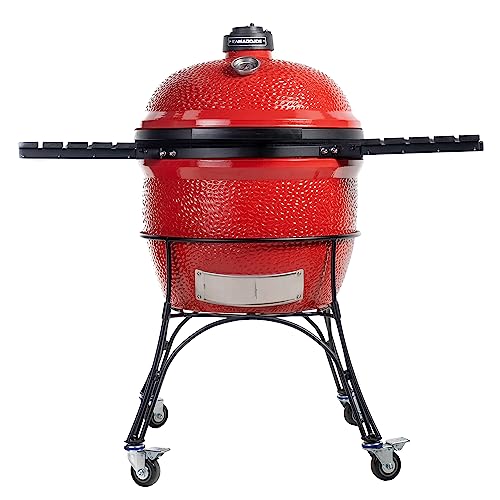
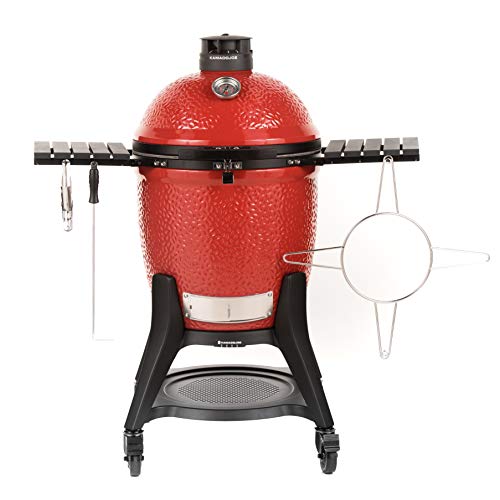
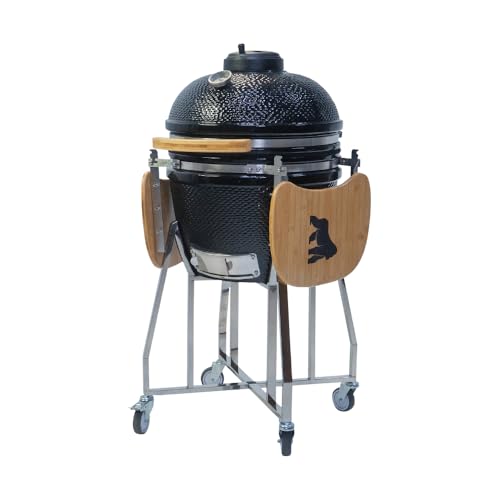
Full size models, commonly sold in 18 and 24 inch sizes, come with a cart, side shelves and a larger grate. They hold heat for a whole brisket or a dinner party, and they suit cooks who want one cooker for roasting, baking, smoking and searing. They are heavy, need a firm and level spot, and reward cooks who learn vent control, because small vent moves make a large difference. Choose this type when the cooker will live in one place and cook often.
Compact and Portable Kamado
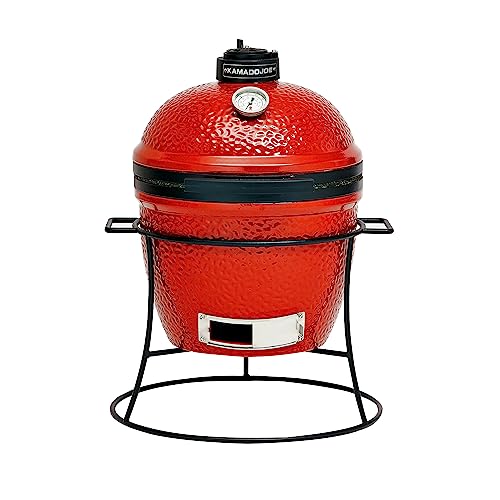
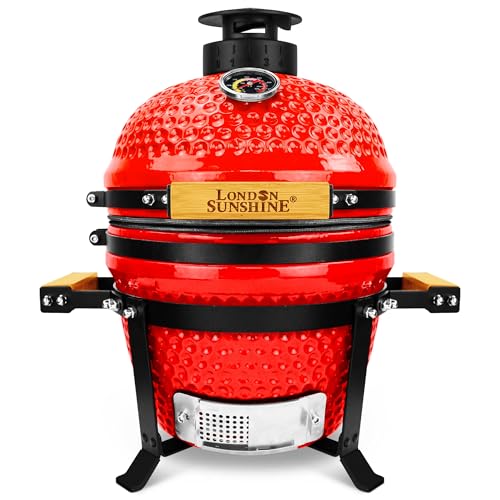
Compact ceramic grills, usually 13 to 15 inches across, cook for two to four people and take far less room. Some come with a small stand or locking casters, which helps on a balcony where rules allow, at a tailgate or at a campsite. They still weigh a lot for their size, so lift with help and never carry one with the lid unsecured. Choose a compact model when space is tight or you cook for a small household.
Premium and Large Capacity Models
At the top of the range you find larger bodies, heavier ceramic, better hinges and bands, and extras such as a divide and conquer grate system or a fan controller. These suit people who cook for crowds or use the cooker several times a week. Extras only pay off when you use them, so compare warranty terms and parts support along with the cooking area.
Ceramic Grills for Specific Needs
Small Patios and Tailgating
If space is the main limit, look for a compact body, locking wheels and a stable stand. A smaller grate still handles a few burgers, a spatchcocked chicken or a pizza on a stone, and it heats up quickly because there is less ceramic to warm. Check the weight and the handle placement before you buy, since you will lift it more than you expect.
Large Families and Entertaining
For groups, a larger cooking area matters more than any feature on the list. Pick a size that fits your usual meal in a single layer, then look at whether a second grate or an extender gives you room for sides. Make sure the cart and shelves can carry the load of a full cook and a hot lid.
Tips to Get the Most From Your Ceramic Grill
- Preheat 10 to 15 minutes before cooking, so the grate and the ceramic wall reach a steady temperature and food sears cleanly.
- Clean grates while warm, using a brush suited to your grate type, and dry cast iron grates before storing them.
- Cover the grill and check for rust, because a cover keeps rain out and protects metal bands, hinges, and carts.
- Use lump charcoal or natural starters rather than lighter fluid, and open the vents slowly when you light the fire so the ceramic heats evenly.
- Close the vents after cooking to starve the fire safely, then wait until the cooker is fully cool before cleaning ash.
FAQs
How often should I clean my ceramic grill?
Clean the grates after every cook while they are still warm, and clear ash before it builds up enough to block airflow. A deeper clean of the interior, grease path, and vents every few months keeps temperature control steady and reduces flare ups. Gaskets deserve a quick check during deep cleans, since a worn gasket leaks air and makes low temperatures harder to hold. Replace a gasket when it feels flat, cracked, or loose rather than waiting for a failed cook.
How long should a good ceramic grill last?
A good ceramic grill can last many years when it sits on a firm surface, stays covered, and avoids knocks and freezing water inside the body. The ceramic shell often lasts longer than gaskets, bands, and grates, so plan for those smaller parts as normal upkeep. Sudden temperature shock and a fall are the most common causes of cracks, so avoid pouring cold water into a hot cooker. Careful placement and steady cleaning habits protect the cooker far better than any single feature.
Can I use a ceramic grill on a balcony?
You can use one on a balcony only when building rules allow grills, the floor can carry the full weight, and you have safe clearance from walls, railings, and overhead cover. Many buildings ban open flame grills on balconies, and smoke may disturb neighbors even when cooking is allowed. Check your lease, building rules, and local rules before you buy, and confirm that a fire extinguisher and a clear exit path are close by. A ground level patio or a shared outdoor area is often the safer and simpler choice.
How big of a ceramic grill do I need?
Size your grill by your usual meals, with a little room for guests, rather than by the largest feast you might cook once a year. A cooking area near 200 to 300 square inches works for two to four people, while 400 square inches or more works for larger groups and whole roasts. A second grate can add space for foods that need gentler heat, but it does not replace a well sized main grate. Measure your patio as well, since a large cooker needs room for the lid, side tables, and safe clearance.
Is a ceramic grill worth the price?
A ceramic grill is worth it when you cook outdoors often and want one cooker for searing, roasting and long smokes. The thick walls use less fuel and hold steady heat, which saves effort once you learn the vents. The costs are weight, a higher price than a basic grill and care around knocks and freezing water. If you grill a few times a year and move the grill often, a lighter design may suit you better. Fuel choice matters too, so read our guide to best charcoal for ceramic grills before you stock up.
Final Thoughts
The right ceramic grill is the one that fits your space, your usual group, and the way you like to cook, not the one with the longest feature list. Prioritize steady temperature control, a sturdy stand, and cleanup you will actually do, then use spending levels to decide which extras earn their cost. Review the product table above one last time, check local rules and maker guidance for placement and safety, and choose a cooker you will enjoy firing up often. Choosing the right one of the best ceramic grills starts with that careful first look at size, stand and warranty.