
Best Ceiling Garage Storage 2026: Buying Guide
Disclosure: We may earn a commission when you buy through links on this page, at no extra cost to you. As an Amazon Associate I earn from qualifying purchases. Learn more

Measure joists, ceiling height and door clearance first, then pick the best ceiling garage storage for your bins and gear.
Floor shelves fill fast, and bulky bins, holiday decor, and camping gear soon crowd the space where you park and work. The best ceiling garage storage moves items you use only a few times a year into the empty air above your vehicles. The product table below sums up the main types.
Ceiling storage includes fixed racks, adjustable platforms, and hoists, each suited to a different ceiling height and load. For the broader room layout, see our guide to best garage storage, then size the ceiling zone on its own.

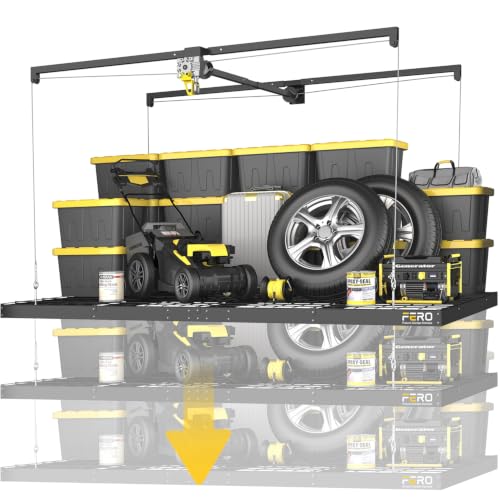

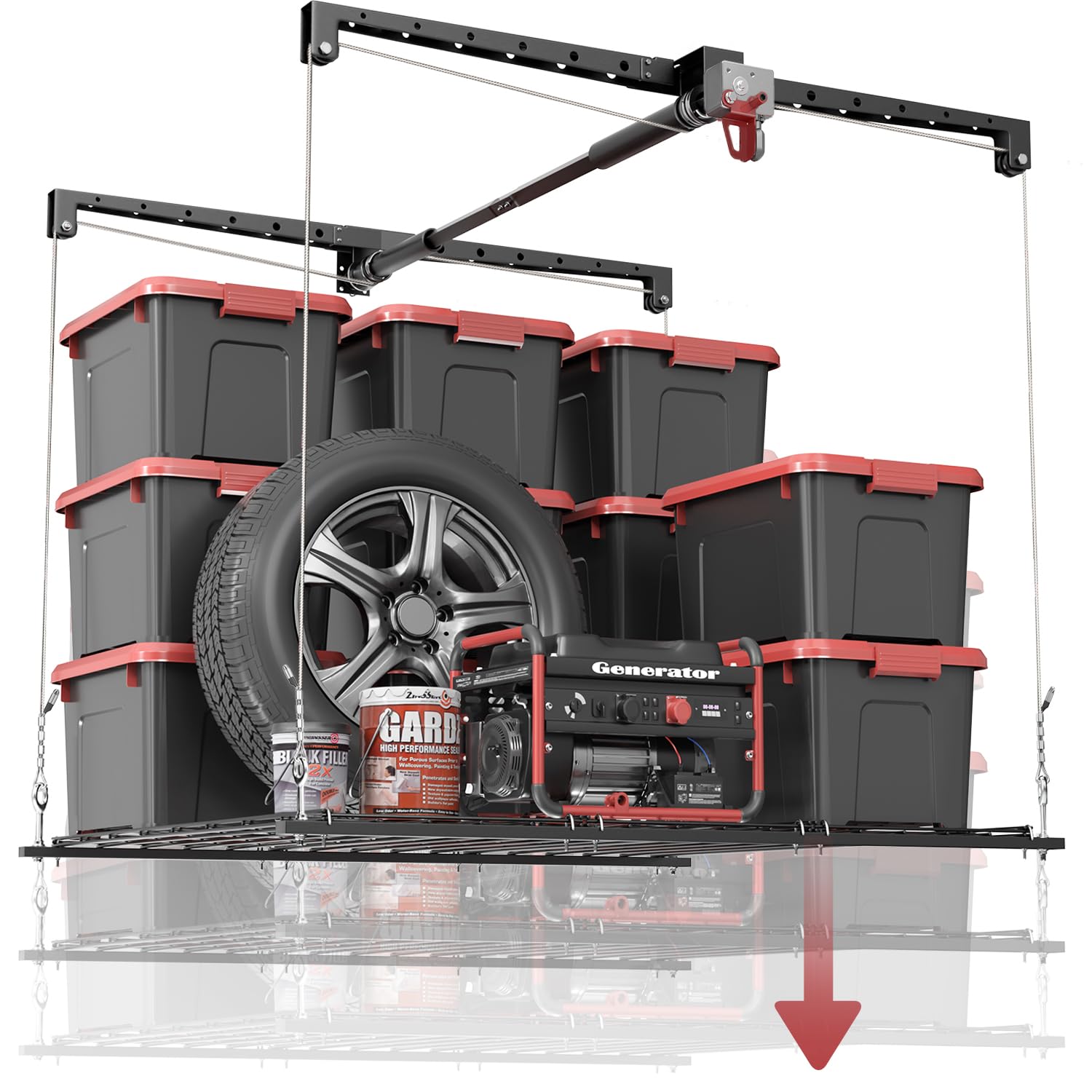
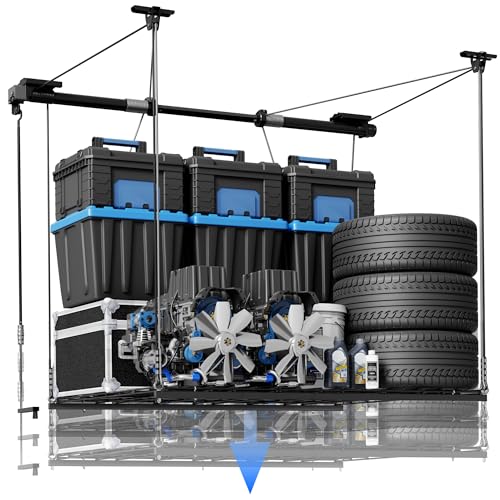
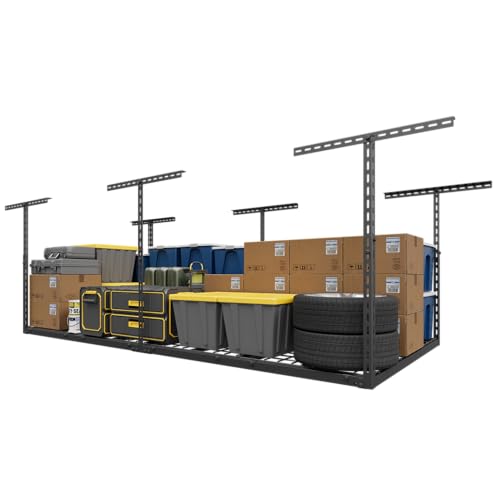

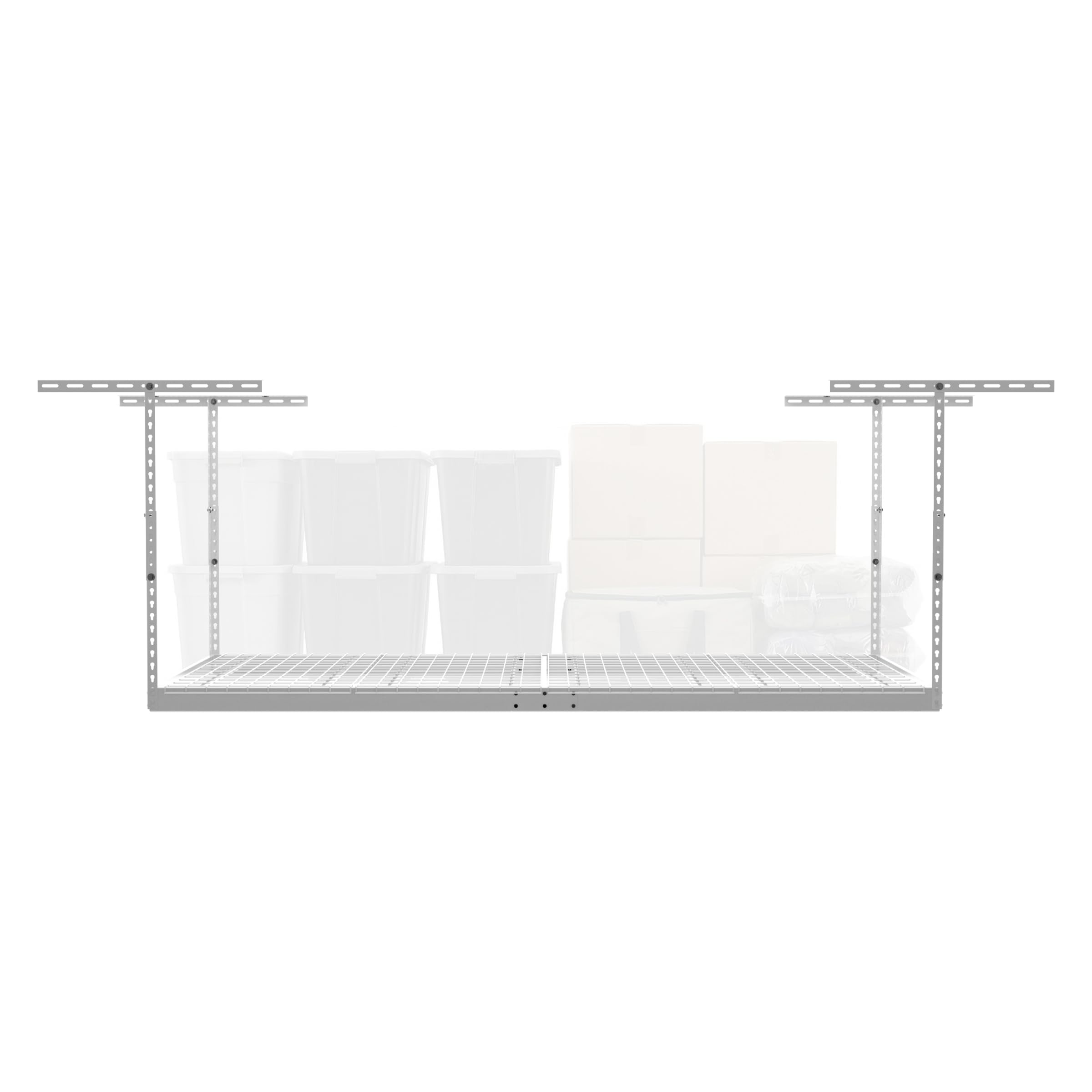

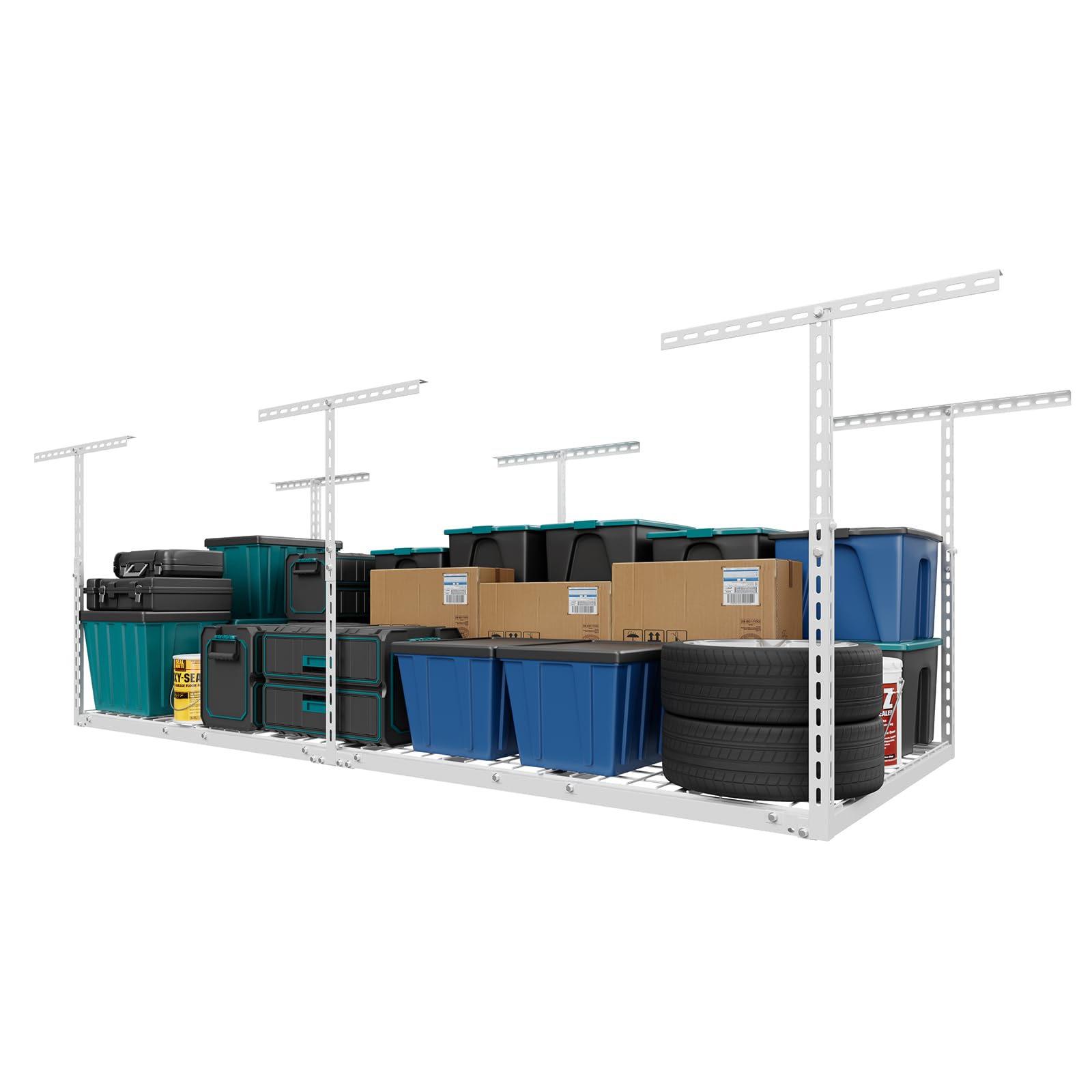
Three Ceiling Storage Formats
Three ceiling formats cover nearly every home garage. Fixed racks give the largest flat area for bins. Adjustable platforms change height to match your ceiling and vehicle roof. Hoists lift one bulky item, such as a cargo box or kayak, without a ladder routine for every use.
Four facts decide the right format: ceiling height, joist location, what you plan to store, and how often you need to reach it.
Three Ceiling Storage Types to Compare First
Fixed Overhead Racks for Maximum Bin Space
A fixed rack is a steel frame and deck that bolts to ceiling joists and hangs at a set height. It holds several large bins side by side, making it the default choice for seasonal decor and archived household items. A closely spaced wire deck supports small bins without sagging, while a wide grid suits only large containers with stiff bottoms. Leave clear space for the open door and nearby lights. Our guide to best overhead garage storage helps if listings use overhead and ceiling for the same frame style.
Adjustable Platforms for Varied Ceiling Heights
An adjustable platform uses vertical posts with several height settings. You can lower the deck for taller bins or raise it to clear a tall vehicle roof. That flexibility helps when one bay parks a low car and the other an SUV, and if you move homes. Each post must sit at the same setting and the deck must stay level, so bins do not slide. Check the full adjustment range in inches, not just the tallest setting.
Motorized Hoists for Single Bulky Items
A hoist uses straps or a small platform plus a motor or hand crank to raise one awkward item straight up. It suits a rooftop cargo box, a kayak, or a folded ladder that is hard to lift onto a rack from a ladder. Straps must sit on strong parts of the item, not on handles or thin edges. Power models need a nearby outlet and a control you can reach while watching the load.
How We Chose the Types Above
We ranked formats by capacity and fit, frame materials, joist attachment, access, and value, using maker specifications and patterns in verified buyer feedback. A format earned its place by solving a clear problem, such as storing many bins at once or lifting one item two people struggle to carry up a ladder.
We also weighed what listings leave unclear. Some state a high load rating that assumes perfect joist spacing and even weight spread, and others ignore usable depth once the door and opener are counted.
Who Should Buy Ceiling Garage Storage
Households With Seasonal Items Crowding the Floor
If holiday bins, winter clothing, and camping gear return to the same floor corner every year, a ceiling rack fits your pattern. You load it a few times a year, label each bin on the side facing the room, and leave daily tools at waist height.
Owners of Small Garages Who Need Parking Space Back
In a tight garage, wall shelves alone may still leave the center of the room blocked. Moving low use items overhead can be the only way to park inside again without renting outside storage. Your priority is deck depth that clears the vehicle roof with room to spare, measured with the vehicle in its normal spot.
Active Households With Bulky Gear Used in Rotation
Kayaks, cargo boxes, and seasonal sports gear are often light enough for ceiling storage, yet too bulky for standard shelves. A hoist or rack near the door shortens the path from vehicle to storage. Households storing cycles overhead can compare options in our guide to best garage storage for bikes, since cycle hooks and hoists follow different spacing rules than flat racks.
How to Choose the Right Garage Storage
Type
Start with the shape of what you store. Many similar sized bins point to a flat rack or platform. One large item with an uneven shape points to a hoist with straps. A mix points to a rack over one bay and a hoist over the other, if the layout allows it. Wall shelves still win for weekly items, because ceiling access always adds a ladder step. Also weigh who does the loading, since a system needing two adults frustrates a household where one person handles storage alone.
Capacity and Fit
Measure ceiling height from the floor to the lowest obstruction, which may be a beam, a duct, or the open garage door. Subtract rack depth and the height of your tallest bin. The result is the clearance left above your vehicle and your head. A common rack size is about 4 by 8 feet, but a smaller deck may fit better between lights and door tracks. Sketch the ceiling and mark the opener, springs, and lights first.
Load Rating and Joist Attachment
The load rating only holds when the frame attaches to joists as directed and weight spreads evenly across the deck. Most home garages use joist spacing of about 16 or 24 inches, and brackets must land on joists, not drywall alone. Treat the printed rating as a ceiling, not a target, and stay well below it. Dense items such as paint, tools, and books belong low in the garage, and the heaviest bin belongs near a supported edge.
Deck Design, Bin Lids, and Materials
Steel frames dominate this category because they carry distributed loads well and resist bending over a long span. Look for a finish that resists corrosion, since garage air brings moisture and temperature swings. A raised lip or rail helps stop bins sliding when the door vibrates. Use rigid bins with lids that latch, and avoid soft bags or open boxes overhead. If moisture can damage an item, keep it in a climate controlled room instead.
Features Worth Paying For
Useful extras include height adjustment with locking pins, safety rails, and hooks under the deck for ladders or cords. Such hooks earn their cost when they clear one more floor item without blocking bin access. Wheels and doors belong to floor cabinets, so do not pay for them here. Our garage storage buying guide covers budget and layout trade offs for the whole room, so you can set the share the ceiling zone deserves.
How Much Should You Spend?
Small hoists and compact platforms often cost about $100 to $250. Most racks for a full parking bay fall around $200 to $500, depending on deck size, steel thickness, and hardware. Large motorized systems can run about $500 to $1000 or more, once bins and install help are added. Spending more should buy thicker steel, a wider adjustment range, or a motor, not a higher printed load rating alone.
Ceiling Storage Versus Other Garage Storage: Pros and Cons
Ceiling storage wins on space you would otherwise waste. It keeps low use items inside the home, avoids rental cost, and leaves walls open for daily tools. It loses on access, since each use needs planning, a stable ladder or hoist control, and time to place weight evenly. For weekly items, that friction outweighs the space saved.
Wall systems keep items visible and within reach. A track system covered in our gladiator geartrack review suits tools and gear you rotate often. Cabinets hide clutter and lock away chemicals, and our newage bold series review covers that enclosed approach for readers who prefer doors over open racks.
Common Mistakes to Avoid
- Bolting brackets into drywall instead of joists, which can let a loaded rack pull free.
- Ignoring the open door path, so the rack blocks the door, opener arm, or safety sensors.
- Loading dense items overhead, which makes each bin unsafe to lower from a ladder.
- Choosing deck depth from bin height alone and forgetting vehicle roof clearance below.
- Storing weekly items overhead, which turns a space saving system into a daily frustration.
- Skipping a check of every bolt and pin after the first loading, when small shifts appear.
How to Make Your Ceiling Storage Last Longer
Inspect the frame twice a year for bent posts, loose bolts, cracked welds, and rust at scratches or bracket points. Tighten hardware to the maker specification, and replace any bent or corroded part rather than loading around it. After a roof leak or nearby impact, inspect it again before trusting it with a full load.
When you swap bins, note the new total weight rather than assuming it matches the old one. Wipe dust from the deck and bin lids with a dry cloth, and never store wet gear overhead, since drips can stain vehicles and speed corrosion. If you feel unsure about joist condition or ceiling cracks, hire a qualified installer first.
FAQ
What is the best ceiling garage storage?
For most homes, a fixed or adjustable steel rack sized to your joists and bins is the most practical answer, since it holds many seasonal items and needs no power. Choose a hoist when one bulky item drives your decision. The product table above compares formats by deck size and load rating.
Are ceiling garage storages worth it?
They are worth it when items are bulky, light for their size, and used only a few times a year, since one rack can free enough floor area to park a vehicle inside. They are rarely worth it for small or daily items, where wall storage saves more time for the same money.
How much weight can a ceiling garage rack hold safely?
The safe amount is always below the printed maximum if your joists, spacing, or load placement differ from the maker's rated setup. Add the weight of every bin, spread it evenly, and keep a clear margin below the rating. Weigh the heaviest bin on a bathroom scale first. If you cannot lift it steadily at ground level, it does not belong overhead.
How long does a garage storage system last?
A steel ceiling frame in a dry garage can serve for many years, often a decade or more, when bolts stay tight and corrosion is caught early. Bins wear out first, since lids crack and plastic grows brittle with heat. Replace damaged bins promptly, because a cracked bin can spill or shift on the deck.
How do you clean a ceiling garage rack?
Lower one bin at a time with a helper, then wipe the empty deck section with a brush or dry cloth. Clean bin exteriors before they go back up, and check each lid for cracks at ground level. Avoid washing the frame in place, since water can drip into light fixtures or onto vehicles.
Can ceiling garage storage work in a garage with a low ceiling?
Sometimes, but only with shallow bins and a careful clearance check. You need depth for the frame and bins plus safe headroom and vehicle clearance below. In many low garages, a hoist holding one flat item fits where a deep rack cannot. If the numbers leave only a few inches of margin, choose wall storage instead.
Final Thoughts
Start with measurements, not with a listing. Confirm joist spacing, ceiling height, door clearance, and the real weight and size of what you plan to store, then pick the format that fits those facts. For most readers, the best ceiling garage storage is a steel rack or platform that clears the vehicle roof, spreads weight across joists, and holds the seasonal items that now block the floor.
Use the product table above to compare deck size, height range, and load rating, and keep daily tools on walls or in cabinets. A modest system installed correctly beats the largest system installed in a hurry.


