
Best Ceiling Fan for High Ceilings in 2026: Downrods, Spans and Controls
Disclosure: We may earn a commission when you buy through links on this page, at no extra cost to you. As an Amazon Associate I earn from qualifying purchases. Learn more

Finding the best ceiling fan for high ceilings starts with drop height: downrod length, blade span, airflow and reachable controls explained.
A fan mounted on a tall ceiling can look perfect and still barely move the air you feel, because the blades sit far above the people below. Choosing the best ceiling fan for high ceilings comes down to drop height, blade span, and airflow strong enough to reach the floor. This guide compares fan types and the specs that matter most, including light output and motor style. Start with the comparison table below, then use the sections that follow.


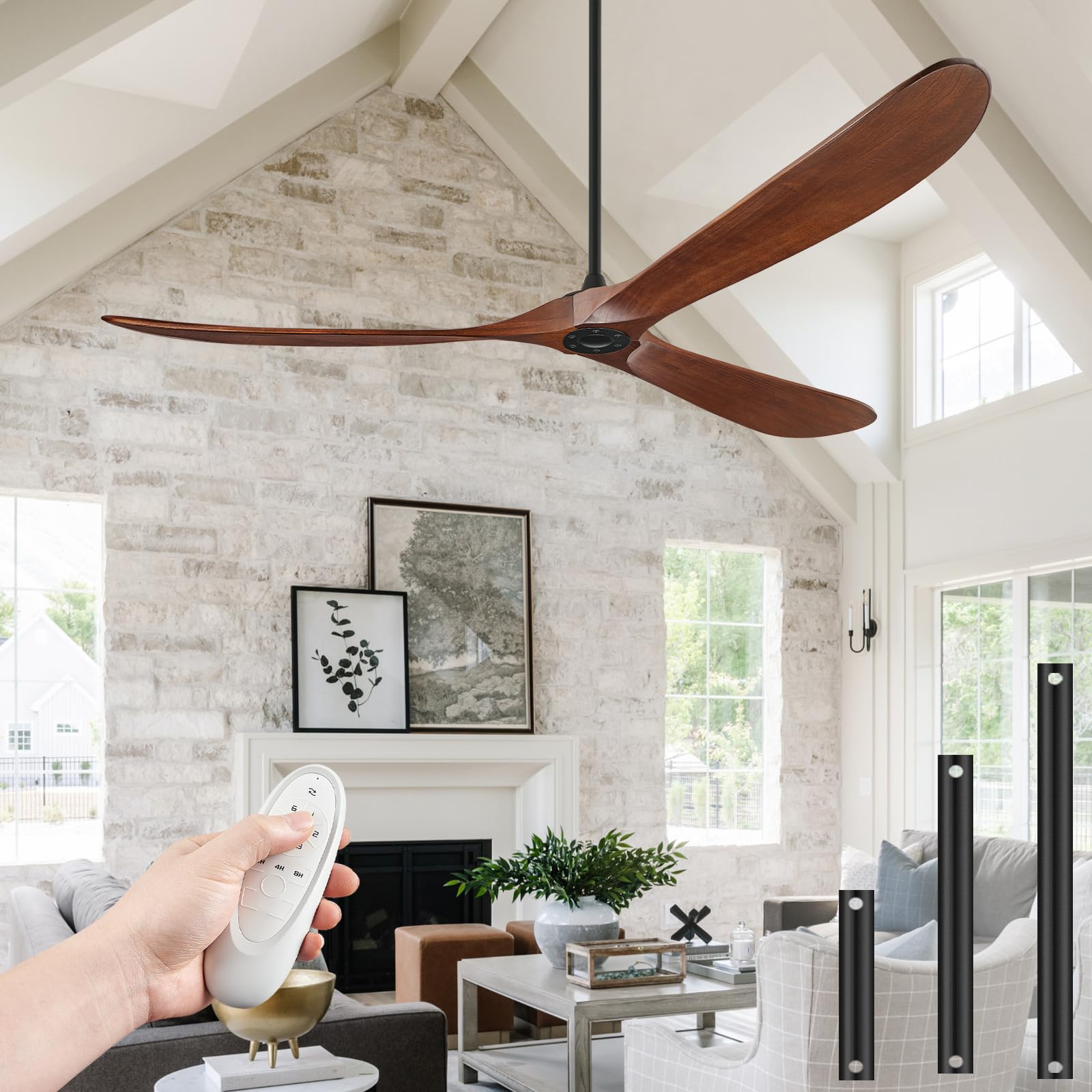
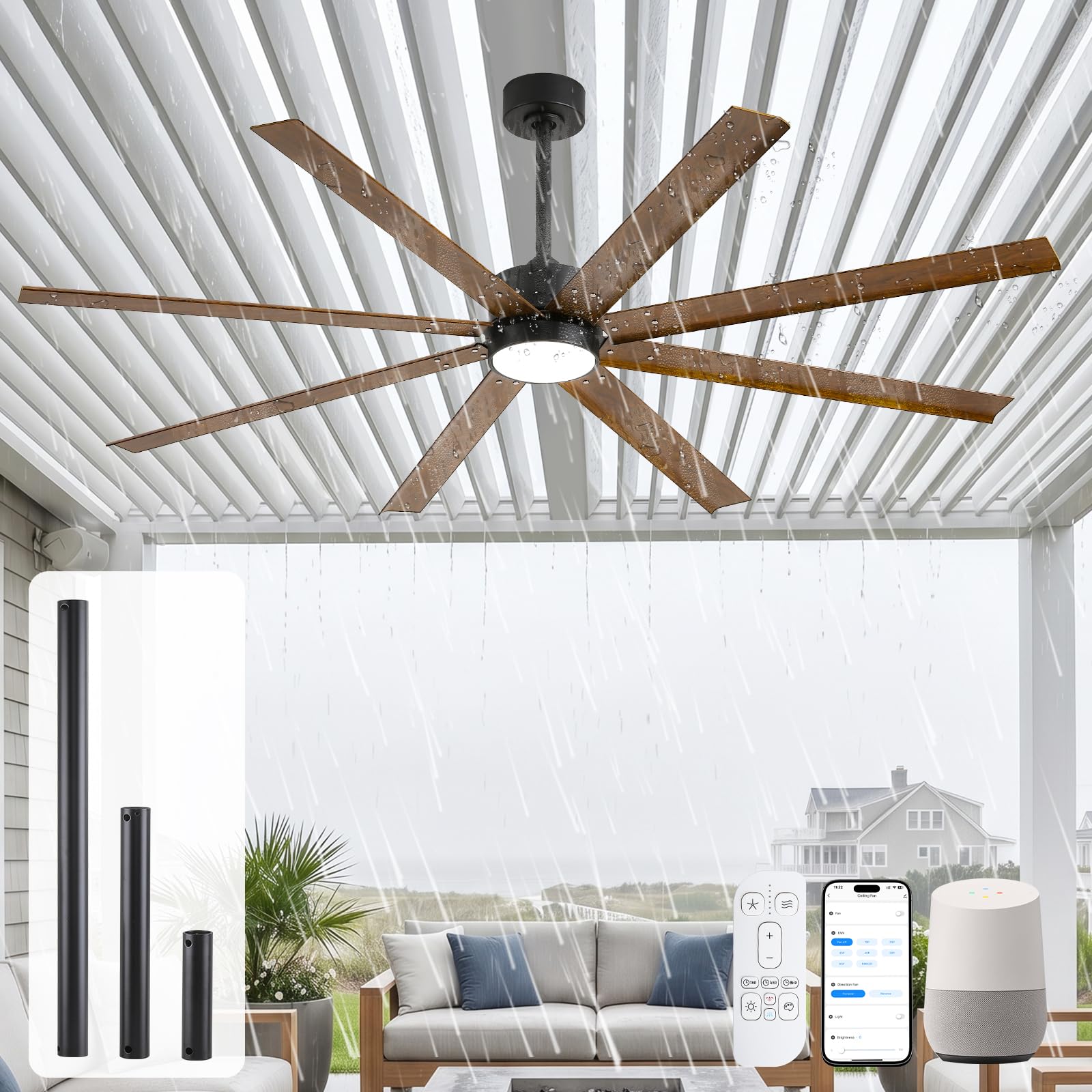


Who Should Buy Which Ceiling Fan for a High Ceiling?
Homes With Vaulted or Cathedral Ceilings
If your ceiling peaks well above the walls, you need a fan on a long downrod and often a sloped ceiling adapter, since many mounts only accept a modest pitch. A blade span of 60 inches or more suits the large air volume in these rooms, and a remote control is close to essential because a pull chain at that height is useless.
Great Rooms and Open Plan Living Spaces
Big open rooms pair high ceilings with wide floor plans, so one fan must push air across a large area. Wide blades, a strong motor, and high airflow ratings matter more than detail. If the room is your main living space, our guide to the best ceiling fan for living room covers layout ideas for seating areas. An integrated light also helps, since ceiling light often feels dim at floor level in tall rooms.
Two Story Entryways and Stairwells
In a foyer or stairwell, the fan works all year rather than only in summer. Warm air collects near a tall ceiling in winter, and a fan in reverse at low speed pushes that air down the walls without a draft. Choose a model with a remote or wall control, since nobody wants to balance on a ladder over stairs to change a setting.
Types of Ceiling Fans That Suit High Ceilings
It helps to sort fans into three types that solve the height problem in different ways.
Large Span Fans for Big Air Volume
Fans with blades of 60 to 72 inches move a broad column of air, which suits tall rooms where a standard 52 inch fan feels lost. The trade off is weight and cost, and the ceiling box must be rated for the load. These fans fit great rooms best and look proportionate against a tall ceiling.
Fans Built for Long Downrods
Some fans ship with a short rod but accept extension rods of 36, 48, or even 72 inches in matching finishes. This is the flexible choice for ceilings of 10 to 14 feet, because you can set the exact drop so the blades land 8 to 9 feet above the floor. Confirm rod compatibility before buying, since thread sizes vary and a mismatched rod can wobble.
Smart and Remote Controlled Fans
When the fan hangs far out of reach, the control method becomes a core feature rather than a bonus. Remote and smart fans let you change speed, reverse direction, and dim the light from the floor. For more on control and motor options, see our overview of the best ceiling fan styles.
Key Features to Compare
Downrod Length and Finished Drop Height
The most important spec for a tall ceiling is where the blades end up. Fan makers put ideal blade height at 8 to 9 feet above the floor, with at least 7 feet of clearance for safety. On a 12 foot ceiling, that means a downrod of about 36 inches once you count the motor housing. Measure your ceiling, subtract your target blade height, and buy the rod that closes the gap. A fan mounted too high stirs air near the ceiling while you feel almost nothing below.
Blade Span and Airflow (CFM)
Airflow is rated in cubic feet per minute, and tall rooms need more of it because the air has farther to travel before you feel it. A span of 52 inches can work in a smaller tall room, but spaces above about 400 square feet usually call for 60 inches or more. Higher CFM on the top speed gives you headroom, since you can always run a strong fan slower. Steeper blade pitch moves more air at the same speed, though it asks more of the motor.
Motor Type and Energy Use
DC motors use less electricity than AC motors, run quieter, and usually offer more speed settings plus a reverse function on the remote. AC motors cost less and have a long track record. Our explainer on dc vs ac ceiling fan motors breaks down the differences in running cost and control. For a fan that runs many hours a day, the DC savings add up over the years.
Light Output in Lumens and Color Temperature
Light from a tall ceiling spreads out and weakens before it reaches the floor, so brightness matters more than in a standard room. Look for integrated LED output of about 1,600 lumens or higher for a main living space, and treat lower output as accent light. Color temperature near 3000K feels warm, while 4000K looks crisper for kitchens and work areas. A dimmable light lets you soften the room at night.
Controls You Can Reach
Pull chains are a poor fit for any fan you cannot touch, so plan on a handheld remote, a wall control, or smart control through WiFi and a voice assistant such as Alexa. Check what the fan includes in the box, because some models need a separate receiver kit. Also confirm the reverse function is on the control itself, since climbing up to flip a switch on the motor housing defeats the point of a tall installation.
How to Choose the Right Ceiling Fan for High Ceilings
Size and Form Factor
Match blade span to room size first: about 52 inches for rooms up to roughly 225 square feet, 56 to 60 inches for mid sized great rooms, and 72 inches for very large spaces. Flush mount and low profile fans belong on low ceilings, so skip them here. Standard mount fans with downrod options are the right form above 9 feet.
Type and Style
Modern, farmhouse, and industrial styles all come in large spans, so style rarely limits you. Outdoor rated fans suit damp or wet spots such as covered porches, and a tall porch ceiling needs the same downrod planning as an indoor one; our guide to the best outdoor ceiling fan explains the ratings. Bladeless and caged designs move less air per inch of span, so size up if you choose one.
Features Worth Paying For
An integrated LED light, a remote with reverse, and a DC motor earn their cost on a tall installation because each solves a reach or running cost problem. WiFi and voice control are worth it if you already use a smart home system. Decorative finishes and extra speeds beyond six add little in daily use.
Fixture Size and Placement
Center the fan in the room or over the main seating area, and keep blades at least 18 to 24 inches from any wall, beam, or sloped section of ceiling. On a slope, the downhill blades need clearance through their full rotation, which may mean a longer rod than the center height suggests.
Installation: Hardwired Power and Fan Rated Boxes
Ceiling fans are hardwired; plug in options are not a safe route for a permanent overhead fan. The ceiling box must be rated for fan support and fixed to a joist or brace, because a long downrod adds leverage. Given the ladder height and weight involved, many owners hire an electrician, and our walkthrough of how to install a ceiling fan shows the full sequence before you decide. Turn off power at the breaker and verify it is off first.
How Much Should You Spend?
Under about $100, expect a basic AC motor fan, modest airflow, and a separate charge for the long downrod you need. Around $150 to $300 buys larger spans, better airflow, and a remote in the box. Above about $300, you gain DC motors, smart controls, brighter lights, and longer warranties. Budget for the extension rod and a sloped ceiling adapter on top of the fan price.
What Matters Most in a Ceiling Fan for High Ceilings
Drop height decides whether any other spec matters. A powerful fan mounted flush against a 14 foot ceiling mostly cools the top of the room, while a mid range fan dropped to 9 feet feels stronger at the sofa. Get the rod length right first, then choose span and airflow for the room, then pick light output and controls. A well placed fan also lets you feel cooler at a higher thermostat setting; our comparison of ceiling fan vs air conditioner running costs explains where each one wins.
Common Mistakes to Avoid
- Mounting the fan flush to a tall ceiling, which leaves the moving air far above head height where nobody feels it.
- Buying a downrod by guesswork instead of measuring, which leaves blades too high to help or low enough to feel unsafe.
- Choosing a span sized for a standard room, so a 52 inch fan struggles in a great room.
- Using a ceiling box that is not rated for fan support, which risks wobble once a long rod adds leverage.
- Picking a pull chain model for a fan no one can reach, which means speeds never change after install day.
- Ignoring ceiling slope, so blades pass too close to the high side of a vaulted ceiling on every rotation.
Care and Maintenance
Dust builds up on blades fast, and a tall fan throws it around the room when it starts. Clean the blades a few times a year with an extendable duster or a pillowcase slipped over each blade to trap dust, working from a stable ladder with a helper nearby. Check that blade screws and the downrod pin stay snug, since slight wobble grows over time.
FAQ
What is the best ceiling fan for high ceilings?
The strongest choice is a fan sized for the room, hung so the blades sit 8 to 9 feet above the floor, with a remote control and airflow suited to the space. No single model fits every tall room, because ceiling height, slope, and room size change the answer. Match the downrod, span, and motor to your measurements first, and style second.
How long a downrod do I need for a 12 foot ceiling?
For a 12 foot ceiling, a downrod of about 36 inches usually places the blades near 8 to 9 feet above the floor once the motor housing is counted. A 10 foot ceiling needs about 18 inches, and a 14 foot ceiling often needs about 48 inches. Always confirm with the maker chart, since housing depth differs between models.
How long does a ceiling fan last?
A quality ceiling fan often runs for 10 years or more, and motor warranties give a useful clue, with better models covered far longer than budget ones. The light kit or remote receiver tends to fail before the motor does. In a tall installation, replaceable light modules and spare remotes protect you from a full replacement over one small part.
Is a ceiling fan worth it in a room with a very high ceiling?
Yes, as long as the fan hangs at the right height. Dropped to about 9 feet, it makes the room feel cooler in summer and recovers warm air from the ceiling in winter in reverse at low speed. Mounted tight to a tall ceiling, the same fan does very little.
How do you clean a ceiling fan on a high ceiling safely?
Use a step ladder rated for the height, set on a flat floor with someone steadying it, and never stand on the top step. An extendable duster reaches most blades from a lower rung. Turn the fan off and let it stop fully first. If the fan hangs over stairs, hire a cleaning service instead.
Final Thoughts
Tall ceilings reward a bit of measuring before you buy. Set the drop height first, size the span and airflow to the room, and choose controls you can use from the floor. Do that, and the best ceiling fan for high ceilings for your home becomes a simple match between your ceiling and the spec sheet. Use the product table above to compare types against your measurements, and check rod compatibility before ordering.


