
Best Ceiling Fan for Garage in 2026: Types, Sizes and Ratings
Disclosure: We may earn a commission when you buy through links on this page, at no extra cost to you. As an Amazon Associate I earn from qualifying purchases. Learn more

Which is the best ceiling fan for garage use? Compare blade span, damp rating, motor, light and mounting for workshops and home gyms.
A garage traps heat, dust, and stale air, and it often has a higher ceiling and a wider floor than any room inside the house. That mix makes a standard indoor fan a poor match, so choosing the best ceiling fan for garage use starts with airflow, clearance, and parts that tolerate dust and temperature swings. This guide covers sizes, motor types, lights, and mounting choices so you can match a fan to the way you use the space.
The comparison table below sums up the main types side by side, and the sections after it explain which type suits a workshop, a home gym, or plain vehicle storage. If you are also comparing fans for finished indoor rooms, our overview of the best ceiling fan options covers those gentler conditions.




Who Should Buy a Ceiling Fan for a Garage?
Garage users split into clear groups.
Workshop and DIY Users
You spend long stretches at a bench, often with tools raising dust and the main door closed. You need strong air movement across the work area, a light that makes detail work easy, and blades that wipe clean without special cleaners. A remote matters more than a pull chain, since benches often block the path under the fan.
Home Gym Users in a Garage
Workouts raise your body heat fast in a closed space, so you feel airflow gaps more than most users. You want steady air over a mat or a bike rather than a gentle breeze in one corner, plus speed changes without stopping mid session. Noise also counts, because a loud motor competes with music.
Drivers Who Mostly Store Vehicles
Your main goals are moving stale air out, drying a wet floor after rain, and keeping the space less stuffy. You may run the fan for shorter periods, so simple controls and low running costs matter more than extra speed settings. Clearance matters most, since the fan must stay clear of raised hoods and the arc of the garage door.
Types of Garage Ceiling Fans Compared
Instead of naming single models, compare the main types below. The right type depends on ceiling height, exposure to outside air, and floor coverage.
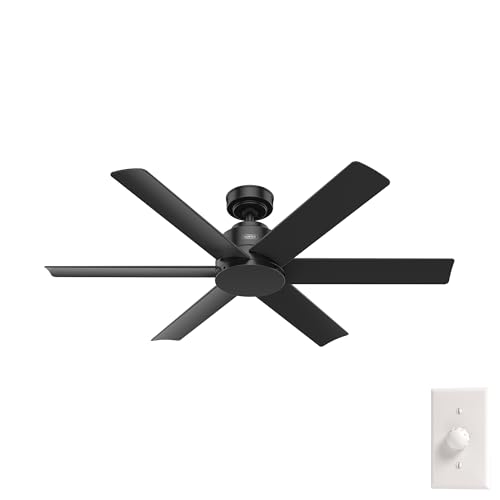
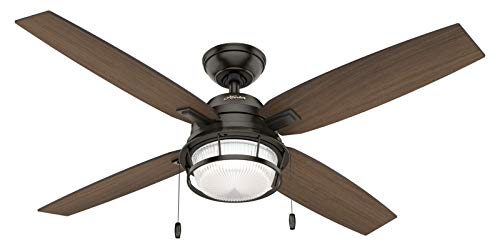
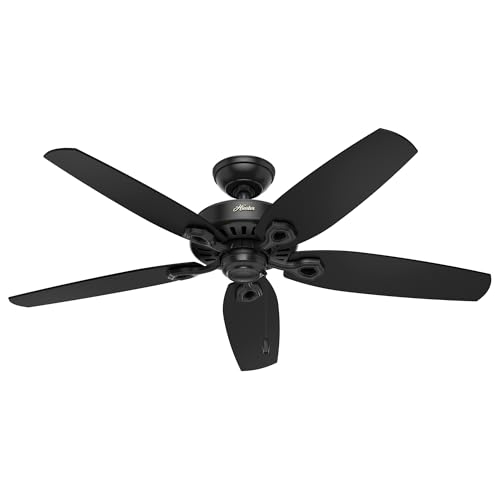
Standard Fans With a Downrod
A downrod drops the blades below the ceiling, which helps air reach you on higher ceilings where a fan mounted flat would push air mostly above head height. This type suits garages with ceilings around ten feet or more and open floors with few tall racks. The rod length must match the ceiling height so the blades stay at a safe level.
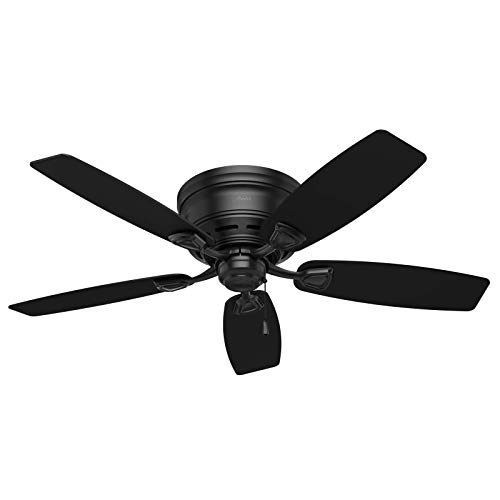
Flush Mount and Low Profile Fans
These fans sit close to the ceiling and suit garages with ceilings under about nine feet, where headroom is tight. They protect clearance for tall vehicles and for lifting long items such as ladders. The trade off is gentler air reach at floor level, so a large space may need a wider span to match a downrod model.
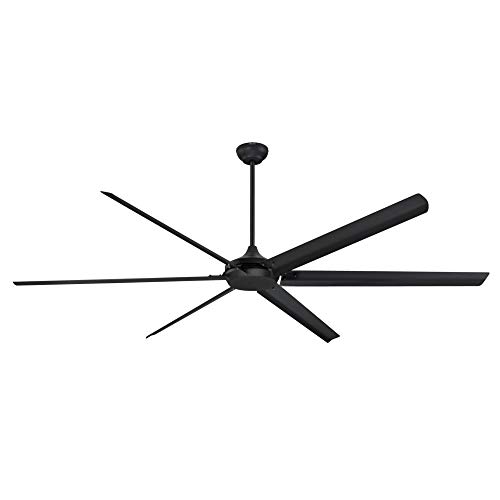
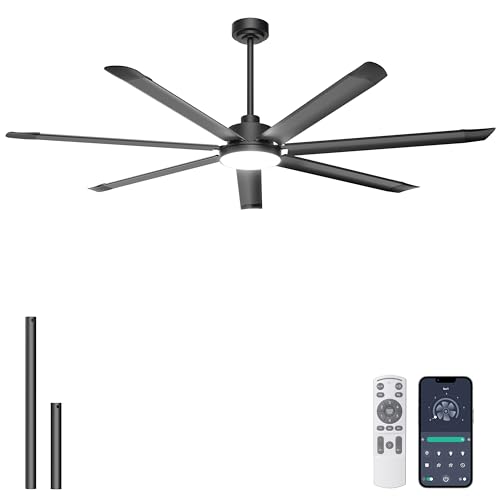
Large Span and Industrial Style Fans
Wide blades, often sixty inches or more, move air across a broad floor and suit garages built for two or more cars or used as open workshops. Metal blades and simple housings handle knocks and dust well. For a partly open garage, compare these with the best outdoor ceiling fan types, since those carry ratings for damp locations that many indoor fans lack.
Key Features to Compare
Blade Span and Airflow
Blade span sets how wide an area the fan can cover, and makers rate airflow in cubic feet per minute, shown as CFM. A span of about fifty two inches suits a single bay, while larger garages often need sixty inches or more, or two smaller fans spaced across the ceiling. Higher CFM helps because doors open often and let moving air escape. Judge span and CFM together, since a wide fan with a weak motor feels disappointing.
Motor Type and Energy Use
AC motors cost less and use a simple control setup, while DC motors use less power, run more quietly, and usually offer more speed settings plus a reverse mode. For long workshop days, the lower running cost and finer control of a DC motor can be worth paying for. Our explainer on dc vs ac ceiling fan motors covers the wiring and control differences in depth. Either type should have a sealed housing where possible, since open vents pull in dust.
Light Output and Color Temperature
Many garage fans include a light, and output in lumens tells you how bright it will feel over a bench or a car. Look for bright, even output if the fan light will be your main light source, and treat a dim decorative light as a bonus only. Color temperature shapes the feel of the space, with cooler light near daylight helping you spot detail during repair work. A dimmable light helps for gym sessions.
Controls, Smart Options, and Finish
A handheld remote or a wall control suits a garage far better than a pull chain, because you often enter with your hands full and the fan hangs out of easy reach. Smart controls through WiFi or a voice assistant such as Alexa add timers and voice speed changes, which help in a gym setup. Keep smart features secondary, though, since garage WiFi signals can be weak. For finish, plain metal or matte surfaces hide dust and small marks better than glossy white.
Materials and Damp Rating
Garages swing between hot and cold and often take in moisture, so blade material matters more here than in a bedroom. ABS plastic and treated metal blades resist warping better than plain wood blades, which can sag in damp air. Check the location rating before you buy, since a fan rated for damp locations has protected parts for humid spaces, while a dry rated fan belongs only in enclosed, dry garages. Sealed bearings and coated hardware also slow rust.
How to Choose the Right Size and Setup
Start with the room itself. Our overview of how to choose a ceiling fan covers general sizing, and the points below adapt it to garages.
Measure the Space and Place the Fan
Measure the floor, then note ceiling height, beams, lights, and the path of the garage door as it opens. Place the fan over the area where you spend the most time, which may be a bench zone rather than the center of the room. Keep blades at least seven feet above the floor, and leave clear space around the blade tips so racks and doors cannot strike them. In a long garage, two smaller fans often give more even coverage than one oversized fan.
Installation and Wiring Choices
Most garage ceiling fans are hardwired into a ceiling box, and the box must be rated to support a moving fan, not just a light fixture. If your garage has no ceiling wiring where you want the fan, a licensed electrician can add a circuit, and local codes may require permits. A few fans use a plug in design, but cords limit placement and must stay clear of doors and tools. Our walkthrough of how to install a ceiling fan explains the mounting steps in order.
How Much Should You Spend?
Basic garage fans run about $80 to $150 and cover a single bay with simple controls. The middle range, about $150 to $300, adds stronger motors, better lights, remotes, and damp location ratings. Spending over about $300 mainly buys very wide spans, DC motors, and smart controls. Set your budget after you know the size and rating you need.
What Matters Most in a Garage Setting
A fan will not lower the air temperature the way an air conditioner does, and it helps most when you are in the room to feel moving air on your skin. That is why the comparison in our guide to ceiling fan vs air conditioner use matters for garages, where cooling the whole volume is often costly. A fan earns its place by making work sessions bearable, drying floors, and moving fumes toward an open door. Pair it with basic ventilation during painting or engine work.
Common Mistakes to Avoid
- Buying by blade span alone, so the fan is wide enough but hangs too low for the garage door arc.
- Putting a dry rated fan in a damp, partly open garage, so moisture reaches parts never built for it.
- Mounting the fan on a standard light box, so the support works loose under the weight and motion of the fan.
- Centering the fan on the room instead of over the bench or workout area, so the air misses where you stand.
- Choosing wood blades for a humid garage, so the blades slowly warp and the fan starts to wobble.
- Skipping the remote to save money, so every speed change means climbing up to reach a pull chain.
How to Make Your Garage Ceiling Fan Last Longer
Dust is the main enemy in a garage, and a thick layer on the blades adds weight, cuts airflow, and can throw the fan out of balance. Wipe the blades about once a month in a busy workshop and less often in a storage only garage, using a damp cloth and mild cleaner, then dry them fully. Check the mounting and blade screws each season, since vibration loosens them, and tighten them with the power off. Run the fan regularly even in cooler months, because long idle periods in damp air invite rust.
FAQ
Can a ceiling fan cool a garage that has no insulation?
It can make you feel cooler, but it will not fix heat soaked walls and a sun heated roof. Moving air speeds sweat evaporation on your skin, so the space feels several degrees cooler while you are under the fan. Open the door a little in the early morning to flush out air that collected heat overnight, then close it before the day peaks.
Can I run a garage ceiling fan in winter?
Yes, and the reverse mode is the reason why. Run in reverse at a low speed, the fan pushes warm air that rose to the ceiling down along the walls without a direct draft on you. This helps if you heat the garage for winter projects, since the heat spreads through the space instead of pooling above your head. Let the blades fully halt before you flip the direction switch.
Does a garage ceiling fan need a special electrical box?
Yes, it needs a box listed for fan support, and the rating printed on the box must meet or exceed the weight of your fan. A standard light fixture box is not built for the load and vibration of a spinning fan, even if the fan feels light in your hands. If you cannot see a rating on the existing box, treat it as unrated and have it replaced before mounting anything.
What is the best ceiling fan for garage workshops that get very dusty?
The strongest choice for a dusty workshop is a fan with smooth metal or ABS blades, a sealed motor housing, and as few grooves as possible. Dust slides off smooth surfaces during a quick wipe, while carved wood and textured finishes hold grime in place. A light under a flat cover also beats an open bulb design here, since sawdust settles on exposed bulbs and dulls the light.
When should I replace a garage ceiling fan instead of repairing it?
Replace the fan when the motor hums loudly on every speed, when wobble stays after you tighten the screws and balance the blades, or when rust has eaten into the mounting bracket. Those signs point to wear in parts that cost nearly as much to fix as a new fan. A fan that only needs a new remote or fresh blade screws is usually worth keeping.
Final Thoughts
Start with your ceiling height and the zone you use most, then pick the type, span, and rating that fit those facts before you look at style or smart extras. A damp rated fan with a strong motor, a bright dimmable light, and remote control will serve most garages well for years. When you find the best ceiling fan for garage use in your own space, it is the one whose airflow you feel at the bench and whose blades clear every door and rack. Use the product table above to compare the types again before you order.


