Best Ceiling Cassette Mini Split in 2026: Sizing, Types and Buying Guide
Disclosure: We may earn a commission when you buy through links on this page, at no extra cost to you. As an Amazon Associate I earn from qualifying purchases. Learn more

Match the best ceiling cassette mini split to your room: BTU sizing, joist space, drain options, noise, efficiency and installation costs.
Finding the best ceiling cassette mini split for your room means solving two problems at once. You need enough heating and cooling capacity, and you need a unit that actually fits inside your ceiling. A cassette hides most of its body above the ceiling and leaves only a flat panel visible, so the room keeps a clean look with no equipment covering the wall.
Cassettes also spread air in several directions from a central spot, which suits open living areas better than a single stream from one wall. If you are still weighing the cassette format against other formats, our guide to the best mini split gives the wider picture. The comparison table below sums up the main cassette types so you can narrow your choice before reading the detail.
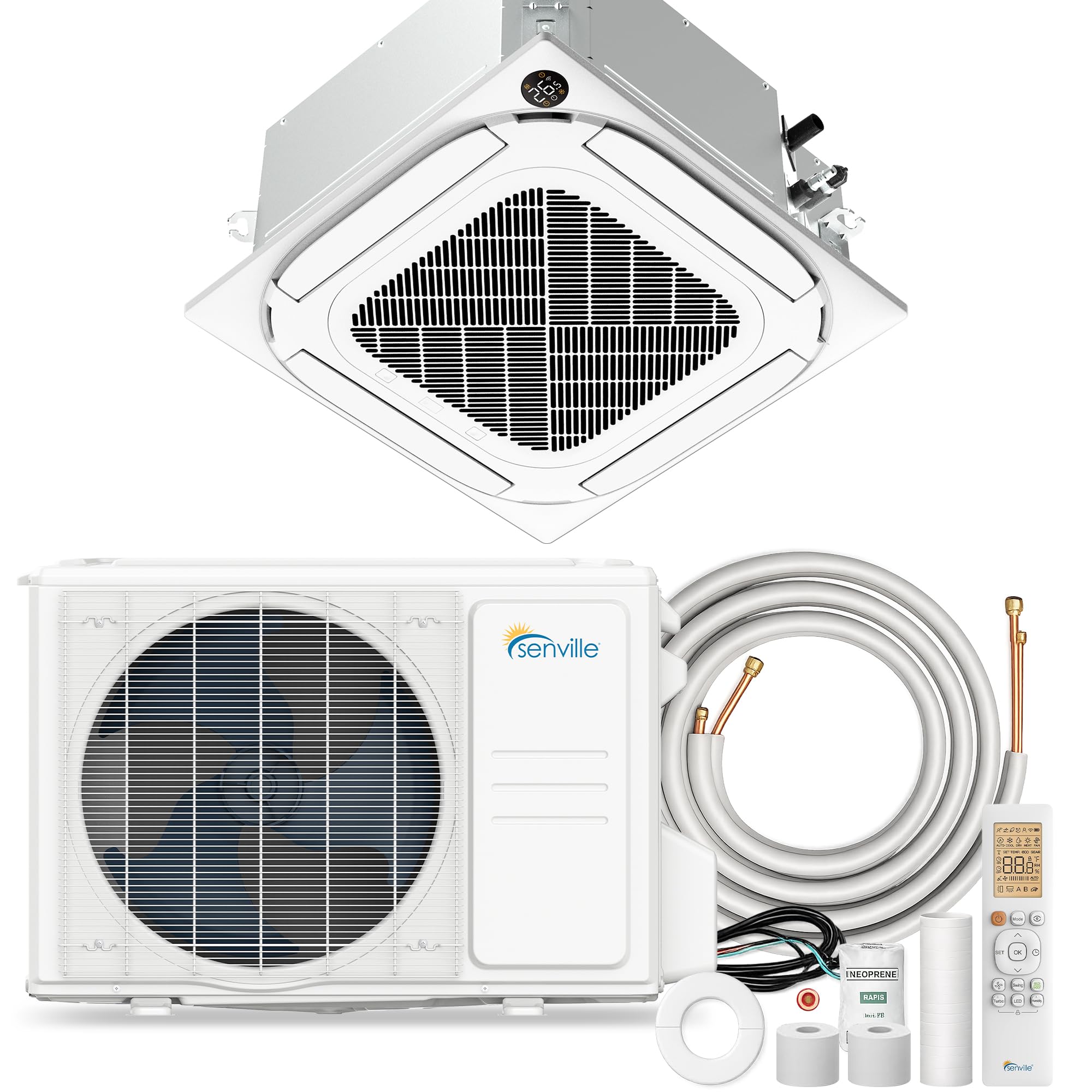

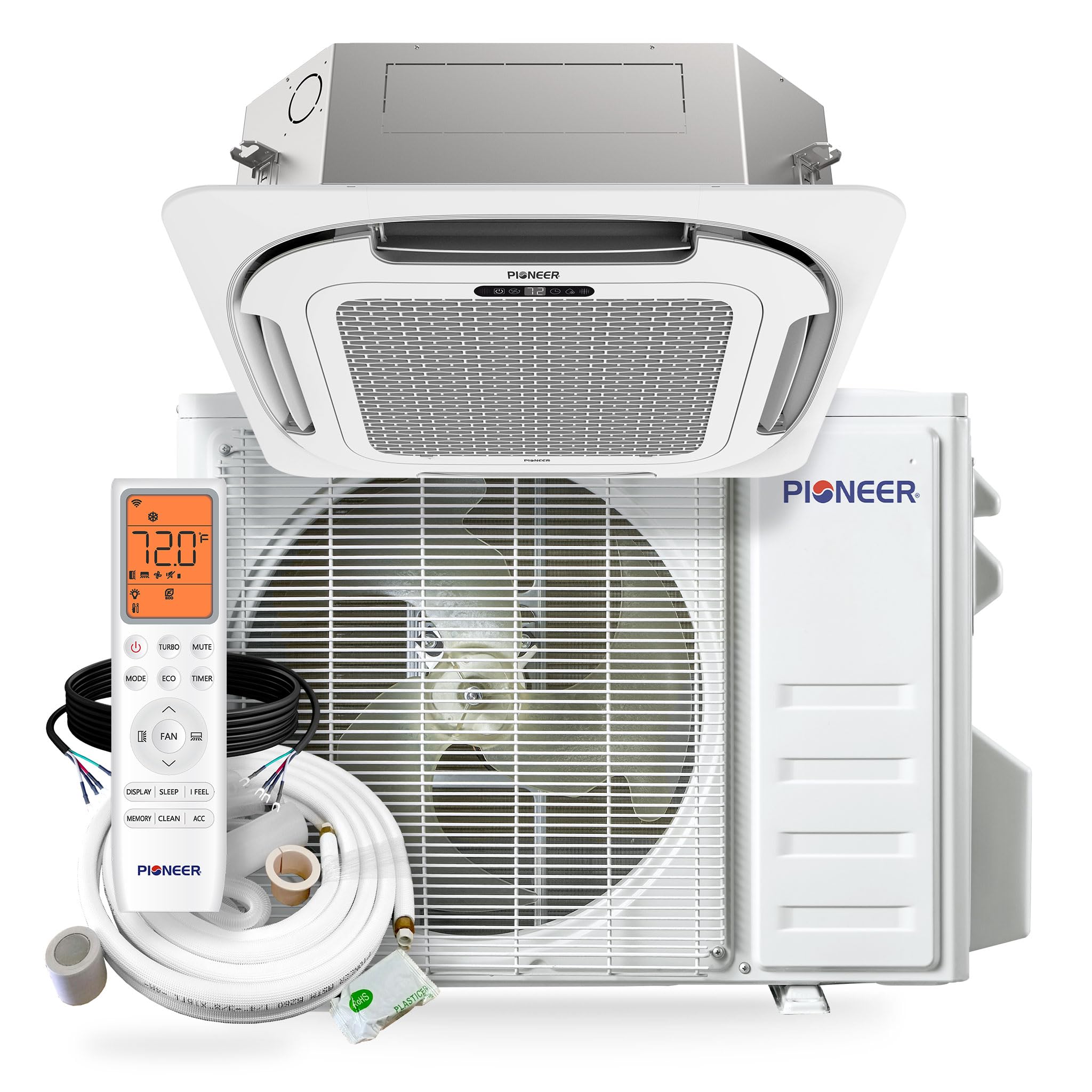
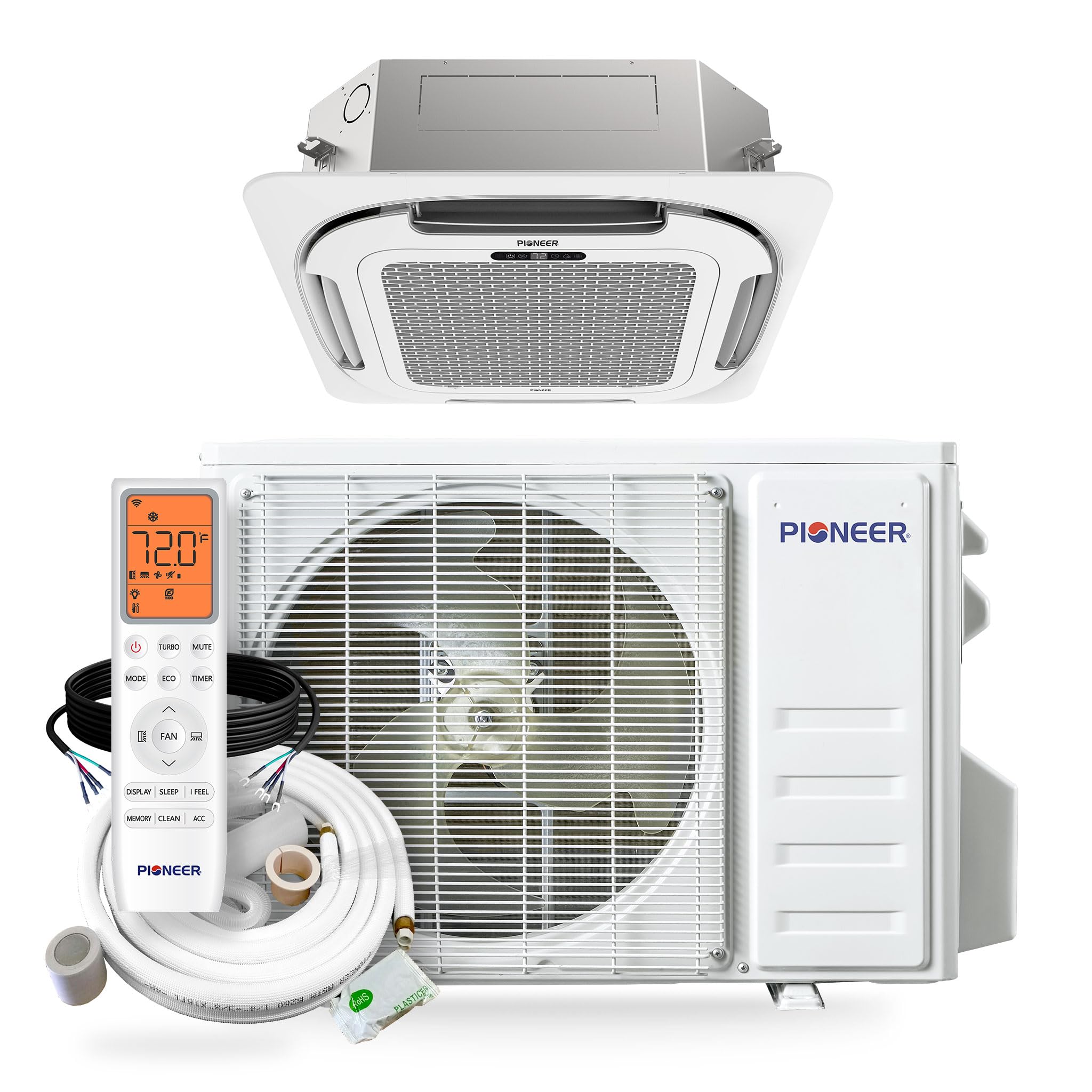
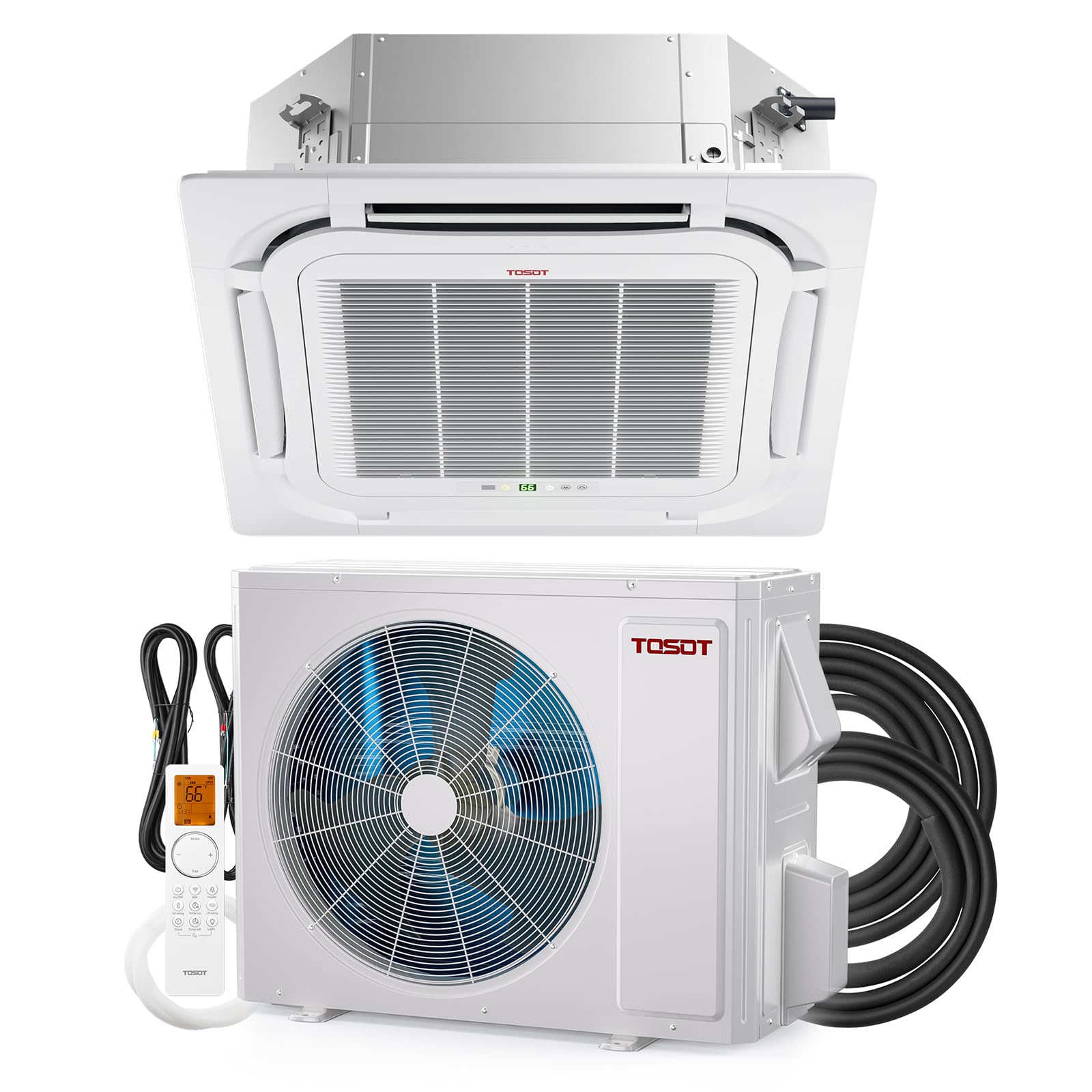
Ceiling Cassette Types at a Glance
Most residential cassettes fall into three groups, and the right group depends on your ceiling layout more than on brand or price. Compact models suit smaller rooms and tighter joist spacing. Standard models move more air across bigger spaces. One way models blow in a single direction and fit narrow rooms where a square panel would look crowded.
| Type | Typical capacity | Air pattern | Best for |
| Compact cassette | 9000 to 18000 BTU | Four way | Bedrooms and home offices |
| Standard cassette | 18000 to 36000 BTU | Four way | Open living areas |
| One way cassette | 9000 to 12000 BTU | Single direction | Hallways and narrow rooms |
A single zone setup pairs one cassette with one outdoor unit and gives you simple control for one space. A multi zone setup connects two or more indoor units to one outdoor unit, which saves outdoor space but means every zone shares the outdoor capacity. Choose the layout first, because it decides which models you can even consider.
How We Chose the Best Ceiling Cassette Mini Splits
We judged cassette systems on coverage in BTU and square feet, heating and cooling performance, rated noise on the lowest fan speed, and energy use shown by seasonal efficiency ratings. We also weighed filter access, drain options, and control features such as WiFi and scheduling. Our notes come from manufacturer specification sheets and patterns in verified buyer feedback, and we favored types that a local installer can service easily in the years ahead.
How to Choose the Right Mini Split
Size and form factor
Capacity is sold in steps of 9000, 12000, 18000, 24000, and 36000 BTU, and picking the right step matters more than picking extra power. An oversized cassette cools fast, then shuts off before it removes much humidity, leaving the room feeling clammy. Before you settle on a size, work through what size mini split do i need with your room measurements, ceiling height, and sun exposure. Also measure the space above your ceiling, since the cassette body needs clear depth and room for drain and refrigerant lines.
Type
Nearly all cassettes use inverter compressors that slow down and speed up instead of switching fully on and off, which keeps temperatures steadier and uses less power. Heat pump models reverse the cycle to heat in winter, and cold climate versions keep working at lower outdoor temperatures than standard versions. If heating is your main goal, compare the options in our guide to the best heat pump mini split before you commit. Check the voltage as well, because larger cassettes need a 230 volt circuit while the smallest may run on 115 volt service.
Features worth paying for
A built in condensate pump is worth the money when your drain line cannot slope downward to an outside wall, since it lifts water out instead of relying on gravity alone. Individual louver control helps too, letting you aim air away from a desk or sofa while the other sides keep blowing. WiFi control adds real convenience for scheduling and for checking the room temperature while you are away. Pre charged line sets matter less here than with wall units, because most cassettes go in as a planned install. If a simple self install appeals to you more, the best diy mini split options are usually wall mounted rather than cassette models.
Room size and coverage ratings
As a rough guide, 9000 BTU covers about 350 to 400 square feet, 12000 BTU covers about 450 to 550 square feet, and 18000 BTU covers about 700 to 900 square feet. Larger 24000 BTU models suit about 1000 to 1200 square feet, while 36000 BTU models can serve about 1500 square feet in an open plan space. Treat these figures as a starting point only. Poor insulation, tall ceilings, large south facing windows, and kitchen heat all push you toward the next size up.
Running cost and energy use
Look at the SEER2 rating for cooling efficiency and the HSPF2 rating for heating efficiency, since higher numbers mean less electricity for the same comfort. Inverter systems save the most in mild weather, when they can run slowly for long stretches instead of cycling. Your habits matter as well, because raising the cooling set point by a couple of degrees during work hours cuts the bill without leaving the house hot. A cassette serving one open area also avoids the cost of conditioning spare rooms you rarely use.
Noise levels for bedrooms
Manufacturers rate indoor sound in decibels, and the figure that matters at night is the lowest fan speed, often around 30 decibels for quiet models. The highest speed can be far louder, so a slightly larger cassette running on a lower speed may sound softer than a small one straining at full blast. In a bedroom, position the panel away from the head of the bed so moving air does not fall straight onto you. Ask your installer to isolate the mounting rods well, since vibration carried into the joists can hum through the ceiling.
Filters and maintenance
Cassettes use washable mesh filters behind the visible panel, and you reach them by lowering the grille rather than opening a wall unit cover. Rinse the filters about once a month during heavy use, let them dry fully, and refit them so dust does not reach the coil. The drain line also needs a periodic flush, because a blocked line inside the ceiling can stain the panel and the ceiling around it. For the full routine, step by step, see how to clean a mini split before your first deep clean.
How much should you spend?
Complete cassette systems rarely land under $700 once you count the outdoor unit, line set, and installation, so treat very cheap listings with care and check exactly what is included. Equipment alone often runs about $1000 to $2000 for a single zone setup, and multi zone systems can pass about $3000 before labor. Professional installation adds a large share of the total, yet it protects your warranty and your ceiling. Spend first on correct sizing and a good installer, then on extras such as app control.
Ceiling Cassette vs Other Mini Splits: Pros and Cons
A cassette wins on looks and on air distribution, since it sits in the middle of the room and blows outward in four directions. A wall mounted unit costs less to buy and install, but it occupies wall space and throws air from one side only. Floor mounted units suit rooms with low walls under windows, while slim ducted units hide completely but need duct runs and lose some efficiency through them. The full trade off against a whole house system is covered in mini split vs central air, which is worth reading if you are replacing older ductwork.
- Pro: only a flat panel shows, so the unit suits finished rooms and open plan layouts.
- Pro: four way airflow evens out hot and cold spots in square and wide rooms.
- Pro: no wall space is lost to equipment, leaving room for shelving and art.
- Con: installation costs more because the ceiling must be opened and then patched or fitted with a panel.
- Con: you need enough depth and clear joist space above the ceiling, which some homes lack.
- Con: filter changes and service happen overhead, so you will work from a ladder.
Choose a cassette when the room is large, square, or short on free wall space, and when you plan to stay in the home long enough to enjoy the tidy result. Choose a wall unit when budget rules, when the ceiling has no usable cavity, or when you may move the system later. Renters and owners of homes with solid ceilings usually find the wall format far more practical.
FAQ
What is the best ceiling cassette mini split?
The best choice is the cassette that fits your ceiling cavity, matches your room load, and can be serviced from below without opening the ceiling again. Prioritize models with a panel that removes easily and with parts your local installer stocks. A slightly less efficient model with strong local support often serves you better than a top rated import that takes weeks to get a replacement board or motor for after a breakdown.
Are ceiling cassette mini splits worth it?
They are worth it when you value a clean ceiling line and even air spread enough to pay the higher install cost. The value rises further if you install during a remodel, when the ceiling is already open and the extra labor drops sharply. If the room is small or the budget is tight, a wall unit delivers similar comfort for less money, so the cassette premium buys appearance and distribution rather than extra cooling power.
How long does a ceiling cassette mini split last?
A well installed cassette system often lasts about 15 to 20 years, with the outdoor unit usually wearing out before the indoor panel. Coastal salt air, clogged drains, and skipped filter care shorten that span, while a surge protector and an annual professional check help you reach the upper end. Keep the model and serial details on file, since late life repairs go faster when your technician can order exact parts on the first visit.
How do you clean a ceiling cassette mini split?
Start by switching the power off at the breaker, then spread a cloth on the floor below to catch drips and dust before you lower the grille. Wash the mesh filters, wipe the panel, and leave coil cleaning and drain flushing to a technician unless you own the right tools and feel confident working overhead. Working from a ladder with wet hands is risky, so keep one hand free for the rails and never rush the job.
Which ceiling cassette mini split brand is most reliable?
No single brand wins for every home, because reliability depends as much on the installer and on local parts supply as on the factory. Look for a long parts warranty, a dealer network near you, and clear terms on whether labor is covered in the first years. Register the warranty right after installation, since some brands shorten the coverage period for unregistered systems, and keep your install invoice with the registration confirmation.
Final Thoughts
Start with the ceiling itself, then size the capacity to the room, then pick the features you will actually use each week. Check the product table above once more, and you will see that the best ceiling cassette mini split is simply the type that fits your joists, your load, and your budget without forcing compromises elsewhere. Get two installer quotes, confirm the drain route in writing, and you can order with confidence.