Best Cat Toys in 2026: Which Type Is Right for You?
Disclosure: We may earn a commission when you buy through links on this page, at no extra cost to you. As an Amazon Associate I earn from qualifying purchases. Learn more

The best cat toys by type: interactive, travel, budget and heavy duty toys compared, plus safety and care tips.
Walk down any pet aisle and you will find wands, kickers, laser pointers, motorized balls, tunnels and puzzle tracks, all promising a happier cat. The truth is that most cats have a clear favorite style of play, and the right toy depends on how your cat likes to hunt, how much time you have to play together and how rough your cat is with its things. This guide to the best cat toys compares each type side by side so you can match the toy to your cat instead of guessing.
You will see how interactive, travel, budget and heavy duty toys differ, a direct comparison of the two most popular groups, the factors that matter most when choosing and simple care habits that keep toys safe. Every toy in the table above is sold new on Amazon US.






Types of Cat Toys Compared
Interactive toys suit cats that need more exercise, budget multipacks suit cats that like variety, compact toys suit travel and heavy duty toys suit strong, rough players. The table below summarizes how each type compares before we look at them one by one.
| Type | Best For | Pros | Cons | Typical Price |
|---|---|---|---|---|
| Interactive (wands, motorized, laser) | Indoor cats needing exercise | Mimics prey, burns energy, builds bond | Needs supervision, some need charging | around $9 to $25 |
| Travel (compact, soft, quiet) | Carriers, hotels, vet trips | Light, familiar comfort, packable | Less exciting, easy to lose | around $10 to $15 |
| Budget (multipacks, crinkle balls) | Variety seekers, kittens | Lots of choice for little money | Pieces wear out quickly | around $10 to $13 |
| Heavy duty (kickers, tracks, scratch balls) | Strong players, solo play | Durable, safe for rough play | Bulkier, higher cost per toy | around $12 to $21 |
Interactive Options
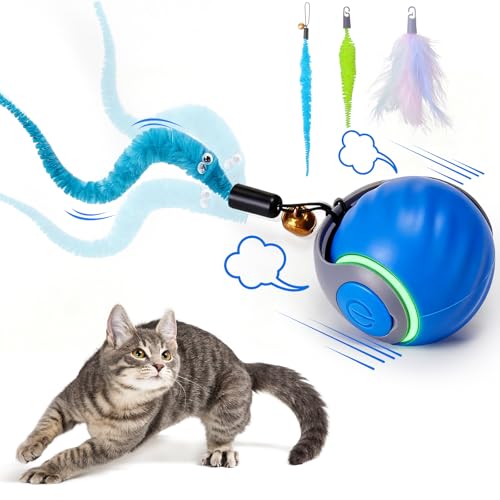
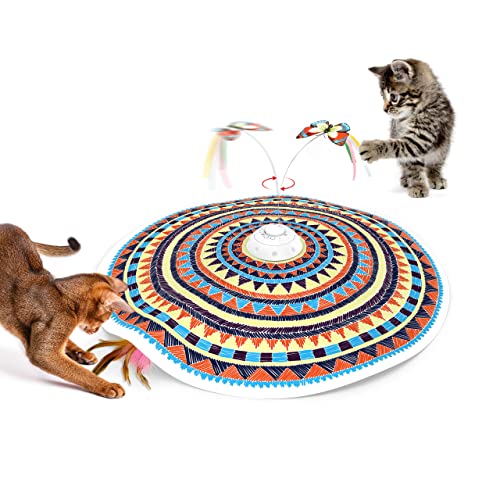
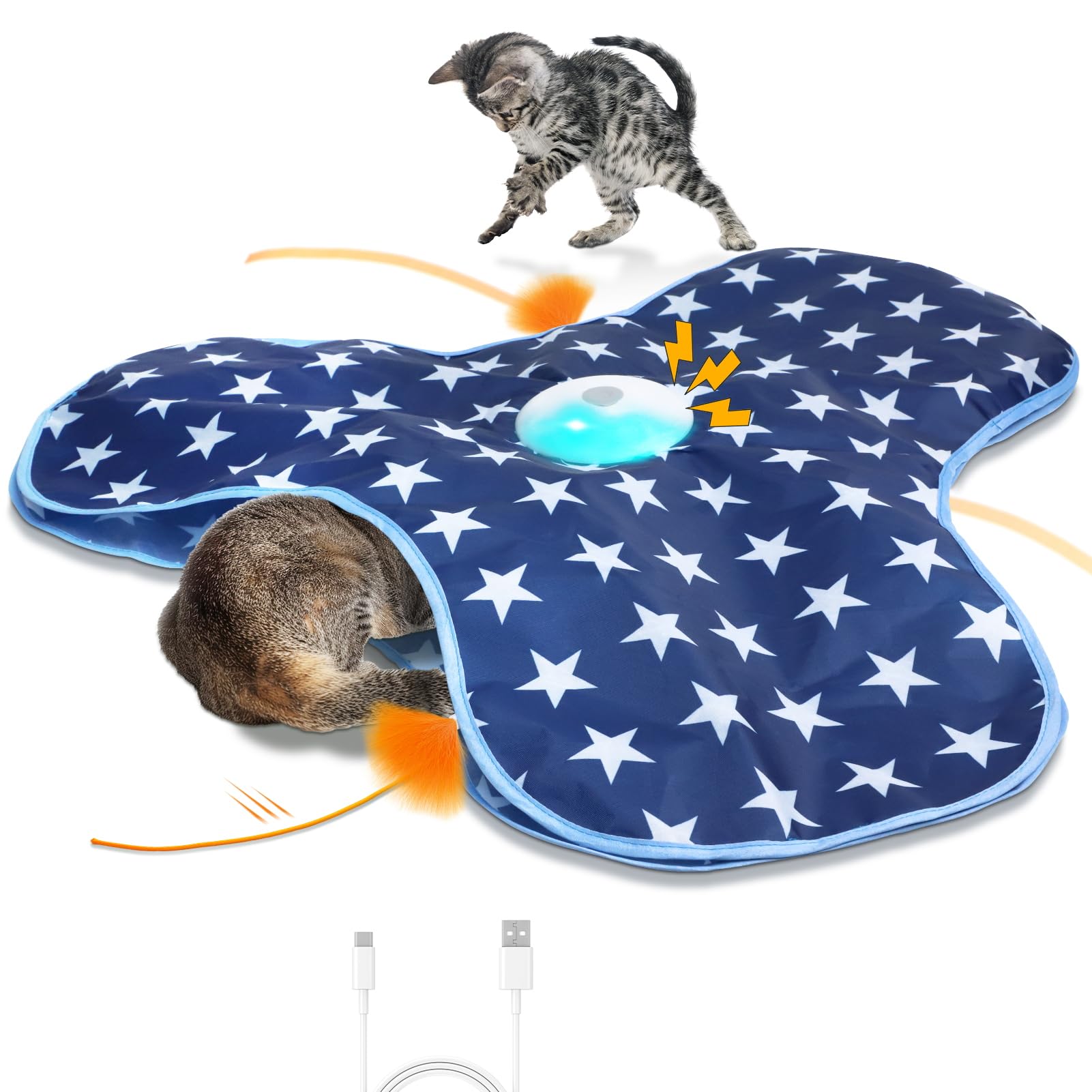
Interactive toys get your cat moving by imitating prey. Wand toys like the MeoHui retractable wand set, which includes two wands and nine feather refills, let you flick a feather through the air while your cat stalks and pounces. Motorized toys such as the BABORUI automatic ball, with two speeds and a rechargeable battery, and the Potaroma 3 in 1 hide and seek toy keep cats busy when you are not available.
The strengths are clear: interactive play burns energy, reduces boredom and can ease nighttime zoomies. The downside is that wands need your time and must be stored away after play, since strings can be dangerous if chewed. Choose interactive toys for indoor cats, young adults and any cat that seems restless or overweight.
Laser toys, such as the Saolife automatic laser, deserve a note. Many cats love chasing the dot, but they never get to catch it, which can leave some cats frustrated. End laser sessions by tossing a small toy or treat for your cat to grab, so the hunt has a satisfying finish.
Travel Options
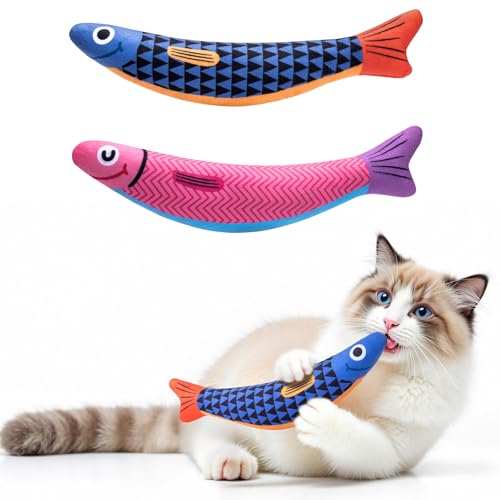
Travel toys are small, soft and quiet, so they fit in a carrier or suitcase and help a cat feel at home in a new place. Catnip pillows like the Potaroma three pack and silvervine kickers are popular picks because the familiar scent can comfort a nervous cat during trips or vet visits.
Their main advantage is portability and comfort. The trade off is that they rarely excite a cat for long, and small toys are easy to leave behind in hotel rooms. Choose travel toys if you move between homes, board your cat often or take regular road trips.
Budget Options
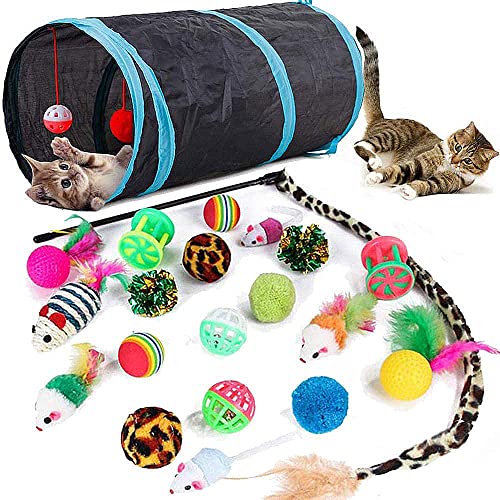
Budget multipacks bundle many small toys in one box for around $10 to $13. The Fashion's Talk 20 piece variety pack and the Speedy Panther 21 piece set mix crinkle balls, mice, feather teasers and even a collapsible tunnel, which helps you learn what your cat prefers without spending much.
The benefit is variety for little money, especially for kittens who play with everything. The drawback is durability, since small pieces wear out and can be swallowed if they break apart. Choose multipacks when you have a new kitten or want to discover your cat's favorite style.
To get the most from a multipack, bring out only two or three pieces at a time and keep the rest in a sealed bag. Fresh toys every week feel new to your cat, and the pack lasts far longer.
Heavy Duty Options
Heavy duty toys are built for strong cats that bunny kick, bite and wrestle. Kicker toys like the PetBusy kicker with catnip and silvervine let cats grab with front paws and kick with back legs. Ball tracks and sisal scratching balls, such as the Fhiny turtle shaped scratching ball with roller tracks, offer durable solo play.
These toys last longer and handle rough play safely, which saves money over time. They cost more per toy and take more space than a small mouse. Choose heavy duty toys for large breeds, energetic young cats and households with several cats.
Electronic concealed motion toys, like the SmartyKat Hot Pursuit, also fit here for many owners, since the moving wand hides under a cover that protects the motor from paws. Check that battery doors screw shut on any electronic toy used by a strong player.
Interactive Options vs Travel Options: Which Should You Choose?
Choose interactive toys if your cat needs exercise at home, and travel toys if your cat needs comfort on the move. Most cats benefit from both, but here is how they compare on five key points.
- Exercise: Interactive toys win clearly, since chasing and pouncing burn far more energy than cuddling a pillow.
- Comfort: Travel toys win, because soft, familiar scented toys help anxious cats settle in carriers and new rooms.
- Supervision: Travel toys are usually safe to leave out, while wands with strings need to be put away after play.
- Portability: Travel toys are small and quiet, while motorized and wand toys take more space and sometimes need charging.
- Price: Both groups start around $9 to $12, but motorized interactive toys reach around $25.
If you can only buy one, pick an interactive wand for a home based indoor cat, and add a catnip pillow later for trips.
How to Choose the Best Cat Toys for Your Cat
The best cat toys match your cat's play style, age and size, are safe to use unsupervised or are stored properly, and are easy to keep clean. Use these factors to narrow your options.
Comfort and Enrichment Value
Watch how your cat plays. Cats that stalk birds at the window often love feather wands, cats that bat at bugs enjoy small balls and motorized toys, and cats that wrestle prefer kickers. Rotating a few toys every week keeps them feeling new and makes enrichment last longer.
Mix active and calm play. A short wand session before meals mimics the natural hunt, eat, groom and sleep cycle, which helps many cats settle in the evening.
Age changes play needs. Kittens play in short bursts many times a day and love small, light toys. Adult cats often prefer two or three focused sessions of 10 to 15 minutes. Senior cats still enjoy play, but they appreciate slower movement and toys they can reach without jumping.
Ease of Cleaning
Toys collect saliva, fur and dust. Hard plastic balls and tracks wipe clean with warm soapy water, while fabric kickers and pillows are easier to keep fresh if they are machine washable or have removable catnip pouches. Feather toys cannot be washed easily, so replace them when they look worn.
Choose washable toys for multi cat homes, since sharing toys can spread germs between cats.
Safety and Materials
Cat toys do not carry crash ratings like pet carriers, so safety comes down to design and materials. Avoid toys with small glued parts, loose bells, long strings or ribbons that can be swallowed. Look for non toxic materials, sturdy stitching and dyes that do not bleed.
Store wand toys and anything with string out of reach after play. For electronic toys, check that battery compartments are secure and charging ports are covered.
Size and Fit for Your Pet
Size toys to your cat. Kittens and small breeds handle small balls and mice easily, while large breeds such as Maine Coons need bigger kickers and balls they cannot swallow. A good rule is that any toy should be larger than your cat's mouth can close around.
Senior cats often prefer slower, gentler toys, such as a slowly moving wand or a ball track they can bat while lying down.
Value and Replacement Cost
Think about cost per month rather than sticker price. A $10 multipack that lasts a month may cost more over a year than a $20 heavy duty kicker that lasts six months. Wand toys with replaceable feather refills, like the MeoHui set, keep costs down because you only replace the attachment.
Rechargeable electronic toys save on batteries, which adds up if your cat plays daily.
Consider what you already own, too. A cat tree with hanging toys, a cardboard box or a paper bag with the handles cut off can add enrichment for free, which lets you spend your toy budget on the types your cat enjoys most.
Care and Maintenance Tips
- Supervise pets with new toys. Watch the first few sessions to see whether your cat chews off parts or swallows pieces.
- Inspect for damage regularly. Throw away toys with loose threads, torn seams, cracked plastic or missing pieces.
- Wash bedding and toys weekly. Wipe hard toys and wash fabric toys, refreshing catnip inserts as needed.
- Rotate toys. Put some away for a week, then bring them back to renew interest.
Refresh catnip toys by sealing them in a container with dried catnip for a day or two. Not every cat responds to catnip; about a third of cats show little interest, and some of those respond to silvervine instead, which is why many kickers now combine both.
Cat Toys: Your Questions Answered
Is it safe for aggressive chewers?
Some toys are safe for aggressive chewers, but many are not. Choose heavy duty kickers with strong stitching, solid ball tracks and large balls without small attached parts. Avoid feathers, strings and toys with glued eyes for cats that chew hard, and replace toys at the first sign of damage. Ask your veterinarian if your cat chews or eats non food items often.
How often should I replace it?
Replace cat toys when they show wear, such as torn fabric, loose parts, frayed feathers or cracked plastic. Feather refills may need replacing every few weeks with daily play, while heavy duty kickers and tracks can last months. Rotating toys spreads out wear and keeps them interesting.
Keep a few spare refills for wand toys, so a damaged feather can be swapped out right away instead of being left for your cat to chew.
How do I introduce it to my pet?
Introduce new toys during your cat's active times, usually early morning or evening. Move the toy like prey, away from your cat rather than toward it, and let your cat catch it at the end of the session. Rubbing a little catnip or silvervine on a toy can spark interest in cats that respond to it.
What size should I choose for my pet?
Choose toys larger than your cat's mouth can fully close around, so they cannot be swallowed. Kittens can use smaller balls and mice under supervision, while large breeds need bigger kickers and balls. Check the product dimensions and compare them with your cat's size before buying.
For multi cat homes, buy a few extra toys of the same type so cats do not compete over a single favorite, and give shy cats their own play sessions away from more confident housemates.
Final Thoughts
The best cat toys fit your cat's hunting style, size and energy level. Interactive wands and motorized toys keep indoor cats active, multipacks help you discover favorites, compact catnip toys travel well and heavy duty kickers survive rough play. Focus on play style, safe materials and easy cleaning, and rotate toys to keep things fresh.
For more pet and play ideas, see our guides to the best cat bed, the best cat repellents, the best robot toys and the best educational toys. Then compare current prices in the product table above.