
Best Cast Iron Loaf Pan: Size, Finish and Lids (2026)
Disclosure: We may earn a commission when you buy through links on this page, at no extra cost to you. As an Amazon Associate I earn from qualifying purchases. Learn more

The best cast iron loaf pan guide: size, bare versus enameled, lids and care.
A loaf that bakes pale in a thin pan can come out deep golden and crisp at the edges in cast iron. Choosing the best cast iron loaf pan for your kitchen comes down to household size, the breads you bake most, and how much care you will give the pan after each bake. The product table below lists current options so you can match one to your space and budget.
Cast iron holds heat steadily and lasts for decades, and it asks for a little more lifting and attention in return. If you are weighing cast iron against every other material, our guide to the best loaf pan covers the wider field, while this article stays focused on cast iron alone.
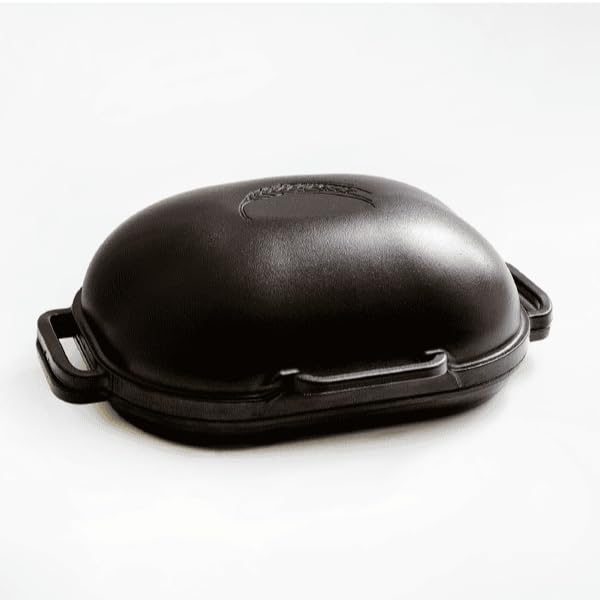


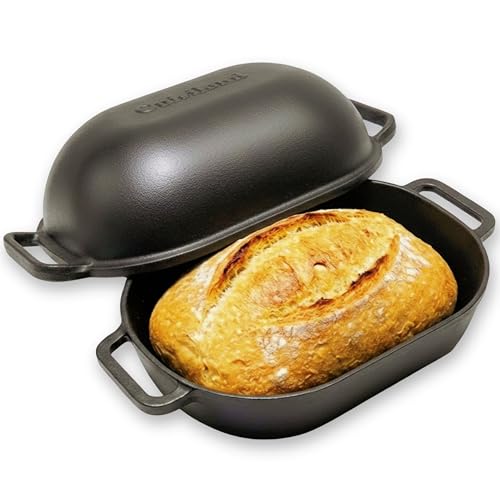

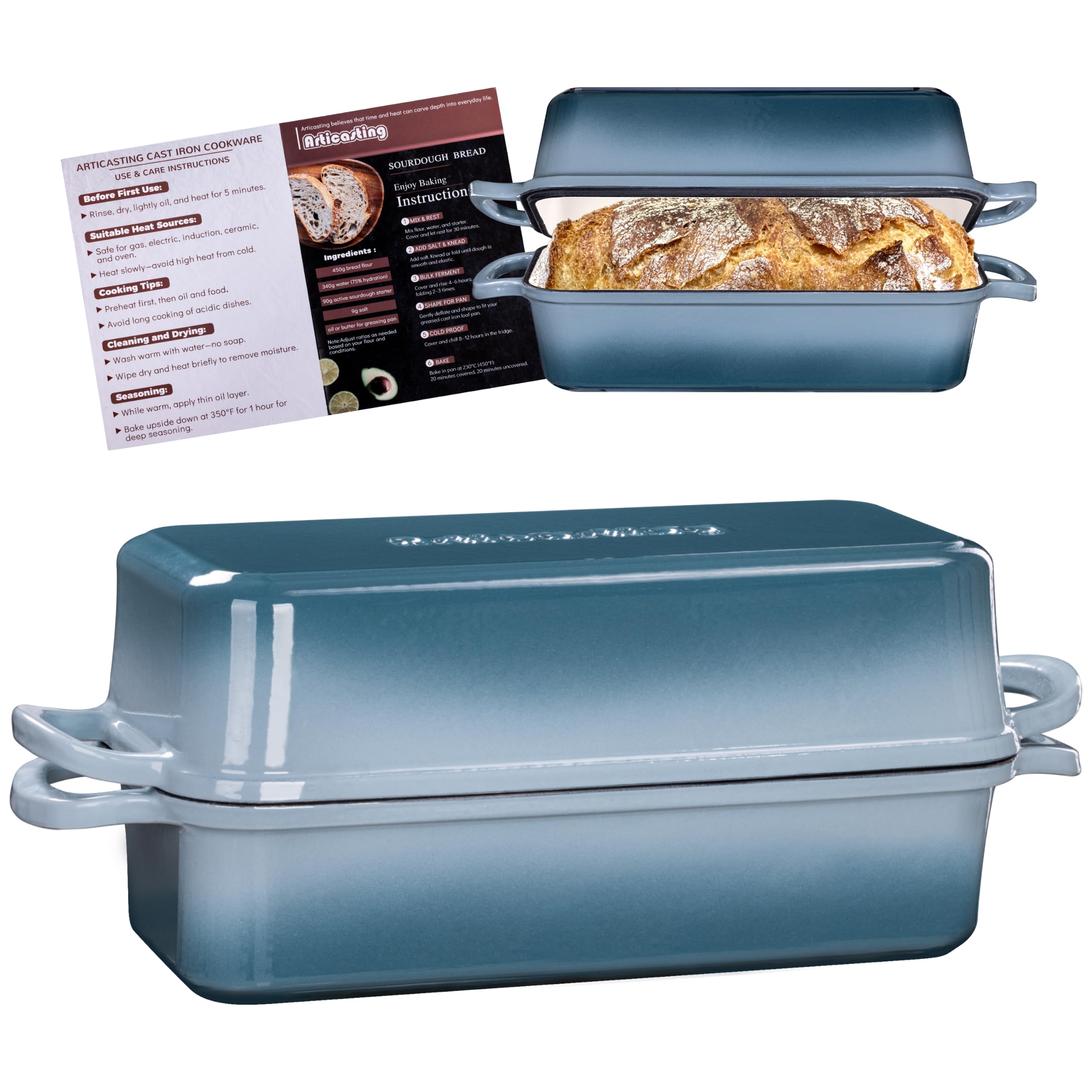


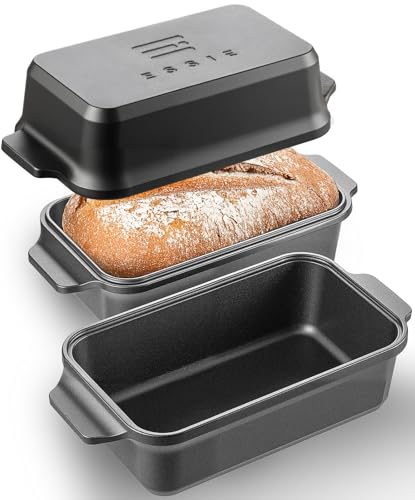

Quick Answer: Which Type Fits Your Home
For most homes, the best cast iron loaf pan is a bare pan in the standard 9 by 5 inch size, the simplest start. It costs the least of the three types, builds a strong crust, and asks only for drying and a thin coat of oil after washing. Choose enameled cast iron if you bake acidic loaves often and want easier cleaning with no seasoning routine. Choose a lidded pan if you bake sandwich loaves and want a flat top and a soft, even crumb.
Household size settles the rest. One or two people often do well with a smaller 8.5 by 4.5 inch pan, while families who freeze slices for the week usually need the larger loaf. Storage matters too, since a lidded pan takes more cabinet room than a bare one.
Before You Buy: A Quick Checklist for Choosing a Loaf Pan
Size: Match It to Your Space
Pan size controls both loaf size and how a recipe behaves. An 8.5 by 4.5 inch pan suits recipes written for about 1 pound of dough and gives a taller rise in a small batch. A 9 by 5 inch pan holds about 1.5 pounds of dough and fits most standard sandwich and quick bread recipes without overflow. Measure your oven and cabinet shelf before ordering, and if you are unsure which capacity your recipes assume, the guide on what size loaf pan do i need explains the volume differences in detail.
Which Type Fits Your Routine
Bare cast iron is the workhorse choice for bakers who bake weekly and do not mind a short seasoning routine. Enameled cast iron has a smooth coated interior, so fruit filled loaves release more easily and the pan wipes clean without oil afterward. A lidded design traps steam around the dough and shapes a straight sided loaf, which suits toast and sandwiches.
Features Worth Paying For and Ones to Skip
Wide loop handles are worth paying for, since a loaded cast iron pan is heavy and oven mitts need a secure grip on both ends. A lid is worth it only if you bake shaped sandwich loaves often. Pour spouts, decorative exteriors, and bundled scrapers add cost without changing the bake, so you can skip them with no loss.
Light vs Dark Finish and Browning
The dark interior of bare cast iron absorbs heat and browns crusts deeply, which is ideal for crusty breads and for loaves that tend to bake pale. That same darkness can overbrown sweet quick breads at the edges before the center sets, so you may need to lower the oven temperature slightly for those recipes. Enameled pans with a light interior brown more gently and let you watch the true color of the crust as it forms.
Oven Safe Temperature
Bare cast iron tolerates very high oven heat, well beyond what bread dough ever needs, and it can move from the oven to a stovetop burner for warming. Enameled pans carry a stated limit from the maker, often lower than bare iron, so check that limit before using the pan under a broiler. Lids with knobs made from other materials can set the real limit for the whole pan.
Seasoned Surface vs Enameled Coating
A seasoned surface is a layer of baked on oil that builds with use and improves food release over time. It is not a chemical coating, and you can renew it at home whenever the pan starts to stick or look dull. An enameled coating needs no seasoning and resists acidic foods, but a hard knock can chip it, and a chip cannot be repaired at home. Neither surface releases food like a coated aluminum pan, so greasing still matters for sticky batters.
Realistic Budget Ranges
Price tracks finish and extras more than baking results. Bare pans often sit under $50 and give the strongest value for daily baking. Enameled pans commonly start around $45 in budget lines and climb well above $100 from premium makers, and you are paying for easier cleaning and a choice of colors rather than a better loaf. Lidded pans and two pan sets tend to fall about $45 to $100, depending on size and finish.
Types Compared: Bare, Enameled, and Lidded Cast Iron
Comparing the three cast iron types side by side helps more than comparing individual products, since type decides almost everything about cost, care, and results. Bare pans are the lightest of the three and the easiest to restore if neglected. Enameled pans are the easiest to live with day to day, because washing needs only warm water and a soft sponge, with no oiling step. Lidded pans add weight and storage bulk, but they give the most control over loaf shape and crust softness.
A lidded design is the cast iron version of a classic pullman shape, with straight walls and a sliding cover that keeps the top flat as the dough rises. If that shape is your main goal, our guide to the best pullman loaf pan compares lidded options across materials as well. For crust lovers, the bare pan wins, because its open top and dark walls give the fullest browning.
Weight is the shared trade off. A cast iron loaf pan can weigh roughly twice as much as an aluminum pan of the same size before you add batter. That weight gives steady baking, but it also means two handed lifting every time.
How to Judge a Cast Iron Loaf Pan
Five criteria do most of the work when you compare listings. Heat distribution shows up as even browning from end to end, with no pale center stripe. Food release depends on seasoning or enamel smoothness plus how you grease the pan. Warp resistance is a natural strength of thick cast iron, which stays flat where thin metal can twist. Cleaning effort is the final test, and it is where the three types separate most clearly.
Judge listings by photos of the interior, the stated dimensions including handle length, and care instructions from the maker. A clear listing states capacity in cups or pounds of dough, not just outer measurements, and that detail prevents most sizing regrets.
What We Like and What We Do Not About Cast Iron vs Other Loaf Pans
The strengths are consistent. Cast iron holds heat through oven door openings, browns crusts evenly, and shrugs off metal utensils that would scar a coated pan. One pan can serve for sandwich bread, pound cake, and meat loaf for many years, which lowers the cost per bake over time.
The downsides are just as real. Cast iron is heavy, it needs drying right after washing to prevent rust, and acidic batters left sitting in a bare pan can pick up a metallic taste. If you want a fuller side by side of lighter materials, the comparison of glass vs metal loaf pan shows where glass and metal each do better.
Common Buying Mistakes to Avoid
- Buying the wrong size for your recipes: a pan that is too small overflows, and one that is too large gives flat loaves with a dense crumb.
- Ignoring total width with handles: the pan may fit the oven on paper but crowd a second pan or touch the oven walls.
- Paying for a lid you will rarely use: lids add cost and storage bulk, and open top baking suits most crusty loaves better.
- Expecting coating level release from day one: a new bare pan needs several bakes before its seasoning releases sticky batters cleanly.
- Skipping the care routine in your budget: seasoning oil, parchment, and storage space are small but real parts of owning cast iron.
Cost of Ownership and Care
Ongoing costs are low. You will use small amounts of neutral oil for seasoning, plus parchment or butter for lining and greasing, and that is nearly all. A clear walkthrough of how to grease a loaf pan helps sticky batters release while your seasoning is still young. There are no replacement coatings to budget for with bare iron, and no inserts or parts that wear out on a schedule.
Daily care takes a few minutes. Wash the pan in warm water, dry it fully on low heat or with a towel, and rub in a very thin coat of oil while it is warm if it is bare iron. Store it in a dry cabinet, ideally with a cloth layer if you stack other pans on top. Never leave a bare pan soaking in a sink, since standing water is the fastest route to rust.
FAQ
Are cast iron loaf pans worth it for home bakers?
Yes, if you bake at least a few times a month and value crust and durability over light weight. The pan pays for itself slowly, bake by bake, because it does not warp or lose a coating and need replacing. One extra use is that cast iron can go under a broiler for a brief final browning of a cheese topped loaf, a step many coated pans cannot handle.
How do you clean a cast iron loaf pan after sticky bakes?
Let the pan cool until you can hold it, then loosen stuck bits with a wooden or plastic scraper before washing. A short soak of ten to fifteen minutes in warm water softens sugary residue without giving rust a foothold, as long as you dry the pan right after. For stubborn spots, a paste of coarse salt and a little water scrubs without stripping much seasoning.
How long does a cast iron loaf pan last?
A cast iron loaf pan can last for decades and often outlives the oven it bakes in. Bare iron can be restored after rust or worn seasoning, so its working life has no fixed end point. Enameled pans also last for many years, but deep chips that expose iron at the cooking surface are a reason to retire the pan from acidic foods.
Can you bake sourdough in a cast iron loaf pan?
Yes, and the pan shape gives sourdough a tidy slice for toast while the iron supports a strong oven spring. Timing matters too: a cold pan slows the early rise, so many bakers proof the dough in a lined basket and turn it into a preheated pan at baking time. If sourdough is your main bake, our guide to the best loaf pan for sourdough goes deeper on shaping and scoring for pan loaves.
Does a cast iron loaf pan need parchment paper?
For most yeast breads, greasing alone is enough once the pan is well seasoned. Parchment earns its place with high sugar batters, cheese filled loaves, and fruit loaves, where caramelized edges grip the walls. A single sling of parchment with ends overhanging the long sides also lets you lift a fragile loaf out without compressing it while it is hot.
Final Thoughts
The right choice is the type you will use happily every week: bare iron for crust and value, enameled iron for easy cleaning, and a lidded pan for neat sandwich slices. Match the size to your recipes, check the handle room in your oven, and keep the care routine simple and consistent. When you want a dependable best cast iron loaf pan for real home baking, the product table above pulls the current options together so you can compare types, sizes, and prices in one place before you order.


