
Best Cast Iron Bbq Grills: Fuel, Cooking Area and Care (2026)
Disclosure: We may earn a commission when you buy through links on this page, at no extra cost to you. As an Amazon Associate I earn from qualifying purchases. Learn more

The best cast iron bbq grills guide: fuel type, cooking area and care, from hibachi bodies to heavy grates.
Cast iron holds heat in a way thin steel cannot, and that steady heat gives you a deep crust on steaks and even cooking across the grate. The best cast iron bbq grills pair that heavy grate with a body that seals well and cleans up without a fight. This guide covers fuel, size and coating so you can read the product table below with clear priorities.
Start with how you actually cook. A weeknight griller needs fast startup and simple cleanup. A weekend cook who smokes ribs for hours needs stable low heat and room for large cuts.




Who Should Buy a Cast Iron BBQ Grill?
Choose by the meals you repeat most often, because grate weight, size and fuel all trade against each other.
Sear Focused Cooks Who Love Steaks and Burgers
You cook hot and fast, and you judge a grill by its crust. Choose thick cast iron grates over a strong burner or a deep charcoal bed, because the metal stores heat and marks food instead of cooling when cold meat lands on it.
Low and Slow Cooks Who Smoke Ribs and Brisket
You cook for hours and need heat that barely moves. Choose a grill with a tight fitting lid, adjustable vents or a pellet feed, plus room for a full brisket or two racks of ribs laid flat. Cast iron grates smooth out small temperature swings.
Small Patio Cooks With Limited Outdoor Space
You grill on a patio, deck or balcony and store the grill in a corner between cooks. Choose a compact footprint, folding shelves and sturdy wheels. Check building and local fire rules first, because many properties ban charcoal on balconies and require clear space around gas grills.
Key Features to Compare
When you compare the best cast iron bbq grills side by side, work through these factors in order.
Fuel Type, Flavor and Running Cost
Charcoal gives the strongest smoke flavor and the highest searing heat, but it asks for lighting time and ash cleanup after every cook. Gas starts in minutes and holds a steady temperature with a dial, though the flavor is milder. Pellet grills burn wood pellets for smoke and steady low heat, fed from a pellet hopper over hours. Propane and pellets usually cost more per long cook than charcoal.
Cooking Area and Grill Size
Cooking area is measured in square inches, and most family grills offer about 350 to 550 square inches on the main grate. That space holds about 12 to 20 burgers at once, depending on size and spacing. A warming rack adds room for buns and vegetables, but it does not count for searing.
Cast Iron Grates, Coating and Build Quality
Thick grates hold more heat than thin ones, so look for heavy bars with close spacing that supports small vegetables and shrimp. Porcelain enamel coating resists rust and releases food more easily, while bare cast iron needs seasoning but can be restored if it rusts. Thick body metal and a snug lid seal hold heat and smoke.
Heat Output, Sear Power and Temperature Range
BTU per square inch tells you more than total BTU alone. For a strong sear you want about 500 to 650 degrees on the grate. For smoking you need a steady hold near 225 to 250 degrees for hours. Adjustable charcoal trays, precise gas valves and a PID controller on pellet models serve that control, and a meat probe port helps you verify the dial.
Ash, Grease Management and Cleanup
Charcoal models need an ash catcher you can pull out and empty without lifting the whole grill. Gas and pellet models need a grease tray that slides out easily and holds drippings from several cooks. Grease left sitting in a tray can flare up on the next hot cook, so an accessible tray is a safety feature as much as a convenience.
Footprint, Portability, Assembly and Warranty
Wheels, folding shelves and modest weight matter if you move the grill for storage or take it tailgating. Most full size grills take about one to two hours to assemble with basic tools. Warranty terms split by part, with burners and grates often covered for fewer years than the body.
Types of Cast Iron BBQ Grills Compared
Cast iron shows up in several grill styles, and each suits a different cook. For the wider category view, see our guide to the best bbq grills before you narrow to cast iron.
Charcoal Grills With Heavy Cast Iron Grates
Charcoal kettle and barrel grills with cast iron grates give you direct smoke flavor and very high searing heat. They reward attention, because you manage heat by moving coals and opening vents. Choose this type if flavor comes first.
Gas Grills With Cast Iron Grates
Gas models pair push button startup with cast iron heat retention, which suits weeknight cooking best. If gas is your fuel, see our guide to the best cast iron gas grills and our guide to the best gas grills with cast iron grates.
Cast Iron Hibachi and Tabletop Grills
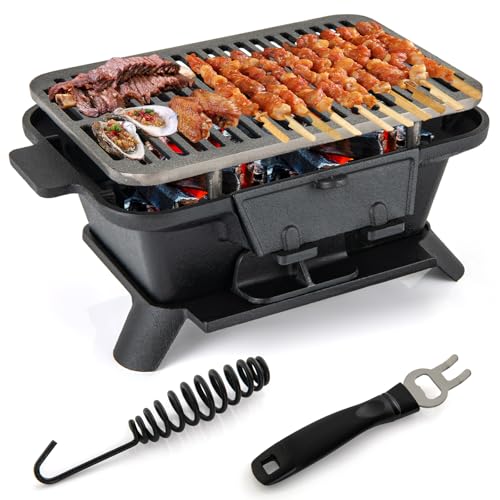
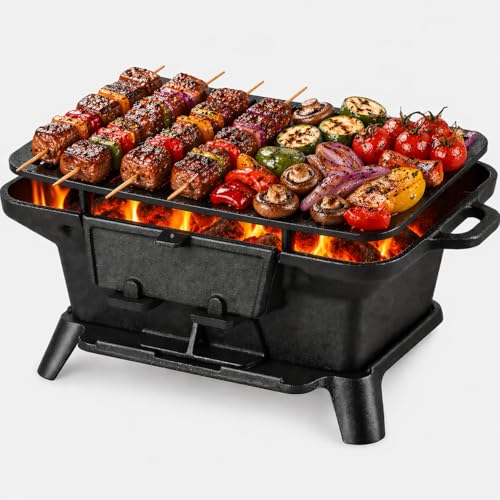
The most literal cast iron grill is a hibachi, a small charcoal grill with a solid cast iron body and one or two adjustable grates. The thick walls hold heat well and the compact size suits a patio rail, a picnic table or a campsite. Expect a small cooking surface, so plan on cooking in batches, and keep the grill dry between cooks because bare iron rusts quickly outdoors.
Portable Grills for Camping and Tailgating
Portable grills shrink the cast iron grate into a tabletop or folding frame that fits in a car trunk. You give up cooking area and wind protection, and in return you get real searing at a campsite or parking lot.
Kamado Style Grills With Cast Iron Grates
Kamado grills use thick ceramic walls and cast iron grates to hold heat for low smoking and very hot searing in one body. They are heavy and cost more, but they sip fuel on long cooks.
Common Mistakes to Avoid
These errors cost money or ruin cooks, and each one is easy to prevent before you order.
- Buying by total BTU alone leads to a grill that runs hot in spots yet cannot hold low heat for smoking.
- Choosing bare cast iron grates when you hate maintenance leads to rust and sticking food within one wet season.
- Sizing the grill for a holiday crowd leaves you heating a huge grate for two burgers most weeknights.
- Storing a cast iron grill uncovered outdoors invites rust on the grates and water inside the firebox.
- Ignoring balcony and building rules can leave you with a charcoal grill you cannot light at home.
Care and Maintenance for Cast Iron Grills
Preheat the grill for about 10 to 15 minutes before cooking, then brush the grates while warm. After cooking, leave the heat on briefly to burn off grease, brush again, and coat bare cast iron lightly with cooking oil once the grates cool to warm. That thin oil layer is the seasoning that blocks rust.
Empty the ash catcher and grease tray once they cool, and wash enamel coated grates with warm water and a soft brush rather than harsh pads that chip the coating. Cover the grill when cool and dry. On gas models, test connections with soapy water each season and watch for bubbles that signal a leak.
Cast Iron BBQ Grills: Your Questions Answered
Is a pellet grill with cast iron grates worth it for low and slow cooking?
Yes, a pellet grill with cast iron grates is worth it if you smoke often. The automatic feed holds smoking temperatures for hours, and cast iron adds searing ability that plain steel lacks. For options in that style, see our guide to the best pellet bbq grills. Keep pellets dry, because damp pellets crumble and jam the feed.
What type of cast iron BBQ grill gives the best flavor for smoked meat?
Charcoal gives the deepest smoke flavor, because burning charcoal and wood chunks surround the meat with smoke for the whole cook. Pellet grills come close at low temperatures, while gas gives the mildest result. Grate material affects crust far more than smoke taste, so choose charcoal and learn vent control if flavor comes first.
Can you use a cast iron BBQ grill on a balcony?
You can use some cast iron BBQ grills on a balcony, but the fuel decides what is allowed. Many buildings and local fire codes ban charcoal and open flame grills on balconies. Small gas and electric models are accepted more often. Confirm your lease and local rules before you buy, and keep the grill clear of railings and siding.
How often should you clean a cast iron BBQ grill?
You should brush cast iron grates after every cook and empty ash or grease after every few cooks. That quick routine prevents the buildup that causes flare ups and off flavors. Add one deeper clean each season, when you scrape the interior, wash the grease tray and inspect grates for rust or chipped enamel.
How long should a cast iron BBQ grill last with regular care?
A cast iron BBQ grill should last about 10 to 15 years with regular care, and the grates often outlast burners and igniters. Storage matters more than price, because a covered grill kept dry avoids the rust that ends most cast iron service lives. Budget for wear parts such as igniters and burner tubes over that span.
How big a cast iron BBQ grill do you need for a family cookout?
For a family cookout of four to six people, about 400 to 500 square inches of main grate space is usually enough. That area fits a spatchcocked chicken with vegetables around it, or burgers for the group in one batch. If you host larger groups often, step up in size rather than cooking in batches.
The Bottom Line
Match fuel to your patience, cooking area to your usual group, and grate coating to the maintenance you will honestly do. Use the product table above to check size, fuel and price, and see our guide to the best cast iron grills to compare cast iron designs beyond the BBQ category.
When you choose best cast iron bbq grills with those priorities set first, you get steady heat, a real sear and a grill that rewards simple care for years.


