
Best Carbon Steel Paella Pans (2026): How to Choose for Your Kitchen
Disclosure: We may earn a commission when you buy through links on this page, at no extra cost to you. As an Amazon Associate I earn from qualifying purchases. Learn more

Choose the best carbon steel paella pan by size, steel gauge and burner fit, with plain advice on seasoning, rust care and cooking socarrat at home.
A good paella night at home often fails before the rice goes in, because the pan is too wide for the burner or too large for the cabinet. Choosing the best carbon steel paella pan for your household starts with your space, your cooktop, and how many people you usually feed. This guide walks through sizes, steel thickness, handles, and care costs so you can match a pan to daily life. You can also compare your short list with our broader guide to the best paella pan for other materials.
Carbon steel is the traditional choice in Spain, and it suits cooks who want fast heat response and the crisp rice base called socarrat. It does ask for a little upkeep, mainly drying and oiling after use. The product table lists current pans.


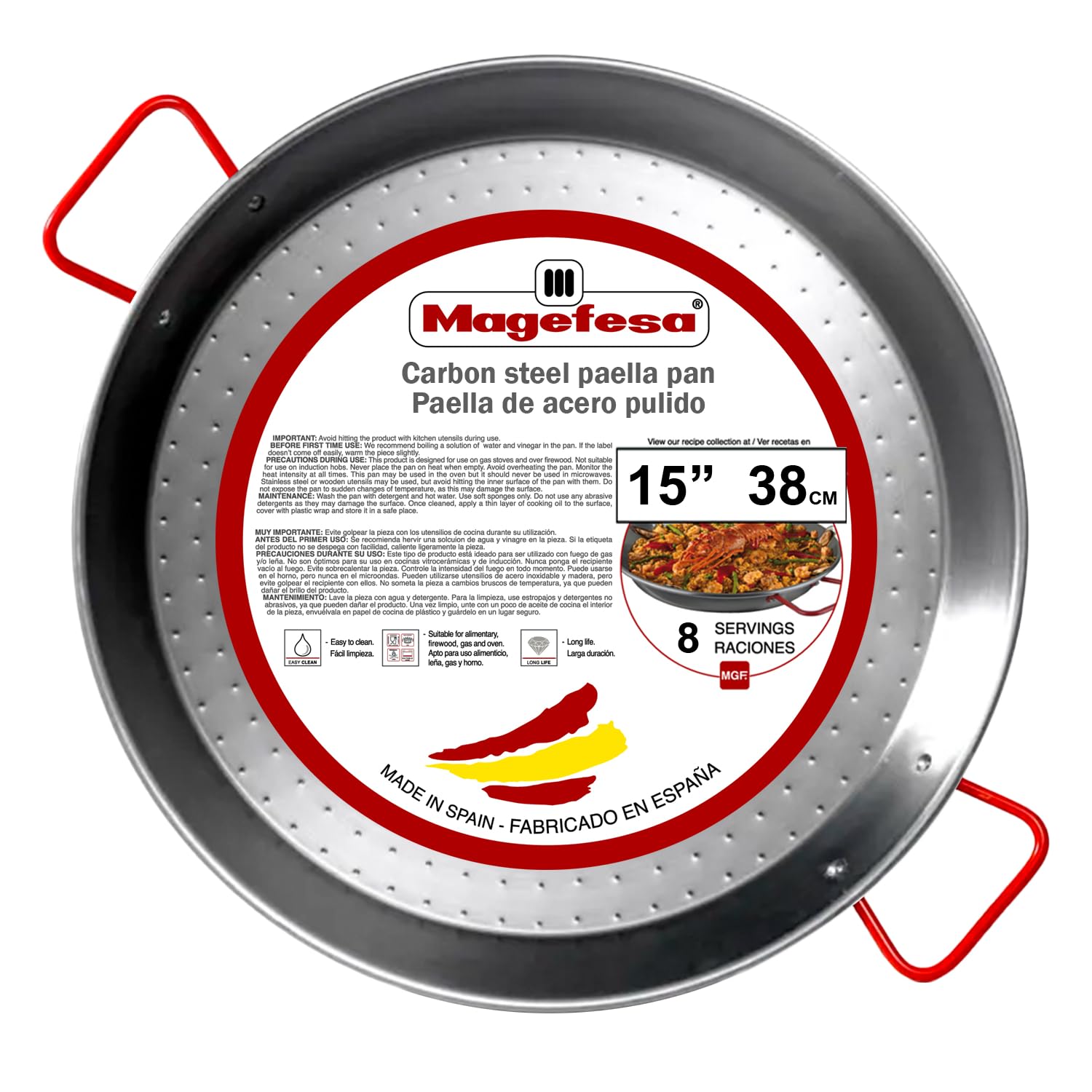


Quick Answer: The Three Carbon Steel Types
If you want a fast decision, think in types rather than in brand names. A thin classic pan heats quickly and costs the least, and it is the easiest to store. A medium gauge pan balances quick response with a base that feels steadier on a home burner. A heavy gauge pan costs more and weighs more, but it resists denting and suits frequent cooking for a crowd. All three need seasoning.
- Thin classic pan: lightest and lowest in price, best for occasional cooking and tight storage.
- Medium gauge pan: a balanced pick for most family kitchens and weekly use.
- Heavy gauge pan: the durable option for large pans, grill use, and frequent entertaining.
Before You Buy: A Quick Checklist for Choosing a Paella Pan
Work through the points below in order. Size and cooktop fit come first, because a pan that your burner cannot heat evenly will disappoint you no matter how good the steel is.
Size: Match It to Your Space
Measure your largest burner and your oven width before you look at pan diameters, because the pan base should sit mostly over the heat source. A 13 inch pan suits most home burners and stores easily in a standard cabinet or deep drawer. A 15 inch or 16 inch pan needs a wide burner or a grill to heat the edges well. Pans of 18 inch and 22 inch look impressive, but on a small cooktop the outer rice stays undercooked while the center races ahead.
Which Type Fits Your Routine
Carbon steel heats fast, responds quickly when you lower the flame, and builds a seasoned surface with use. Enameled steel skips seasoning and resists rust, but the coating can chip and it gives a less responsive feel. If you cook paella only twice a year and dislike upkeep, read our guide to the best stainless steel paella pan before you decide. If you enjoy hands on cooking and want the classic socarrat, carbon steel fits your routine best.
Features Worth Paying For and Ones to Skip
Pay for steel thickness you can feel, sturdy loop handles that stay cool enough to grip with towels, and a base that sits flat on your cooktop. A lid is worth it if you often rest the rice, steam shellfish on top, or store leftovers in the pan, and our guide to the best paella pan with lid covers that choice in depth. Skip decorative gift boxes and bundled spice kits of unknown age.
Is Carbon Steel Free of Synthetic Coatings?
Plain carbon steel has no synthetic coating at all. The surface is bare metal that you season with a thin layer of cooking oil, so there is no PFAS or PTFE layer to wear out or to worry about at high heat. The trade off is that bare steel reacts with water and acidic foods, so long simmers of tomato heavy dishes can strip seasoning and invite rust. For paella, where cooking time is short and the pan is dried right after, the bare surface works well.
Induction, Gas and Glass Top Compatibility
Carbon steel is magnetic, so most pans work on induction, but check that the base is flat, because a warped base spins and heats unevenly on glass. Gas gives you the most forgiving heat spread. On a glass top or coil cooktop, a pan much wider than the element leaves a pale ring of undercooked rice, so rotate the pan a quarter turn a few times during cooking. For wide pans, a grill or an outdoor burner is the better heat source, as covered in our guide to the best paella pan for grill.
Oven Safety and Handles
Most carbon steel pans can go in the oven, which helps when you finish the rice under even heat or keep it warm before serving. Check the maker limit for your pan, since coated handles can lower the safe temperature even when the steel itself tolerates more. Traditional loop handles rise above the rim, so the pan needs vertical clearance on an oven rack. Those same loops make the pan easy to carry with two hands when it is full and heavy.
Realistic Budget Ranges
Small thin pans often cost about $25 to $30, and they are a sensible way to learn the technique without a big commitment. Medium pans in the range of about $30 to $50 usually bring thicker steel and better handles, which most home cooks feel right away. Large or heavy gauge pans run about $50 to $100, and the extra money mainly buys size, stiffness, and durability rather than better rice. Price alone does not predict socarrat, because burner fit matters more.
Three Carbon Steel Styles Compared
Use the notes below to match a pan style to your household.
The Medium Gauge Everyday Pan
This style suits families who cook paella once or twice a month and want one pan that lives in the kitchen full time. The steel is thick enough to feel steady on the burner yet light enough to lift with one hand when empty. In a 15 inch size it feeds a family meal and still fits in many ovens. For most readers, this balance of weight, price, and durability is where the value sits.
The Thin Classic Pan
The thin classic style is the traditional tavern pan, light, quick to heat, and the lowest in price. It rewards attention, because thin steel can scorch the center if the flame is high and the pan sits still. New cooks often do better once they learn to rotate the pan and moderate the heat. Choose it if you cook small batches, store in a small apartment, and accept a shorter service life.
The Heavy Gauge Pan
A heavy gauge pan costs more and feels it the moment you pick it up. The extra steel spreads heat more evenly across a wide base, resists dents from storage and travel, and holds up to grill grates and outdoor burners. That stiffness helps when you cook for a crowd. Choose this style if you entertain often and plan to keep one pan for many years.
What to Compare in a Carbon Steel Paella Pan
Compare pans on heat distribution, base flatness, steel thickness, handle design, and cooktop and oven compatibility. Maker specifications and patterns in verified buyer reviews are the best evidence you can check before you order.
Pros and Cons of Carbon Steel Compared With Other Paella Pans
What stands out first is response. Carbon steel heats in seconds and cools quickly when you pull it off the flame, and that control helps you build socarrat without burning it. The pan is also light for its size and free of coatings that can fail. On the other side, it rusts if you leave it wet, it needs seasoning before the first use, and acidic sauces can dull the surface. Stainless steel asks less of you day to day but costs more and responds more slowly.
Common Buying Mistakes to Avoid
- Buying for the guest list, not the burner: a 22 inch pan on a home cooktop leaves the outer rice raw while the center burns.
- Confusing rim size with cooking size: makers measure the top rim, so the flat base is smaller than the number on the box suggests.
- Skipping the first seasoning: unseasoned steel sticks badly and can rust after a single wash.
- Storing the pan damp: trapped moisture under a lid or towel causes rust spots within days.
- Heating an empty pan on high: thin steel can warp, so warm it gently with oil or stock in it.
Cost of Ownership and Care
Ownership costs stay low with carbon steel. There is no coating to replace and no special cleaner to buy, just soap, water, heat for drying, and a little cooking oil. If light rust appears, scrub it off, dry the pan on the burner, and apply a thin coat of oil. Our step by step guide on how to clean a paella pan walks through rust removal in detail. A pan dried and oiled after each use can serve for decades.
Your Questions, Answered
Are carbon steel paella pans worth it for home cooks?
Yes, if you cook paella more than a couple of times a year and you enjoy a short care routine. The fast response and the seasoned surface give you control that coated pans rarely match, and the price is modest. If you want a trial run first, borrow a pan or order paella at a good Spanish restaurant to confirm your household loves the dish.
How long does a carbon steel paella pan last?
A well kept pan can last for decades, because there is no coating to wear through and the steel can be reseasoned whenever the surface looks dull. Retire a pan when the base warps so much that it rocks on a flat cooktop or when deep pitting from rust roughens most of the cooking surface. Lifespan depends far more on drying habits than on price.
How do you clean a carbon steel paella pan after cooking rice?
Serve the rice first, then fill the warm pan with hot water and let stuck grains soften for about 10 to 15 minutes. Lift the residue with a wooden spoon or a soft sponge, and avoid steel wool, which strips seasoning. Dry the pan on a warm burner until every drop is gone, then wipe on a thin film of oil. Our guide on how to season a paella pan explains how to rebuild the surface if cleaning takes off too much seasoning.
What size paella pan do you need for six people?
For six people as a main course, a 15 inch pan is the usual fit, since paella rice cooks in a thin layer and spreads wider than it does in a pot. A 13 inch pan suits six small appetizer portions but crowds a full meal, which makes the layer too thick and the texture gummy. If your burner is small, cook two smaller batches rather than one oversized batch.
Can you use a carbon steel paella pan on an induction cooktop?
Yes, carbon steel is magnetic and works on induction, and you can confirm any pan with a simple magnet test on the base before you buy. The catch is flatness, because induction needs full contact, and a warped base will heat in patches. A heat diffuser plate can help a slightly uneven pan, but it slows the quick response that makes socarrat possible. Keep the base flat by heating gradually and never cooling hot steel under cold water.
Final Thoughts
Start with the pan your burner can heat evenly, then choose the steel thickness that matches how often you cook. For most households, the best carbon steel paella pan is a medium gauge pan in a 15 inch size, with the thin classic as the low cost way to learn and the heavy gauge as the upgrade for crowds. Check the product table once more against your cooktop, your oven, and your storage space, and you will pick a pan that earns its place in your kitchen.


