
Best Car Rubber Floor Mat Cleaner: Washing and Restoring All-Weather Mats (2026)
Disclosure: We may earn a commission when you buy through links on this page, at no extra cost to you. As an Amazon Associate I earn from qualifying purchases. Learn more

How to choose the best car rubber floor mat cleaner: sprays, protectants and dry-wash options, plus a method that cleans without leaving mats slippery.
Rubber floor mats are the hardest working part of a car interior, and they show it. Road salt leaves white stains, mud dries in the grooves and sun fades the surface to a dull gray. A good cleaner lifts the dirt, and a good protectant brings back a rich, even finish without turning the mat into a skating rink.
The best car rubber floor mat cleaner removes grime without damaging the rubber, rinses easily and leaves a safe, non-greasy surface. The product table above includes dedicated mat cleaners, protectants and a dry-wash spray, and each takes a slightly different approach.


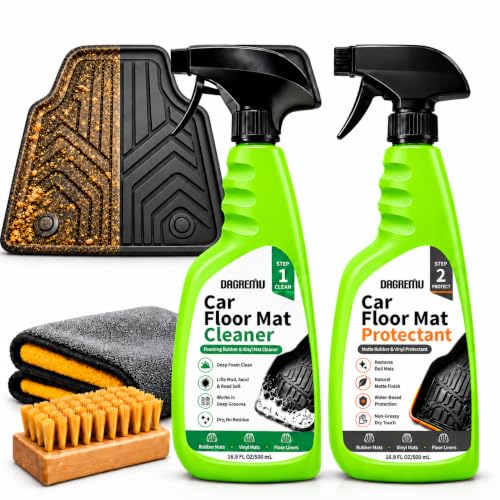

Below is a look at how each type works and a simple routine that keeps mats looking new.
Why Rubber Mats Need Their Own Cleaner
All-purpose cleaners can strip the oils out of rubber and leave it dry or chalky. Products made for mats balance cleaning power with gentleness and often include conditioners that keep the surface supple. Harsh solvents and petroleum-based degreasers can break down rubber or leave it sticky, so check that the label says it is safe for rubber and vinyl.
Types of Cleaner
Spray-and-Rinse Cleaners
These are the most common. Spray the surface, let it sit briefly, scrub the grooves and rinse with water. They deal with ordinary dirt, mud and salt and work well for regular maintenance.
Dry-Wash Sprays
A dry-wash spray cleans without water, which is handy for apartment dwellers or a quick wipe at a car wash with no hose. You spray and wipe with a microfiber towel. They suit light dirt and a fast refresh more than heavy mud.
Cleaner and Protectant Combos
Some products clean and leave a thin protective layer that resists UV damage and keeps the mats from fading. They save a step but can leave the surface smoother, so use them on the sides and heel and avoid heavy application where your feet sit.
Dedicated Protectants and Dressings
These are applied after cleaning to restore color and protect. Look for a satin finish rather than a glossy one, since shine on a mat can make a foot slip on the pedals.
What to Look For
- Safe on rubber and vinyl: read the label.
- Non-slip finish: the mat should not be slick after treatment.
- Ease of use: a spray bottle with a good nozzle and no heavy scrubbing needed.
- Scent: a mild smell is better in a closed car.
- Size: a large bottle is more economical if you have several mats.
A Simple Cleaning Routine
- Remove the mats and shake or knock out loose dirt.
- Rinse with a hose to wash away mud and salt.
- Spray the cleaner and let it work for the time on the label.
- Scrub the grooves with a stiff brush, working in sections.
- Rinse thoroughly and let the mats dry completely, away from direct heat.
- Apply a protectant lightly if you want, and wipe off any extra.
Never put wet mats back in the car, since moisture under them leads to musty odors.
Tackling Tough Stains
Salt stains respond to a mix of warm water and white vinegar, followed by a rinse. For grease, use a cleaner designed for the job and a soft brush, because strong solvents can damage the rubber. Black scuff marks can be rubbed away with a melamine-style sponge, used gently. If a mat feels chalky, a conditioner restores the surface, and a mat that is cracked or curling may need to be replaced.
Safety Notes
Do not use slippery dressings on the driver's mat or near the pedals. Tire shine and silicone sprays are not suitable for mats. Ventilate the car when you apply products, and keep chemicals away from children and pets. Follow the label and avoid mixing different cleaners.
How Often to Clean
In wet or snowy weather, rinse the mats weekly to keep salt from building up. In dry weather, a monthly wash is generally enough. Treat spills as they happen, since sugary drinks and coffee harden into stubborn residue.
Choosing the Best Car Rubber Floor Mat Cleaner
Look at how dirty your mats are and how you prefer to work. If you have a hose, a spray-and-rinse cleaner is economical. If you live where hosing is difficult, a dry-wash spray is convenient.
Choose a finish that leaves grip and avoid glossy dressings for the driver's side. Compare bottle sizes and read the instructions before you buy.
Brushes, Towels and Tools
A good brush matters as much as the cleaner. A medium-stiff nylon brush reaches into the grooves where dirt packs down, and a long-handled version saves your back. For delicate surfaces, a softer brush avoids scuffing.
A microfiber towel dries the mat and picks up the last traces of cleaner, and a second towel is useful for buffing a protectant. If you have a pressure washer, use it from a distance, because a tight jet can mark rubber and force water into the seams.
Removing Odors
Rubber that has sat wet can smell musty. A rinse with a mild cleaner, a dry in the sun and a light spray of a fabric-safe deodorizer usually fixes it. Check the area under the mats as well, because spilled liquid can soak into the carpet and cause the smell.
Baking soda sprinkled on the carpet and vacuumed up after an hour helps absorb odors there. If a smell persists, check for leaks around the doors and floor.
Common Mistakes to Avoid
- Using tire shine on mats: it leaves a slick, greasy surface.
- Scrubbing with a wire brush: it scratches the rubber.
- Drying mats in extreme heat: high heat can warp or crack them.
- Using too much product: a thick layer attracts dust and takes longer to dry.
- Forgetting the back side: dirt and moisture on the underside transfer to the carpet.
Related Guides
- Best Rubber Floor Mats For Cars
- Best Rubber Mat Cleaner
- Best Rubber Car Mats
- Best Rubber Floor Mats
Frequently Asked Questions
Can I use dish soap?
Mild soap works for light cleaning, but a rubber-safe cleaner conditions the surface too.
Will cleaner make my mats slippery?
Some dressings can. Choose a satin finish and keep it off the pedal area.
Why do my mats look white and chalky?
Salt, dried cleaner or UV damage. A rinse and a conditioner often fix it.
Can I wash carpet mats with the same product?
No. Use a product made for the material.
The Bottom Line
The best car rubber floor mat cleaner removes dirt and salt, protects the rubber and leaves a safe grip. Choose a type that suits your washing habits, follow a regular routine and avoid slick finishes near the pedals. Clean mats keep the whole interior looking fresher.


