Best Car Mats: How to Choose Floor Protection That Fits and Stays Put (2026)
Disclosure: We may earn a commission when you buy through links on this page, at no extra cost to you. As an Amazon Associate I earn from qualifying purchases. Learn more

How to pick the best car mats for mud, snow, kids and daily commuting, with advice on materials, coverage, anchoring and cleaning.
Floor mats take more abuse than any other part of a car interior: wet boots, spilled drinks, gravel, pet hair and road salt all end up on them first. The best car mats keep that mess off the carpet underneath, stay anchored under the pedals and clean up in a couple of minutes. The product table above leans toward universal and trim-to-fit sets, which suit most owners who do not want to hunt for a mat cut for one exact model.
This guide walks through materials, coverage, fit and upkeep so you can match a set to your climate and routine. Use it to rule out the wrong style quickly, then compare the options in the table.


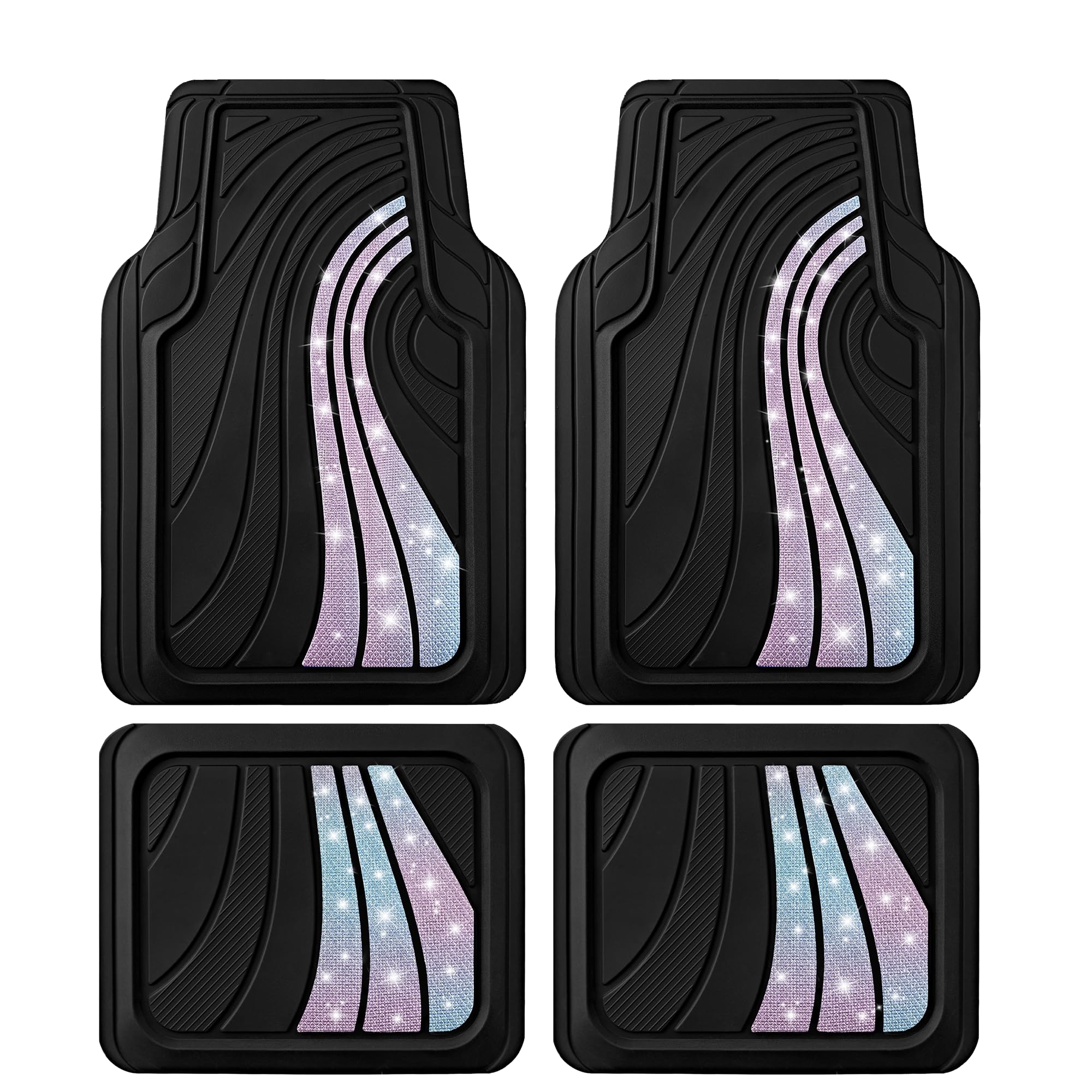


Start With the Material
Material decides how the mat handles water, how it feels underfoot and how long it keeps its shape.
Rubber and TPE
Heavy-duty rubber and thermoplastic mats are the standard answer for wet, muddy or snowy conditions. They are waterproof, they do not soak up spills, and you can pull them out and hose them down. Look for deep channels or raised ridges that trap water and grit away from shoes. The downside is a slightly utilitarian look, and cheap rubber can smell strong when new or stiffen in deep cold.
Carpet
Carpet mats look closer to factory trim and feel softer, so they suit dry climates and drivers who care about appearance. They hold dirt in the fibers, so they need vacuuming and an occasional shampoo. In wet weather they stay damp, which can lead to musty smells if you do not dry them.
Vinyl and Faux Leather
Smooth vinyl or leatherette wipes clean quickly and looks tidy, but a smooth surface can be slippery when wet. Check that the top has texture and that the backing grips the carpet.
Coverage, Depth and Edge Design
A mat is only as useful as the area it protects. A shallow flat mat catches the footprint and nothing else, while a deep-dish design with a raised perimeter acts like a tray and keeps meltwater from running over the edges into the carpet.
- Raised lip: a tall outer wall contains spills and slush. Check that it does not rub against the door sill.
- Full-set coverage: front and rear mats together protect passengers and kids, who tend to cause the biggest messes.
- Heel pad: a reinforced spot under the driver's heel resists the wear that wrecks cheaper mats first.
- Texture on top: grooves or a pattern give shoes traction so feet do not slide toward the pedals.
Fit and Anchoring Matter More Than Price
A loose mat is a safety problem as well as a nuisance. A mat that creeps forward can interfere with the pedals, so a correct fit and a secure hold are the first things to verify.
Universal mats are cut larger than most footwells and meant to be trimmed with scissors along marked lines. Measure the space from the seat rail to the firewall and side to side before you trim, and cut a little at a time. Leave the driver mat especially snug to the floor shape.
Check what the mat uses to stay in place. Some rely on a rubber nib backing that bites into the carpet, others hook onto the factory retention posts. If your car has posts, a mat with matching holes or a clip is the more secure choice. Never stack a new mat on top of an old one, because the two will slide against each other.
Matching Mats to How You Drive
- Snow and slush climates: go for deep-dish rubber with a tall lip, and plan to empty and rinse the mats weekly in winter.
- Dusty commutes: a textured or ribbed surface hides dirt better and is easy to shake out.
- Families: choose a full set with extra rear coverage and a surface that wipes clean after juice and snacks.
- Rideshare or work vehicles: hard-wearing rubber that you can wipe between trips beats carpet.
- Pets: rubber collects hair less stubbornly than carpet and rinses clean.
Cleaning and Care
Rubber mats are the easiest: remove them, rinse with water and mild soap, scrub grooves with a brush and let them dry fully before putting them back. Avoid slick dressings on the top surface, because shine makes a mat slippery under the foot. Carpet mats need a stiff brush, a vacuum and spot treatment for stains. Whatever the material, empty trapped water before it soaks the carpet underneath, since damp padding is where rust and odors begin.
How to Choose the Best Car Mats for Your Vehicle
Write down your vehicle type, climate and the number of seating rows, then use those three facts to narrow the table. A compact commuter in a dry region can use a simple trim-to-fit set, while a three-row family SUV in a snowy state benefits from full coverage and tall edges. Compare thickness, edge height and the way each set anchors rather than judging by photos alone, and check the return policy in case a universal set needs more trimming than you expected.
Trunk and Cargo Mats
Many sets are sold with a matching cargo liner for the trunk or rear cargo area. A tray-style liner protects against groceries, sports gear, muddy boots and a wet dog, and it keeps the carpet in far better condition for resale. Check that the liner has a raised rim all around and that it is sized for your cargo area, because a mat that is too small leaves the edges exposed. If you carry heavy or sharp items, a thicker material resists tears.
Common Mistakes to Avoid
- Buying before measuring: a mat that is too wide curls up against the door, and one that is too narrow leaves gaps.
- Ignoring the pedals: drive a short distance and confirm that the mat does not bunch toward the pedals after the first few turns.
- Choosing by looks alone: a glossy or smooth top feels sleek in the listing and slippery in wet shoes.
- Skipping the rear mats: back-seat spills are the hardest to clean, so a full set is usually worth the small extra cost.
Related Guides
- Best All Weather Car Mats
- Best Rubber Car Mats
- Best Floor Mats For Car
- Best Car Mats For Suv
- Best Custom Car Mats
Frequently Asked Questions
Are universal car mats good enough?
For many drivers, yes. A trim-to-fit set gives solid protection at a lower price, and you can adjust it to your footwell. The trade-off is less perfect edge coverage than a mat molded to one model.
How often should I clean my car mats?
Rubber mats benefit from a quick shake or rinse every week or two in bad weather and a thorough wash each season. Carpet mats need vacuuming at least monthly.
Can I use a car mat on top of the factory carpet mat?
It is better to remove the old mat first. Stacking mats lets them slide and can push the layers toward the pedals.
Do rubber mats smell?
New rubber can have a noticeable odor at first. Airing the mats outside for a day or two usually clears most of it.
The Bottom Line
The best car mats are the ones that fit tightly, anchor securely and match your weather, not simply the most expensive set. Confirm coverage and edge height, make sure the driver mat cannot slide, and pick a material you are willing to clean. A good set is a small, quick upgrade that protects the carpet and resale value for years.