
Best Car Refrigerators: Portable 12V Fridges and Freezers for Road Trips (2026)
Disclosure: We may earn a commission when you buy through links on this page, at no extra cost to you. As an Amazon Associate I earn from qualifying purchases. Learn more

How to choose the best car refrigerators: compressor 12V fridges, capacity, dual zones, power use, battery protection and install tips.
Ice melts, soggy sandwiches and warm drinks are a familiar part of road trips. A powered fridge solves the problem by running from the vehicle's 12V socket and holding a set temperature all day, even in a hot parked car. The best car refrigerators use an efficient compressor, hold the temperature steady and protect your starter battery from being drained. The product table above covers compact single-zone models up to large dual-zone units that act as a fridge and a freezer at once.
Below is a guide to the features that decide how well one of these will work for your trips.






Compressor Versus Thermoelectric
Two cooling methods are common in portable coolers. A thermoelectric cooler cools to a set number of degrees below the surrounding air, so in a hot car it struggles to get cold. A compressor fridge works like a household refrigerator and can keep food cold or frozen in heat.
Almost all the products in the table above use a compressor, which is why they cost more but perform far better. If you want to keep food safe on long trips, choose a compressor model.
Capacity and Size
Capacity is usually listed in quarts or liters. A smaller fridge suits a couple on a weekend trip, while a family needs a larger one. Consider the physical size as well as the capacity, because the unit must fit your cargo area and still allow you to open the lid.
Measure the space, including the height with the lid open. A fridge that sits in a back-seat footwell is handy for drinks and snacks.
Weight matters when the fridge is full. Look for sturdy handles and think about who will lift it.
Single or Dual Zone
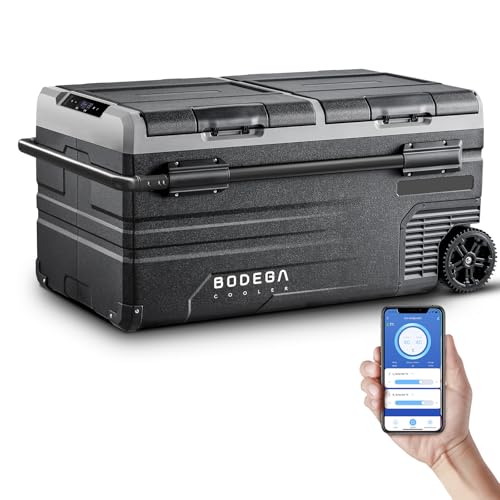
A single-zone fridge has one temperature for the whole compartment. A dual-zone unit has two separate sections, so you can freeze one side and chill the other. This is convenient for long trips with meat and drinks. Dual-zone models cost more and are larger, but they save the effort of juggling ice packs.
Power Use and Battery Protection
These fridges draw current from the car, so a battery protection feature is vital. It switches the compressor off when the voltage drops to a set level, leaving enough charge to start the engine. Many offer low, medium and high settings. Check whether the power cord is long enough to reach the socket without strain and whether the fridge accepts household power as well.
If you plan to camp for days without driving, consider a separate battery or a portable power station, because a fridge can drain a car battery in a day or two when the engine is off.
Insulation and Lid Design
Thick insulation helps the fridge hold its temperature while using less power. A tight-sealing lid and a good gasket make a difference. Look for a lid that opens and stays open, and that can be reversed to suit your car.
A drain plug makes cleaning easier. A light inside helps at night, and a removable basket keeps items organized.
Controls and Extras
- Digital display: shows the temperature and settings at a glance.
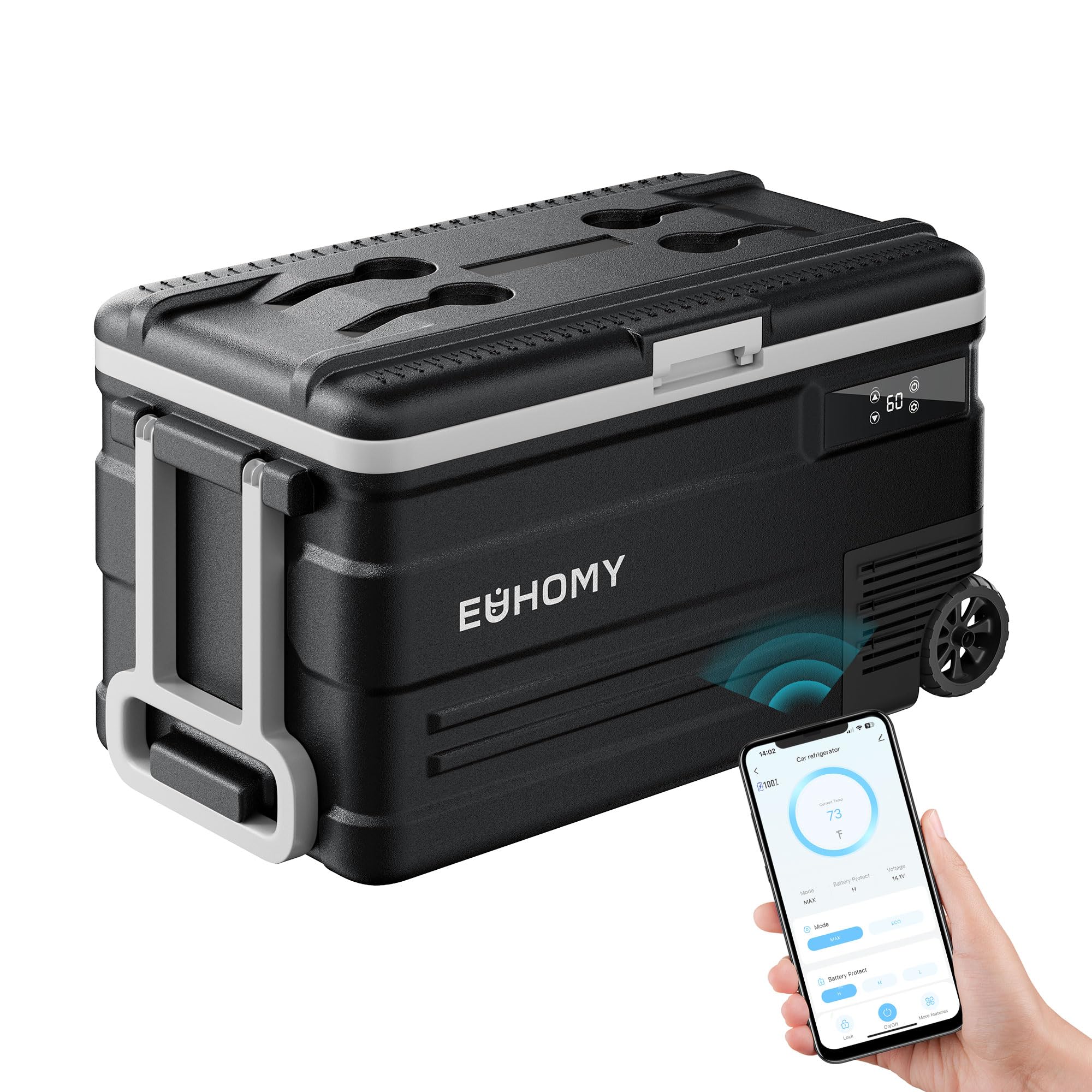
- App control: some models let you check and adjust the temperature by phone.
- USB ports: handy for charging devices.
- Wheels and handle: useful for bigger units.
- Cover: an insulated cover protects the fridge from sun and cuts power use.
Installation and Use
Place the fridge on a flat surface and secure it so it cannot slide in a stop, using straps or a restraint. Leave space around the vents for airflow, since a blocked vent makes the compressor work harder. Pre-cool the fridge at home on mains power and load it with cold food, which saves power in the car. Keep the lid closed as much as possible.
Cleaning and Storage
Empty and wipe the interior with a mild cleaner after each trip, then leave the lid open to dry so odors do not build up. Check the gasket for crumbs and wipe it clean. Store the unit with the lid slightly open, and keep it dry.
Matching a Fridge to Your Trips
- Day trips and commuting lunch: a compact unit.
- Weekend camping: a mid-size single zone or small dual zone.
- Long overland trips: a larger dual-zone with strong battery protection.
- Work vehicles: a rugged, secure design.
Choosing the Best Car Refrigerators
Think about how long you travel, how many people you feed and how you will power the fridge. Check the size against your cargo area and the voltage cutoff against your battery. Compare noise levels, since some compressors are louder than others. Read the warranty and the support terms, and keep the receipt.
Noise, Vibration and Cooling Speed
A compressor fridge makes noise when it cycles on, and in a quiet car or a tent it can be noticeable. Some models use a quieter compressor or an eco mode that lowers the noise at the cost of slower cooling. Check how long the fridge takes to reach its target temperature from a warm start and how it behaves on uneven ground. A good unit tolerates tilt and bumps without losing performance, but a very steep angle can affect the compressor and the refrigerant flow, so keep the fridge as level as you can.
Organizing Food for a Trip
Pack items in the order you will need them, with drinks on top and perishables underneath. Use containers to keep contents from sliding and to keep raw foods separate from ready-to-eat items. A full fridge holds its temperature better than an empty one, so fill the space with water bottles if you have room.
Avoid hot food and pre-chill drinks before loading to reduce the strain. Freeze water in reusable bottles and use them as ice packs that you can drink when they melt.
Common Mistakes to Avoid
- Blocking the vents: the compressor needs airflow to shed heat.
- Running it off the starter battery for days: use a separate battery or the protection setting.
- Loading it while hot: pre-cool the fridge and the food.
- Leaving food inside after the trip: odors and mold develop quickly.
- Forgetting the lid latch: an unlatched lid can open in a sudden stop.
Related Guides
- Best Garage Refrigerators
Frequently Asked Questions
Will a car fridge drain my battery?
It can if the engine is off for a long time. Use the battery protection setting and consider a secondary battery.
Can it freeze food?
Many compressor models can. Check the temperature range.
Do I need to pre-cool the fridge?
It helps. Starting with cold contents saves power.
Is a car fridge safe for medication?
Follow the medication's storage instructions and ask a pharmacist, since temperature needs vary.
The Bottom Line
The best car refrigerators use an efficient compressor, protect your battery and fit your vehicle. Choose a size and zone layout that match your trips, plan your power and secure the unit. A good one turns a hot road into a place with cold drinks and fresh food.


