Best Car Chargers for iPhone: A Complete Buying Guide
Disclosure: We may earn a commission when you buy through links on this page, at no extra cost to you. As an Amazon Associate we earn from qualifying purchases. Learn more

Finding the best car chargers for iPhone isn't just about plugging in and hoping for the best. Apple devices are pickier than most Android phones about the accessories they'll fully trust, and the wrong charger can mean slow charging, random disconnects, or an on-screen warning every time you get in the car. The two things that matter most are whether the charger is actually built to Apple's standards and whether it matches the port your specific iPhone uses. Get those right and everything else, wattage, port count, build quality, falls into place. This guide walks through what to check before you buy, why some chargers trigger warning messages and others don't, and how to pick one that keeps your phone charging quickly on every drive.



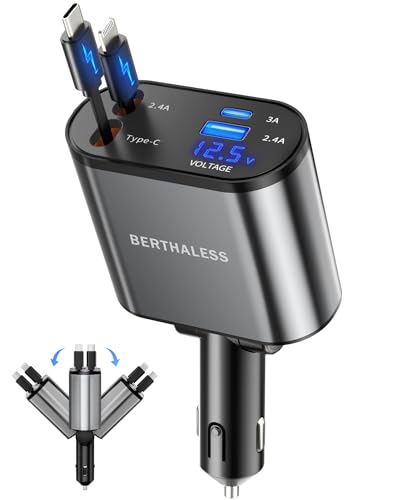
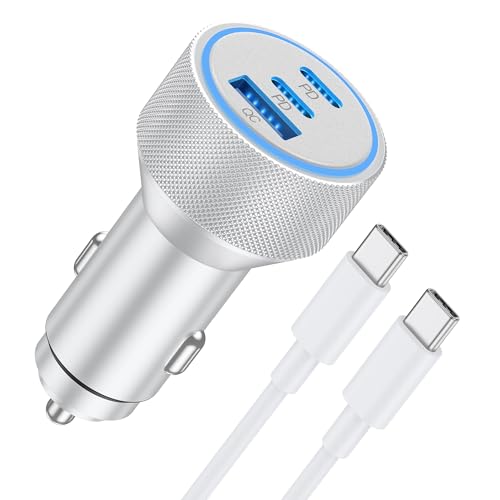
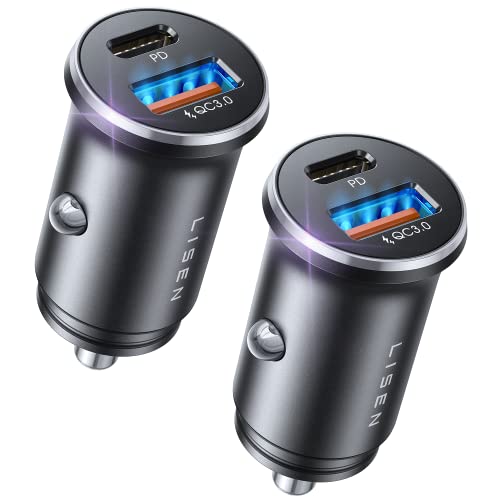
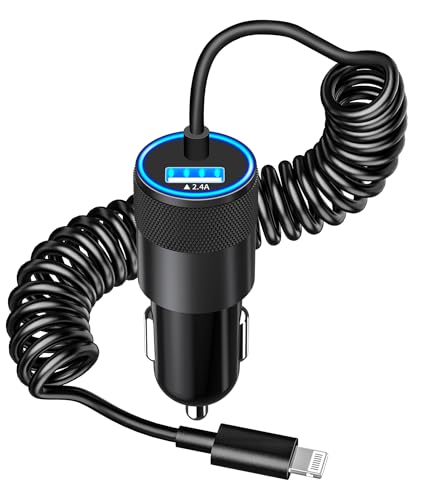



Why MFi Certification Matters More Than the Spec Sheet
MFi stands for "Made for iPhone," and it's Apple's own certification program for accessory makers. A charger or cable that carries this label has been tested to work safely with Apple's charging circuitry, which uses a small authentication chip that non-certified accessories often skip or fake. This is different from a generic USB-C charger doing generic USB-C things. Apple devices actively check for that authentication step, and a charger that doesn't pass it can still charge your phone, just not reliably.
Look for the MFi badge on the packaging or product listing before you buy, not after. Certified accessories go through testing for power delivery accuracy, electrical safety, and interference with cellular and Wi-Fi signals inside the car. None of that shows up in a spec sheet that just lists wattage, so wattage alone is a poor way to judge whether a charger is actually good for an iPhone.
Lightning or USB-C: Match the Cable to Your iPhone
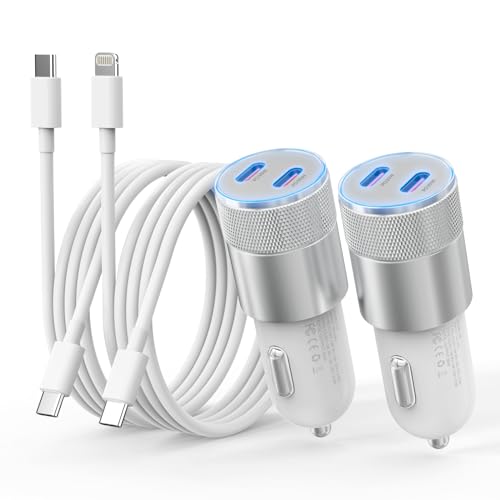
Apple switched its iPhone lineup from a Lightning port to USB-C, so the charger you need depends on which iPhone you're driving with. Newer iPhones charge over USB-C, while older models still rely on the Lightning connector, and the two aren't interchangeable without an adapter.
iPhones With a USB-C Port
If your iPhone charges with the same USB-C cable as most modern laptops and Android phones, you'll want a car charger with a USB-C output and a USB-C to USB-C cable. This is now the more future-proof choice, since it's the direction Apple has moved the entire lineup.
iPhones With a Lightning Port
Older iPhone models still use Lightning, which means you need either a charger with a built-in Lightning cable or a USB-C car charger paired with a USB-C to Lightning cable. A USB-A to Lightning cable will also work, but it caps charging speed well below what USB-C delivers, so it's worth avoiding if fast charging matters to you.
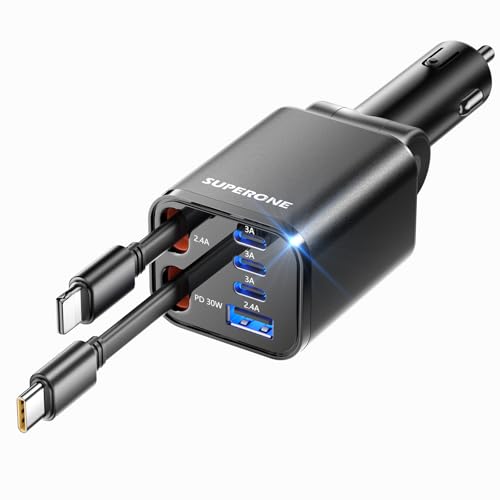
If you're shopping for more than one person in the household, a dual-port charger that covers both port types (one USB-C output, one with a Lightning cable) avoids buying two separate chargers.
How Many Watts Your iPhone Actually Needs
Fast charging on an iPhone requires a USB-C Power Delivery (PD) charger rated at roughly 20 watts, paired with a compatible cable. Below that threshold, your phone still charges, just slowly, closer to the pace of an old-style 5-watt adapter. Higher-end iPhone models can accept a bit more power and reach a meaningful charge in well under 30 minutes on the road, while smaller iPhone models plateau earlier and don't benefit much from chargers rated much above 20 to 25 watts.
This is where buying based on the highest wattage number backfires. Most of the best car chargers for iPhone advertise a similar 20 to 25 watt PD range for exactly this reason, since a 65-watt car charger doesn't charge an iPhone any faster than a well-built 20-watt one, because the phone itself caps how much power it draws. What matters more is that the charger delivers its rated PD wattage consistently, without dropping to a slower charging profile the moment the engine is idling or another device shares the port.
What Happens When a Charger Isn't Certified
Plug in an uncertified accessory and there's a good chance you'll see a message telling you the accessory may not be supported or isn't certified. That warning exists because the phone can't confirm the accessory meets Apple's power and safety specifications, and it will often throttle charging speed as a precaution even if the phone still appears to be charging normally.
Beyond the annoying popup, uncertified chargers are more likely to skip basic safety features like overcurrent and overheating protection. In a car, where a charger sits exposed to heat and vibration for hours at a time, that's a bigger risk than it sounds. A loose or poorly shielded connection can also cause charging to cut in and out, which is worse for long-term battery health than charging slowly but steadily.
One Port or Two: Planning for More Than Just Your Phone
A single-port charger keeps things simple if the car charger is only ever charging one iPhone. But most cars end up charging a phone and something else, a passenger's device, a dash cam, or a tablet for the back seat, so a two-port charger with independent PD output on each port is worth the small extra cost.
Watch for chargers that advertise two high-wattage ports but only deliver full power when a single device is plugged in. Shared power budgets are common, and if the listing doesn't clearly state per-port wattage when both ports are active, assume the real-world number is lower than advertised. If you want a deeper breakdown of how shared power and Power Delivery specs work across ports, our USB-C car charger buying guide covers that in more detail.
Frequently Asked Questions
Why does my iPhone say the accessory is not certified?
This warning appears when the charger or cable doesn't pass Apple's MFi authentication check, which usually means it wasn't built or licensed to meet Apple's safety and performance standards.
How many watts do I need to fast charge an iPhone in the car?
Around 20 watts of USB-C Power Delivery is enough to hit fast charging speeds on most current iPhone models. Going much higher than that rarely adds a meaningful speed benefit.
Can I use a USB-C car charger with an older Lightning iPhone?
Yes, as long as you pair it with a USB-C to Lightning cable rather than a USB-C to USB-C cable, which won't fit the Lightning port at all.
Is MFi certification really necessary, or just a marketing label?
It's more than marketing. MFi testing checks electrical safety and charging accuracy, and uncertified accessories are more likely to charge inconsistently or trigger warning messages.
Can an uncertified charger damage an iPhone?
It's uncommon for a single use to cause damage, but poor voltage regulation and weak surge protection in cheap, uncertified chargers raise the long-term risk to both the battery and the charging port.
Does charging two devices from the same charger slow down my iPhone?
Often, yes. Many dual-port chargers split a shared power budget between ports, so charging a second device can reduce the wattage your iPhone actually receives.
Choosing the Right Charger for Your iPhone
The best car chargers for iPhone come down to matching two things correctly: a genuinely certified accessory and the right port type for your specific model. Once those boxes are checked, wattage in the 20 to 25 watt PD range covers fast charging for nearly every current iPhone, and a second port is worth adding if you're regularly charging more than one device. Skip the temptation to chase the highest wattage number on the box, and pay attention instead to certification, build quality, and whether the charger holds its power output steady on real drives.