Best Campfire Grill: A Complete Buying Guide
Disclosure: We may earn a commission when you buy through links on this page, at no extra cost to you. As an Amazon Associate we earn from qualifying purchases. Learn more

Balancing a hot dog on a stick that keeps drooping toward the fire gets old fast, and a skillet propped on a stack of shifting rocks is even worse. The best campfire grill fixes both problems by giving you a stable surface set right over the coals, whether that fire is in a backyard pit or deep at a backcountry site. The trouble is that a lot of grates sold for open-fire cooking do not hold up once real heat and repeated use get involved. This guide walks through how to match a grate to the way you actually cook, which base style and material actually last, and what size gets the job done without being a hassle to pack.


Where and How You'll Cook Should Drive Your Choice
Before comparing materials or base styles, it helps to be honest about where this grate will actually spend most of its life. A grill grate that's perfect for a stationary backyard setup can be the wrong pick entirely for someone hiking a few miles into the backcountry, and vice versa.
A backyard fire pit that hosts regular evening cookouts can support a heavier, sturdier grate that never has to leave the yard. That's also the setting where a solid ring of seating around the fire matters as much as the cooking surface itself, since most of these gatherings involve more sitting and talking than actual grilling.
Car camping and established campgrounds sit in the middle. You've got trunk space to bring something more substantial than a backpacker would carry, but it still needs to break down for the drive home. Anyone setting up near a family-sized tent for a weekend trip usually does best with a mid-weight grate that folds flat rather than a permanent yard fixture. Backcountry and ultralight trips are the other extreme, where every ounce matters and a grate needs to fold small enough to strap to a pack without adding noticeable weight.
Ground Stakes, Free-Standing Legs, or a Swing Arm
How a grate mounts over the fire matters just as much as what it's made of, and this is the decision that trips up a lot of first-time buyers. Each style solves a different problem.
Ground Stake Grates
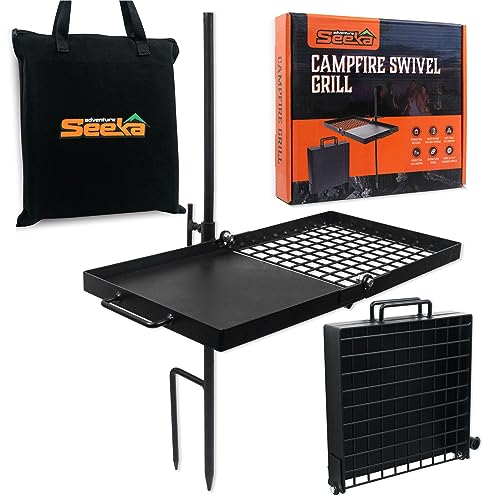
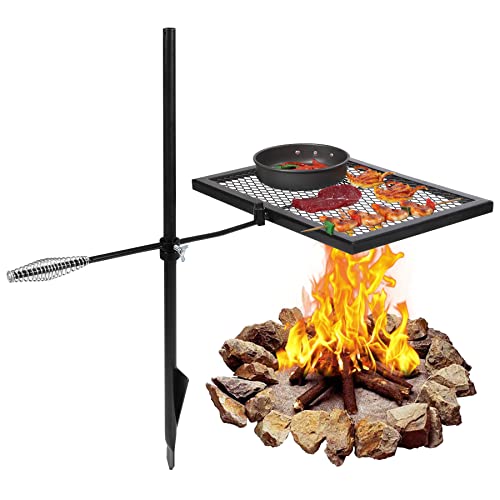
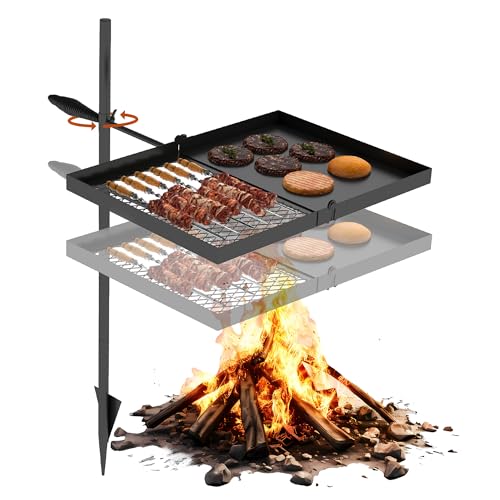
These drive a pointed base directly into dirt, grass, or sand, which gives them the best stability of any style on soft or uneven ground. Most also let you rotate the grate away from the flame entirely, which is useful when you need to check food or add fuel without reaching over open fire. The tradeoff is that they don't work on gravel, rock-lined fire rings, or paved patios, since there's no soft ground to stake into.
Free-Standing Leg Grates
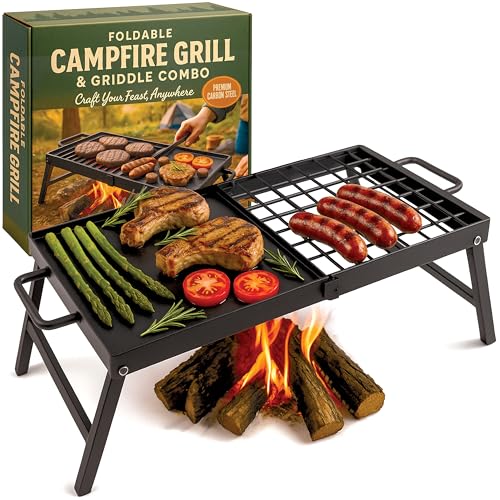
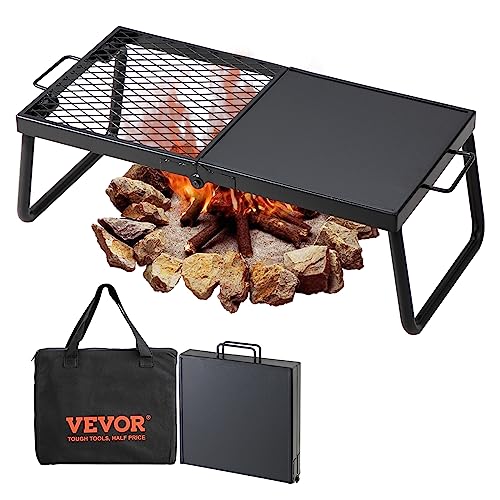
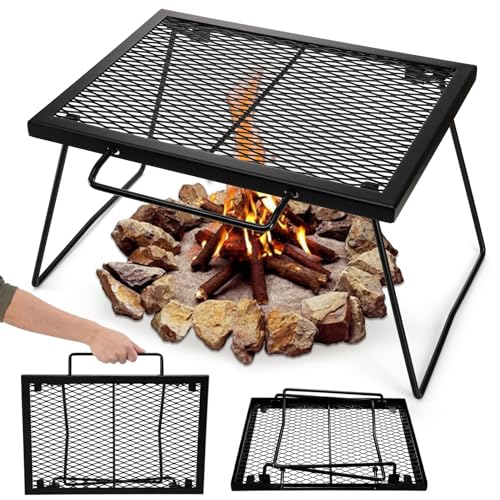
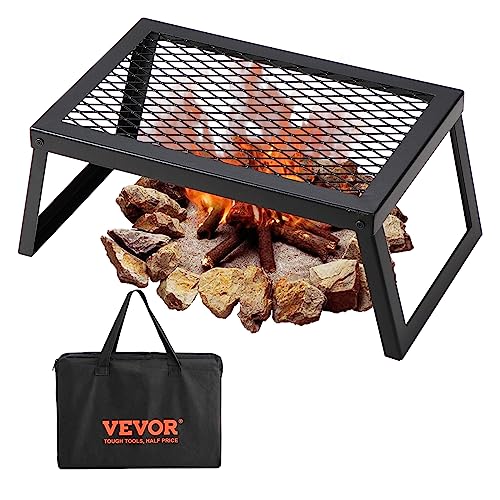
Three or four folding legs set the grate directly over the fire ring without needing to be driven into anything, which makes this style the most universal option across different surfaces. Wide-set legs resist tipping far better than a narrow stance, and this style tends to be the lightest and most affordable of the three. The catch is a fixed height in most models, so you're stuck with whatever heat the fire happens to be putting out at the moment.
Swing Arm and Adjustable Stands
A pole anchors beside the fire with an arm that holds the grate and swings it over the flames or off to the side on demand, usually with a height adjustment built in as well. This setup gives the most control of any style, since you can pull food away from a flare-up without lifting anything off the grate. It costs more than a simple leg grate, and it takes up more room to pack, which is worth weighing against how much you actually value that level of control.
Cooking Surface Size and Bar Spacing for What You Actually Grill
Once the base style is settled, size and spacing determine whether the best campfire grill for your situation actually fits how you cook, not just how it looks on a shelf.
Sizing for Your Group
A compact grate in the roughly 11 by 18 inch range works fine for one or two people cooking simple meals, but it fills up fast the moment a skillet and a pan of vegetables both need room. Family-sized trips generally do better with something closer to 16 by 24 inches, and larger group setups can justify surfaces pushing past 700 square inches. Going bigger than you need just adds weight and cost for surface area that sits empty most of the time.
Bar Spacing for What You Cook
Wide bar spacing handles burgers and steaks without issue, but it lets smaller items like shrimp, sliced vegetables, or foil-free fish drop straight through into the coals. A tighter grid or a mesh-style grate solves that for anyone who cooks more than the basics over an open flame, though it's worth noting that finer mesh also tends to hold onto grease and residue more than widely spaced bars do.
Stainless Steel, Cast Iron, or Coated Steel: What Holds Up
Material is where most cheap grates fail, and it's worth paying attention to even if the price difference feels small at checkout.
Stainless steel resists warping under direct flame and shrugs off rust from rain or overnight condensation, which makes it the safest default for anyone who wants a grate that lasts years without much upkeep. Cast iron holds and distributes heat better, giving food a harder sear, but it needs to be dried and lightly oiled after every use or it starts rusting within a season. Coated or painted steel is the budget option, and the finish tends to flake off after a handful of real fires, exposing bare metal underneath that rusts quickly once the coating is gone.
Whichever material you land on, a stiff grill cleaning brush makes a noticeable difference in how long a grate stays functional, since baked-on grease left to sit is what accelerates both rust and pitting over time.
Fire Safety and Site Rules Worth Checking First
This part gets skipped in a lot of buying advice, but it affects whether you can even use a grate the way you're planning to. Local and seasonal fire restrictions change by region, and some parks or campgrounds only allow contained cooking fires within a designated ring, which rules out certain stake or free-standing setups entirely.
A grate with legs or a stake long enough to keep the cooking surface a reasonable distance above the coals also matters for basic safety, not just cooking performance. Cooking over active flame instead of a settled bed of coals chars food unevenly and creates flare-ups from dripping fat, so a grate that adjusts or swings clear of the fire gives you more control over that risk. Checking restrictions before a trip, rather than after arriving with gear that won't work for the site, saves a wasted drive.
Frequently Asked Questions
What is the best type of grill to use for a campfire?
It depends on where you'll set it up. Ground stake grates are the most stable on dirt or grass, free-standing leg grates work across the widest range of surfaces, and swing arm stands give the most heat control for anyone cooking regularly.
What is the best material for a campfire grill grate?
Stainless steel offers the best balance of rust resistance and low maintenance for most cooks. Cast iron sears better and holds heat longer but needs drying and oiling after every use to avoid rust.
Is a stake, free-standing, or tripod style more stable?
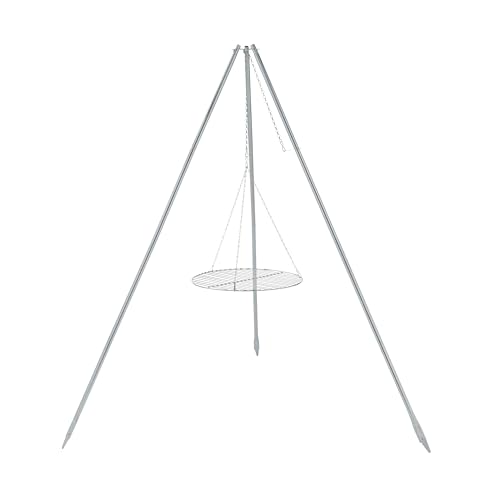
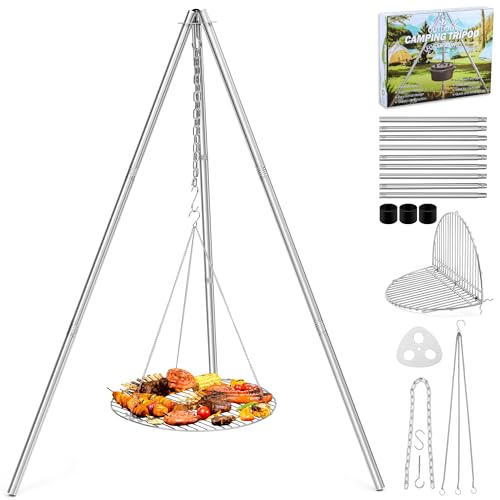
Ground stakes are generally the most stable since they anchor into the ground, especially on soft or uneven terrain. Free-standing grates need flat, level ground to avoid tipping, and hanging tripod setups tend to swing, which makes them better suited for pots than for grilling flat food.
How high should a grill grate sit above a campfire?
Most cooking works well around eight to twelve inches above the coals, though this varies with fire size and what's being cooked. An adjustable or swing arm design lets you fine-tune that height instead of guessing with a fixed one.
Can you put a regular BBQ grill grate directly on a campfire?
A standard barbecue grate can work in a pinch, but it usually lacks the leg height and heat resistance built into grates made specifically for open-fire cooking, so it tends to warp faster under direct flame.
What size campfire grill grate do I need?
A compact grate around 11 by 18 inches suits one or two people, while family trips generally need something closer to 16 by 24 inches or larger, depending on how many dishes you cook at once.
Is it safe to cook directly over open flame?
It's safer and more effective to cook over a bed of coals rather than active flame, since direct fire chars food unevenly and creates flare-ups from dripping fat. Letting wood burn down before cooking also cuts down on soot landing on the food.
Making the Right Call
Picking the best campfire grill comes down to being honest about where it will actually get used and how often. A stake or swing arm setup earns its keep for anyone cooking regularly at the same backyard fire pit, while a lighter free-standing grate makes more sense for trips where packing space and weight matter more than adjustability. Checking material, size, and any site restrictions before buying goes a long way toward avoiding a warped or rusted grate by the end of the season.