
Best Cake Stand With Dome: Sizes, Materials, and Care (2026)
Disclosure: We may earn a commission when you buy through links on this page, at no extra cost to you. As an Amazon Associate I earn from qualifying purchases. Learn more

The best cake stand with dome clears your tallest frosting, fits your shelf, and cleans easily. Check plate width and dome height first.
Your layer cake looked perfect at noon, and by dinner the frosting had dried at the edges and picked up a faint taste of the onion sitting nearby in the fridge. A best cake stand with dome solves that quiet, everyday problem. The raised plate presents the cake well, and the dome keeps air, dust, and curious fingers off it between servings.
This guide helps you choose by what matters at home: counter and cupboard space, how many people you serve, and your budget. If you are still deciding whether you need the raised plate at all, our guide to the best cake stand covers the plain styles too. Start with the comparison table below, then use the checklist to narrow your choice.





Quick Answer: Which Type Suits Your Home
If you bake often and serve a crowd, a footed glass stand with a tall dome is the most flexible choice, since it suits layer cakes, pies, and muffins alike. Small households do better with a compact 10 inch plate and a lighter dome that is easy to store. If display matters most, a marble or wood base turns an ordinary cake into a centerpiece. Either way, the best cake stand with dome for you is the one whose plate fits your cakes and whose dome clears your tallest frosting.
Before You Buy: A Quick Checklist for Choosing a Cake Stand
Size: Match It to Your Space
Start with the cakes you actually bake. A 10 inch plate suits most 8 inch and 9 inch layer cakes once you allow room for frosting and a serving spatula. A 12 inch plate gives breathing room for decorated cakes and for pastries arranged around a center item. Measure dome height as well as plate width, because a tall cake with piped topping can need 5 to 6 inches of clear space. Then measure your cupboard, since a dome that fits nowhere will live on the counter full time.
Which Type Fits Your Routine
Glass shows the cake from every side and wipes clean fast, which suits frequent bakers. Ceramic feels sturdy and comes in colors that match a table setting, though it can chip at the rim. Marble stays cool and looks striking, but it is heavy and needs care around acidic foods. Wood feels warm and casual, yet it dislikes soaking and can hold odors. If you decorate cakes as well as serve them, a spin base helps you frost evenly, and our guide to the best rotating cake stand explains that style. Footed stands lift the cake for a formal table, while flat plates store more easily.
Features Worth It, and Ones to Skip
A dome is the feature that earns its keep here, because it slows drying and shields the cake at room temperature for a day or so. A snug rim matters more than decorative knobs, since gaps let air in. Handles on the dome help if your hands are small or the glass is heavy. You can skip stands bundled with servers and slicers you already own. Flat lids suit short bakes and fridge storage, and the best cake stand with lid guide covers those if height is not a concern. Skip tiered add ons unless you host often, because extra tiers eat storage space.
Lead and Cadmium Free Glazes
Ceramic stands are usually glazed, and the glaze is what touches your food. Look for wording that the glaze is free of lead and cadmium, and for a statement that the piece meets food contact rules in the United States. Bright vintage style pieces and imported ceramics with unclear labeling deserve extra caution. If a listing says nothing about the glaze, treat that as a reason to choose a different stand, glass, or plain stainless steel instead.
Dishwasher, Microwave, and Oven Safety
Most glass plates and domes tolerate the dishwasher, though the maker may still suggest hand washing to keep the glass clear. Ceramic varies, and gold trim or painted detail usually means hand washing only. Wood and marble should never soak, and neither belongs in a microwave. A cake stand is a serving piece, not a baking dish, so oven use is off the table for nearly every style. Check the base of the plate for printed care marks before the first wash, and keep that information in mind if anyone else in the house loads the dishwasher.
Set Size and Open Stock Availability
Some stands come alone, while others arrive as part of a serving set with matching plates or a server. A set can be good value if you host dinners, but it also takes more cupboard room. Open stock availability matters when a dome cracks two years from now: makers that sell the stand on its own, season after season, make it easier to replace one part or buy a second matching stand later. If replacement domes are sold separately, note that before you buy, since a dome is the part most likely to break.
Realistic Budget Ranges
Stands under $20 are usually simple glass or plastic with a basic dome, fine for occasional baking. Most homes land at about $20 to $40, which buys thicker glass, a footed base, and a better fitting dome. Spending about $40 to $80 brings marble bases, heavier ceramic, and larger sizes suited to parties. Paying more should get you material and finish you can feel, not accessories you will never use.
Types Compared: Three Styles Worth Your Money
Footed Glass Stands for Most Homes
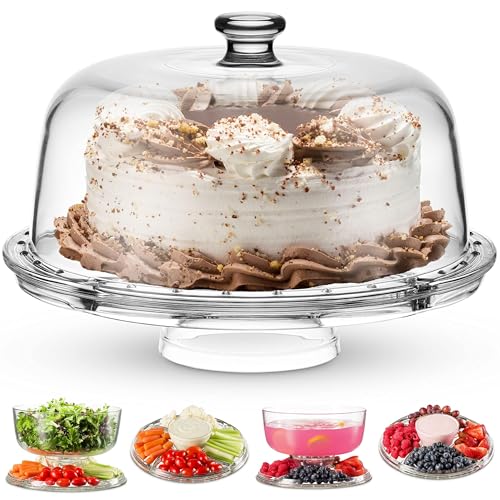
This is the default choice for good reason. The clear dome shows off the cake, the foot raises it to a comfortable serving height, and glass does not hold flavors from the last bake. Look for a dome with a sturdy knob and a plate rim that keeps the dome from sliding when you carry the stand. The trade off is weight and fragility, so this style suits homes where it can live on the counter or in a safe cupboard spot.
Simple Plate and Dome Sets for Tight Budgets
A flat glass or sturdy plastic plate with a matching dome covers the basics at the lowest cost. You lose the drama of a raised stand, but you gain easy storage, since the plate stacks with your dinnerware. This style works well for muffins, brownies, and store bought cakes that need protection more than presentation. Choose a dome handle you can grip with one hand, because you will lift it often. For a first stand in a small kitchen, this is often the smartest money you can spend.
Marble and Wood Stands for Display
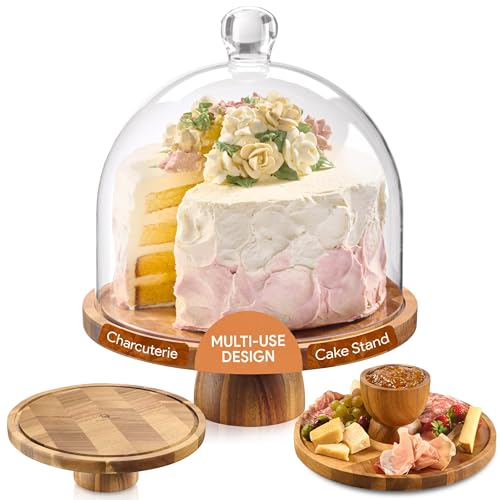
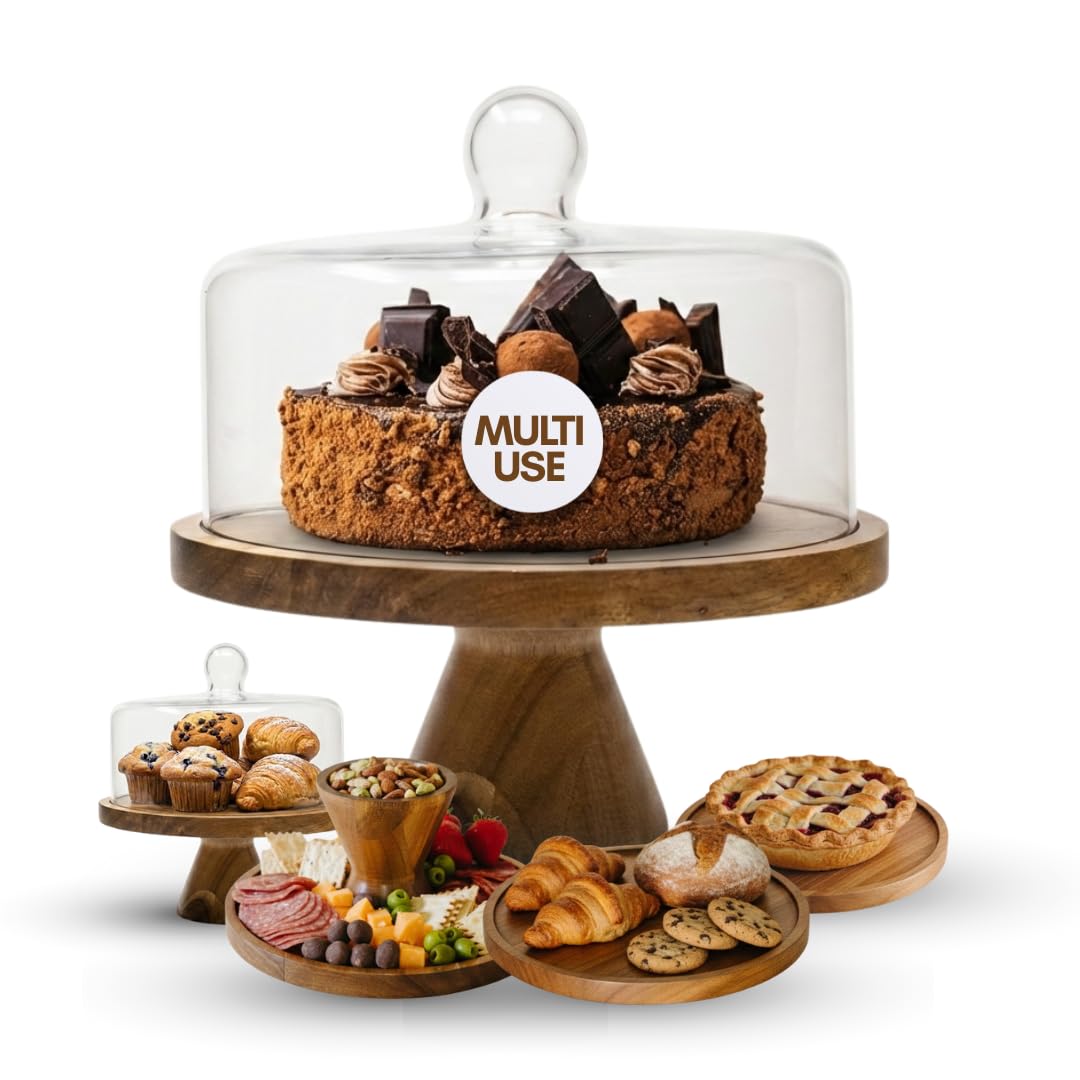
When the cake doubles as decoration, a marble or wood base under a glass dome looks the part at birthdays and holidays. Marble keeps buttercream cool during a long party, and wood suits rustic tables and everyday bread or cheese as well. These bases cost more and weigh more, and marble can stain if a berry filling sits on it, so wipe spills quickly. Pick this style when looks lead your decision and you have the storage and the arms for it.
Do You Really Need a Cake Stand With Dome?
If your cakes are eaten within a few hours, a plain plate and an upturned bowl will do. The dome earns its place when cakes sit overnight, when you bake a day ahead for a party, or when pets and small children share the kitchen. A fabric or mesh option keeps flies off outdoors, and the best cake stand with cover guide covers those lighter styles. Unlike a plastic storage box, a domed stand keeps frosting untouched, because nothing presses on the top, and it moves straight from fridge to table.
Common Buying Mistakes to Avoid
- Buying a plate the same size as your cake, so frosting smears the dome and serving turns messy.
- Checking plate width but not dome height, then finding your frosted layers do not fit under it.
- Choosing marble for a small kitchen, then rarely using it because it is too heavy to lift down.
- Paying for a large set when you only bake twice a year, which wastes money and cupboard space.
- Ignoring the glaze and care details, so a pretty stand ends up stained, chipped, or unsafe for food.
Cost of Ownership and Care
A cake stand costs nothing to run, so ownership cost is really about breakage and replacement. The dome is the fragile part, and a replacement can cost a fair share of the original price when it is sold at all. Wash glass domes with a soft sponge to avoid scratches, and dry them before storing to prevent water spots. Store marble away from heavy pans that could chip the edge. Set the dome down on a cloth rather than a bare stone counter, a small habit that prevents most chips.
FAQ
How do you clean a cake stand with dome after a party?
Wash the plate first, since it carries the grease, using warm water and a small amount of dish soap. For the dome, rinse promptly so frosting does not dry onto the glass, and use a soft cloth rather than a scouring pad. If water spots remain, wipe the inside with a cloth dampened with plain vinegar, then dry it fully. Let every part dry before you reassemble it, because trapped moisture can leave the dome fogged the next time you use it.
How long does a cake stand with dome last?
A glass or ceramic stand can serve for many years, often a decade or more, because there is nothing to wear out. In practice, most stands are retired after a chip or crack rather than old age. Wood bases age faster if they are soaked often, and marble can etch from repeated contact with lemon or berries. If a crack reaches the rim of a glass dome, stop using it, since the crack can spread under the weight of lifting.
Is a cake stand with dome worth it for a small household?
Yes, if you bake even once a month, because two people rarely finish a cake in one sitting, and the dome keeps the rest fresh for the next day. A compact 10 inch size stores upright in many cupboards, and it doubles as covered storage for cheese, fruit, or leftover pie. If you truly never bake, the same money buys good food storage containers instead. The deciding factor is how often food sits out in your kitchen waiting to be finished.
What is the best cake stand with dome for a wedding cake?
For a wedding, choose a footed stand one size wider than the bottom tier, with a dome tall enough for the topper, since display height matters in photos. Many couples rent the stand from the baker or venue, which avoids buying a large piece you may never use again. If you buy, plain glass reads well with any color scheme and resells or lends easily afterward. Confirm the combined weight of cake and stand, because a full wedding cake is heavier than most home bakes.
Can a cake stand with dome go in the fridge?
Yes, as long as it fits, and measuring your fridge shelf before buying is the step most people skip. Glass and ceramic both handle cold well, though you should let a chilled dome sit a minute before washing it in hot water, since a sudden change can stress the glass. Keep the stand away from strong smelling foods where you can, because butter based frosting picks up fridge odors over a day or two even under a dome.
Final Thoughts
Match the plate to your cakes, the dome to your tallest frosting, and the material to how much care you will honestly give it. Glass footed stands suit most homes, simple sets suit tight budgets, and marble or wood suits display. Look back at the product table above to compare sizes and materials side by side. Chosen well, the best cake stand with dome turns an ordinary Tuesday bake into something your family gathers around.


