
Best Cable Home Gyms (2026): Types, Space and Cost
Disclosure: We may earn a commission when you buy through links on this page, at no extra cost to you. As an Amazon Associate I earn from qualifying purchases. Learn more

Weight stack, plate loaded or smart? Compare space and resistance to find the best cable home gym.
A cable station can give you rows, pulldowns, presses, curls, and core work from one corner of a room, but models differ a lot in resistance, footprint, and pulley feel. Choosing the best cable home gym means matching the machine to your space, your strength, and the movements you train each week.
Use the product table above to scan the main types side by side first. If you are still weighing cable stations against other styles, our guide to the best home gym covers the wider category, while this page stays focused on cable models only.



Who Should Buy a Cable Home Gym?
Apartment and Small Room Lifters
A cable gym suits you if floor space is tight but you want more than dumbbells alone can offer. Many cable stations train the whole body from a footprint not much larger than a recliner, with the resistance stored inside the frame instead of spread across the floor. You can face the machine into a corner and train quietly at odd hours. Just confirm the room allows full cable travel for flyes and rows. Keep that in mind when you compare the best cable home gym options.
Beginners Who Want Smooth Guided Resistance
If you are new to strength training, cables are forgiving because the resistance stays steady through the whole movement and the path is easy to control. You start light and pin a small increase as you improve, without balancing a heavy bar. Our guide on how to use a home gym will help you set pulley height, stance, and tempo correctly from your first session, while your technique settles in.
Lifters Who Train Alone and Want Variety
Training alone is safer on a cable station than under a loaded bar, because you can release the handles at any point and the weight settles back on the stack. That freedom lets you push a set close to your limit without a spot. Cables also cover pressing, pulling, arm work, leg work, and core moves on one machine.
Cable Home Gym Types Compared
Weight Stack All in One Stations
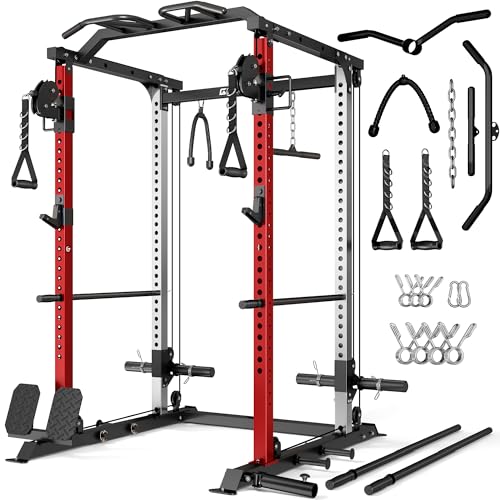
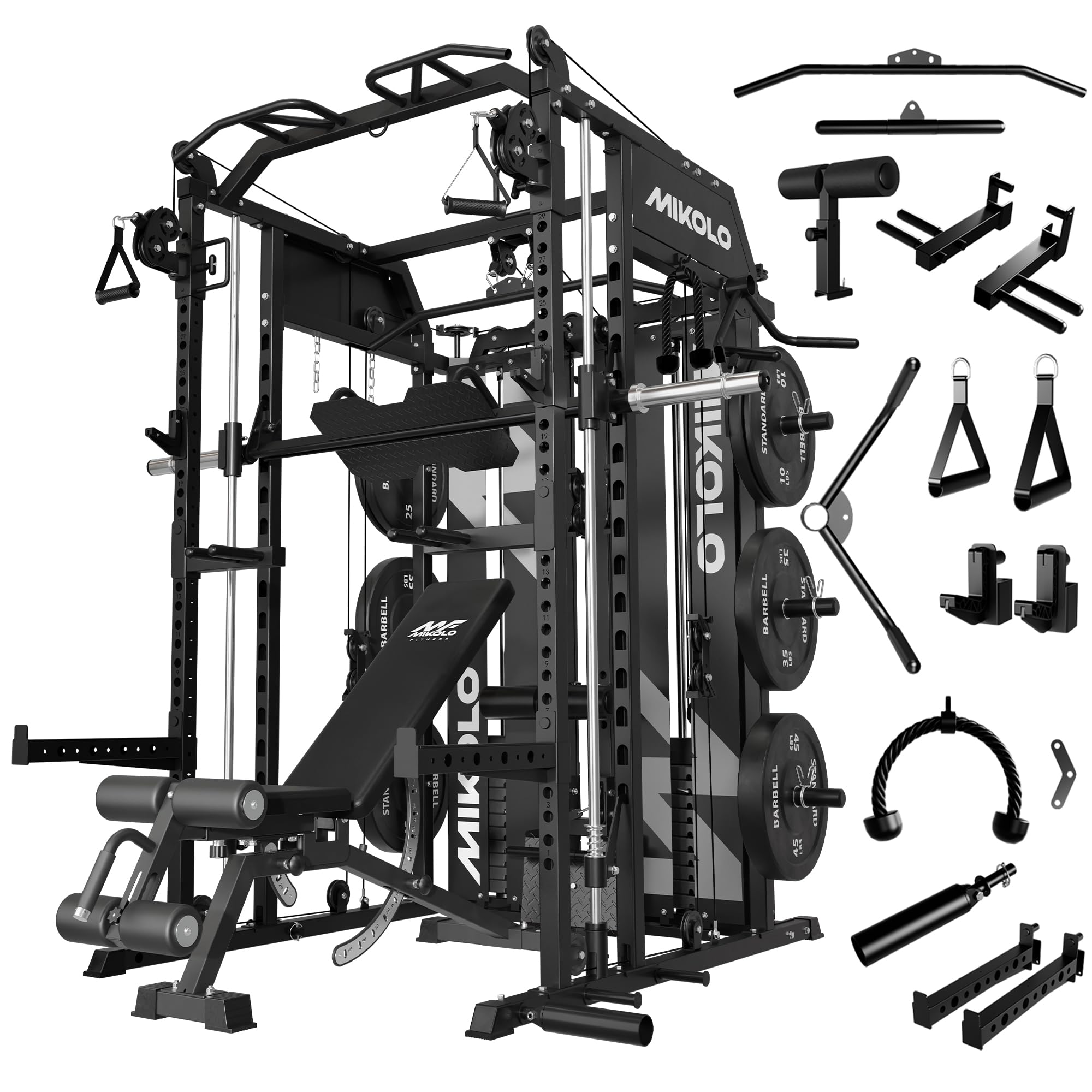
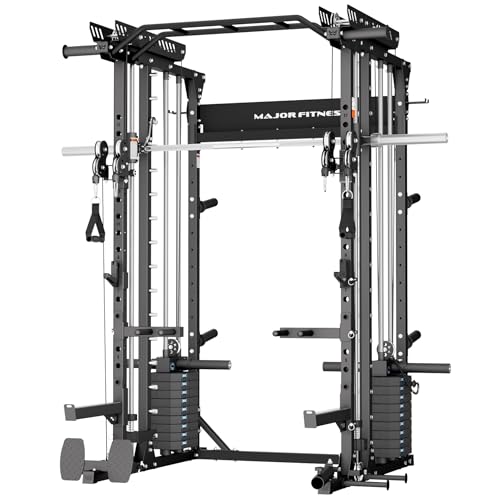
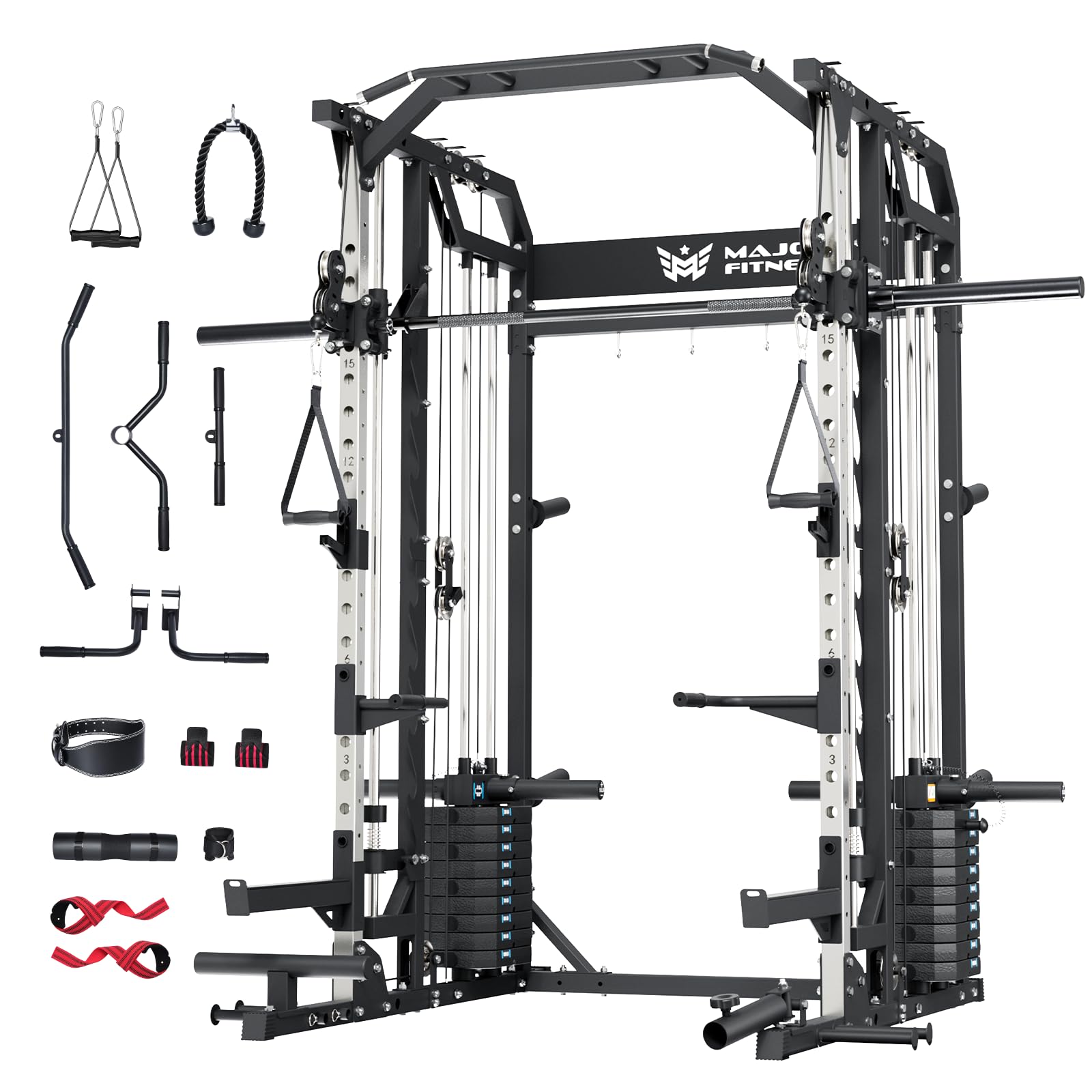
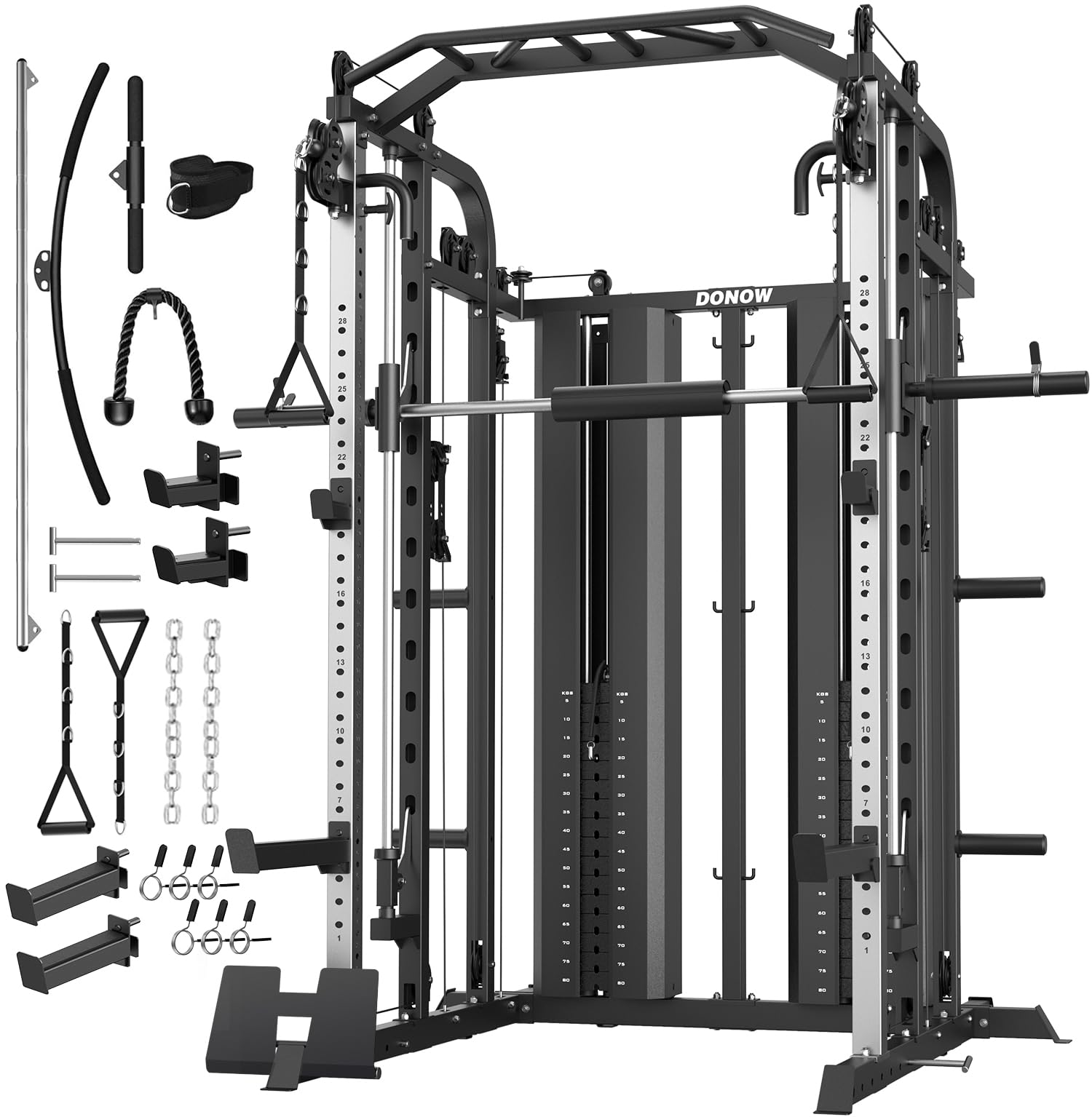
These classic cable gyms pair a built in weight stack with a high pulley, a low pulley, and often a press arm and leg developer on one frame. Changing resistance takes seconds because you move a pin, which keeps rest periods short. They suit households where several people train at different strengths. The trade off is size, since frame, seat, and stack need the largest floor area of the cable family.
Plate Loaded Cable Stations
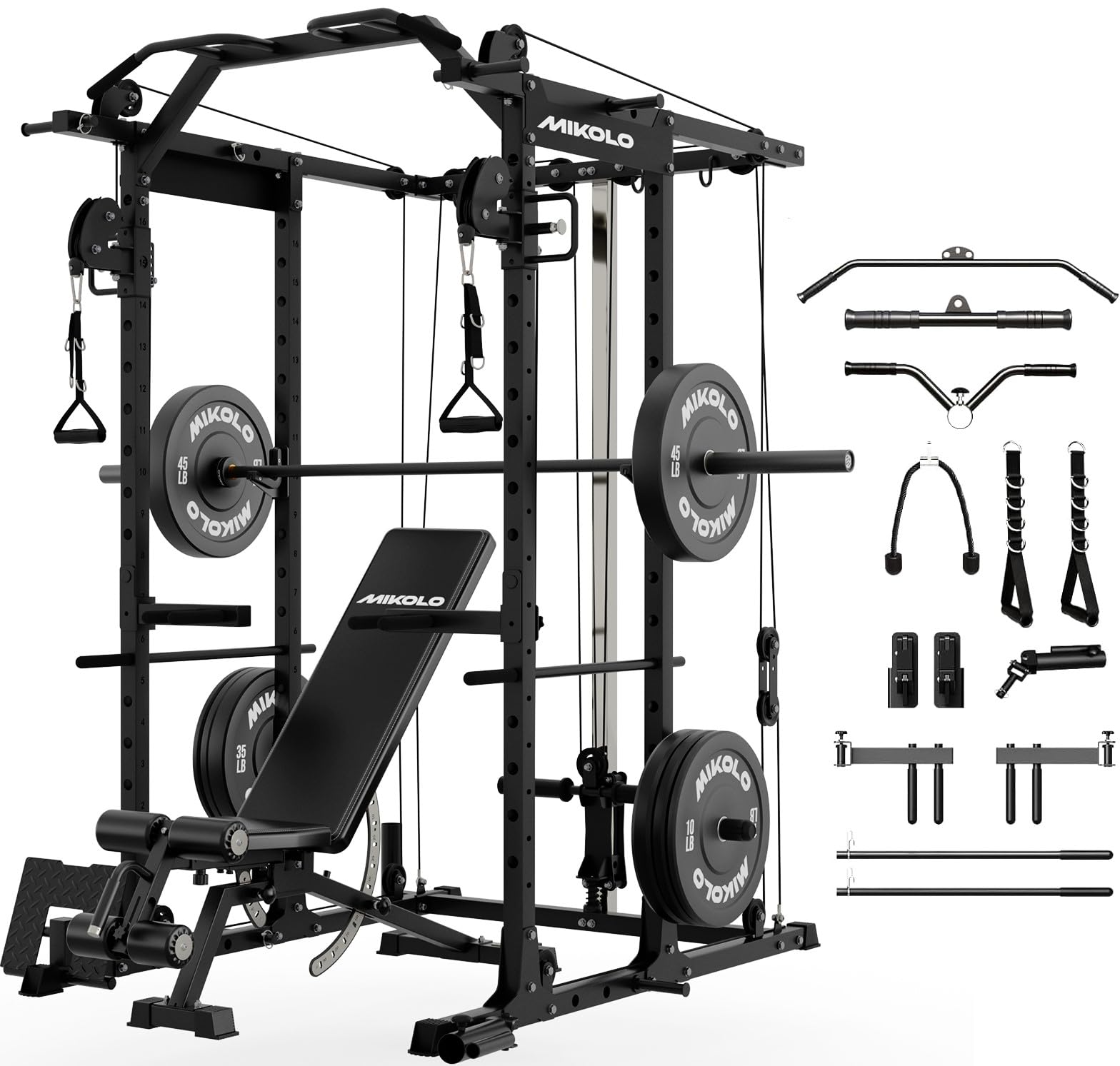
Plate loaded models use your own weight plates on loading pins instead of a built in stack. The price is usually lower, and strong lifters like them because capacity grows as your plate collection grows. Loading plates between exercises does slow a session down, though. Check pin diameter so the machine matches your plates. Smoothness depends on bushing quality, so these units can feel less refined than stack models.
Smart Digital Cable Units
Smart units replace iron with motor driven resistance, so the load lives in software and the hardware can mount on a wall or stand slim against it. Weight changes happen on a screen, and the app tracks every rep for you. If that format appeals to you, our guide to the best smart home gym explains the category in depth. Most smart units need a subscription for full programming, and a power outage can pause your training entirely.
Key Features to Compare
Build Quality and Frame Strength
The frame decides how solid the machine feels when you pull hard at an angle. Look for thick steel uprights, even welds, and a base wide enough to stay planted during rows and woodchoppers. Powder coat should cover the steel evenly, because bare patches near the floor can rust in a damp garage. A frame that flexes throws cable alignment off and speeds wear, so check the steel gauge and machine weight before you commit.
Weight Capacity and Resistance Range
Two numbers matter, the rated capacity of the frame and user combined, and the heaviest load the stack or pins can deliver. Stronger lifters can outgrow a light stack within a year on rows and pressdowns, so leave yourself headroom. Also check the starting weight, because a stack that begins too heavy makes rotator cuff work awkward. Steps of about 5 to 10 pounds between settings help you progress in small jumps instead of stalling between pins.
Pulley Height and Cable Travel
Pulley range controls which exercises the machine can serve. A high pulley set well above your head allows a full stretch on pulldowns, while a low pulley near the floor anchors rows, curls, and leg work. Adjustable carriages that lock at many heights add chest level settings for flyes and presses. Cable travel matters just as much, because a tall user who runs out of cable mid rep loses tension exactly where the muscle works hardest.
Attachments and Exercise Range
Handles decide how much of the exercise catalog you can unlock, so count what ships in the box. A lat bar, a short bar, a rope, two single handles, and an ankle strap cover most upper and lower body work. A standard carabiner clip lets you add other handles later. Also confirm the frame offers a seat or bench position for pulldowns and rows, since a braced torso keeps your form strict.
Warranty and Parts Support
Cables, pulleys, and upholstery wear out, so support after the sale is a real feature. Read the warranty by part, because frames often carry far longer cover than cables and pads. Ask whether replacement cables are sold for your exact model. A maker that stocks wear parts keeps a gym running for a decade, while an orphaned model can become scrap over one frayed cable.
How to Choose the Right Cable Home Gym
Measure Your Space Before You Order
Start with the tape measure, not the product page. Record the length, width, and ceiling height of your room, then note doors and vents the machine cannot block. Leave space behind the unit for loading plates or reaching the stack pin, and space in front for standing rows. Tape the full working footprint on your floor before ordering, because a gym that cramps every session will slowly stop being used.
Programs and App Subscriptions
Some cable gyms are purely mechanical, and you bring your own program on paper or in a notes app. Others, mostly smart units, sell guided classes and progress tracking through a monthly plan. Add the subscription cost across three years to the purchase price when you compare options, because that total is the true cost of ownership. Also check whether basic resistance still works if you cancel the plan.
Noise and Floor Protection
Cables are among the quietest ways to train, because there is no bar to rack and plates rarely clang. The main sounds are the stack plates touching at the end of a set and the seat shifting on a hard floor. A dense rubber mat under the frame solves most of it and protects tile, wood, or concrete. Set the stack down under control and the noise drops further.
How Much Should You Spend?
Simple single stack stations start at about $300 to $700, while larger all in one frames often run about $700 to $1,500. Smart digital units sit higher, at about $1,500 to $3,500, before any subscription. Spend more when the money buys a heavier stack, better pulleys, or a longer warranty, not styling alone. If you are weighing the purchase against a gym membership, our breakdown of is a home gym worth it runs the long term math.
Cable Gyms Compared With Other Home Gym Types
Cable gyms win on exercise variety, smooth resistance, and safe solo training. They lose on very heavy compound lifting, because no stack matches a barbell loaded for a maximal squat or deadlift. If heavy barbell work is your main goal, our guide to the best power rack home gym fits that style better. A guided bar sits between the two approaches, and our guide to the best smith machine home gym explains who should pick that path.
- Choose cable if you value variety, constant tension, and compact training for the whole body.
- Choose a rack if maximal barbell strength is the priority and you have room for a full cage.
- Choose a smart unit if data and guided classes matter more than a low running cost.
- Choose dumbbells only if your budget is small and you mainly train basic movements.
Common Mistakes to Avoid
- Buying by exercise count alone. A long list of claimed movements means little if the pulleys sit at the wrong heights for your body.
- Ignoring the starting weight. A stack that begins too heavy blocks light shoulder work from day one.
- Forgetting cable travel. Tall lifters who run out of cable lose tension at the top of pulldowns and flyes.
- Skipping the floor check. An uneven garage slab makes a tall station wobble, so level the spot before assembly.
- Overlooking subscription costs. A smart unit priced well can cost more across three years once the plan is added.
- Choosing the lightest frame for heavy rows. A base that lifts or slides under load will cut every hard set short.
How to Make Your Cable Home Gym Last Longer
Cables are the main wear item, so inspect yours monthly for frays, flat spots, or a coating that has split near the end fittings. Replace a damaged cable before it fails under load, and follow the maker guidance on cleaning the stack guide rods so the plates glide without grinding. A soft brush over the pulley wheels clears the dust that makes the spin feel gritty.
Check frame bolts twice a year, because the repeated pull of training slowly works hardware loose, and a small rattle is your early warning. Keep attachments off the floor and out of damp corners so grips and straps dry between sessions. Store the selector pin in the stack rather than loose on the floor where it gets kicked and bent.
FAQ
Can a cable home gym build muscle effectively?
Yes, because muscles respond to hard effort and steady progression, and cables provide both. Constant tension keeps the target muscle loaded through the full range, and you can train close to failure safely since releasing the handles ends the set at once. Track your pin settings and reps in a notebook so each week gives you a clear target to beat.
How much ceiling height does a cable home gym need?
Most full size stations stand about 80 to 86 inches tall, so a ceiling of at least 7 feet is the practical minimum. You also need clearance during assembly, because many units are tipped upright as the last step. Measure at the exact spot, not the center of the room.
Do cable home gyms need to be bolted down?
Most freestanding stack stations do not need bolts, because the weight of the stack and frame keeps them planted during normal use. Wall mounted units are different, since their strength comes from the wall, and they must anchor into studs or solid masonry with the specified hardware. Never rely on drywall alone to hold a loaded cable unit.
Are cable home gyms a good choice for older adults?
They can be, because the starting resistance is light, the path is easy to control, and most exercises can be done seated with back support. Anyone with a joint condition, a heart condition, or recent surgery should talk with a clinician before starting, and stop and seek advice if training brings chest pain, dizziness, or sharp joint pain. A chair beside the station gives a steady handhold between sets.
Can one cable home gym serve two people of different sizes?
Usually yes, and this is where adjustable pulley carriages earn their cost. A taller and a shorter lifter need different pulley heights for the same exercise, and a carriage that resets in seconds keeps shared sessions moving. Check that the seat height adjusts and that the lightest setting suits the smaller lifter.
Final Thoughts
The right cable gym fits your room, starts light enough for your smallest movements, and still challenges you on rows and presses a year from now. Compare types in the product table above and count subscription costs before you decide. Chosen well, the best cable home gym turns a spare corner into a complete training space you will actually use.


