Best Butane Camping Stoves (2026): Types That Fit Real Homes
Disclosure: We may earn a commission when you buy through links on this page, at no extra cost to you. As an Amazon Associate I earn from qualifying purchases. Learn more

Shopping for the best butane camping stove? Here are 3 picks that suit different homes and budgets, plus a quick checklist so you choose right the first time.
A storm knocks out power at dinner time, or your kitchen stove is already full during a family gathering, and you still need one more burner that works right away. That is where a best butane camping stove earns its place in a real home, because it lights in seconds, sits on a table, and stores in a small case. The comparison table below sums up the main types so you can match one to your space and your household size.
This guide takes the home angle on purpose. It focuses on table space, how many people you cook for, daily ease of use, and ownership cost. If you are still comparing fuel types and burner layouts in general, start with our guide to the best camping stove and then come back here for the butane details.




Quick Answer: The Types That Fit Most Homes
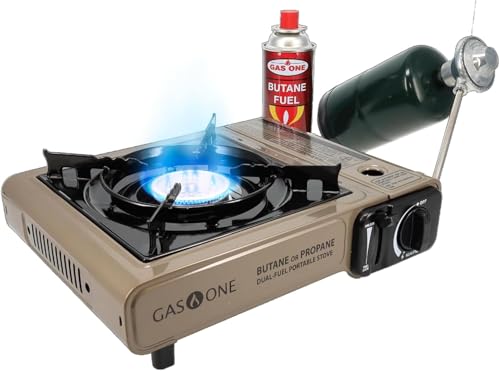
Most households do well with one of three setups. A compact single burner suits one or two people and simple meals like soup, eggs, and coffee. A standard single burner with a wide pot support and a carrying case suits families who cook full pans at camp or on a patio. Two matching single burners give you two cooking zones for group meals while each unit stays light and easy to store.
Before You Buy: A Quick Checklist for Choosing a Camping Stove
Butane stoves look alike at first glance, yet small details decide how pleasant one is to live with. Work through the points below before you spend anything.
Which Type Fits Your Routine
Think about where the stove will actually work. A tabletop single burner is the core butane design, and it fits car trips, patios, balconies with open air, and backup cooking at home. For road trips where meals happen at a picnic table, see our guide to the best camping stove for car camping for layout ideas. If your trips are mostly on foot with a pack, a butane tabletop unit is usually too bulky, and a tiny canister stove makes more sense.
Features Worth Paying For and Ones to Skip
Pay for a firm canister locking lever, a stable pot support with raised edges, and an ignition that lights on the first or second try. A hard carrying case is also worth it, because it protects the grate in a closet or car trunk. Skip extras that add bulk without helping you cook, such as oversized side trays or novelty attachments that fit only one odd pan. A windscreen panel helps outdoors, but tall add on shields can trap heat around the canister, so use only the shield the maker supplies.
Fuel Type and Running Cost
Butane stoves burn fuel from an 8 ounce canister that locks inside the body, which keeps setup tidy and spill free. A canister gives roughly 2 to 4 hours of cooking depending on flame level, and refills come in multipacks at modest cost. Propane handles cold weather better, while butane is cleaner to store indoors and simpler to connect. Our breakdown of butane vs propane stove fuel costs and cold weather limits can help if you are torn between the two.
Cooking Area and Heat Output
Heat output on most standard butane burners falls around 7000 to 10000 BTU, while stronger models reach about 12000 to 15000 BTU. More useful than the peak number is pot support size, because the pan base must sit fully on the grate without crowding the canister housing. Pans around 8 to 10 inches across suit most single burners well. Also check low flame control, since a burner that cannot hold a gentle simmer will scorch sauces even if it boils water fast.
Build Materials and Rust Resistance
Most bodies are coated steel, and the coating matters more than metal thickness for daily life. A smooth enamel or powder coat wipes clean and resists rust when stored dry, while scratched metal rusts fast in a damp garage. Look for a removable drip pan under the burner, since trapped grease causes most stains and odors. Rubber feet or a wide flat base keep the stove steady when you stir a heavy pot, and a metal canister latch outlasts a thin plastic catch.
Realistic Budget Ranges
Each step up in price buys sturdier parts rather than much more power.
- Spending under $50: a basic single burner with a simple grate, fine for backup cooking and light camp use.
- Spending about $50 to $100: a stronger body, a better ignition, a windscreen, and a hard case.
- Spending about $100 to $200: higher output, wider pot supports, and options like a flat griddle plate.
- Spending about $200 to $300: usually a pair of units or a bundle with extra canisters and cookware.
Types Compared: Choosing by Household Size and Space
Since one burner is the norm for butane, choosing well means matching burner size and output to your household. The three groups below cover nearly every home situation.
Compact Single Burner Models for Small Homes and Solo Cooking
Compact models have a narrow body, a smaller pot support, and a light case, so they fit in a small storage bin. They handle a kettle, a small skillet, and one pot meals for one or two people with ease. The trade off is stability, because a tall pot on a narrow grate needs a level table. Choose this group if storage space is your tightest limit and your meals stay simple.
Standard Single Burner Models for Families and Group Meals
Standard models add a wider grate, a stronger flame, and a sturdier case, which makes them the safest default for most families. They support a family size skillet or a stock pot and keep a steadier simmer for rice and stews. At a campsite they cover meals for four people as long as dishes cook in sequence. Choose this group if you want one stove for both home backup duty and regular camp cooking.
Paired Units and Higher Output Models for Big Gatherings
When you often cook two dishes at once, two standard butane burners side by side give you flexible zones and a spare if one runs out of fuel. If two burners in one frame sound better for your table, compare that layout in our guide to the best 2 burner camping stove before you decide. Higher output single burners are the other route, trading some simmer control for faster boils.
What We Like and What We Do Not Like About Butane Stoves
Butane has clear strengths for home centered use. The canister connects with a lever instead of a threaded hose, the stove lights fast, and the flat body stores upright in a case. Flame control is smooth at low and medium settings, which suits everyday cooking well. Cleanup is also simple, because the fuel leaves no soot on pan bottoms and there is no liquid fuel to spill.
The limits are just as real. Butane pressure drops as the temperature nears freezing, so the flame weakens on cold mornings unless you warm the canister gently with your hands. One burner also means one pan at a time, and cooking for a crowd drains canisters fast. Before your first meal, read a walkthrough of how to use a camping stove so the seating and lighting steps feel familiar. For safety, use the stove where air moves freely, never inside a tent or a closed car, and treat headache, dizziness, or nausea during use as a warning sign of carbon monoxide buildup: turn the stove off, move to fresh air, and seek medical help.
Common Mistakes to Avoid
- Forcing the locking lever when the canister notch is not aligned, which bends the latch and causes fuel leaks.
- Using an oversized pan that hangs over the canister housing, which overheats the fuel and can trigger the safety shutoff.
- Storing the stove with a canister still locked inside, which wears the seal and invites slow leaks.
- Buying the smallest model for a large family, which turns every group meal into a long queue of single dishes.
- Ignoring the low flame setting, which leaves you with a stove that boils fast but burns every sauce.
- Setting the stove on grass or a tablecloth instead of a firm level surface, which risks a tip and a spill of hot food.
Cost of Ownership and Care
Ongoing cost is mostly fuel. A household that cooks a few camp meals a month and keeps two spare canisters for outages will spend a modest amount each season, and multipacks lower the per meal cost. Wipe the burner area after greasy meals so residue does not clog the flame ports. For a full routine, follow the steps in our guide to how to clean a camping stove once a season.
Storage decides how long the stove stays pleasant to use. Let it cool and dry fully, remove the canister, and store both in a dry indoor spot away from heat. Check the rubber seal where the canister meets the valve each season, and stop using the stove if the seal looks cracked or the latch feels loose. Store canisters upright with their caps on.
Your Questions, Answered
What is the most reliable butane camping stove brand?
Reliability tracks build details more than the name on the lid. Look for a recognized safety listing, a metal canister latch, and a maker that sells replacement grates and seals. Checking recall records for the exact model takes two minutes and tells you more than brand reputation. A simple design with few moving parts also tends to age better than a feature packed one.
How do you clean a butane camping stove after greasy cooking?
Wait until the stove is fully cool, remove the canister, and lift out the drip pan and grate for washing in warm soapy water. Wipe the body with a damp cloth only, and never pour water over the burner or the valve area. A soft brush clears food bits from the flame ports without scratching them. Dry every part before you close the case, because trapped moisture is what starts rust inside the lid.
Is a butane camping stove worth it for home backup cooking?
Yes, if outages or a crowded kitchen are part of your life. A butane stove gives you hot meals and boiled water when the electric stove is dead, and it needs no installation. Keep two or three canisters stored with it and rotate them into camp use so your stock stays fresh. For a household that never camps and rarely loses power, the same money may serve you better elsewhere.
How long does a butane camping stove last?
A simple butane stove can serve for many seasons, often about 5 to 10 years, because the burner itself has little to wear out. The parts that age first are the ignition, the canister seal, and the case hinges. Stoves stored dry indoors with the canister removed sit at the long end of that range. If ignition fails but the valve and seal are sound, many models still light safely with a long lighter.
Can a butane camping stove be used indoors?
Only with real ventilation and only if the maker allows indoor use for that model. Open a window or run an exhaust fan, keep the stove well away from curtains and paper, and never use it in a bedroom or a small closed room. A working carbon monoxide alarm in the room adds an important layer of safety. When in doubt, move the cooking to a porch or patio instead.
Final Thoughts
For most homes, a standard single burner with a wide grate, a firm latch, and a hard case is the best butane camping stove choice, because it balances cooking space, storage size, and running cost. Small households can size down, while big gatherings are better served by a matched pair. Compare your shortlist against the product table above, check canister fit and low flame control, and you will end up with a stove that earns its storage space.