
Best Builtin Grills of 2026: Complete Buying Guide
Disclosure: We may earn a commission when you buy through links on this page, at no extra cost to you. As an Amazon Associate I earn from qualifying purchases. Learn more

Compare the best builtin grills by fuel type, cutout size, build quality and heat output, with install costs and price bands for every outdoor kitchen.
A built in grill is not an appliance you wheel into the garage when the season ends. It drops into a permanent outdoor island, connects to fixed utility lines, and stays outside in every kind of weather, so choosing one is closer to a small construction project than to a normal appliance purchase. The island, the ventilation, and the utility runs usually make up the larger half of the true cost, which is why the best builtin grills are the ones matched to the island first and to the spec sheet second. This guide walks through fit, fuel, build quality, and price in that order.
Two ground rules apply to every model in this class: a built in grill belongs outdoors only, with the clearances the maker specifies kept open on every side, and any gas line must be fitted by a licensed installer, not connected as a weekend project. The comparison table below lays out the main options side by side.


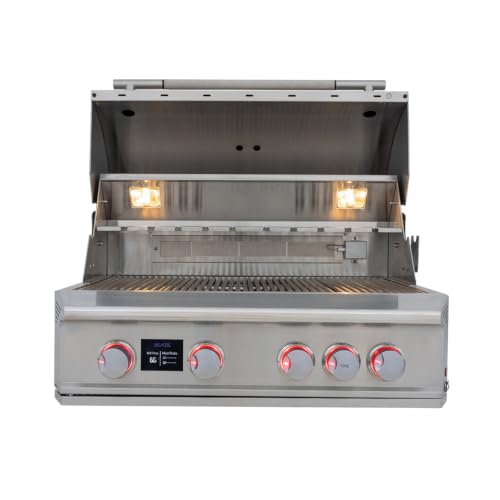
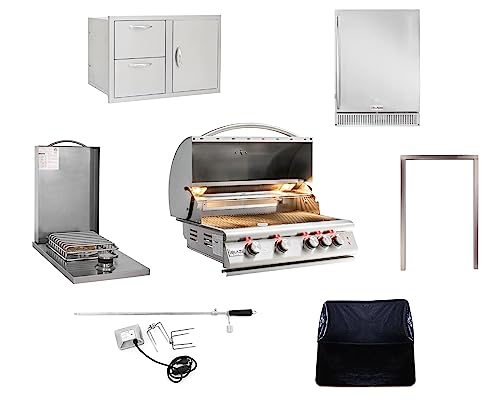
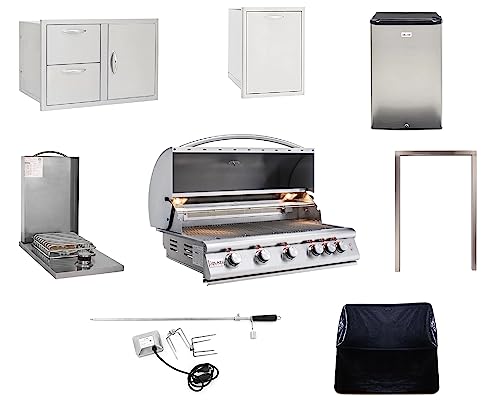


Start With the Island: Measure Before You Shop
The first check is not a burner count or a temperature figure but the cutout, the rectangular opening in the island that the grill body slides into. Cutout widths fall into rough classes of about 24 to 30 inches, about 32 to 38 inches, and about 40 inches and up, and each class also fixes the depth and height the island must provide. Measure an existing cutout in all three directions before you look at a single grill, because a grill that misses the opening by half an inch is a return, not a project.
Depth and support matter as much as width. The island frame has to carry the full weight of the grill plus a full cooking load, and the maker states a minimum counter depth and support ledge height. If you are building from scratch, pick the grill first and build the cutout to its stated dimensions, which removes the most common failure in this category.
Ventilation is the part new buyers most often skip. An island encloses the space under the grill, and gas that leaks or collects in that closed box has nowhere to go, so islands need vent panels placed low and high as the maker directs. Keep the specified clearances to anything that can burn, including framing, siding, and overhead structures, and leave an access door in the island so the shutoff valve and connections can be reached quickly.
Finally, think about service life as a matched pair. A grill that outlives its island is a mismatch, and so is a premium grill dropped into a frame that will rot or crack in five seasons. Budget the island materials to the same standard as the grill itself, with noncombustible framing and a counter surface that tolerates heat and grease.
What Built In Grills Cost: Price Bands and the Money Beyond the Grill
Grill prices alone fall into four broad bands, from compact drop in models under about $1,000 that cover small islands and simple cooking, through the main middle band of about $1,000 to $2,500 where thicker steel, more even heat, and better grates appear. From about $2,500 to $5,000 you are paying for heavier construction, larger cooking areas, and stronger warranties. Above $5,000 the grills are commercial in build and size, and the island to hold them usually costs as much again.
The grill itself is often less than half the finished bill. A framed and finished island commonly adds about $1,500 to $6,000 depending on size and materials, a licensed gas line run adds about $300 to $1,000, and electrical work for lights or ignition adds more. Doors, drawers, and a side burner are separate purchases that belong in the same budget conversation, not after it.
Timing can soften the total, since outdoor kitchen gear follows a strong seasonal cycle and the best time to buy grills is usually late in the cooking season or during holiday sale periods, when retailers clear floor space. Buying on sale and building the island in the off season spreads the cost across two budgets without cutting quality on either half.
How to Choose: The Factors That Decide
Every factor below affects the best builtin grills decision more than brand badges do, and they are ordered the way an owner feels them: fuel first, then running cost, then the build that has to survive outdoors for a decade or more.
Fuel Type Comes First
Gas is the convenience class: it lights in seconds, holds a steady temperature, and suits weeknight cooking, and it comes in two forms, a plumbed natural gas line that never runs out and liquid propane delivered from a tank. The guides to the best lp grills cover the tank fed route in depth, including regulator and hose checks. Charcoal is the flavor class, slower to light and harder to hold steady but unmatched for smoke and sear, and buyers who want that route built into an island should look at the best coal grills, which in this context means charcoal grills designed for permanent settings. Pellet models trade some sear for set and forget temperature control, and electric built ins exist mainly where open flame is restricted, with the weakest sear of the four.
Fuel Cost and Availability
Running cost separates the fuels more than purchase price does. Natural gas from a house line is the cheapest fuel per cook by a wide margin, while propane costs more per session and adds the chore of tank swaps or refills. Pellets cost about $1 to $2 per hour of cooking depending on temperature, charcoal falls between propane and pellets for most cooks, and availability matters too, since a fuel you can buy locally on a Sunday afternoon beats a slightly cheaper fuel that needs a special trip.
Build Quality and Materials
Outdoor permanence is what you are really paying for. Look for grade 304 stainless steel on the box and hood, since lower grades can rust at welds and fasteners within a few seasons near salt air or pool chemicals, and choose a double lined hood, which holds heat and keeps the outer surface cooler. Grates in heavy cast iron sear well and hold heat, while thick stainless rod grates last longer with less upkeep. Firebox thickness, welded seams instead of folded ones, and a warranty that covers the box and burners for a decade or more are the honest signals of build quality.
Heat Output and Temperature Range
Total burner output on the box is a weak number on its own. Divide it by the cooking area and you get output per square inch, which predicts searing power far better; strong built in grills land around 75 to 100 BTU per square inch or higher. The low end matters just as much for smoking and gentle cooking: a grill that cannot hold about 225 degrees Fahrenheit steadily will fight you on ribs and brisket. A dedicated sear burner, usually an infrared zone at one end, is worth more than one extra standard burner.
Temperature Control and Smart Features
Control quality shows up in small things: valves that adjust in fine steps rather than jumping from low to blazing, and an accurate hood thermometer. Wired meat probes that report to the lid or to a phone app remove guesswork on thick cuts. On pellet models, a PID controller holds temperature within a few degrees instead of swinging widely, and WiFi monitoring lets you check a long cook from indoors. These are conveniences layered on top of sound basic heat, not replacements for it.
Types of Built In Grills
The four types below cover nearly everything sold for permanent islands. The product table above groups current options by these same classes, and the wider family covered in the best bbq grills guides shows where the built in classes sit in the broader market.
Drop In Gas Grills
The default choice, and the one most islands are designed around: drop in gas grills offer the widest range of widths and prices, light instantly, and pair naturally with side burners and storage in the same island. Choose this type if you cook outdoors more than twice a week.
Built In Charcoal Grills
A smaller class built around a firebox with adjustable charcoal trays and air vents, where height adjustable grates or trays move food closer to or farther from the coals, the charcoal answer to a temperature dial. Choose this type if flavor is the priority and you accept a longer start and slower cleanup as part of the ritual.
Pellet Grills and Smokers Built Into an Island
Pellet units built for islands bring automatic feeding and precise low temperatures to permanent kitchens. The dedicated guides to the best pellet grills and smokers explain hopper sizes and controller types in detail. A pellet grill also needs electrical power at the island and a hopper you can still reach once the unit is set into the cutout.
Vertical Smokers and Electric Options
Vertical smokers built into an outdoor kitchen are a specialist add on rather than a main grill, giving large smoking capacity in a small footprint for cooks who smoke often. Electric built in grills serve balconies and buildings where flame is banned, with modest heat and no fuel storage, and both work best as second units beside a gas main grill rather than instead of one.
Safety Rules That Come With a Permanent Grill
A permanent install concentrates the usual grill risks in one fixed place. The grill stays outdoors only, never inside a garage or screened room unless the maker rates it for that use, and the stated clearances to walls, fences, and anything overhead stay open for the life of the island.
- Have the gas line fitted by a licensed installer, and test every connection with soapy water before first use and at the start of each season; growing bubbles mean a leak that must be fixed before lighting.
- Keep the island vents unblocked at all times, and store any propane tank outside the enclosed island base unless the island was built with a vented tank compartment.
- Let a thermometer decide doneness, using the official guidance figures to check your results: chicken at 165 degrees Fahrenheit and ground beef at 160 degrees Fahrenheit. Color and clear juices are not a test.
- For charcoal models, let ash cool at least 48 hours, then move it into a lidded metal container kept away from anything that can burn.
- Keep a clear path to the gas shutoff, and make sure everyone in the household knows where it is.
Care Habits That Make a Built In Grill Last
- Preheat for 10 to 15 minutes before cooking, which burns off residue and stops food sticking to cold grates.
- Brush the grates while they are still warm after cooking, when grease and food lift away with the least effort.
- Empty the grease tray on a schedule rather than after a flare up, since a full tray is the most common cause of island fires.
- Cover the grill head between uses, and check seams, burners, and the igniter for rust or blockage each season.
- Clean or replace burner tubes when flames turn yellow or uneven, and keep spider guards and venturi tubes clear.
- Run the soapy water leak check again after any work on the island, the counter, or the gas line.
Builtin Grills: Your Questions Answered
What type of built in grill gives the best flavor?
Charcoal gives the strongest smoke and sear flavor, because the fuel itself is part of the cooking. Pellet grills sit in the middle, adding gentle wood smoke with far less attention, while gas is the cleanest and most neutral. Drippings hitting a hot flavor bar add flavor too, so a gas grill with a good vaporizer system closes more of the gap than its fuel type suggests.
How often should a built in grill be cleaned?
Grates need a brush after every cook, and the grease tray needs emptying every few cooks or monthly in steady use, whichever comes first. A deeper clean of the firebox, burners, and drip pan belongs on a twice a year rhythm for most owners. Built in models add one task freestanding grills skip: check inside the island for grease pooling or nesting pests, since the enclosed base hides both.
Can a built in grill be used on a balcony?
Usually no, for structural reasons: a built in grill needs a permanent noncombustible island, fixed clearances, and a utility connection, and most balconies fail on weight, building rules, and distance to the wall at the same time. Many buildings and local codes also ban flame grills on balconies outright, and small electric grills are the class designed for that space instead.
How long should a good built in grill last?
A well built unit in grade 304 stainless steel should give about 10 to 15 years of regular use, and the frame and box often outlast the parts inside them. Burners, igniters, and grates are wear items with shorter lives, commonly about 3 to 7 years, so check before you buy that replacements for your size class are still sold. Because the island is built around the cutout, a grill from a maker with a long parts history protects the whole investment.
How big of a built in grill do I need?
Match the cooking area to your largest regular cook, not your average one. About 400 to 500 square inches of main grate handles family dinners and small gatherings, while 600 square inches and up suits households that host often or cook several items at once. Remember that width classes jump in steps, so a slightly larger cutout chosen at build time leaves room to move up a class later without rebuilding the island.
Is a built in pellet grill worth it for an outdoor kitchen?
It is worth it if low and slow cooking is a regular habit rather than an annual event. The automatic feed and tight temperature control turn brisket and ribs into a set and check routine, and the same unit grills well at higher heat. The honest costs are a power outlet at the island, pellets stored dry nearby, and a weaker hard sear than gas or charcoal unless the model adds a direct flame zone.
The Bottom Line
Choose the cutout class first, the fuel second, and the build quality third, and the rest of the decision gets easy. Treat the island and the grill as one purchase with one budget, keep the safety checks in this guide on a seasonal rhythm, and the best builtin grills for your patio will be the ones that still light, sear, and clean up well a decade from now. Compare the classes in the product table above before you commit to a cutout size.


