
Best Budget Massage Guns: Types Compared and Buying Guide for 2026
Disclosure: We may earn a commission when you buy through links on this page, at no extra cost to you. As an Amazon Associate I earn from qualifying purchases. Learn more
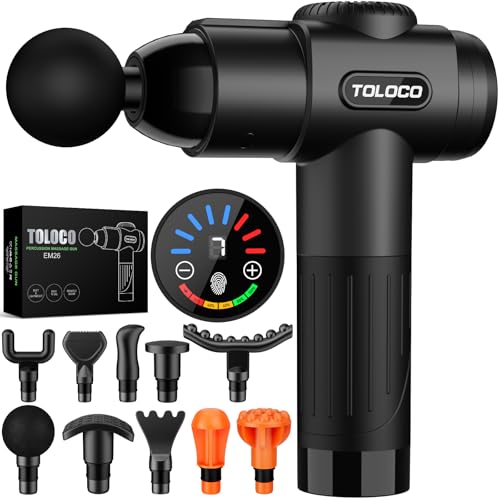
Mini, standard or stronger? Compare the types and key specs to choose the best budget massage gun for your muscles and your budget.
A sore back after a long day or tight calves after a run can make a percussion massager sound appealing, yet the price spread is wide and the specification sheets are confusing. Amplitude, stall force, and battery claims all sound similar on budget listings. Choosing the best budget massage gun comes down to matching depth, size, and noise to the muscles you will actually treat, not to paying for extras you will ignore.
This guide compares three types by build quality, footprint, and useful features, so you can see the trade offs before you spend. Use the comparison table below to narrow your short list, then read the sections that follow. If you want the wider price range as well, see our guide to the best massage gun for context.


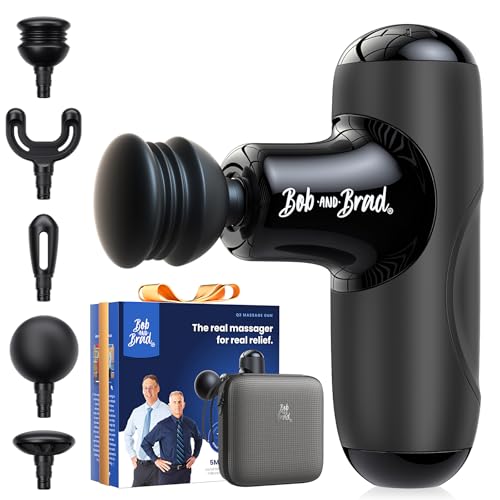
Budget Massage Gun Types at a Glance
Because budget lineups change often, the most useful comparison is by type rather than by a single model name. One type will suit travel and light daily soreness. Another will suit broad muscle groups at home. A third gives you more depth and pressure for larger legs and glutes, at a higher price and with more weight in your hand.
- Compact mini type: smallest footprint, lightest in the hand, best for bags, desks, and smaller muscle groups.
- Standard full size type: balanced depth, grip, and battery life, best for regular home use on backs, quads, and calves.
- Stronger upgrade type: deeper stroke and firmer pressure, best for dense muscle and people who found a mini type too mild.
Three Types Compared
Compact Mini Type for Travel and Light Soreness
A mini type usually weighs the least and fits in a gym bag, a carry on bag, or a desk drawer without crowding anything else. Its stroke is shorter, so the feel is more like strong vibration on the surface than deep pressure. That suits forearms, calves, feet, and the muscles along the upper back. Battery life is often good because the motor is small. If portability matters most, compare options in our guide to the best mini massage gun before you decide.
Standard Full Size Type for Daily Home Use
A standard type is the middle ground most home users should start with. The longer handle helps you reach the middle of your back and the back of your legs without twisting as much. Its stroke is deeper than a mini type, and the grip gives you better control when you add pressure. It takes more shelf space and feels heavier during long sessions. For general soreness after work, training, or yard work, this balance is usually the most practical.
Stronger Upgrade Type for Dense Muscle
An upgrade type within a budget range focuses on depth and stall force rather than on screens or apps. It keeps working when you press into quads, glutes, and hamstrings instead of slowing or stopping. The cost is size, weight, and often more noise at the top speeds. You also tend to pay more, though still far less than flagship models. If deep work is your main goal, our guide to the best deep tissue massage gun explains that category in more detail.
How to Evaluate Budget Models
Start with build quality you can judge from the listing and from verified buyer reviews. Look for a solid housing with no loose seams, a head mount that clicks in firmly, and controls that do not feel vague. Check the stated weight, because a heavy gun gets tiring when you hold it at arm length to reach your back.
Next, weigh footprint and storage, the list of included heads, and the warranty terms. A case that holds the gun, its heads, and its charger in one place protects the device and keeps small parts from getting lost. Noise ratings in decibels help, but treat them as rough guides, since brands measure distance differently. A written warranty of at least a year and clear return terms matter more at this price than a bonus app.
How to Choose the Right Massage Gun
Type
Match the type to the body areas you treat most. Mini types suit travel and smaller muscles, standard types suit most home routines, and stronger types suit large, dense muscle groups. Athletes who train legs several times a week often outgrow a mini type quickly, so if that sounds like you, read our guide to the best massage gun for athletes. Occasional users with mild soreness rarely need the strongest option.
Features Worth Paying For
Pay for a useful range of speeds, four to six interchangeable heads, and a battery you can replace or at least charge quickly. A round head covers broad areas, a flat head suits quads and glutes, and a narrower head reaches the arch of the foot or the forearm. A heated head can feel pleasant on stiff muscles, but it is a comfort extra, not a need. Skip extra heads you will never swap and decorative lights.
Space and Footprint
Measure where the case will live before you buy. A full size case needs a shelf or a closet bin, while a mini type can stay in a drawer or a gym bag. If several people in the home will share the device, a case that opens flat and labels each head slot saves time. Apartment users with little storage often prefer the compact type even if they give up some depth.
Pressure Capacity and Stroke Depth
Two numbers decide how deep the work feels. Amplitude, measured in millimeters, tells you how far the head travels with each pulse. Stall force tells you how much pressure you can apply before the motor slows. Budget mini types often sit near the shallow end, while standard types reach deeper. You do not need the highest figures for general soreness. You need enough depth for your largest muscle group without pressing hard to get it.
Programs and App Subscriptions
Most budget models keep controls on the device itself, with a few preset speeds and sometimes an automatic shut off after about ten minutes. That is enough for almost everyone. App guided routines can help you learn pacing and pressure, and our guide on how to use a massage gun covers the same basics without a subscription. Avoid paying monthly fees for timers and videos when the hardware itself is the budget option.
Noise and Surface Protection
Noise matters if you plan to use the gun while others watch TV, sleep, or work in the next room. Lower speeds are quieter on every model, so check your likely speed, not the maximum, when you read reviews. Set the gun and its case on a towel or a mat rather than on a hard floor, where vibration can rattle and scuff the surface. Keep the charging cord away from the heads so nothing rubs during storage.
Safety Limits You Should Respect
Use a massage gun on muscle only. Keep it away from the front of the neck, the spine, joints, and any area with broken skin, a recent injury, or a healing surgical site. Stop at once and seek medical care if you notice sharp pain, numbness, spreading bruising, dizziness, or swelling that was not there before. Talk with your clinician first if you are pregnant, use blood thinners, have a pacemaker, or manage a nerve or circulation condition.
How Much Should You Spend?
Under $50, expect a mini type or a basic standard type with fewer heads, a shorter warranty, and a shallower stroke. About $50 to $100 is the value zone for most buyers, with deeper strokes, better cases, and quieter motors. About $100 to $200 buys stronger stall force, longer battery life, and sturdier construction. Spending about $200 to $300 moves you out of the true budget tier, so spend that only if you need the extra depth often.
Budget vs Other Massage Guns: Pros and Cons
Budget models now cover the core job well, which is steady percussion at a few speeds with a handful of heads. What you give up is refinement rather than function. If you are still weighing the purchase itself, our article asking is a massage gun worth it walks through who benefits most and who can skip one.
- Pro: lower cost makes it easier to try percussion therapy without a large commitment.
- Pro: smaller and lighter bodies are easier to carry, store, and hold during longer sessions.
- Pro: simple controls with no required app or account suit shared household use.
- Con: shallower strokes and lower stall force limit deep work on large muscle groups.
- Con: cheaper housings, chargers, and head mounts tend to wear sooner with daily use.
- Con: noise control and battery quality vary more from one budget model to the next.
FAQ
What is the best budget massage gun?
For most people it is a standard full size type in the middle price band, with a stroke deep enough for quads and back muscles, four or more heads, and a case. That answer changes with your routine. Frequent travelers get more use from a mini type they actually carry, while people with very dense leg muscle may need the stronger type even at a higher price.
Are budget massage guns worth it?
Yes, if your goal is short sessions for general soreness a few times a week and you pick a type that matches your largest muscle group. They are less worthwhile if you expect daily deep work, because a shallow stroke will leave you pressing harder and getting less from each session. Buying the right type once costs less than buying a mild model and replacing it within months.
How long does a massage gun last?
With normal home use, a budget model often serves for a few years before the battery holds noticeably less charge or a head mount loosens. Lifespan depends more on charging habits and storage than on price alone. Keep the battery partly charged during long storage, avoid drops onto hard floors, and replace a cracked head at once, since a damaged head can tear its mount.
Is a massage gun worth it?
It is worth it if you will use it in place of time you now spend stretching or rolling and you enjoy the sensation enough to stay consistent. It adds little if it sits in a closet after the first week. A practical check is your current routine. People who already set aside recovery time after training or long shifts tend to use one. People buying on impulse tend not to.
How do you clean a massage gun?
Switch the device off and remove the head before cleaning. Wipe the body and each head with a cloth that is slightly damp with mild soap and water, then dry everything fully before you store it. Never soak the gun, spray liquid into the head mount, or use bleach based cleaners, which can damage the housing finish and the foam or silicone on the heads. Clean heads that touch bare skin more often when several people share the device.
What is the most reliable massage gun brand?
No single brand guarantees reliability at the budget level, because each brand sells several tiers of build quality. A better check is the record of the specific type you are buying. Look for a clear warranty, spare heads and chargers that are easy to order, and buyer reviews that mention the device still working after a year of use. Avoid listings with no warranty information at all, whatever name is printed on the box.
Final Thoughts
Start with the type that fits your body and your storage space, then check stroke depth, stall force, noise, and warranty in that order. Most home users land on a standard type in the middle price band and never miss the extras. Use the product table above to compare your finalists side by side, and choose the best budget massage gun you will reach for several times a week, not the one with the longest feature list.


