Best Broadcast Lawn Spreaders for 2026: A Buyer Checklist
Disclosure: We may earn a commission when you buy through links on this page, at no extra cost to you. As an Amazon Associate I earn from qualifying purchases. Learn more

Compare broadcast lawn spreaders by hopper size, spread width, wheel type and flow control, with a buyer checklist, calibration steps and care tips.
A broadcast spreader earns its place in the shed only if it lays seed and fertilizer evenly, without bare strips or burned patches. The best broadcast lawn spreaders share a few traits: a gate that opens the same way every pass, wheels that roll straight on real turf, and a frame that shrugs off corrosive granules. This guide turns those traits into a simple checklist you can use before you order.
Start with your lawn size and the material you spread most often, then work through the buyer groups and feature checks below. The product table pulls the shortlist together, so you can match each model against the points that matter for your yard.
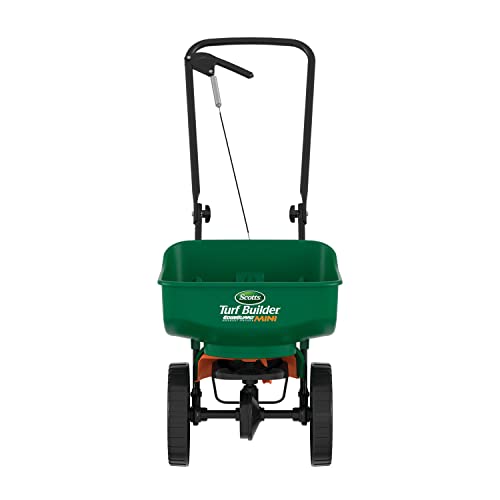

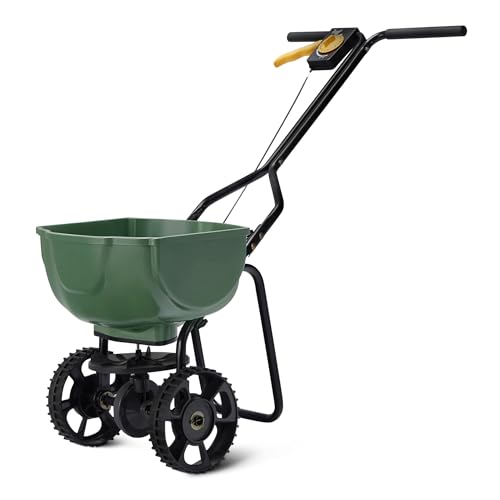


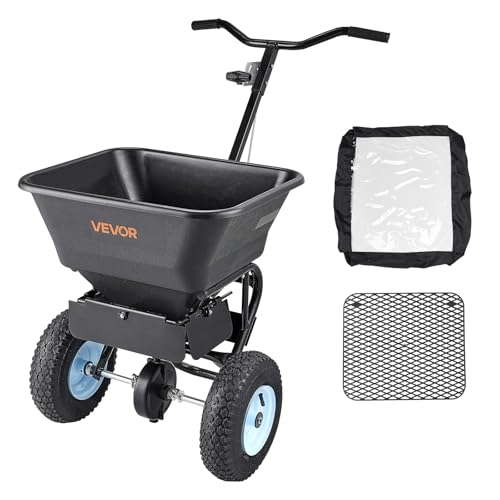
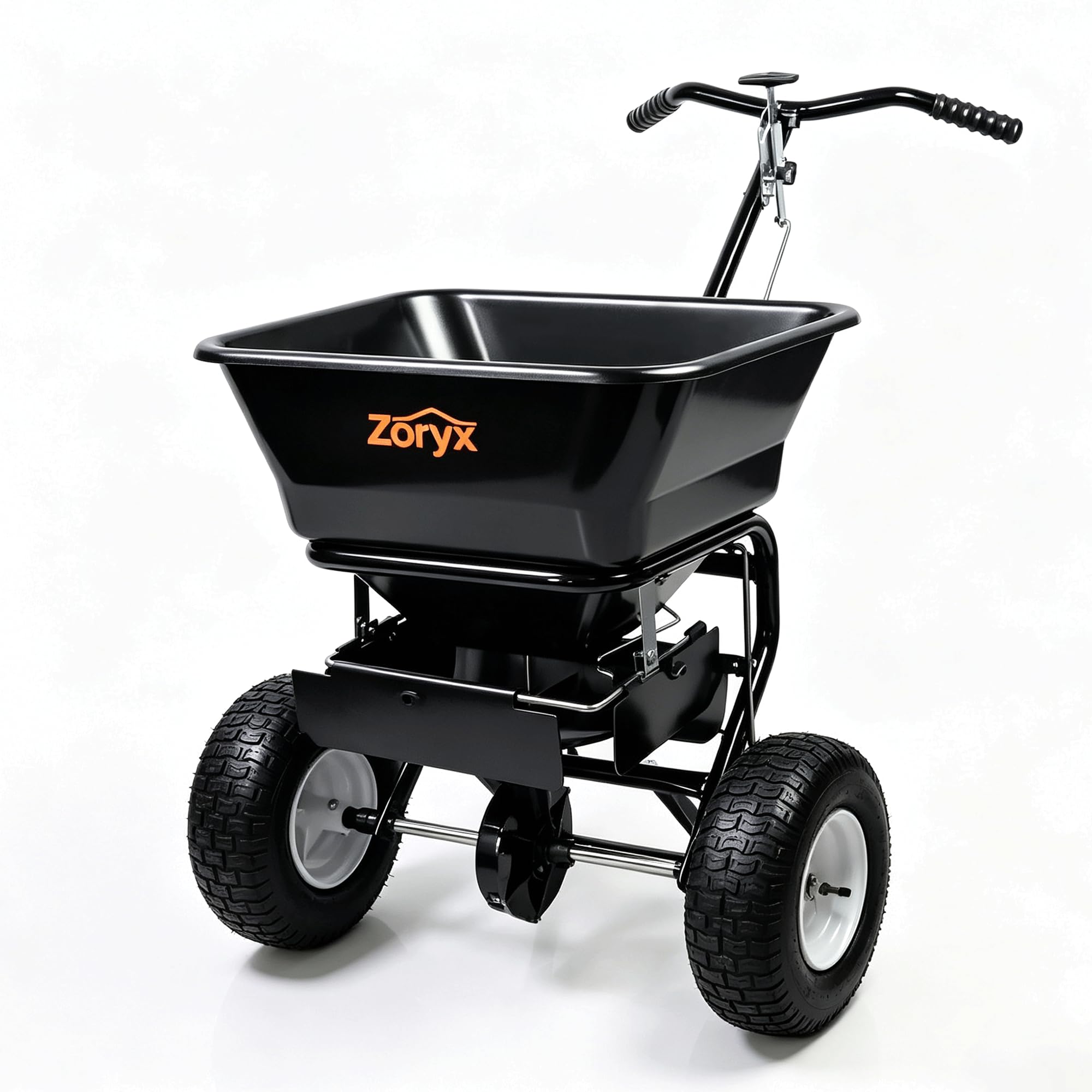
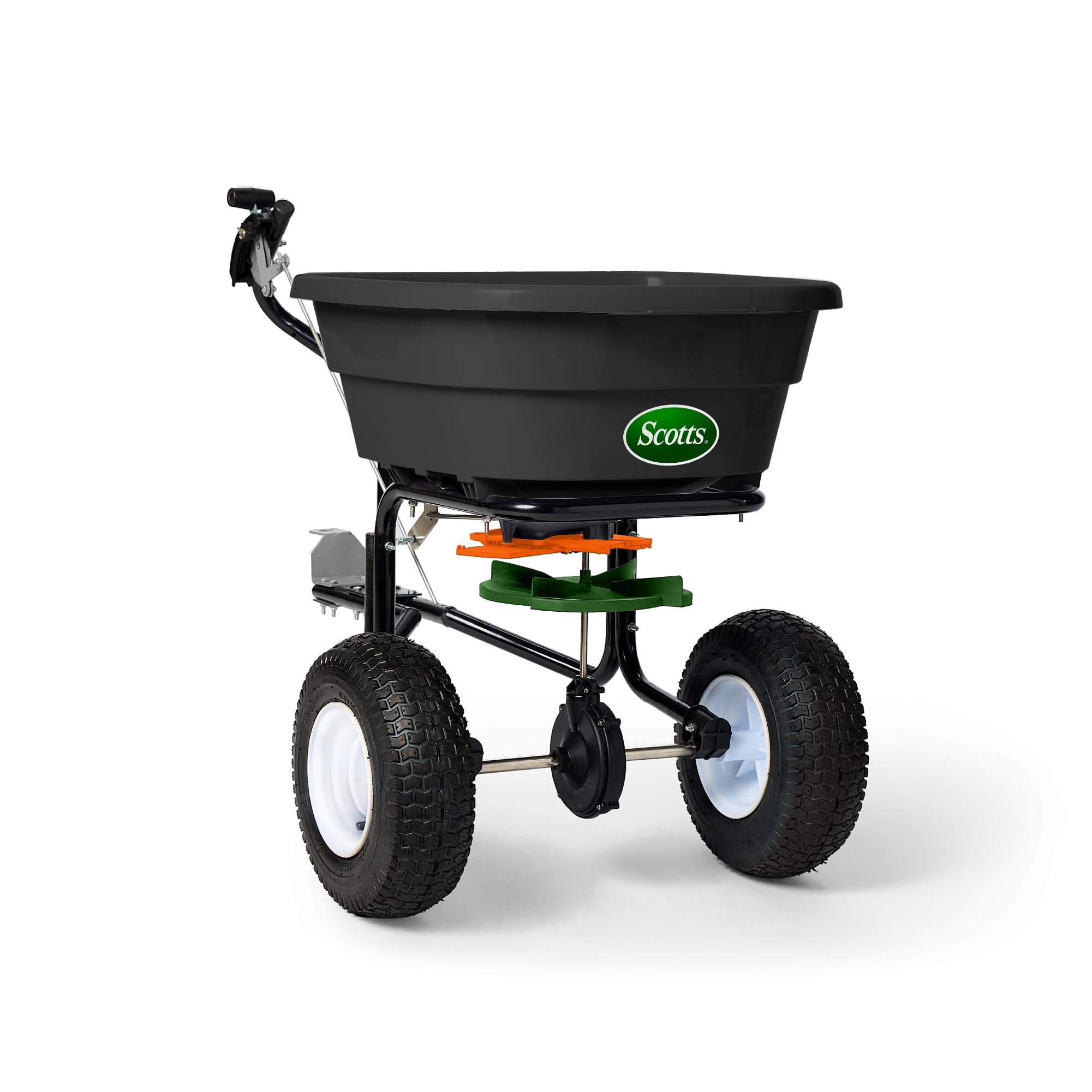
Who Should Buy a Broadcast Lawn Spreader?
Homeowners With Medium to Large Open Lawns
If your lawn runs from about a quarter acre to a full acre of mostly open turf, a push broadcast model is usually the sweet spot. A hopper holding about 50 to 85 pounds of fertilizer covers long stretches between refills, and a wide throw shortens the job on straight runs. Small handheld units will feel painfully slow at this size, while tow behind models only pay off once the lawn is larger still.
Gardeners Who Overseed and Feed on a Schedule
If you overseed in fall and feed two or three times a year, you spread very different materials through the same machine. Fine grass seed flows fast and needs low gate settings, while pellet fertilizer needs a wider opening and a steadier walking pace. Choose a spreader with clear numbered settings and a gate that shuts fully, so leftover seed never dribbles onto the driveway between passes.
Owners of Sloped or Uneven Ground
On bumpy or sloped lawns, stability matters more than raw capacity. Large pneumatic tires roll over ruts and mole runs instead of bouncing the hopper and scattering granules in clumps. If your ground is rough, weight your choice toward wheel size and frame strength rather than the biggest hopper.
Key Features to Compare
Hopper Capacity and Loaded Weight
Capacity is listed in pounds of fertilizer, and common push models hold about 50 to 130 pounds. A bigger hopper saves refill trips, but a full load is heavy to push uphill and hard to lift into a truck bed. Match the hopper to one full application for your lawn, not to the largest number on the box. Poly hoppers never rust and rinse clean, while steel hoppers feel sturdier but need the corrosion checks covered later in this guide.
Spread Width and Pattern Evenness
Spread width tells you how far the spinning plate throws material, often about 8 to 12 feet on push models. Treat the top figure as a maximum, because the outer edges of the pattern always land lighter than the center. Even coverage comes from overlapping each pass by roughly a foot, so a slightly narrower honest pattern beats a wide one that feathers out. Look for a plate and agitator design that keeps granules moving, since surging flow leaves dark and pale bands across the lawn.
Flow Gate Settings and Calibration
The gate controls how much material falls onto the plate, and the dial or lever beside the handle sets it. Good controls click into numbered positions and hold that setting over bumps, while vague sliders drift mid pass. Every product bag prints a suggested setting, but treat it as a starting point and test on a driveway or tarp first. Measure what actually came out over a known area, then adjust the dial until the applied rate matches the bag rate.
Wheels, Frame, and Rust Resistance
Wheels decide how the spreader tracks and how much effort each pass takes. Pneumatic tires about 10 to 14 inches across cushion bumps and grip wet grass, while solid plastic wheels are lighter but chatter on hard or rough ground. Fertilizer is corrosive, so frame material matters: stainless steel and well coated steel resist rust far longer than bare metal. Check that wheel bearings and the gearbox are shielded, because granule dust works into moving parts quickly.
Edge Guard and Material Compatibility
An edge guard, sometimes called a deflector shield, blocks material on one side so granules stay off flower beds, pools, and pavement. It matters most along borders, where a full pattern wastes product and can scorch plants. Compatibility matters just as much: most broadcast models handle pellet fertilizer, grass seed, and granular weed control, but very fine powders cake and bridge over the outlet. If you plan to spread ice melt in winter, confirm the maker allows it before buying.
Choosing the Right Format and Checking Your Shortlist
Push models suit most suburban lawns and cost about $50 to $250 depending on capacity and frame material. Tow behind models hitch to a lawn tractor and carry about 100 to 175 pounds, which suits properties over an acre where walking every pass takes too long. Handheld and shoulder bag models hold only a few pounds, but they shine on small patches, steep banks, and spot repairs where a wheeled machine cannot go. If seed is your only job, see our guide to the best seed spreaders for lawn for models built around seed alone.
Price alone rarely separates the best broadcast lawn spreaders from average ones, so run this short checklist against any model you are considering. Readers building a full feeding routine can also see our guide to the best spreaders for lawn care for the wider program view.
- Does the hopper hold one full application for your lawn without an extra refill?
- Are the gate settings numbered, and does the control hold its position over bumps?
- Does the spreader include an edge guard for beds, paths, and driveways?
- Are the tires pneumatic and at least about 10 inches across for your ground?
- Is the frame stainless steel, coated steel, or poly where fertilizer touches it?
- Does the maker list your main materials, such as seed, fertilizer, or ice melt, as approved?
- Is a hopper cover included or available for spreading in light rain?
Common Mistakes to Avoid
- Loading the hopper on the lawn, so any spill dumps a concentrated pile that burns a dead spot into the turf.
- Walking much faster or slower than your test pace, so the applied rate drifts away from the bag rate.
- Spreading on a windy day, so light granules drift onto beds and pavement instead of landing on the grass.
- Skipping the overlap between passes, so the light edges of each pattern meet and leave pale stripes.
- Leaving damp fertilizer in the hopper overnight, so it cakes into lumps that jam the gate next time.
- Applying product right up to a pond or drain without an edge guard, so runoff carries fertilizer into the water.
Care and Maintenance for a Broadcast Spreader
Empty the hopper after every use, even if you plan to spread again soon, because fertilizer pulls moisture from the air and hardens into a crust. Tip leftover material back into its bag on a dry surface, then brush out the hopper and rinse it only when you can let it dry fully before storage. A quick rinse after spreading corrosive products slows rust on the frame, axle, and gate plate.
Once a season, check tire pressure on pneumatic wheels, spin the plate to listen for grinding, and confirm the gate opens and closes fully at every setting. A drop of light oil on the axle bushings and gate linkage keeps movement smooth, but keep oil away from the hopper interior where it would coat granules. Store the spreader dry, indoors, and unloaded.
FAQ
What size broadcast lawn spreader does a half acre lawn need?
A hopper holding about 65 to 85 pounds suits most half acre lawns, since one load usually covers a full feeding without a refill stop. The new point many buyers miss is gate access: at this size, a handle mounted control you can close at each turn saves more product than a slightly larger hopper would.
Why does a broadcast lawn spreader leave stripes on a lawn?
Stripes usually come from gaps or heavy overlaps between passes, and the first fix is to overlap each pass by about a foot at a steady pace. Striping can also point to a worn agitator or a partly blocked outlet on one side, which starves half the pattern. Check the hopper outlet for caked lumps before blaming your walking line, and clear any buildup with a dry brush.
Can a broadcast lawn spreader spread fine grass seed evenly?
Yes, a broadcast lawn spreader can spread fine seed, but set the gate lower than you expect and make two passes at half rate in opposite directions. Fine seed flows faster than fertilizer pellets of similar weight, so a single full rate pass often empties the hopper halfway across the lawn. The two pass method also hides small pace changes, giving thin areas a second chance at coverage.
Should I choose a broadcast lawn spreader or a drop spreader for a small lawn?
Choose a drop spreader when a small lawn is mostly borders, because it places material only between its wheels and keeps edges crisp. A broadcast model still wins on open patches where its wider throw finishes faster, even in a modest yard. For a fuller comparison of the drop style, see our guide to the best lawn drop spreaders before you decide.
Can a broadcast lawn spreader apply ice melt in winter?
Many broadcast lawn spreaders can apply bagged ice melt, but only if the maker lists it as an approved material. Rock salt is far more corrosive than fertilizer, so rinse and dry the hopper, plate, and axle the same day you spread it. Some warranties exclude salt damage entirely, and checking that one line before winter protects both the machine and your claim.
Wrapping Up
Focus your decision on three things: a hopper sized to one full application, gate settings you can calibrate and trust, and wheels and a frame that suit your ground and resist rust. Match the format to your lawn, push for most yards, tow behind for large properties, handheld for patches, and the machine will serve for years. When you are ready to compare models, the best broadcast lawn spreaders for your yard are waiting in the product table.